After Visiting 1600 SupplySide Booths, We Uncover the New Growth Logic for 2027 Supplements
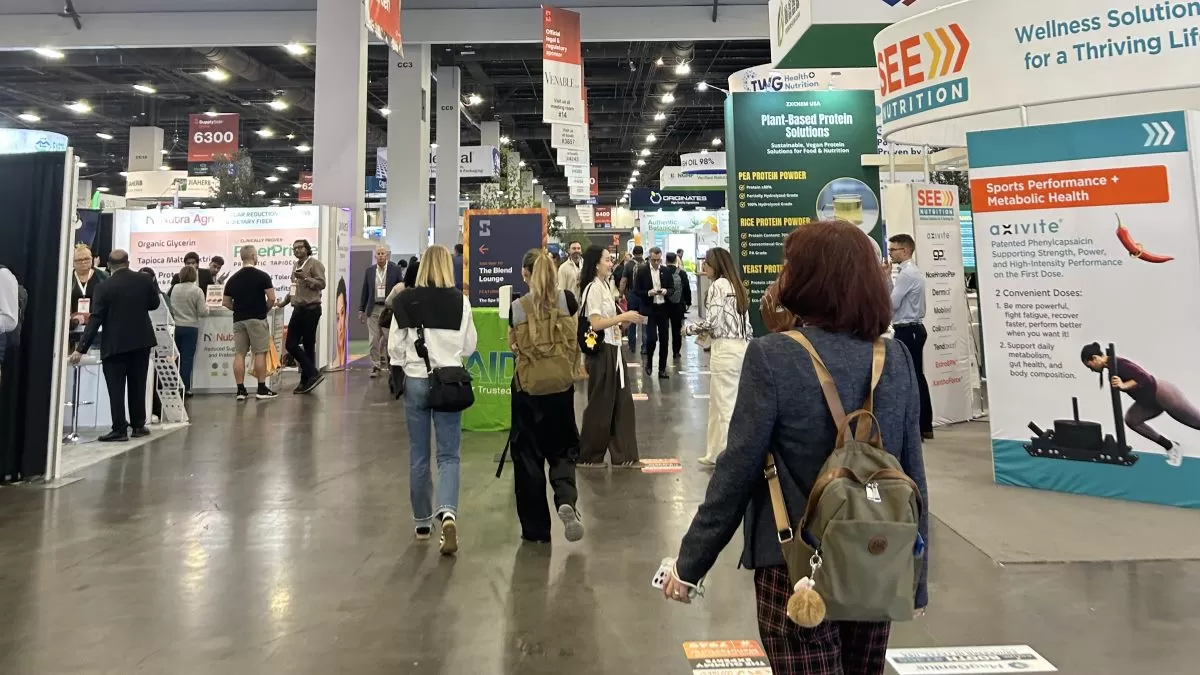
The 29th SupplySide Global 2026 has just concluded in Las Vegas, USA. As the most trend-setting professional exhibition in the global health and nutrition sector, this event drew over 1,600 exhibitors and more than 13,000 industry practitioners. It fully presents the evolution direction of the global supplement market in the coming year, covering raw material innovation, formulation technology and end-product forms.
Before the exhibition, our NutraLighting market team made predictions focusing on four major directions: GLP-1 supporting demands, precision-fermented longevity ingredients, low-dose standardized women’s herbs, traceability & differentiated dosage forms. At the closing day’s high-profile industry panel, guests from top global market research institutes, innovative brands and supply chains further turned abstract trends into clear practical questions: For 2027, which dosage forms should supplement enterprises focus on?
The answer is not the simple popular claim of “gummies replacing capsules” that circulated in the industry in past years. Instead, it follows a more layered path that fits real consumer behaviors: tablets and capsules maintain the cost and efficiency base, gummies and chewables unlock the long-term consumption growth of middle-aged and elderly users, stick packs, powders and effervescent products meet the full-scenario portable demands, and the whole supplement industry is systematically shifting towards the boundary of functional food.
01 Industry Panel Directly Points Out: Supplement Dosage Forms Are Undergoing a Collective Shift
The most critical industry judgment of this SupplySide edition was concentrated in the special session State of the Industry: Health and Nutrition in 2026. Guests including Lynn Dornblaser, Head of Innovation Insights at Mintel, and Tim Avila, Founder of Systems Bioscience, put forward a set of very practical conclusions based on new product data and consumer tracking from over 30 global markets in the past 12 months:
- The proportion of traditional tablets and capsules in new global supplement products has seen a slight decline for three consecutive years, but their fundamental position in categories requiring high dosage and high stability remains irreplaceable.
- The sustained growth of gummies and chewables is no longer mainly driven by Generation Z, but by Generation X and Baby Boomers – this group’s willingness to pay for “better taking experience” far exceeds that of younger generations.
- For middle-aged and elderly people, the core criterion for choosing supplements has shifted from “stronger ingredients, higher content” to “whether it is easy to take consistently every day”. Compliance has surpassed “efficacy concentration” and become the top decision-making factor for the first time.
- New products with fiber-related claims have seen a year-on-year growth of 40%, which is directly linked to the daily intestinal management and blood sugar stabilization demands of GLP-1 medication users.
- Protein claims still maintain popularity, but homogeneous products that “add protein just for the sake of adding protein” in past years are being rapidly eliminated by the market. Only protein supplementation solutions tied to specific scenario values can build stable repurchases.
What is more convincing than guest opinions is the product changes happening across all exhibition booths. Many leading raw material enterprises and OEMs have showcased non-traditional dosage forms such as effervescent tablets, instant powders, independent stick packs and bubble granules. All these point to the same consumer pain point that the whole industry is facing: pill fatigue.
A senior product representative from the well-known Indian raw material enterprise Sabinsa shared directly during on-site communication: “Now more and more consumers’ real mindset is not rejecting supplements, but refusing to swallow one more large capsule. Powders, stick packs and instant forms do not require extra water or a specific time to take. They can naturally integrate into daily scenarios like breakfast, commuting and office drinking, and the long-term taking compliance can be improved by at least 30%.”
02 Four Definite Dosage Form Signals for 2027
Combining the industry data from the panel and the product directions across all exhibition booths, the product layout of the 2027 supplement industry can focus on four almost undisputed main lines.
Signal 1: Gummies/Chewables Keep Expanding, But Their Underlying Logic Has Changed Completely
Gummies are evolving from the past “children-exclusive dosage form” or “youth-oriented snack dosage form” to one of the mainstream forms for adults to take daily for a long time. The real industry highlight is no longer just “more gummies on the market”, but three deep-level changes:
- The applicable ingredient boundary has expanded rapidly from basic vitamins to herbal extracts, high-activity functional ingredients, probiotics and postbiotics – categories that used to be hard to maintain stable in gummy forms.
- Middle-aged and elderly people over 50 have become the core growth group for gummies. Their sensitivity to swallowing experience far exceeds the industry’s previous general perception.
- Stability technologies, precise taste masking and unit dosage accuracy have replaced “appearance attractiveness” and become the core competence that OEMs compete for. In other words, the competition in the gummy sector has long bid farewell to the early appearance bonus, and officially entered the stage of “formula engineering capability” competition.
Signal 2: Stick Packs, Powders and Effervescent Products Have Become Rigid Demands in Portable Scenarios
Lifestyles featuring office work, sports and frequent business trips are driving the accelerated penetration of independent small packages and instant-drink dosage forms into the mass market. The advantages of such dosage forms are further amplified at this exhibition:
- The single dosage is clearly marked, completely avoiding dosage deviation when consumers split the product by themselves.
- The volume is light and burden-free, and can be easily put into commuting bags, sports fanny packs and travel suitcases.
- It is easier to deeply integrate into specific scenarios such as daily drinking water, breakfast matching and post-exercise supplementation, greatly lowering the taking threshold for users.
- It is extremely friendly to people who have swallowing difficulties or reject large capsules, covering a large number of potential users that traditional dosage forms cannot reach. Judging from the exhibited product structures, GLP-1 supporting protein + fiber supplementation, sleep and stress support, and electrolyte hydration products are the three tracks most suitable for shifting to stick packs, powders and effervescent forms.
Signal 3: The Boundary Between Supplements and Food Continues to Blur, Functional Foodization Enters the Accelerating Phase
A large number of innovative concepts such as protein bars, probiotic/postbiotic muffins and functional slushies appearing at this exhibition clearly show that supplements are evolving from “products that need to be taken specially at fixed time” to “ordinary food forms that fully integrate with daily diets”. The most direct impacts of this change are:
- Traditional supplement brands must jump out of the inherent dosage form mindset and start to understand the processing technology and taste logic of ordinary food.
- Traditional food enterprises need to build awareness of the delivery efficiency and activity retention technology of functional ingredients, and cannot develop functional products with the standards of ordinary food.
- ODM factories can no longer discuss new products with clients only based on the experience of tablets and capsules. They must have cross-category process integration capabilities. In the future, the core competitiveness of brands may no longer come from the ultimate polishing of a single dosage form, but from the combination capability of traditional supplement technologies and food-grade processes.
Signal 4: The First Principle of Dosage Form Design Is to Serve “Compliance + Scenario”
This is the most memorable sentence for all product teams from this SupplySide exhibition. In the past, many enterprises developed dosage forms following the logic: first determine the ingredients to be made, then find a way to fill them into a suitable dosage form. But now the industry logic is being completely reversed: first clarify who the target user is, in what scenario they will take the product, and whether they can stick to it easily, then decide the final dosage form. Therefore, when making any dosage form judgment in 2027, enterprises must answer at least three questions at the same time:
- Does the target group have swallowing difficulties or obvious barriers to long-term consistent taking?
- Is this product most suitable for scenarios like breakfast, sports, business trips or before-bed relaxation?
- Can the ingredient’s own stability, taste masking demand and delivery efficiency really support the selected dosage form?
03 Practical Reminders for Brands and ODM Factories
The dividend cycle of the supplement industry is rotating rapidly. The profit of the old gameplay that simply stacks new ingredients and relies on new concepts to drive sales is declining rapidly. Dosage form differentiation, precise scenario matching and stable long-term repurchases are becoming the new core dimensions of competition.
For brands, the most important thing to do now is to re-calibrate their product matrix, and focus on checking three key points:
- Whether the dosage forms of your existing core SKUs still fit the real taking habits of the target group?
- For high-potential scenarios such as GLP-1 supporting, sleep and stress management, and women’s full life cycle nutrition, have you adopted high-compliance adapted dosage forms first?
- Does your supply chain already have the flexible development capability for multiple dosage forms such as gummies, stick packs, powders and effervescent products, to avoid missing the next round of product iteration window?
For ODM factories, the key in 2027 is not to bet all resources on one popular dosage form, but to build multi-category combined undertaking capabilities. If the same set of raw material formula can be stably applied to tablets/capsules, gummies/chewables, stick packs/powders, oral liquids or ready-to-drink forms, you can more flexibly undertake client orders of different positioning, different channels and different price ranges, and build irreplaceable barriers amid industry changes.
The core trends released by SupplySide every year will usually be reflected on mainstream retail shelves in North America and even across the globe 5 to 12 months later. The 2027 supplement competition is no longer a contest of “whether you have this new ingredient”, but a contest of “what form you use to make users stick to taking it for a long time”. From capsules and tablets, to gummies, stick packs, effervescent products, and then to various innovative functional food forms, the whole industry is undergoing a value redistribution at the dosage form level. For brands and OEMs, what is really worth keeping a close eye on is never a fleeting hit product form, but the matching efficiency among dosage forms, target groups, scenarios and supply chain capabilities – this is the most solid growth starting point in the next cycle.