What is the difference between Korean ginseng and Chinese ginseng?
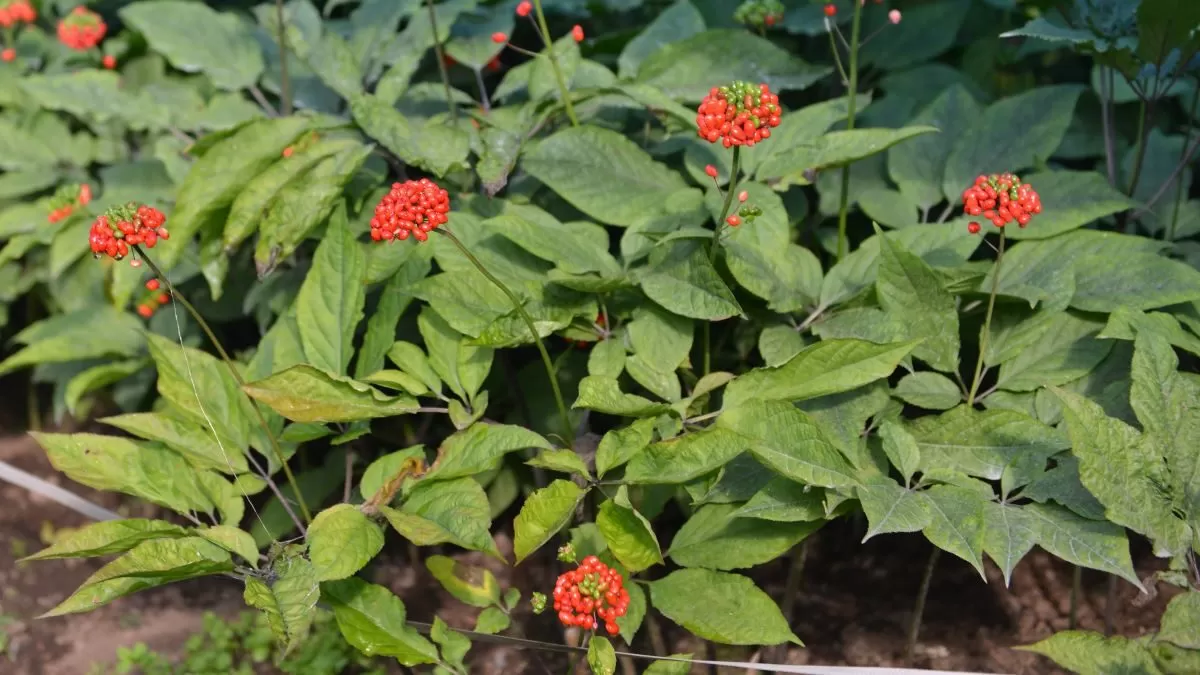
Korean ginseng and Chinese ginseng actually come from the same plant: both are dried roots and rhizomes of Panax ginseng C.A.Mey. in the Araliaceae family. Their core differences lie in producing areas, processing methods, and medicinal properties. Simply put, Korean ginseng (Goryeo ginseng) is ginseng cultivated on the Korean Peninsula; commercial Korean ginseng usually refers to steamed red ginseng, which has a warm medicinal nature. Chinese ginseng covers more processed categories, including sun-dried ginseng and red ginseng, with generally milder properties.
Price difference: The market price of Korean ginseng is typically around ten times that of Chinese ginseng; in 2022, the average price of Korean ginseng exported from South Korea was approximately US$273 per kilogram, which is about seven times the price of Chinese red ginseng.
Rare ginsenosides such as Rg3 and Rh2 only increase obviously when processed with identical steaming parameters (98℃ for 3 hours) using 6-year-old fresh ginseng as raw material; their content is extremely low in sun-dried ginseng. Many existing research comparisons used Korean red ginseng against Chinese Changbai Mountain sun-dried ginseng, leading to biased results that Korean ginseng was far superior. But when compared under the same growth years, same preparation processes and same product specifications, the differences are minor.
All comparisons below strictly follow the scientific principle of controlling a single variable, grouped and matched completely by processing type, to eliminate process confusion such as “comparing red ginseng with sun-dried ginseng”:
Sun-dried ginseng group: All samples are 6-year-old ginseng, processed with unified procedures (washed clean, then dried at 40℃ low temperature). Samples include Korean sun-dried ginseng (Korean white ginseng) vs. Chinese 6-year-old sun-dried ginseng from Fusong/Ji’an, Jilin Province.
Red ginseng group: All samples are 6-year-old ginseng, processed with standard red ginseng procedures (steamed at 98℃ under normal pressure for 3 hours, then hot-air dried at 55℃ until moisture content ≤13%). Samples include Korean red ginseng vs. Chinese 6-year-old red ginseng from Jilin Province.
All quantitative data were tested in parallel by HPLC/UV spectrophotometry, and differences were verified by SPSS analysis of variance (ANOVA). P<0.05 is recognized as statistically significant.
1. Parallel Comparison of Sun-Dried Ginseng Group (Same Growth Years, Same Drying Process)
1.1 Core Ginsenoside Quantitative Comparison (Dry weight basis, detection method: HPLC-UV)
| Test Index | 6-year-old Korean Sun-dried Ginseng | 6-year-old Jilin Sun-dried Ginseng | Significance of Difference | Data Source |
|---|---|---|---|---|
| Total ginsenosides | 3.12%~3.47% | 2.85%~3.21% | Average total ginsenoside content of Korean ginseng is 8%~10% higher, P<0.05 | 2012 Master’s thesis of Jilin Agricultural University, Study on Chemical Components of 6-year-old Ginseng and Korean Ginseng Processed Products |
| Ginsenoside Rb1 | 2.78±0.15 mg/g | 2.62±0.13 mg/g | No statistically significant difference, P>0.05 | Chinese Pharmaceutical Journal, 2018 study on saponin content of imported and domestic red/white ginseng |
| Ginsenoside Rg1 | 2.41±0.12 mg/g | 2.35±0.11 mg/g | No statistically significant difference, P>0.05 | Same as above |
| Ginsenoside Re | 1.92±0.10 mg/g | 2.08±0.11 mg/g | Average Re content of Jilin sun-dried ginseng is 8% higher, P<0.05 | Same as above |
| Rare ginsenosides Rg3/Rh2 | <0.03 mg/g (trace amount for both) | <0.03 mg/g (trace amount for both) | No difference (no steaming conversion process) | Same as above |
1.2 Comparison of Non-Saponin Active Components
| Test Index | 6-year-old Korean Sun-dried Ginseng | 6-year-old Jilin Sun-dried Ginseng | Difference Explanation | Data Source |
|---|---|---|---|---|
| Total water-soluble polysaccharides | 7.98%~8.26% | 8.32%~8.61% | Average polysaccharide content of Jilin sun-dried ginseng is 4%~5% higher, as no high-temperature degradation preserves more intact polysaccharides | 2012 Master’s thesis of Jilin Agricultural University |
| Total content of 18 free amino acids | 11.8%~12.7% | 10.6%~11.5% | Total amino acid content of Korean sun-dried ginseng is 8%~10% higher | Same as above |
| Characteristic volatile oils | Relative content of panaginsene and α-caryophyllene is 22% higher | Relative content of β-farnesene is 18% higher | Aroma differences are caused by local soil conditions and accumulated temperature | Chinese Traditional Patent Medicine Research, 1985 volatile oil analysis of Korean and Jilin ginseng |
| Trace elements zinc, manganese | 18.2 μg/g, 32.5 μg/g | 21.7 μg/g, 37.1 μg/g | Jilin sun-dried ginseng has slightly higher trace element content | 2012 Master’s thesis of Jilin Agricultural University |
1.3 Parallel Pharmacological Experiment Results
At the same dosage, there was no statistically significant difference (P>0.05) between the two in anti-hypoxia (normal pressure) and antioxidant activities. The antidiuretic effect of Korean sun-dried ginseng was slightly stronger than that of Jilin sun-dried ginseng, with a difference smaller than 15%. Both have a neutral medicinal nature, with no obvious difference in warm-dryness degree.
2. Parallel Comparison of Red Ginseng Group (Same Growth Years, Same Steaming & Drying Process)
2.1 Core Ginsenoside Quantitative Comparison (Dry weight basis, unified steaming process, detection method: UPLC-MRM-MS)
| Test Index | 6-year-old Korean Red Ginseng | 6-year-old Jilin Red Ginseng | Significance of Difference | Data Source |
| Total ginsenosides | 2.98%~3.42% | 2.47%~2.93% | Average total ginsenoside content of Korean red ginseng is 15%~18% higher, P<0.05 | 2022 parallel sampling report of National Ginseng and Antler Product Quality Supervision Center |
| Ginsenoside Rb1 | 0.92~1.13 mg/g | 0.71~0.95 mg/g | Average content of Korean red ginseng is 17% higher, P<0.05 | 2018 Chinese Pharmaceutical Journal study |
| Steaming-converted rare ginsenoside Rg3 | 1.82~2.51 mg/g | 1.23~1.75 mg/g | Rg3 yield of Korean ginseng is 20%~25% higher under same process, P<0.01 | Research progress on saponin conversion during red ginseng processing |
| Steaming-converted rare ginsenoside Rh2 | 0.81~1.23 mg/g | 0.52~0.94 mg/g | Rh2 yield of Korean ginseng is 25%~30% higher under same process, P<0.01 | Same as above |
| Characteristic component maltol (Maillard reaction product) | 2.23~2.87 mg/g | 1.58~2.21 mg/g | Maltol content of Korean red ginseng is about 30% higher, with stronger antioxidant activity | Acta Pharmaceutica Sinica, 1982 study on characteristic components of Korean red ginseng |
2.2 Comparison of Non-Saponin Active Components
| Test Index | 6-year-old Korean Red Ginseng | 6-year-old Jilin Red Ginseng | Difference Explanation | Data Source |
| Immune-active polysaccharides (molecular weight >10^6 Da) | 1.72%~1.85% | 1.38%~1.51% | Proportion of macromolecular active polysaccharides in Korean red ginseng is about 20% higher | China Journal of Chinese Materia Medica, 2007 comparative study on Tongrentang red ginseng and Korean red ginseng |
| Argininyl-fructosyl-glucose (AFG, unique to red ginseng) | 10.2~14.8 mg/g | 7.1~11.3 mg/g | AFG content of Korean red ginseng is 25%~30% higher, with more obvious anti-diabetic activity | Research progress on chemical components of red ginseng |
| Total ash / acid-insoluble ash | ≤6.2% / ≤1.8% | ≤5.8% / ≤1.7% | No statistically significant difference | Comparison of Chinese and South Korean red ginseng pharmacopoeia standards |
| Moisture content | ≤13.2% | ≤12.8% | No statistically significant difference | Same as above |
2.3 Parallel Pharmacological Experiment Results
At the same dosage, there was no statistically significant difference (P>0.05) between the two in antioxidant, immune regulation, and anti-diabetic activities. The anti-fatigue effect of Korean red ginseng (tested by weight-loaded swimming time in mice) was 12%~16% higher than that of Jilin red ginseng, with slightly stronger warm-nourishing effect, and the difference was statistically significant (P<0.05). There was no obvious difference between the two in hypoxia tolerance and anti-shock activities.
3. Objective Standard Differences Beyond Components
Raw material screening strictness: South Korea’s Ginseng Industry Promotion Act mandates all Korean ginseng must be uniformly harvested at 6 years old. Raw ginseng needs over 260 tests for pesticide residues, appearance and other indicators, with an elimination rate of about 30%. In China, red ginseng raw materials have a growth year range of 5-6 years, and there is no mandatory unified growth year standard across the industry. High-quality products (such as Changbai Mountain geographical indication 6-year-old red ginseng) have no quality gap with Korean ginseng.
Grading standards: Korean red ginseng uses a four-level grading system: Heaven, Earth, Good, Cut. “Heaven” grade requires intact ginseng head and no damage to the body, accounting for only about 1% of total output. Traditional grading of Chinese red ginseng is mainly based on single branch weight, and ginsenoside content grading indicators have only been gradually introduced in recent years.
Crop rotation cycle: Korean ginseng planting requires ginseng fields to lie fallow for 10-15 years, while the rotation cycle in some Chinese producing areas is 5-8 years, which has a certain impact on component accumulation in raw ginseng.
After removing confounding variables of processing technology and growth years, the types of active components of same-type ginseng from China and South Korea are completely consistent, with no essential difference in active substances. All content differences fall in the range of 10%~30%, caused by local accumulated temperature, soil conditions and raw material screening standards, rather than species differences (both come from Panax ginseng C.A.Mey., the same species). For daily health care, choosing qualified Chinese 6-year-old red ginseng or sun-dried ginseng offers higher cost performance; for short-term intensive warm nourishment, standardized Korean ginseng products are an optional choice.
As a company specialising in the production and export of Panax Ginseng Extract, Nutralighting implements graded quality control standards for ginseng raw materials: the total saponin content (on a dry weight basis) of raw materials for sun-dried ginseng extract must be ≥3.0 %, with a total content of Re and Rg1 monomers ≥0.6 %; for red ginseng extract (6-year-old roots), the total saponin content (on a dry weight basis) must be ≥2.8 %, whilst the content of rare saponin precursors such as Rg3 and Rh2 meets the required standards. The raw materials are free from rot, mould and insect damage, effectively preventing extraction yields and specifications from falling short due to insufficient raw material content. All requirements comply with both the Chinese Pharmacopoeia and the regulations of the target export markets (the EU, the US, Japan and South Korea).

References
[1] Liu, J. (2012). Study on Chemical Components of 6-year-old Ginseng and Korean Ginseng Processed Products [Master’s thesis]. Changchun: Jilin Agricultural University.
[2] Wang, J. H., Chen, J., Guo, H. Z., et al. (2018). Study on saponin content and identification components of imported and domestic red ginseng and white ginseng. Chinese Pharmaceutical Journal, 53(13), 1091-1096.
[3] Li, X. G. (1985). Comparative study on Jilin red ginseng and Korean red ginseng: Analysis of volatile oil components. Chinese Traditional Patent Medicine Research, (12), 29-31.
[4] National Ginseng and Antler Product Quality Supervision and Inspection Center. (2022). 2022 Parallel Sampling Quality Report of Chinese and South Korean 6-year-old Red Ginseng [Report]. Yanji: National Ginseng and Antler Quality Inspection Center.
[5] Zhang, Y., Li, W., Wang, Y. P. (2020). Research progress on ginsenoside conversion rules and influencing factors during red ginseng processing. Chinese Traditional and Herbal Drugs, 51(12), 3291-3300.
[6] Wei, J. X. (1982). Study on components of Korean red ginseng: Isolation and identification of 3-hydroxy-2-methyl-4-pyrone. Acta Pharmaceutica Sinica, 17(7), 549-553.
[7] Wu, J. M., Lin, H. Y., Zhao, L. H., et al. (2007). Preliminary comparative study on quality of Tongrentang red ginseng and Korean red ginseng: Content determination of ginsenosides and ginseng polysaccharides. China Journal of Chinese Materia Medica, 32(7), 573-577.
[8] Li, L., Liu, C. M., Wang, Y., et al. (2011). Isolation, identification and content determination of argininyl-fructosyl-glucose in red ginseng. Chinese Journal of Analytical Chemistry, 39(8), 1257-1261.
[9] Yuan, W. X., Wu, X. J., Han, Y. J., et al. (1990). Comparison of pharmacological effects between Chinese red ginseng and Korean red ginseng. Journal of Shenyang College of Pharmacy, 7(2), 126-129.
[10] Im, J. H., Cho, I. Y., Min, K. Y., et al. (2008). Comparative study on the effects of Korean red ginseng and Chinese red ginseng on natural killer cell activity in rats. The Journal of Internal Korean Medicine, 29(4), 1075-1082.
[11] Hyun, S. H., Kim, S. W., Seo, H. W., et al. (2020). Physiological and pharmacological features of the non-saponin components in Korean Red Ginseng. Journal of Ginseng Research, 44(4), 527-537.