What causes wall sticking during goji extract spray drying
The polysaccharide specifications of goji berry extract span a wide range (10%-50%, UV method). To figure out the root cause of material sticking to the tower in production, a single set of drying parameters cannot cover all specifications. The specifications, carrier and equipment must be determined in a coordinated manner.

Dried goji berries for extraction
1.1 Product Form and Typical Specifications
Goji berry extract is a powder obtained by using the dried ripe fruits of Lycium barbarum from Ningxia as raw material, through water extraction, concentration, alcohol precipitation or column separation followed by drying. Its main active component is goji berry polysaccharide, and it also contains betaine, carotenoids, etc. Goji berry polysaccharide is a water-soluble proteoglycan with a molecular weight of about 22-25 kDa, composed of monosaccharides such as arabinose, galactose, rhamnose, glucose, xylose and mannose. The commercial specifications determine the polysaccharide content by UV method, commonly in the range of 10%-50%. It appears as a dark brown to yellowish-brown powder and is highly hygroscopic.
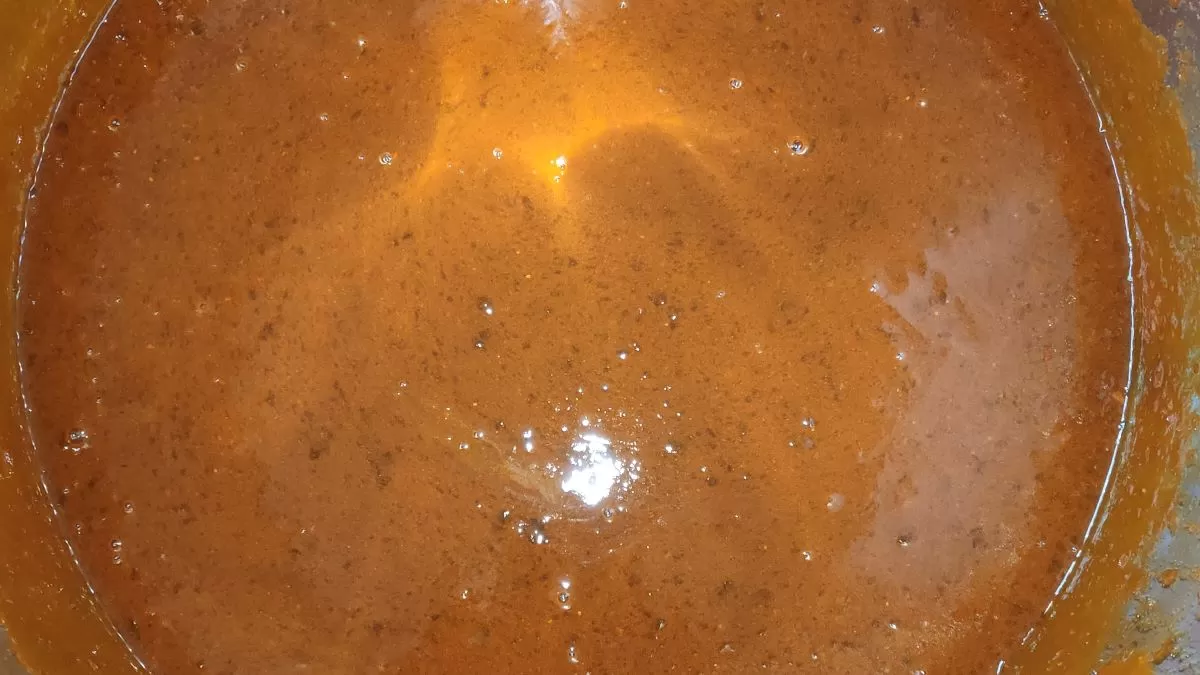
Nutralighting goji berry extract liquid
This set of descriptions contains three pieces of information directly related to tower sticking. First, the proteoglycan complex has both film-forming property and adhesiveness: the film-forming property is beneficial for interface protection, while the adhesiveness is harmful when contacting the wall surface, and the effect direction depends on the water content state of the particles when they reach the wall surface. Second, the lower the polysaccharide content, the fewer low-molecular-weight sugars removed by alcohol precipitation or column separation, the higher the proportion of fructose and glucose in the residue, and the lower the Tg of the system. Third, high hygroscopicity means that even if the material is completely dried in the tower, secondary re-sticking may still occur when it enters the cyclone, pipelines and packaging section.
1.2 Four Material Parameters That Determine Tower Sticking
To judge whether a certain specification of goji berry extract is “spray-drying friendly”, you only need to look at four parameters, and there is no need to conduct a full-item analysis first.
- Tg: The critical temperature at which amorphous powder transitions from glassy state to rubbery state, which directly determines at what temperature the particles start to become sticky.
- Sticking point temperature: The temperature at which particles form an adherable surface. In engineering practice, it is usually about 20℃ higher than Tg. The higher the moisture content, the lower the actual sticking point.
- Hygroscopicity: It determines whether the powder will re-stick during the powder collection stage and storage period, and is highly correlated with the low-molecular-weight sugar content and DE value.
- Feed liquid viscosity and solid content: They determine the droplet size and drying rate, and further determine the moisture content of the particles when they reach the wall surface.
Only by superimposing these four parameters with the equipment temperature window can a judgment diagram be formed. If you only look at one of them, you often draw a wrong conclusion: if you keep increasing the inlet air temperature, the evaporation capacity will rise, but the wall temperature near the hot air inlet will also increase synchronously, which will instead aggravate thermal sticking to the wall.
1.3 Why Goji Berry Extract Is More Difficult to Spray-Dry Than Ordinary Plant Extracts
Ordinary plant extracts are mainly composed of polysaccharides, flavonoids and saponins, with a limited proportion of low-molecular-weight sugars, so their Tg can be maintained at a relatively acceptable level. The trouble with goji berry extract lies in its sugar profile: the fruit itself is rich in fructose and glucose, and these monosaccharides almost all remain in the feed liquid during water extraction and concentration, and only part of them can be removed by alcohol precipitation. According to equipment and process documents, the total sugar content of goji berry pulp can reach 40%-50%, which is exactly the reason for the phenomenon of “still sticking to the tower even with a considerable polysaccharide content”.
In other words, what customers buy is polysaccharides, but what sticks in the tower is often syrup. This judgment determines the priority of all subsequent measures: if you only focus on adjusting the formula according to the polysaccharide content without reducing the low-molecular-weight sugar load, any parameter optimization can only make limited adjustments within a narrow operating window.
1.4 Common Solutions to Tower Sticking Problems
Based on years of spray-drying engineering experience, the following practical measures can effectively alleviate or eliminate the sticking phenomenon:
- Carrier selection and proportion optimization: Using maltodextrin, gum arabic or oligosaccharides as carriers can raise the overall Tg of the system. Generally, adding 20%-40% maltodextrin (DE 10-20) can significantly improve flowability and reduce wall adhesion. However, excessive carrier addition will dilute the active ingredient content, so the ratio must be balanced.
- Pretreatment of feed liquid: Increasing the degree of alcohol precipitation or adding column chromatography purification steps can effectively remove free fructose and glucose, thereby reducing the hygroscopic load of the final powder.
- Atomization control: Optimizing the atomizer speed and nozzle structure to obtain a more uniform droplet size distribution can shorten the drying time and reduce the time particles stay in the sticky zone.
- Drying temperature window matching: According to the Tg and sticking point temperature of each specification, determine a safe inlet air temperature range. For low-specification products with high sugar content, moderate inlet temperatures (140-160℃) combined with high exhaust temperatures should be used to avoid local overheating.
- Tower inner wall treatment: Polishing the inner wall to a mirror finish or applying anti-adhesion coatings can reduce the sticking force. Some manufacturers also install vibrating devices or ultrasonic oscillators on the tower wall to prevent material accumulation.
1.5 Quality Control Suggestions for Procurement
When selecting goji berry extract suppliers, buyers should pay attention not only to the polysaccharide content indicated on the label, but also to the following hidden quality indicators:
- Residual solvent and heavy metal limits
- Microbial load (total aerobic count, yeast and mold, E. coli, Salmonella)
- Low-molecular-weight sugar residual amount (especially fructose and glucose)
- Moisture content and water activity (a w value)
- Powder flowability and bulk density
Suppliers with mature spray-drying processes can stably deliver products that are free-flowing and non-sticky, which is an important sign of process capability.
The tower sticking problem of goji berry extract is essentially a physicochemical problem caused by the mismatch between the material properties and the drying conditions. Low molecular weight sugars, high hygroscopicity and the film-forming characteristics of proteoglycans together determine the difficulty of its spray drying. Only by simultaneously controlling the formula composition, optimizing the carrier system, fine-tuning the equipment parameters and strengthening post-treatment can the sticking problem be fundamentally resolved. For purchasers, understanding these mechanisms helps to better evaluate supplier capabilities and specify appropriate product standards.