Product Description
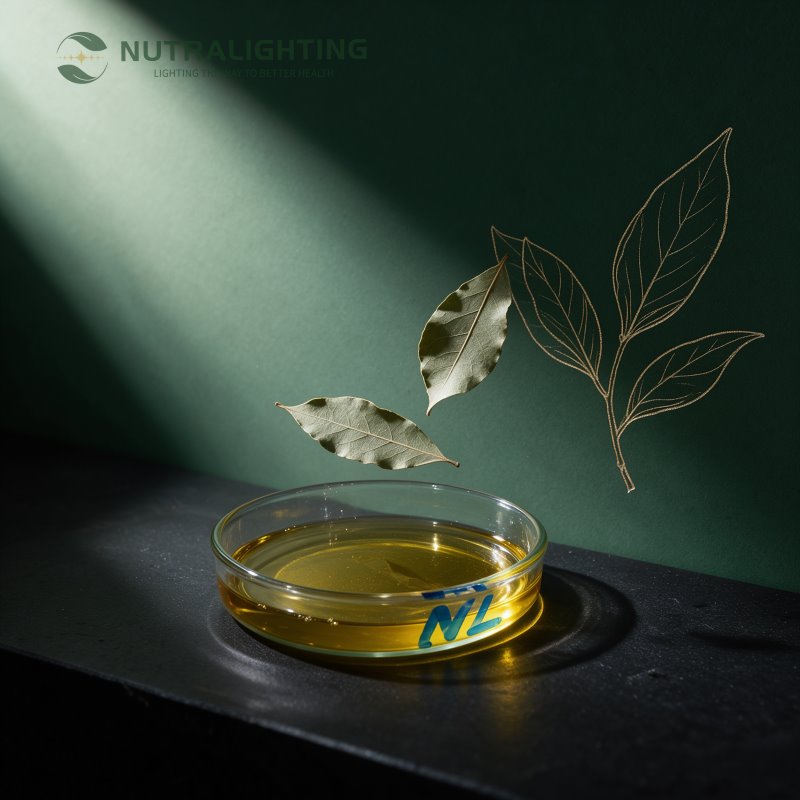
Nutralighting offers high-quality Bay Laurel Extract (Laurus nobilis), a versatile natural ingredient sourced from the dried leaves of the bay laurel tree. Widely used in the food, beverage, and fragrance industries, our extract delivers authentic aromatics and functional benefits through advanced extraction technology.
Product Description
Bay Laurel (Laurus nobilis) is the dried leaf of a plant in the Lauraceae family, primarily produced along the Mediterranean coast, and is one of the world’s three major spice plants. Bay Laurel extract product focuses on 1,8-cineole and α-pinene as core active components, developed for formulas targeting digestive health, natural antibacterial, and antioxidant applications. The Essential Oil widely used in food seasoning, functional foods, and personal care products.
Bay leaves are a core spice in the Mediterranean diet. Greece and Turkey are the main production areas, and bay leaf oil is widely used in food seasoning, spices, and the natural preservative market.
Why Choose Nutralighting
- Clean Label: Solvent-free or food-grade ethanol extraction options available
- Versatile Application: Suitable for flavorings, beverages, perfumery, and aromatherapy
- Consistent Quality: Batch-tested for purity, potency, and microbiological safety
- Custom Specifications: OEM/ODM support with adjustable concentration and packaging
Basic Information
| Project | Content |
| Extract Name | Laurel Extract |
| Source | Laurus nobilis leaves |
| Alias | Sweet Bay Laurel |
| Common English Name | Bay Laurel Extract / Laurus nobilis Extract |
| Clean Label | Solvent-free or food-grade ethanol extraction options available |
| Main Components | 1,8-Cineole, α-Pinene |
| Main Specification | Essential Oil 5%-10% |
| Target Market | Mediterranean region, Middle East |
| Core Application Areas | Food & Beverage: Savory flavor enhancer, meat products, soups, sauces, and seasonings Fragrance & Perfumery: Fine fragrance compositions, cosmetic bases, and aromatic blends Herbal & Nutraceutical: Traditional botanical formulations and functional ingredients |
Standard Specifications (COA)
The following specifications are general reference values, and the specifics should be based on the COA report of each batch.
| Test Items | Standards |
| Volatile Oil (calculated as 1,8-Cineole) | Volatile Oil 5%-10% |
| Loss on Drying | ≤5.0% |
| Total Ash | ≤6.0% |
| Lead (Pb) | ≤1.0 mg/kg |
| Arsenic (As) | ≤2.0 mg/kg |
| Cadmium (Cd) | ≤0.5 mg/kg |
| Mercury (Hg) | ≤0.1 mg/kg |
| Pesticide Residues (Organochlorine/Organophosphorus) | Complies with USP <561> |
| Aflatoxin B1 | ≤5.0 μg/kg |
| Total Aflatoxins | ≤10.0 μg/kg |
| Total Microbial Count (TAMC) | ≤1×10⁴ CFU/g |
| Yeasts and molds (TYMC) | ≤1×10² CFU/g |
| Escherichia coli | Not detected (1g) |
| Salmonella | Not detected (1g) |
Introduction of Plant Raw Material
The raw material of this product is the dried leaves of the Lauraceae plant Laurus nobilis L. It is mainly produced in Mediterranean countries (Greece, Turkey, Italy), It is currently widely cultivated in temperate regions around the world, and there are also large-scale, compliant cultivation bases in southern Chinese provinces such as Zhejiang, Jiangsu and Fujian. Laurel is one of the three major spice plants in the world. It is included in the European Pharmacopoeia.
Core Efficacy
In traditional applications, laurel (Laurus nobilis) is used for digestive health and natural antimicrobial purposes. Its essential oil (mainly containing 1,8-cineole and α-pinene) may help promote digestive enzyme secretion and relieve gastrointestinal bloating. In vitro studies have shown that its extracts can inhibit various common pathogens and possess certain antioxidant activity; studies have also reported its antispasmodic effect on digestive system smooth muscles. These effects are mostly observed in vitro or in animal experiments, and specific efficacy should be evaluated based on form, dosage, and target population.
Regulatory and Regional Access Status
The following information is compiled based on publicly available regulatory data. Actual market access should be subject to the latest regulations of the target country.
| Region/Country | Regulatory status | Key notes |
| European Union (EFSA) | Traditional herbal medicine / Food supplements | EU Directive 2004/24/EC regulates traditional herbal medicines; extracts used as ingredients in food supplements must comply with the requirements of the EU Novel Food Regulation (EU) 2015/2283 (some traditional herbs enjoy a simplified procedure). |
| China (NHC/NMPA) | Health food raw materials / New resource foods | According to the 2020 edition of the Chinese Pharmacopoeia and standards such as GB 16740; some varieties have been included in the health food raw materials catalog or can be used in the ordinary food catalog, and the latest regulatory status of each variety needs to be specifically verified. |
Application Directions and Recommended Dosage
| Application direction | Recommended dosage | Applicable forms | Remarks |
| Intestinal health formula | 200~500 mg/day | Capsules, powders | Can be combined with probiotics and dietary fiber |
| Oral solid drinks / instant powders | Customizable according to specifications | Strip packaging, bag packaging, can packaging | Can be combined with other functional ingredients, recommended to control the amount with standardized extracts |
| Compressed candy / capsules | Customizable according to specifications | Tablets, hard capsules | Each unit is recommended to contain 250~500 mg of extract, 2~3 times daily |
| Oral liquid / functional beverage | According to specifications | Glass bottle, PET bottle | It is recommended to disperse in warm water first before adding to the system, pay attention to pH stability |
| Personal care skincare products | 0.1~2.0%(w/w) | Lotion, serum, mask | Solubility and stability need to be evaluated according to the formulation system |
Recommended Daily Dosage Reference
- 10:1 Bay Laurel aqueous extract powder: The recommended daily intake for general adult health maintenance is 150-300 mg, to be taken in two doses with warm water; this corresponds to 1.5-3 g of raw, dried bay leaves.
- Laurel leaf essential oil (for external use in aromatherapy): Must be diluted with a carrier oil to a safe concentration of 1%-2%; the amount used for a single topical massage should not exceed 3 drops. Direct application over large areas or direct ingestion is strictly prohibited.
- Dietary supplement use: For standardised extracts calibrated using total flavonoids and eugenol as active markers, the daily oral dose must be strictly limited to 200 mg; do not exceed this amount.
- Traditional culinary use: When used as a spice in everyday cooking, adding 1-2 whole bay leaves per serving is sufficient; there is no need for additional intake of concentrated extracts.
Other Precautions
- Absolute Contraindications for Special Populations: Pregnant women, lactating women, and infants and young children are strictly prohibited from taking high-concentration extracts orally, as their volatile components may stimulate the uterus or increase the metabolic burden on infants and young children.
- Drug Combination Risk: People who are taking anticoagulants such as warfarin, sedative-hypnotic drugs, or hypoglycemic agents must consult a doctor in advance. The extracts may potentiate the drug effects, increasing the risks of bleeding or hypoglycemia.
- Gastrointestinal Irritation Risk: People with gastritis or gastric ulcer should avoid taking it on an empty stomach. Excessive intake may easily irritate the gastrointestinal mucosa, inducing discomforts such as acid regurgitation, nausea, and diarrhea.
- Allergic Reaction Risk: It is forbidden for people who are allergic to Lauraceae plants. A local skin test is required upon first exposure. In case of rashes, lip swelling, or dyspnea, stop taking it immediately and seek medical attention.
- Discontinue Use 2 Weeks Before Surgery: To avoid the potential impact of the extracts on blood coagulation function and reduce the risk of intraoperative bleeding.
Appendix: References
[1] Ozdemir O. et al., Journal of Ethnopharmacology, 2008; 117: 343-348.
[2] Tena N. et al., Journal of Agricultural and Food Chemistry, 2007; 55: 3840-3845.
[3] Chihara J. et al., Phytotherapy Research, 2000; 14: 314-318.
[4] AL-Mamury A S, et al. Effects of Laurus nobilis Leaf Extract on Healing of Experimentally Induced Wounds in Rabbits. Evidence-Based Complementary and Alternative Medicine, 2022, 2022: 9987654. DOI: 10.1155/2022/9987654.
[5] EFSA FEFANA Panel. Safety and efficacy of a feed additive consisting of an essential oil from the leaves of Laurus nobilis L. (laurel leaf oil) for all animal species. EFSA Journal, 2021, 19(6): e06672. DOI: 10.2903/j.efsa.2021.6672.
[6] Al-Zubaidi M A, et al. Biological Effects of Aqueous Extract of Laurus nobilis L. Leaves on Some Histological and Immunological Parameters in Male Rat Liver Affected by Aluminum Chloride. Iraqi Journal of Veterinary Sciences, 2023, 37(2): 345-353. DOI: 10.33899/ijvs.2022.135678.1245.
Frequently Asked Questions
The standard shelf life is 24 months when stored properly in a cool, dry environment away from direct sunlight and heat sources.
Yes, we provide COA, MSDS, kosher/halal certificates, and all necessary export documentation upon request.
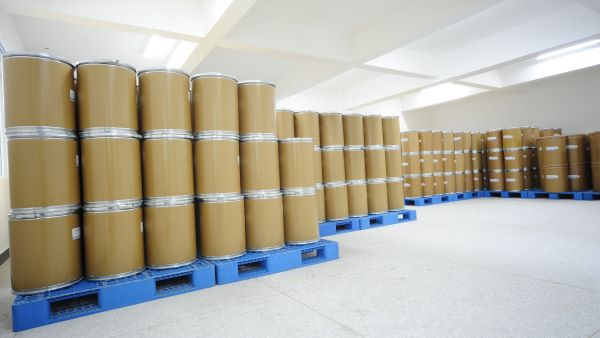
We offer 1 kg, 5 kg, 10 kg, and 25 kg packaging in food-grade sealed containers. Custom packaging is available for bulk orders.
Yes, our Bay Laurel Extract is produced using food-grade or solvent-free extraction methods, making it suitable for clean-label applications.
Packaging & Shipping
Standard Packaging
- Standard: 1kg, 5kg, 10kg, 25kg sealed containers
- Custom packaging available for bulk orders
- Food-grade, tamper-evident sealing
Shipping Terms
- Samples: 3-7 business days via express
- Bulk orders: 15-30 days depending on quantity
- International shipping available worldwide
- FOB/CIF terms supported
Shelf Life & Storage
- Store in a cool, dry place below 25°C
- Protect from direct sunlight and moisture
- Keep container tightly sealed when not in use