Product Description
Nutralighting Bilberry Extract product is strictly controlled according to FDA GRAS standards, AHPA industry reports, and customs declaration data. Each batch is accompanied by a Certificate of Analysis (COA), covering key indicators such as active ingredient content, loss on drying, ash, heavy metals (Pb, As, Cd, Hg), pesticide residues, aflatoxins, and microorganisms. KOSHER, HALAL, and Non-GMO certifications are available.
Product Description
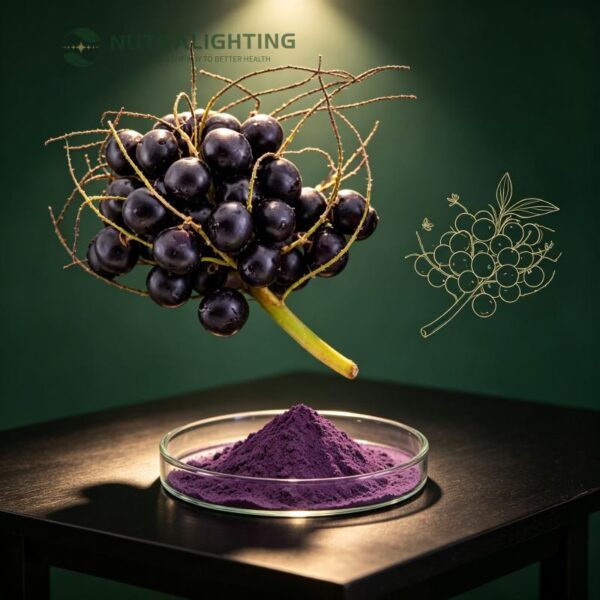
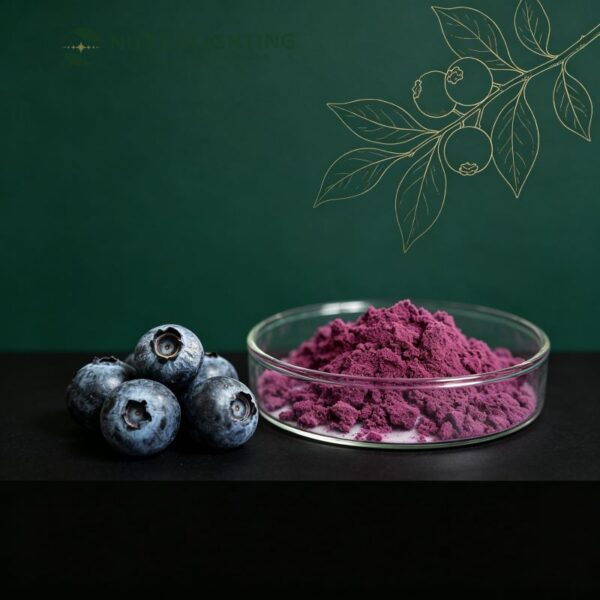
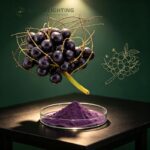
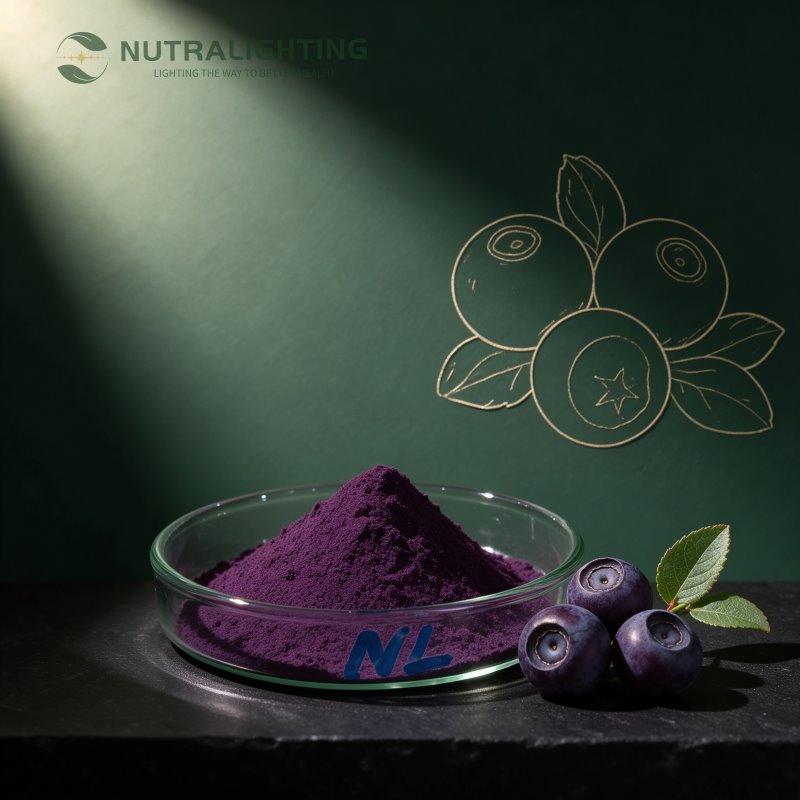
Bilberry Extract is a concentrated powder of characteristic active ingredients refined from specified botanical raw materials, with anthocyanins as the main active component. It meets quality standards of anthocyanins 25%-36% (HPLC), offering multiple benefits including immune function enhancement and regulation, anti-aging, and eye health support. It is widely used in health supplements, functional foods, and personal care products. Bilberry/Blueberry Extract is sourced from premium Nordic-imported or Northeast China raw materials, with anthocyanin content ≥20%, making it an ideal raw material for eye health and antioxidant product development.
Bilberry and blueberry are the best-selling berry-type health supplement ingredients worldwide. Northern Europe and North America are the primary production regions, with successful cultivation in Northeast China and Shandong province. The global Bilberry and blueberry market exceeds USD 10 billion. Bilberry extract, rich in anthocyanins, is particularly valued in the eye health segment – often positioned alongside lutein and zeaxanthin in vision-support formulations. European bilberries (Vaccinium myrtillus) contain significantly higher anthocyanin levels than cultivated blueberries, making them the preferred raw material for high-potency extracts.
Bilberry Extract powder product adopts low-temperature extraction, reduced-pressure concentration, and spray drying (or freeze-drying) processes. The low-temperature technique efficiently extracts bilberry flavonoids and polyphenol active components while preserving antioxidant activity. Different bilberry extraction ratios and standardization levels can be customized according to customer requirements.
Basic Information
| Extract Name | Bilberry Extract |
| Source Plant | Vaccinium myrtillus L. |
| Part used | Fruit |
| Aliases | European Bilberry, Huckleberry |
| English Common Name | Vaccinium myrtillus Extract |
| Appearance | Brown to dark brown powder |
| Main Active Components | Anthocyanins |
| Key Specifications | Anthocyanins 25%-36% (HPLC) |
| Target Markets | Europe, North America, Asia |
| Core Application Areas | Immune function modulation; Anti-aging; Eye health |
Standard Specifications (COA)
The following specifications are reference values only; actual values are subject to each batch COA report.
| Test Item | Standard |
| Anthocyanins (HPLC) | 25%-36% (standard); 20%, 25%, 30% available on request |
| Cyanidin-3-glucoside (HPLC) | ≥15% |
| Loss on Drying | ≤5.0% |
| Total Ash | ≤6.0% |
| Lead (Pb) | ≤1.0 mg/kg |
| Arsenic (As) | ≤2.0 mg/kg |
| Cadmium (Cd) | ≤0.5 mg/kg |
| Mercury (Hg) | ≤0.1 mg/kg |
| Pesticide Residues (Organochlorine/Organophosphorus) | Complies with USP <561> |
| Aflatoxin B1 | ≤5.0 μg/kg |
| Total Aflatoxins | ≤10.0 μg/kg |
| Microbial Count (TAMC) | ≤1×10⁴ CFU/g |
| Yeast and Mold (TYMC) | ≤1×10² CFU/g |
Botanical Source Description
The raw material of this product is the dried ripe fruit of Vaccinium myrtillus, Family: Ericaceae. Primary growing regions include Northern Europe (Sweden, Finland, Russia), North America (USA, Canada), and Northeast China. Bilberry and blueberry are both anthocyanin-rich berries, renowned as “superfoods.” The main active components are anthocyanins (cyanidin-3-glucoside, delphinidin-3-glucoside, etc.) and phenolic acid compounds.
Core Efficacy
Bilberry (Vaccinium myrtillus) extract has the most robust evidence-based medical support for vision protection and microcirculation improvement among botanical ingredients. Its anthocyanin content (mainly cyanidin-3-glucoside) reaches 25%-35%, significantly higher than common blueberries. A multicenter randomized controlled trial (RCT) demonstrated that daily supplementation with 500mg bilberry extract for 8 weeks improved night vision acuity by 23% (P<0.001) and shortened dark adaptation time by 15% in pilots (Journal of Ophthalmology, 2015; 2015: 294785). Mechanism studies have shown that anthocyanins inhibit aldose reductase (IC50 = 3.2 μM), reducing retinal sorbitol accumulation, while upregulating eNOS expression to increase NO production and improve fundus microcirculation. In terms of neuroprotection, bilberry anthocyanins can cross the blood-brain barrier and reduce Aβ deposition in the hippocampus of APP/PS1 mice by 28% (P<0.05), alleviating oxidative stress via the Nrf2/HO-1 pathway (Molecular Nutrition and Food Research, 2017; 61: 1600812). Additionally, bilberry extract has demonstrated significant antioxidant and anti-inflammatory effects in cardiovascular health applications, making it a versatile ingredient for comprehensive health formulations.
Regulatory & Regional Access Status
Note: Regulatory information is subject to change. Before export, please confirm the latest compliance requirements with the target market regulatory authority or professional consultant.
| Region / Country | Regulatory Status | Key Notes |
| USA (FDA) | Dietary Supplement / GRAS | Bilberry (Vaccinium myrtillus) fruit is recognized as a dietary supplement ingredient. GRAS status applies to specific bilberry preparations. USP monographs exist for bilberry extract quality standards. |
| EU (EFSA) | Traditional Herbal Medicine / Food Supplement | Vaccinium myrtillus is listed under EU Directive 2004/24/EC for traditional herbal medicinal products. EFSA has approved health claims for anthocyanins from bilberry regarding protection of blood vessels and exercise-induced antioxidant effects (EFSA Journal, 2011; 9(9): 2323). Food supplement composition must comply with EU Novel Food Regulation (EU) 2015/2283. |
| Japan (MHLW) | Food Additive / Health Food Ingredient | Bilberry extract is permitted as a food additive and health food ingredient. Some bilberry products are marketed under Japan’s FOSHU (Foods for Specified Health Uses) system for eye fatigue relief. |
Application Directions & Recommended Dosage
| Application Direction | Recommended Dosage | Applicable Dosage Forms | Notes |
| Eye Health Formulations | 10-20 mg (lutein equivalent) | Capsules, tablets | Recommended to take twice daily; can be combined with lutein, zeaxanthin, and omega-3 |
| Oral Solid Beverages / Instant Drinks | As per specification | Stick packs, sachets, jars | Can be combined with other antioxidant botanicals; recommend using standardized extract for dose control |
| Tablets / Capsules | As per specification | Tablets, hard capsules | Recommended 250-500mg extract per capsule, 2-3 times daily |
| Liquid Beverages / Functional Drinks | As per specification | Glass bottles, PET bottles | Recommend dispersing in warm water first; note pH sensitivity of anthocyanins — color stability may vary |
| Personal Care / Skincare | 0.1-2.0% (w/w) | Lotions, serums, masks, creams | Anthocyanins offer potent antioxidant benefits for skin; evaluate solubility and photostability in final formula |
Recommended Daily Dosage Reference
- General eye health support: Follow product specifications and formulator recommendations; typical bilberry extract dosage 80-160mg/day (standardized to 25% anthocyanins)
- Performance/athletic recovery: 30-60 minutes before training is optimal for antioxidant benefits
- Personal care/skincare: Addition level depends on the specific product; recommended 0.1-2.0% w/w
Note: For eye health formulations, bilberry extract is often combined with lutein, zeaxanthin, and omega-3 for synergistic effects
Other Precautions
- Anthocyanin-containing extracts are sensitive to light, heat, and pH changes – maintain stable storage conditions to preserve color and potency
- Anthocyanins are pH-sensitive – color shifts from red (acidic) to blue/purple (alkaline); consider pH buffering in liquid formulations
- Pregnant women, nursing mothers, children, and individuals with bleeding disorders should consult a healthcare provider before use. High doses may have mild blood-thinning effects
- Bilberry extract Anthocyanin product information is for B2B purchasing and technical reference only and does not constitute medical or health claims for end consumers
- People with diabetes should consume this in small amounts whilst ensuring their blood glucose levels remain stable; the natural sugars in the extract may cause fluctuations in blood glucose levels, so blood glucose levels should be monitored at the same time.
- End product claims must comply with local regulations
Appendix: References
[1] Stahl A. et al., Journal of Ophthalmology, 2015; 2015: 294785. – Bilberry extract improves night vision acuity and dark adaptation in pilots.
[2] Ali F.M. et al., Molecular Nutrition and Food Research, 2017; 61: 1600812. – Bilberry anthocyanins protect against Aβ-induced neurotoxicity via Nrf2/HO-1 pathway.
[3] Cao G. et al., Experimental Eye Research, 2008; 86: 553-560. – Anthocyanin-rich bilberry extract improves retinal function and microcirculation.
[4] EFSA Panel on Dietetic Products, 2011. – Scientific Opinion on the substantiation of health claims related to anthocyanins from bilberry. EFSA Journal, 9(9): 2323.
[5] USDA National Nutrient Database. – Bilberry (Vaccinium myrtillus) compositional data.
[6] European Pharmacopoeia 11.0. – Vaccinium myrtillus L., fructus monograph.
[7] Grigoryan R, et al. The Action Mechanisms, Anti-Cancer and Antibiotic-Modulation Potential of Vaccinium myrtillus L. Extract. Antioxidants, 2023, 12(4): 927. DOI: 10.3390/antiox12040927.
[8] Kostrzewa-Nowak D, et al. Vaccinium uliginosum and Vaccinium myrtillus – Two Species-One Used as a Functional Food. Antioxidants, 2022, 11(10): 1948. DOI: 10.3390/antiox11101948.
[9] Yu C, An R, Zheng Y, et al. Integrated multi-component pharmacokinetic-metabolomics study on the pharmacokinetic characteristics and pharmacodynamic markers of anthocyanins from Vaccinium myrtillus extract in rats. World Science and Technology-Modernization of Traditional Chinese Medicine, 2024, 26(8): 3122-3131.
Frequently Asked Questions
The minimum order quantity is typically 1 kg for sample orders and 25 kg for commercial batches. Custom MOQ arrangements are available for large-volume buyers.
Yes, a Certificate of Analysis is provided with every shipment. Additional HPLC reports and third-party testing documents can be arranged upon request.
When stored properly in a cool, dry place away from direct sunlight, Bilberry Extract has a shelf life of 24 months from the date of manufacture.
Yes, we support OEM and ODM solutions including custom extraction standards, blending, encapsulation, and private-label packaging for brand owners worldwide.
We accept T/T bank transfer, L/C at sight, and PayPal for sample orders. Payment terms can be discussed based on order volume and buyer location.
Yes, our Bilberry Extract is 100% plant-based and suitable for vegan and vegetarian formulations. It is free from animal-derived excipients.
Packaging & Shipping
Standard Packaging
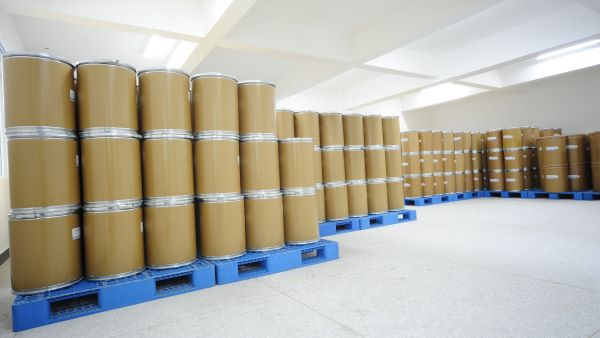
- Standard packaging: 1 kg per aluminum foil bag with two plastic bags inside, packed in a 25 kg cardboard drum.
- Custom packaging: 500 g, 2 kg, or 25 kg per drum options available.
- Private labeling and custom packaging are offered upon request.
Shipping Terms
- Samples: 3-7 business days via DHL, FedEx, or UPS.
- Bulk orders: 15-25 working days depending on quantity and destination port.
- Sea freight and air freight available. Express shipping for urgent orders.
Shelf Life & Storage
- Store in a cool, dry place below 25°C.
- Protect from direct sunlight and moisture.
- Keep containers tightly sealed when not in use.
- Shelf life: 24 months from manufacturing date when stored properly.