
Product Description
Classic Plant-Based Intestinal Support Ingredient – Standardized Senna Leaf Extract with 8%-20% Sennosides (A & B)
Product Description
Senna Leaf Extract contains sennosides (A & B) as the core active components, derived from the dried small leaves of Senna plants in the legume family (Senna), and is refined into a standardized, stable sennoside concentrated powder with sennoside A & B content ranging from 8% to 20%. As a classic plant-based intestinal support ingredient, it has a long-standing application in constipation management and digestive health, widely used in dietary supplements, functional foods, and personal care formulations.
Senna leaf is a classic laxative in traditional Chinese medicine, widely used in constipation health products and Chinese patent medicines. Sudan is one of the main global producers. Long-term use requires attention to dependency.
Why Choose Nutralighting
- Our Senna Leaf Extract undergoes rigorous quality control processes, including third-party testing for heavy metals, pesticides, microbial contaminants, and sennoside content verification.
- We comply with international standards and provide Certificates of Analysis (CoA), MSDS, and halal/kosher certification upon request.
Basic Information
| Item | Content |
| Extract Name | Senna Leaf Extract |
| Botanical Name | Cassia angustifolia / Cassia occidentalis |
| Part Used | Leaf |
| English Common Name | Senna Leaf Extract |
| Extraction Solvent | Water / Ethanol (optional) |
| Appearance | Brown to dark brown powder or liquid concentrate |
| Taste | Bitter |
| Mesh Size | 80 – 100 mesh (powder form) |
| Main Components | Sennosides (Sennoside A & B) |
| Main Specifications | Sennosides 8%-20% |
| Target Market | Global (Pharmaceutical) |
| Core Application Areas | Intestinal Health; Digestive Health; Constipation Management |
Standard Specifications (COA)
The following specifications are conventional reference values; the specifics are subject to the COA report of each batch.
| Test Items | Standards |
| Sennoside (Sennoside A & B) | Sennoside 8%-20% |
| Loss on Drying | ≤5.0% |
| Total Ash | ≤6.0% |
| Lead (Pb) | ≤1.0 mg/kg |
| Arsenic (As) | ≤2.0 mg/kg |
| Cadmium (Cd) | ≤0.5 mg/kg |
| Mercury (Hg) | ≤0.1 mg/kg |
| Pesticide residues (organochlorine/organophosphorus) | Complies with USP <561> |
| Aflatoxin B1 | ≤5.0 μg/kg |
| Total aflatoxins | ≤10.0 μg/kg |
| Total microbial count (TAMC) | ≤1×10⁴ CFU/g |
| Yeasts and molds (TYMC) | ≤1×10² CFU/g |
| Escherichia coli | Not detected (1g) |
| Salmonella | Not detected (1g) |
Plant Raw Material Introduction
The raw material of this product is the dried small leaves of the Leguminosae plant Cassia angustifolia Vahl or Cassia acutifolia Delile. It is mainly produced in Sudan, India, and the Arabian Peninsula. The 2020 edition of the Chinese Pharmacopoeia (Part I) includes the standard for Senna leaves. Senna leaves are bitter and cold in nature, attributed to the large intestine meridian, with effects of clearing heat and promoting fluids, relieving constipation, and eliminating accumulation. The main active components are Sennoside A and B.
Core Effects
Senna leaf extract has a substantial research basis in constipation management. Its core components, sennosides (Sennoside A & B), can support bowel movements by stimulating colonic peristalsis; for liver health, sennosides can support bile secretion.
Note: Long-term continuous use carries a risk of dependency and is not recommended for prolonged use.
Regulatory and Regional Access Status
The following information is based on publicly available regulatory data. Actual market access should be subject to the latest regulations in the target country.
| Region/Country | Regulatory Status | Key Notes |
| United States (FDA) | Dietary Supplements / GRAS | Plant extracts are generally regulated as dietary supplements; some ingredients have been recognized as GRAS (specific confirmation needed case by case). USP has monographs on various extracts. |
| European Union (EFSA) | Traditional Herbal Medicinal Products / Food Supplements | EU Directive 2004/24/EC regulates traditional herbal medicinal products; extracts as food supplement ingredients must comply with EU Novel Food Regulation (EU) 2015/2283 (some traditional herbs have simplified procedures). |
Application Directions and Recommended Dosage
| Application Directions | Recommended Addition Amount | Applicable Dosage Form | Remarks |
| Oral Solid Beverage / Powdered Drink | According to Specifications | Stick Pack, Bag, Can | Can be blended with other functional ingredients, recommended to control amount with standardized extracts |
| Compressed Candy / Capsule | According to Specifications | Tablet, Hard Capsule | Each capsule is recommended to contain 250~500 mg of extract, taken 2~3 times daily |
| Oral liquid / functional beverage | According to specifications | Glass bottle, PET bottle | It is recommended to disperse in warm water first before adding to the system, pay attention to pH stability |
| Personal care and skin care products | 0.1~2.0%(w/w) | Lotion, serum, mask | Solubility and stability need to be evaluated according to the formulation system |
Recommended Daily Dosage Reference
- General Health: Use according to product specifications and formulator’s recommended dosage
- Personal Care & Skincare: Amount added in the formulation depends on the specific product, recommended 0.1~2.0%
Appendix: References
(The following references are for technical reference; some are open access and can be accessed via PubMed/PMC or the journal’s official website)
[1] Chinese Pharmacopoeia 2020 Edition Part I (Senna Leaf Standard)
[2] Journal of Ethnopharmacology, 2020: Cassia angustifolia review
[3] Phytotherapy Research, 2019: Sennosides laxative mechanisms
[4] Chinese Pharmacopoeia Commission, 2020
Frequently Asked Questions
Our standard Senna Leaf Extract is available with sennoside A & B content ranging from 0.5% to 20%, depending on customer specifications. Custom standardization is available upon request.
Yes. Our Senna Leaf Extract is 100% plant-derived with no animal-based processing aids, making it suitable for vegan and clean-label product formulations.
Yes. We provide full documentation including Certificate of Analysis (CoA), MSDS, Phytosanitary Certificate, Free Sales Certificate, and Origin Certificate to support your import process.
Our standard MOQ is 25 kg per product. Smaller trial quantities may be available - please contact our sales team for details.
Absolutely. We export to over 30 countries across North America, Europe, Southeast Asia, and the Middle East.
Regulatory classification varies by region. In the EU, senna leaf is permitted in herbal medicinal products. In the US, it is generally recognized as safe (GRAS) in specific dosage levels for dietary supplements. We recommend consulting local regulations for your target market.
Packaging & Shipping
Standard Packaging
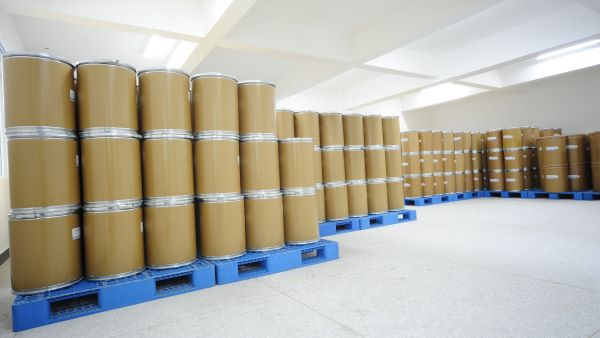
- Standard packaging: 25 kg drum (double-layer bag inside + outer fiber drum).
- Custom packaging available: 1 kg – 10 kg aluminum foil bags, or as per customer requirements.
- All packaging is food-grade and moisture-resistant.
Shipping Terms
- Shipping methods: By sea (FCL/LCL), by air, or by express courier (DHL, FedEx, UPS).
- Lead time: 15–25 working days after order confirmation (subject to quantity and destination).
- Shipping terms: FOB, CIF, CFR, DDP (available on request).
Shelf Life & Storage
- Store in a cool, dry place away from direct sunlight and moisture.
- Keep tightly sealed in original packaging.
- Recommended storage temperature: 2°C – 25°C.
- Ensure good ventilation in storage area.