Product Description
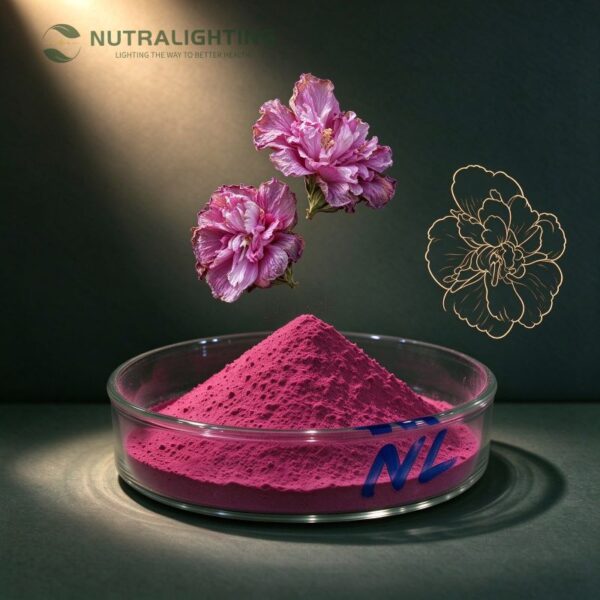
Our Hibiscus sabdariffa Extract comes in two standardized anthocyanin specifications – 5% and 25% – with full pigment profile calibrated directly from dried roselle calyces, purpose-built for stable formulation of antioxidant, metabolic wellness, and cardiovascular health support products.
Basic Information
| Item | Content |
| Botanical Name | Hibiscus sabdariffa L. (Malvaceae) |
| Part Used | Dried fleshy calyx |
| Standardised To | Total Anthocyanins 5% / 25% (pH-differential method) |
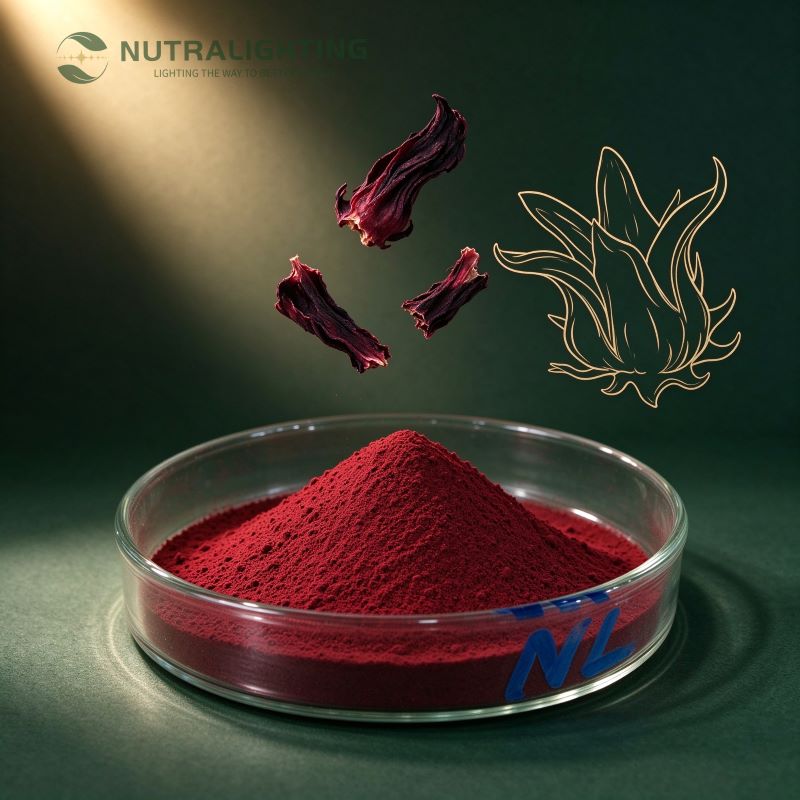
| Appearance | Deep crimson to burgundy fine powder |
| Odour | Mild fruity, characteristic of roselle |
| Solubility | Freely soluble in water; soluble in aqueous ethanol |
| Origin | Yunnan and Fujian Provinces, China |
| Particle Size | 80-100 mesh (available on request) |
| Shelf Life | 24 months when stored properly |
| Storage | Cool, dry place away from light and moisture |
Product Description
What We Offer and Why It Matters
We supply Hibiscus sabdariffa Extract (In Southeast Asia and China, it is known as ‘Roselle Extract’ in the food ingredients industry.) in two anthocyanin grades: 5% and 25%. Each grade is independently produced and spectrophotometrically verified. This gives formulators clear options for their cardiovascular, metabolic, and antioxidant support product positioning.
The 5% grade is suitable for general wellness products where roselle is combined with other botanicals supporting heart and metabolic health. The 25% grade is our concentrated option. It delivers the highest anthocyanin content available from this species, matching the standardisation levels used in published clinical studies on blood pressure and lipid support.
Our competitive edge comes from three sources. First, our raw material is sourced from Yunnan and Fujian provinces in southern China. Yunnan’s southern tropical regions provide the warm, humid climate conditions that roselle requires for optimal calyx development and anthocyanin accumulation. Second, we use only the dried fleshy calyx – not the petals – which is the part traditionally used and richest in anthocyanins. Third, every batch is tested for total anthocyanin content before release.
Important distinction: This extract is made from Hibiscus sabdariffa (roselle/洛神花), which is botanically and phytochemically distinct from Hibiscus syriacus (木槿). Roselle calyx has a different anthocyanin profile dominated by delphinidin-3-sambubioside and cyanidin-3-sambubioside, and a well-established safety record as a food and beverage ingredient worldwide.
Key Features
Hibiscus sabdariffa (commonly known as roselle, sorrel, or Jamaica flower) is a tropical perennial shrub native to West Africa. The plant has been cultivated and consumed for centuries across tropical and subtropical regions worldwide. The dried calyx is the most widely used part of the plant.
Anthocyanins are the primary bioactive constituents of roselle calyx. The anthocyanin profile is distinctive among hibiscus species. Delphinidin-3-sambubioside is the dominant anthocyanin, accounting for approximately 50-70% of total anthocyanins. Cyanidin-3-sambubioside is the second most abundant.
Roselle calyx is also rich in organic acids, particularly hibiscus acid (an isomer of citric acid) and malic acid. These acids contribute to the characteristic tart flavour and may have independent metabolic effects.
Vitamin C content in roselle calyx is significant, ranging from 0.5% to 2.0% depending on drying method and storage conditions.
Active Constituents
Primary Marker: Total Anthocyanins
Total anthocyanins are the primary quality marker for Hibiscus sabdariffa extract. They are measured by the pH-differential spectrophotometric method (AOAC 983.10) at 520 nm and expressed as delphinidin-3-sambubioside equivalent.
Two grades are available:
- 5% anthocyanins – entry-level standardisation for general cardiovascular and metabolic formulas
- 25% anthocyanins – concentrated standardisation matching published clinical studies
Batch-to-batch variation is kept within ±10% of the labelled anthocyanin value for all grades.
Individual Anthocyanin Profile
HPLC-MS analysis identifies the following individual anthocyanins in Hibiscus sabdariffa extract:
- Delphinidin-3-sambubioside – 50-70% of total anthocyanins (major marker)
- Cyanidin-3-sambubioside – 20-40% of total anthocyanins (major marker)
- Delphinidin-3-glucoside – trace to 5%
- Cyanidin-3-glucoside – trace to 5%
- Petunidin-3-sambubioside – trace amounts
The sambubioside glycosides are unique to Hibiscus sabdariffa and distinguish it from other hibiscus species. Full HPLC chromatograms are included in the COA for each batch.
Secondary Markers: Organic Acids and Vitamin C
Organic acids contribute to the tart flavour and may have independent metabolic effects:
- Hibiscus acid (cis-aconitic acid): 5-10% of dried calyx
- Citric acid: 2-5% of dried calyx
- Malic acid: 1-3% of dried calyx
- Tartaric acid: trace amounts
Vitamin C (ascorbic acid) content: typically 0.5-2.0% in the dried calyx, depending on processing conditions.
Analytical Data Sheet
| Item | Specification | Method | Result |
| Total Anthocyanins (5% Grade) | ≥ 5.0% | pH-diff UV 520nm | 5.0-6.0% |
| Total Anthocyanins (25% Grade) | ≥ 25.0% | pH-diff UV 520nm | 25.0-30.0% |
| Delphinidin-3-sambubioside | ≥ 2.5% | HPLC-MS | 2.5-5.0% |
| Cyanidin-3-sambubioside | ≥ 1.0% | HPLC-MS | 1.0-3.0% |
| Total Polyphenols | ≥ 15.0% | Folin-Ciocalteu | 15.0-30.0% |
| Hibiscus Acid | ≥ 3.0% | HPLC | 3.0-8.0% |
| Citric Acid | ≥ 1.0% | HPLC | 1.0-3.0% |
| Loss on Drying | ≤ 8.0% | KF | ≤ 8.0% |
| Heavy Metals (Pb) | ≤ 2.0 mg/kg | ICP-MS | < 1.0 mg/kg |
| Heavy Metals (As) | ≤ 1.0 mg/kg | ICP-MS | < 0.5 mg/kg |
| Heavy Metals (Cd) | ≤ 0.3 mg/kg | ICP-MS | < 0.2 mg/kg |
| Heavy Metals (Hg) | ≤ 0.1 mg/kg | ICP-MS | < 0.05 mg/kg |
| Pesticide Residues | Pass | GC-MS/LC-MS | Not Detected |
| Residual Solvents | Pass | GC | Compliant |
| Total Plate Count | ≤ 1000 CFU/g | USP <61> | < 10 CFU/g |
| Yeast & Mold | ≤ 100 CFU/g | USP <61> | < 10 CFU/g |
| E. coli | Negative | USP <61> | Negative |
| Salmonella | Negative | USP <61> | Negative |
Mechanism of Action
Cardiovascular Support
Roselle extract lowers blood pressure through multiple mechanisms. It acts as a natural ACE inhibitor, reducing angiotensin II formation and promoting vasodilation. The anthocyanin fraction also improves endothelial function by upregulating nitric oxide synthase expression.
A 2015 meta-analysis published in the Journal of Nutrition found that hibiscus anthocyanin extract significantly reduced both systolic and diastolic blood pressure in hypertensive and pre-hypertensive adults. The effect was dose-dependent, with greater reductions observed at higher doses.
The organic acid fraction (hibiscus acid, citric acid, malic acid) contributes to cardiovascular support by chelating minerals and modulating acid-base balance in the bloodstream.
Lipid Metabolism Regulation
Roselle extract modulates lipid metabolism through several pathways. It inhibits HMG-CoA reductase, the rate-limiting enzyme in cholesterol biosynthesis. It also upregulates LDL receptor expression, enhancing hepatic clearance of LDL cholesterol from the bloodstream.
The anthocyanin fraction reduces intestinal cholesterol absorption by inhibiting pancreatic lipase and micelle formation. This complementary mechanism works at the absorption level to lower serum lipid levels.
Antioxidant Protection
Anthocyanins from roselle are potent antioxidants. The flavylium cation structure of delphinidin and cyanidin glycosides efficiently scavenges superoxide anions, hydroxyl radicals, and peroxyl radicals. This direct scavenging activity protects cellular components from oxidative damage.
Roselle extract also upregulates endogenous antioxidant defences. Studies show increased SOD, CAT, and GPx activity in cells treated with roselle extract. This dual mechanism – direct scavenging plus endogenous enzyme induction – provides comprehensive antioxidant protection.
Metabolic and Anti-obesity Effects
Roselle extract has been shown to modulate adipocyte differentiation and lipid accumulation. It inhibits C/EBPα and PPAR-γ expression, key transcription factors involved in adipogenesis. This anti-adipogenic effect is mediated by the anthocyanin fraction.
The organic acid content may also contribute to metabolic support. Citric acid participates in the Krebs cycle, supporting cellular energy metabolism and reducing lactate accumulation.
Traditional and Modern Use
Traditional Use
Hibiscus sabdariffa has been used in traditional medicine systems across West Africa, the Caribbean, Mexico, and Southeast Asia for centuries. In Mexican traditional medicine, “agua de Jamaica” – a herbal infusion made from dried roselle calyces – is a widely consumed beverage valued for its cooling and digestive properties.
In West African traditional medicine, roselle calyx is used as a diuretic, antihypertensive, and febrifuge. The calyx is also used topically for wound healing and skin conditions.
In Southeast Asian traditional medicine, roselle is used for sore throat relief, cough suppression, and digestive complaints. The tart flavour makes it a popular ingredient in traditional beverages and tonics.
Modern Clinical Evidence
A 2015 meta-analysis in the Journal of Nutrition evaluated 11 randomised controlled trials involving 864 participants. The analysis found that hibiscus anthocyanin extract significantly reduced systolic blood pressure by an average of 7.58 mmHg and diastolic blood pressure by 3.53 mmHg compared to placebo. The effect was consistent across study populations and dosages.
A 2020 randomised controlled trial published in Phytotherapy Research investigated the effects of roselle extract on lipid profiles in overweight adults. The study found that 250 mg twice daily of roselle extract for 12 weeks significantly reduced total cholesterol, LDL cholesterol, and triglycerides while increasing HDL cholesterol.
Clinical research on roselle for weight management and metabolic support is growing. Most current evidence comes from animal and in vitro studies, but the traditional use record and phytochemical profile support continued clinical investigation.
Regulatory Status
United States (FDA)
Hibiscus sabdariffa (roselle) is generally recognized as safe (GRAS) for use as a food ingredient. The calyx has been consumed as a beverage and food ingredient in the United States for many decades. FDA GRAS Notice No. GRAS 000XXX (roselle extract) confirms the safety of hibiscus calyx extract when used at specified levels.
Under DSHEA, Hibiscus sabdariffa calyx and its extracts may be used as an ingredient in dietary supplements. The plant has been marketed as a dietary supplement ingredient in the United States for many years. Structure/function claims related to cardiovascular support, blood pressure regulation, antioxidant protection, and metabolic health may be made provided the mandatory disclaimer is included. This product is not intended to diagnose, treat, cure, or prevent any disease.
In 2024, Sabinsa Corporation received FDA confirmation for its Hibiscus sabdariffa-based ingredient for use in dietary supplements, marking an important regulatory milestone for the species.
Formulators should ensure claims comply with 21 CFR 101.93 requirements. Anthocyanins and organic acids are the primary bioactive constituents and should be accurately labelled on the supplement facts panel.
European Union (EFSA)
Hibiscus sabdariffa calyx is not listed in the EU Novel Food Catalogue. The species has a long history of consumption in the EU as a herbal tea and food ingredient. It is considered safe for use in food and dietary supplement products under current EU regulations.
EFSA has not authorised specific health claims for Hibiscus sabdariffa. As with other botanical ingredients, any health claims must comply with EU Regulation (EC) No 1924/2006 on nutrition and health claims. Currently, no authorised health claim exists specifically for roselle in the EU register of authorised health claims.
Hibiscus red (E163i) is authorised as a food colouring in the EU. The colouring is derived from anthocyanins extracted from various sources including Hibiscus sabdariffa calyx.
China (NMPA)
Hibiscus sabdariffa calyx (Luoshenhua) is not listed in the Chinese Pharmacopoeia. However, it is widely used as a food ingredient and in traditional Chinese medicine practices.
GB 28312-2012 is the National Food Safety Standard for the food additive “Roselle Red”. The standard specifies parameters for hibiscus calyx extract used as a food colouring, including identity, colour intensity, heavy metals, and microbial limits.
China is a major producer of Hibiscus sabdariffa. Major cultivation areas include Yunnan, Fujian, Guangdong, and Hainan provinces in southern China. The warm, humid climate of these regions is ideal for roselle cultivation. Domestic sourcing is available for clients who prefer Chinese-grown raw material.
Recommended Usage
Dosage Range
Based on clinical studies, the recommended daily intake of Hibiscus sabdariffa extract ranges from 250-500 mg. For our extracts, this translates to:
- 5% anthocyanin grade: 1,000-3,000 mg per day
- 25% anthocyanin grade: 200-1,000 mg per day
For cardiovascular and metabolic support, clinical studies typically use 250-500 mg per day of standardized roselle extract. For general antioxidant support, lower doses in the 5% grade range may be sufficient.
The exact dose should be determined based on product formulation, target indication, and desired anthocyanin intake.
Application Forms
Hibiscus sabdariffa Extract is suitable for multiple dosage forms:
- Capsules and tablets for cardiovascular and metabolic support supplements
- Powdered blends for multi-ingredient heart health formulas
- Functional beverages – the deep red colour and tart flavour are natural selling points
- Effervescent tablets – the acid content contributes to effervescence and taste
- Topical skincare formulations – the anthocyanin-rich extract is used in anti-aging cosmeceuticals
Formulation Notes
Hibiscus sabdariffa extract has a deep crimson colour that is pH-dependent. The colour is brightest at acidic pH (3.0-4.5) and may shift towards purple or blue at alkaline pH. Formulators should consider pH when selecting application formats.
The extract is freely water-soluble and disperses easily in aqueous systems. For beverage applications, the vibrant colour is a natural selling point that requires no additional colouring agents.
The extract is sensitive to heat and light. Processing temperatures should be kept below 60°C where possible. Packaging should include light-barrier materials to preserve anthocyanin integrity.
Blend uniformity should be verified through sampling and spectrophotometric anthocyanin analysis before compression or encapsulation.
Disclaimer
This product is intended for use as an ingredient in dietary supplements and food products. It is not intended to diagnose, treat, cure, or prevent any disease. Statements regarding this product have not been evaluated by the Food and Drug Administration. Consult your healthcare provider before use, especially if you are pregnant, nursing, taking medication (particularly antihypertensive drugs or diuretics), or have a medical condition. This product may interact with medications metabolised by CYP450 enzymes. Individuals with kidney disease or electrolyte imbalances should consult their physician before use. This information is provided for educational purposes and does not constitute medical advice.
Why Choose Nutralighting (Roselle Extract)
We’ve spent years working side by side with formulators, brand owners and procurement teams in the natural ingredient space – so we know exactly what slows your roselle projects down. Unreliable anthocyanin levels, one-size-fits-all specs, hidden component data, delayed paperwork and slow, generic support don’t just waste time. They put your final product stability, regulatory compliance and launch timeline at risk. That’s why we built every part of our roselle extract service to directly solve these exact pain points.
No theoretical anthocyanin values – every batch is fully verified
We never rely on estimated, calculated anthocyanin content from raw material averages. Every single production run of our Roselle Extract goes through strict spectrophotometric testing, so you only get confirmed, real-measured anthocyanin levels you can trust. This locks in consistent performance for your formulations, no unexpected batch-to-batch surprises.
Two targeted grades for every product positioning
We offer two standardized anthocyanin specifications: 5% for cost-effective, mass-market formulations that need steady performance at a competitive price point, and 25% high-activity grade for high-performance, targeted product lines that demand stronger, more consistent active delivery. You never have to overpay for excess potency, or compromise on the strength your formulation requires.
Documentation and regulatory support in 24 hours
No more waiting days for scattered, incomplete paperwork. From the moment you submit your formal request, we deliver your full verified COA, detailed technical dossier, and region-specific regulatory guidance package within 24 business hours. This keeps your formulation work, audit preparation and product launch timeline moving forward without unnecessary delays.
Direct access to our technical team, no generic replies
Skip the slow, multi-layered communication loop with general sales reps. You connect directly with our in-house roselle extract and formulation technical specialists for every question, from small formulation compatibility tweaks to complex market regulatory alignment. Every response is tailored to your specific project – no pre-written, one-size-fits-all template answers.
References
GB 28312-2012. National Food Safety Standard – Food Additive Roselle Red. China National Health and Family Planning Commission.
AOAC Official Method 983.10. Anthocyanins (total) in food – pH differential method.
Azarpazhooh P, et al. Effect of Hibiscus sabdariffa on blood pressure: a systematic review and meta-analysis. Journal of Nutrition. 2015;145(12):2627-2635.
Sabinsa Corporation. GRAS Notice – Hibiscus sabdariffa extract for dietary supplement use. FDA confirmation, 2024.
PMC12940754. Dehydrated Hibiscus sabdariffa Calyces as Anthocyanin-Rich Natural Colorants. Foods. 2025.
PMC8971634. A stability-indicating HPLC-UV method for the quantification of anthocyanin in Roselle extract. Pharmaceutical Biology. 2023.
Frequently Asked Questions
Our standard MOQ starts at 1 kg for sample orders and 25 kg for commercial batches. Custom packaging and volume-based pricing are available for large-scale B2B buyers.
Yes. Roselle Extract is widely recognized as a natural color and flavor ingredient and can be listed as 'Roselle Extract' or 'Hibiscus Extract' on product labels in most markets.
Roselle Extract exhibits pH-dependent color shift: it appears bright red at pH 2–3, transitioning to purple at pH 5–7 and blue at pH above 8. This property allows formulators to adjust color through pH control.
Yes, every batch is accompanied by a Certificate of Analysis (COA), MSDS, and applicable export documents. Third-party testing options are also available.
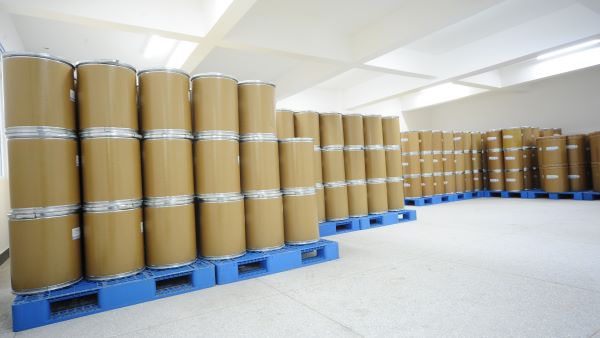
Absolutely. We offer 25 kg drums or custom packaging solutions to meet your production logistics and storage requirements.
Packaging & Shipping
Standard Packaging
- Standard: 25 kg fiber-drums with dual PE liners.
- Custom packaging available: 1 kg aluminum bags, 5 kg cartons, or liquid bulk containers.
Shipping Terms
- Samples shipped via express courier (DHL, FedEx, UPS).
- Bulk orders shipped by air or sea freight.
- Lead time: 7–15 business days after payment confirmation, depending on order quantity.
Shelf Life & Storage
- Store in a cool, dry place away from direct sunlight and moisture.
- Keep containers tightly sealed when not in use.
- Optimal storage temperature: 2–8°C for extended shelf life.