
Product Description
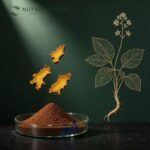
Chili Extract (Capsicum annuum / Capsicum frutescens) is a standardised botanical extract traditionally associated with formulations for weight management, metabolic support, and appetite control. Available in capsaicinoid content specifications of 1%, 2%, 5%, 10%, 20%, and 40% – each grade verified by HPLC against CAS 404-86-4. High-purity capsaicin (90%, 98%) is also available for research applications.
Basic Information
| Item | Content |
| Botanical Name | Capsicum annuum L. (Solanaceae) |
| Part Used | Fruit (ripe or unripe) |
| Plant Origin | Native to the Americas; widely cultivated in southern and southwestern China. Major Chinese producing provinces: Guizhou, Henan, Yunnan, Sichuan, Hunan, and Inner Mongolia (Moyu County). China is the world’s largest chili pepper producer, with over 2 million hectares under cultivation. Annual output exceeds 20 million tonnes. Northwestern China (Yanqi and Hejing) and Inner Mongolia (Moyu County) produce high-capsaicin varieties for extract manufacturing |
| Solvent | Food-grade ethanol / isopropanol; supercritical CO2 (for decolorized grade) |
| Standardisation | Total capsaicinoids; Capsaicin; Dihydrocapsaicin |
| Specifications | 1% / 2% / 5% / 10% / 20% / 40% total capsaicinoids (food-grade oleoresin); 90% / 98% capsaicin (pharma-grade powder); Decolorized/colorless grades also available |
| Appearance | Dark red to orange-brown viscous liquid (oleoresin); Yellowish-white fine powder (decolorized / pharma-grade) |
| Odour | Characteristic pungent odour |
| Taste | Extremely pungent – SHU (Scoville Heat Units) varies from 10,000 to 1,000,000+ depending on grade |
| Moisture | ≤ 5.0% (LoD) |
| Ash | ≤ 3.0% (Total ash) |
| Heavy Metals | Pb ≤ 2 ppm; As ≤ 1 ppm; Hg ≤ 0.1 ppm; Cd ≤ 0.3 ppm |
| Residual Solvents | Ethanol ≤ 2,000 ppm (Ph. Eur. 2.4.24); Isopropanol ≤ 500 ppm (for pharma-grade) |
| Microbiological | Total aerobic count ≤ 10^3/g; Yeast & mould ≤ 10^2/g; E. coli negative; Salmonella negative |
| Particle Size | 95% pass 80 mesh (180 μm) for powder grades |
| Shelf Life | 24 months (store below 25°C, protected from light); Oleoresin: 36 months (sealed, cool, dark) |
| Target Market | China, USA, EU, Japan, South Korea, Southeast Asia |
| Core Application Areas | Weight management supplements; Metabolic support; Appetite control blends; Functional foods and beverages; Topical analgesic formulations |
Product Description
Chili Extract is obtained from the fruit of Capsicum annuum L. It belongs to the Solanaceae family and is native to the Americas.
Six standardised grades are available – 1%, 2%, 5%, 10%, 20%, and 40% total capsaicinoids. Each is independently verified by HPLC using CAS 404-86-4 reference standard. Food-grade oleoresin forms are supplied as viscous liquids in red-orange hues. Decolorized and high-purity grades (90% and 98% capsaicin) are available as yellowish-white powders for pharmaceutical and advanced supplement applications.
The primary bioactive constituents are capsaicinoids – a group of alkaloid-like compounds that activate the transient receptor potential vanilloid 1 (TRPV1) receptor. This activation triggers thermogenesis, increases energy expenditure, and modulates appetite-regulating hormones. Capsaicin and dihydrocapsaicin together constitute over 85% of total capsaicinoid content in most chili extracts.
Capsicum annuum is widely cultivated across southern and southwestern China. Guizhou, Henan, and Yunnan provinces together account for over one-third of China’s total chili pepper area, exceeding 10 million mu. Northwestern China (Yanqi and Hejing) and Inner Mongolia (Moyu County) are key regions for high-capsaicin varieties used in extract manufacturing.
Active Constituents
The bioactive profile of Chili Extract is defined by capsaicinoid content, with capsaicin as the primary marker compound.
Primary Marker: Capsaicin
Capsaicin (CAS 404-86-4, C18H29NO3, MW 305.43) is the principal capsaicinoid and the most potent TRPV1 agonist among natural compounds. It is quantified by HPLC-DAD at 254 nm. Capsaicin activates TRPV1 receptors in sensory nerves, triggering calcium influx that leads to thermogenesis and increased energy expenditure. It is the standard reference compound for all capsaicinoid testing.
Secondary Marker: Dihydrocapsaicin
Dihydrocapsaicin (CAS 19408-84-5, C18H29NO3, MW 307.43) is the most abundant capsaicinoid alongside capsaicin. It has nearly equivalent TRPV1 affinity and contributes to the overall pungency and metabolic effects. Together, capsaicin and dihydrocapsaicin typically account for 85-95% of total capsaicinoid content.
COA Standard Specifications – Oleoresin Grades (1%-40%)
| Item | Specification | Method | Result Range |
| Total capsaicinoids | 1% / 2% / 5% / 10% / 20% / 40% | HPLC-DAD 254 nm | Varies by grade |
| Capsaicin | ≥ 85% of total capsaicinoids | HPLC-DAD 254 nm | – |
| Dihydrocapsaicin | ≥ 80% of total capsaicinoids | HPLC-DAD 254 nm | – |
| SHU (Scoville Heat Units) | Based on capsaicin content | ISO 7540 | Varies by grade |
| Loss on drying | ≤ 5.0% | LoD 105°C | – |
| Total ash | ≤ 3.0% | Char at 600°C | – |
| Lead (Pb) | ≤ 2 ppm | ICP-MS | – |
| Arsenic (As) | ≤ 1 ppm | ICP-MS | – |
| Mercury (Hg) | ≤ 0.1 ppm | ICP-MS | – |
| Cadmium (Cd) | ≤ 0.3 ppm | ICP-MS | – |
| Total aerobic count | ≤ 10^3/g | Ph. Eur. 2.6.12 | – |
| Yeast and mould | ≤ 10^2/g | Ph. Eur. 2.6.12 | – |
| E. coli | Negative | Ph. Eur. 2.6.12 | – |
| Salmonella | Negative | Ph. Eur. 2.6.12 | – |
COA Standard Specifications – Pharma-Grade Powder (90%/98%)
| Item | Specification | Method | Result Range |
| Capsaicin | ≥ 90% / ≥ 98% | HPLC-DAD 254 nm | Varies by grade |
| Dihydrocapsaicin | ≤ 5% (of total) | HPLC-DAD 254 nm | – |
| Isopropyl alcohol residual | ≤ 500 ppm | GC (Ph. Eur. 2.4.24) | – |
| Loss on drying | ≤ 3.0% | LoD 105°C | – |
| Particle size | 95% pass 80 mesh | Sieve analysis | – |
Mechanism of Action
TRPV1 Receptor Activation
Capsaicin is a selective agonist of the TRPV1 (transient receptor potential vanilloid 1) receptor, a non-selective cation channel expressed on sensory neurons. Activation of TRPV1 leads to calcium influx, neuronal depolarisation, and downstream signalling that increases core body temperature and energy expenditure.
Thermogenesis and Energy Expenditure
TRPV1 activation stimulates sympathetic nervous system activity, increasing brown adipose tissue thermogenesis and resting energy expenditure. Meta-analyses estimate an increase of approximately 50-75 kcal/day at clinically effective doses.
Appetite Suppression
Capsaicinoids modulate appetite-regulating hormones including peptide YY (PYY) and glucagon-like peptide-1 (GLP-1). Consumption before meals results in reduced ad libitum energy intake, with significant effects observed at dosages above 2 mg per meal.
Lipid Oxidation
Capsaicin activates AMP-activated protein kinase (AMPK). It upregulates uncoupling proteins (UCP-1 and UCP-2) in adipose tissue. This promotes fatty acid oxidation and reduces lipid accumulation in liver and adipose tissue.
Regulatory Status
Capsaicin has a clear regulatory pathway in major markets.
In the United States, capsaicin and capsicum oleoresins are GRAS for use as flavouring agents and colour additives. This is established under 21 CFR 184.1675 and 21 CFR 73.45. Capsaicin is also permitted as a dietary supplement ingredient under DSHEA. GRAS Notice No. 238 confirmed safety at specified levels.
In the European Union, capsanthin and capsantin (E 160c) are authorised food colourings. Capsaicin itself is not listed as a food additive but is permitted as a flavouring substance under EU Regulation (EC) No 1334/2008. Capsaicin-based dietary supplements are marketed in several EU member states under national legislation.
In China, Capsicum annuum fruit is a common food ingredient and traditional medicinal material. Capsaicin is listed as a food additive (flavouring agent) in GB 2760. China is the world’s largest chili producer, and domestic extraction capacity is extensive.
GRAS Notice No. 312 also covers synthetic dihydrocapsiate (a non-pungent capsaicinoid analogue) for use in low-calorie food and beverage products at 3 mg per serving.
Recommended Usage
Effective doses in clinical studies range from 2 to 6 mg of capsaicinoids per day, typically taken 30 minutes before meals.
Formulation guidance by grade:
1% oleoresin: Suitable for food flavouring at 500-2,000 mg per serving
2% oleoresin: General culinary and functional food applications at 200-1,000 mg per serving
5% oleoresin: Metabolic support supplements at 100-500 mg per serving
10% oleoresin: Weight management formulations at 50-200 mg per serving
20% oleoresin: High-potency clinical formulations at 25-100 mg per serving
40% oleoresin: Premium sports nutrition products at 10-50 mg per serving
90%/98% pharma-grade: Pharmaceutical preparations at 0.5-2 mg capsaicin per dose
Clinical trials have used 2-6 mg capsaicinoids daily for periods of 12-24 weeks. A 2014 meta-analysis reported a significant reduction in ad libitum energy intake of approximately 74 kcal per meal at doses exceeding 2 mg capsaicinoids.
Precautions
Capsaicin is generally recognised as safe (GRAS) when used within approved limits. However, due to its potent TRPV1-activating properties, certain precautions apply.
General Precautions
Do not exceed the recommended daily dosage. Capsaicin may cause gastrointestinal discomfort, including burning sensation, heartburn, and abdominal pain, especially at higher doses. Start with a lower dose and gradually increase to assess tolerance.
Drug Interactions
Capsaicin may interact with ACE inhibitors (causing cough), anticoagulants (theoretical interaction), and medications metabolised by CYP2C9. Consult a healthcare professional before use if taking prescription medications.
Contraindications
Not recommended for individuals with peptic ulcer disease, gastro-oesophageal reflux disease (GERD), haemorrhoids, or inflammatory bowel disease. Avoid use in children under 12 years of age. Pregnant or breastfeeding women should consult a healthcare provider before use.
When to Discontinue
Discontinue use if you experience severe gastrointestinal symptoms. Seek medical attention for allergic reaction or difficulty breathing. Persistent burning sensation that does not resolve should also be evaluated.
Packaging and Storage
| Package Size | Form | Material | Shelf Life | Storage |
| 1 kg | Oleoresin (liquid) | Amber glass bottle or HDPE drum | 36 months | Below 25°C, protected from light |
| 5 kg | Oleoresin (liquid) | HDPE drum | 36 months | Below 25°C, protected from light |
| 25 kg | Oleoresin (liquid) | HDPE drum | 36 months | Below 25°C, protected from light |
| 1 kg | Pharma-grade powder | Double-lined aluminised bag inside drum | 24 months | Below 20°C, protected from light and moisture |
| 5 kg | Pharma-grade powder | Double-lined aluminised bag inside drum | 24 months | Below 20°C, protected from light and moisture |
| 25 kg | Pharma-grade powder | Double-lined aluminised bag inside drum | 24 months | Below 20°C, protected from light and moisture |
Disclaimer
This product is not intended to diagnose, treat, cure, or prevent any disease. Statements regarding this product have not been evaluated by the Food and Drug Administration.
Capsaicin and capsicum oleoresins have GRAS status (21 CFR 184.1675, GRAS Notice No. 238) for use as food flavouring agents. Final claim substantiation and label review are the responsibility of the brand owner. Consumers should consult a healthcare professional before use, particularly if pregnant, nursing, taking medication, or managing a chronic health condition.
Capsaicin is a potent TRPV1 agonist. Handle with appropriate PPE during manufacturing. Avoid skin contact and inhalation of powder. In case of contact, wash thoroughly with soap and water. Do not rub eyes.
Why Choose Nutralighting
- Consistent batch-to-batch quality: We implement strict in-process controls throughout extraction and purification. Each lot is tested for capsaicinoid content, moisture, and heavy metals before release.
- Scalable supply capacity: Long-term contracts with cultivated chili farms ensure reliable volume supply across seasons. Flexible MOQ available for both pilot and commercial orders.
- Advanced analytical support: Beyond standard HPLC testing, we offer supplementary analysis including Scoville heat unit (SHU) testing, pesticide residue screening, and microbial limits upon request.
- Experienced technical team: Our application specialists support your formulation development – from solubility guidance to stability compatibility in various delivery systems.
- Global logistics & compliance: Products are packed and shipped in compliance with international freight standards. Export documentation, including phytosanitary certificates and origin declarations, is provided.
References
FDA. “Capsaicin; Generally Recognised as Safe (GRAS).” 21 CFR 184.1675. Code of Federal Regulations.
FDA. “GRAS Notice GRN No. 238: Capsaicin and Capsaicinoids.” FDA Letter. GRAS Notice 238 confirmed safety for use as a flavouring agent.
Raben, A., et al. (2009). “Capsaicin and capsinoid reduce energy intake and increase fat oxidation in pre-adiposity.” American Journal of Clinical Nutrition, 90(3), 568-577. PMC2736566.
Patel, D., and Miller, K. (2014). “Effects of capsaicin and capsinoids on energy expenditure and fat metabolism.” Nutrition Reviews, 72(S2), S115-S122. Meta-analysis showing significant energy intake reduction at doses >2 mg.
Zhao, W., et al. (2020). “Capsaicin attenuates obesity-induced insulin resistance through regulation of AMPK and SREBP-1c in mice.” PMC7551574.
Alibaba / Made-in-China supplier listings. Verified CAS 404-86-4, C18H29NO3, MW 305.43.
Guo, Q., et al. (2013). “The role of capsaicinoids in adipose tissue thermogenesis and energy expenditure.” Biomedical Research International, Article ID 378756.
Frequently Asked Questions
We supply Chili Extract standardized from 1% up to 97% capsaicinoids. The most commonly requested grades are 2%, 5%, 10%, 25%, and 50%. Custom standardization is available to meet your specification.
Yes. Our Chili Extract is widely used in food & beverage flavoring, dietary supplements, and nutraceutical formulations. It is GRAS-status recognized in the United States when produced according to good manufacturing practices.
Absolutely. A batch-specific COA, along with MSDS and halal/ISO certificates, is provided with every shipment. Third-party testing reports can also be arranged.
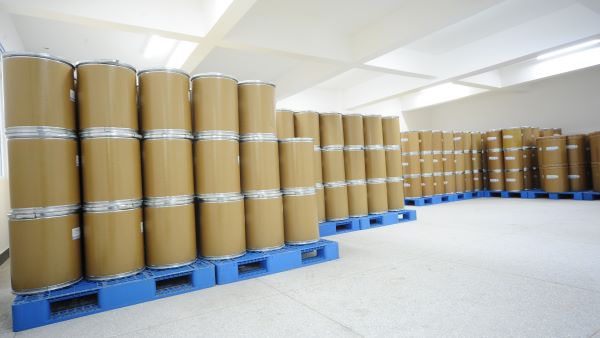
Standard packaging is 25 kg drums lined with double inner plastic bags. Shelf life is 24 months when stored in a cool, dry, and dark environment.
Yes, samples are available for quality evaluation. Shipping costs for samples are borne by the buyer.
Packaging & Shipping
Standard Packaging
- 25 kg fiber drums with double inner PE bag lining.
- Custom packaging sizes and private labeling are available upon request.
Shipping Terms
- Shipped via express, air freight, or sea freight depending on order quantity and destination.
- Same-week dispatch for in-stock items; lead time for customized orders is 15-25 days after order confirmation.
Shelf Life & Storage
- Store in a cool, dry place below 25°C.
- Keep containers tightly closed and protected from light and moisture.