Product Description
NutraLighting Quassia Extract is a rigorously quality-controlled botanical ingredient, offered in standardized 10:1 and 20:1 extract ratios, with commercially available potency grades ranging from 5% to 98% quassin. All production batches undergo validated analytical testing to ensure consistent, label-accurate active marker quantification, delivering full formulation compatibility across capsule, tablet, liquid tincture and functional food delivery formats. This ingredient is designed for integration into compliant traditional herbal and wellness product lines, supporting brand partners in maintaining consistent batch-to-batch performance.
Basic Information
| Item | Content |
| Botanical Name | Picrasma quassioides (D. Don) Benn. (Simarubaceae) / Quassia amara L. (Bitterwood) |
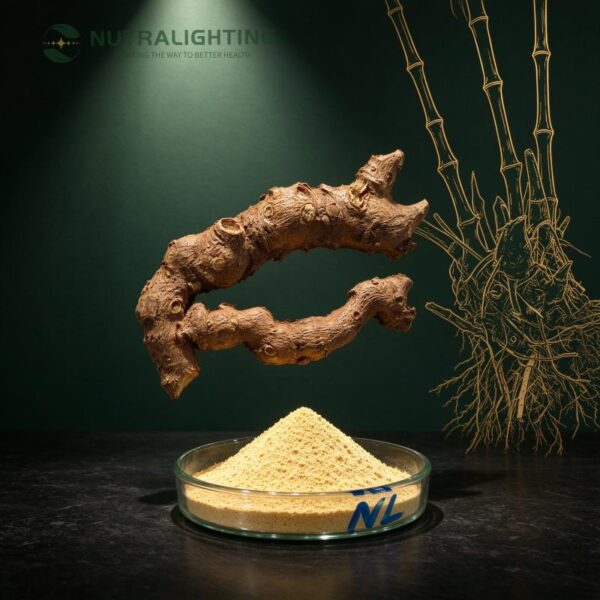
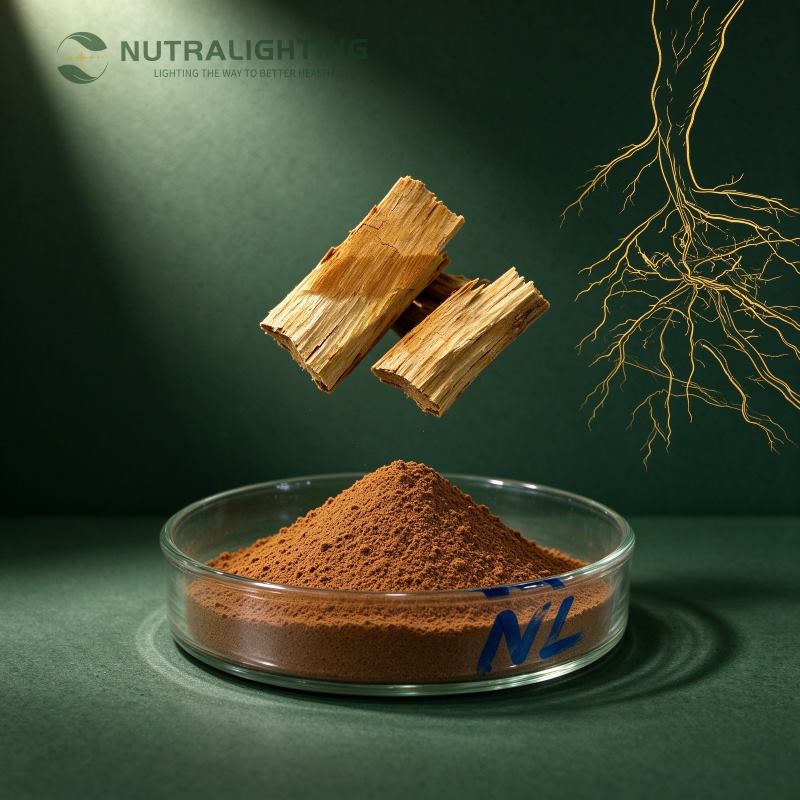
| Part Used | Bark and stem wood |
| Plant Origin | Widely distributed across China. Native to montane mixed forests from the Himalayas (India, Nepal, Bhutan) eastwards to eastern China, Korea, and Japan. In China, it grows naturally across Liaoning, Hebei, Shanxi, Henan, Shaanxi, Gansu, Jiangsu, Anhui, Zhejiang, Fujian, Jiangxi, Hubei, Hunan, Guangdong, Guangxi, Hainan, Sichuan, Guizhou, Yunnan, Xizang (Tibet), and Taiwan at altitudes of 1,400-2,400 m. Both wild-sourced and cultivated raw material are available. |
| Solvent | Food-grade ethanol / aqueous ethanol |
| Standardisation | Total quassin and quassinoids (HPLC-DAD 254 nm); Quassin content profiling |
| Specifications | Standardised extract ratios: 10:1, 20:1. Optional single-compound grades: 5% quassin, 10% quassin, 20% quassin, 50% quassin, 98% quassin. |
| Appearance | Light brown to dark brown fine powder |
| Odour | Characteristic woody, intensely bitter odour |
| Taste | Extremely bitter (one of the most bitter natural compounds known) |
| Moisture | ≤ 8.0% (LoD) |
| Ash | ≤ 5.0% (Total ash) |
| Heavy Metals | Pb ≤ 2 ppm; As ≤ 1 ppm; Hg ≤ 0.1 ppm; Cd ≤ 0.3 ppm |
| Residual Solvents | Ethanol ≤ 2,000 ppm (Ph. Eur. 2.4.24); Methanol ≤ 3,000 ppm |
| Microbiological | Total aerobic count ≤ 10^3/g; Yeast & mould ≤ 10^2/g; E. coli negative; Salmonella negative |
| Particle Size | 95% pass 80 mesh (180 μm) |
| Shelf Life | 24 months (store below 25°C, protected from light and moisture) |
| Target Market | Dietary supplements, TCM herbal medicines, antiparasitic formulations, digestive health products, cosmetic ingredients (China, EU, USA, Japan, Southeast Asia) |
| Core Application Areas | Digestive aid and appetite stimulant supplements; Antiparasitic and vermifuge formulations; Anti-inflammatory herbal blends; Bittering agent for food and beverage; Traditional Chinese Medicine prescriptions; Cosmetics (skin-care bitter principles) |
Product Description
Quassia Extract is obtained from the bark and stem wood of Picrasma quassioides (D. Don) Benn. The plant belongs to the Simarubaceae family and is widely distributed across montane regions of East and Southeast Asia.
The primary bioactive constituents are quassinoids – a class of triterpenoid lactones responsible for the characteristic extreme bitterness. Quassin (CAS 76-78-8) is the most studied and commercially significant quassinoid.
In Traditional Chinese Medicine, Picrasma quassioides (Ku Mu) has been used for over 1,000 years.
It has been used to treat fevers, intestinal parasitic infections, dysentery, and inflammatory conditions.
It appears in classical formulas such as Qiju Weichang Wan and Huangqi Jianpi Decoction.
Quassia extract is also used as a natural bittering agent in food and beverages. It is used as an eco-friendly botanical insecticide in organic agriculture.
Active Constituents
The bioactive profile of Quassia Extract is defined by its quassinoid content. Quassin is the principal marker compound, quantified by HPLC-DAD at 254 nm.
Primary Marker: Quassin
| Compound | CAS | Molecular Formula | Molecular Weight | Notes |
| Quassin | 76-78-8 | C22H28O6 | 388.45 | Principal bitter principle; antiparasitic, anti-inflammatory |
| Aubryvette | 28394-77-6 | C31H40O9 | 532.65 | Minor quassinoid |
| Picrasma-2,12-diene-1,11,16-trione | N/A | C22H28O6 | 388.45 | Quassin isomer |
Other Constituents
Quassia Extract also contains β-carboline alkaloids (harman, harmaline, tetrahydroharman) and canthin-6-one alkaloids. These contribute to the overall pharmacological profile.
COA Standard Specifications
| Item | Specification | Method | Result Range |
| Quassin | Varies by grade (5% / 10% / 20% / 50% / 98%) | HPLC-DAD 254 nm | Per specification |
| Total quassinoids | Varies by extract grade | HPLC-DAD 254 nm | Per specification |
| Loss on drying | ≤ 8.0% | LoD 105°C | – |
| Total ash | ≤ 5.0% | Char at 600°C | – |
| Lead (Pb) | ≤ 2 ppm | ICP-MS | – |
| Arsenic (As) | ≤ 1 ppm | ICP-MS | – |
| Mercury (Hg) | ≤ 0.1 ppm | ICP-MS | – |
| Cadmium (Cd) | ≤ 0.3 ppm | ICP-MS | – |
| Total aerobic count | ≤ 10^3/g | Ph. Eur. 2.6.12 | – |
| Yeast and mould | ≤ 10^2/g | Ph. Eur. 2.6.12 | – |
| E. coli | Negative | Ph. Eur. 2.6.12 | – |
| Salmonella | Negative | Ph. Eur. 2.6.12 | – |
Mechanism of Action
Antiparasitic Activity
Quassin exhibits potent antihelminthic and antiprotozoal activity.
It disrupts parasite metabolism.
It has been used historically as an alternative to quinine for malaria treatment.
The extreme bitterness serves as a natural deterrent against insect pests.
This is why Quassia amara wood is approved as a botanical insecticide in the EU.
Anti-inflammatory Effects
Quassinoids inhibit NF-κB signalling and suppress pro-inflammatory cytokine production.
β-carboline alkaloids from Picrasma quassioides have shown significant anti-inflammatory activity in osteoclastogenesis and arthritis models.
Digestive Stimulation
The extreme bitterness of quassinoids stimulates salivary and gastric juice secretion through gustatory reflexes.
This bitter principle action supports digestion and appetite regulation.
It makes Quassia a traditional digestive aid.
Antimicrobial Activity
Quassin and related quassinoids show antibacterial and antifungal activity against various pathogenic microorganisms.
The broad-spectrum antimicrobial properties support its traditional use in treating dysentery and intestinal infections.
Traditional and Modern Use
Traditional Chinese Medicine
Picrasma quassioides (Ku Mu) has been documented in Chinese materia medica for over 1,000 years.
It is traditionally used to clear heat, detoxify, relieve dysentery, and expel parasites.
Representative TCM formulas include Qiju Weichang Wan and Huangqi Jianpi Decoction.
Modern Clinical Applications
In contemporary practice, Quassia Extract is used primarily as a digestive aid and antiparasitic agent.
Clinical studies have used doses of 250-500 mg per day of standardised extract.
Higher doses (up to 1.5 g/day) have been used in traditional settings for fever and parasitic infections.
The European Food Safety Authority (EFSA) has reviewed quassin as a flavouring substance.
Quassia amara wood is also approved as a basic substance for use as an insecticide and repellent in plant protection under EU regulations.
Regulatory Status
China
Picrasma quassioides is recognised in Chinese pharmacopoeial standards and TCM materia medica.
It is widely used in traditional herbal formulas.
It is commercially cultivated in multiple provinces across China.
European Union (EFSA / EU Pesticides)
Quassia amara L. wood is approved as a basic substance for use in plant protection products as an insecticide and repellent under Commission Implementing Regulation (EU) No 540/2011.
EFSA issued a scientific opinion on quassin as a flavouring substance.
Quassin-containing products may be regulated as food additives or traditional herbal products under national legislation of individual member states.
Germany restricts quassin in food to a maximum of 50 mg/kg in the final product.
United States (FDA)
Quassia extract is generally recognised as safe (GRAS) when used as a flavouring agent in food.
The FDA has acknowledged quassin as a natural bittering substance.
Quassia extract may be marketed as a dietary supplement ingredient under DSHEA provisions.
Japan
Picrasma quassioides is used in Japanese Kampo medicine.
Standardised extracts are available for inclusion in pharmaceutical and health product formulations.
Recommended Usage
Dosage guidance for Quassia Extract is based on traditional use and clinical studies.
Formulation Guidance by Grade
10:1 grade: Suitable for general digestive support at 250-500 mg per serving
20:1 grade: Standardised capsule formulations at 125-300 mg per serving
10% quassin grade: Targeted antiparasitic formulations at 100-300 mg per serving
20%-50% quassin grade: High-potency formulations at 50-200 mg per serving
Clinical and traditional studies have used 250-500 mg per day of standardised extract.
Doses up to 1.5 g/day have been used in traditional settings.
NOTE: Due to extreme bitterness, low doses are typically sufficient.
Product labelling should reflect appropriate dosing for the intended application.
Precautions
IMPORTANT SAFETY NOTE: Quassin is extremely bitter and may cause gastrointestinal discomfort at high doses. Use within recommended dosage ranges.
General Precautions
Do not exceed the recommended daily dosage.
Store in a cool, dry place below 25°C.
Keep out of reach of children.
Gastrointestinal Tolerance
High doses of quassin may cause nausea, vomiting, or gastric irritation.
Begin with the lowest effective dose and titrate as needed.
Do not use on an empty stomach if gastrointestinal sensitivity is a concern.
Drug Interactions
Quassia Extract may interact with medications metabolised by CYP450 enzymes.
Consult a healthcare professional before use if taking prescription medications.
Contraindications
This product is NOT recommended for:
- Pregnant or breastfeeding women
- Children under 12 years of age
- Individuals with known hypersensitivity to Simarubaceae species
- Individuals with active peptic ulcer disease or severe gastric irritation
When to Discontinue
Discontinue use immediately and seek medical attention if you experience persistent nausea, vomiting, abdominal pain, or signs of allergic reaction.
Disclaimer
This product is not intended to diagnose, treat, cure, or prevent any disease.
Statements regarding this product have not been evaluated by the Food and Drug Administration.
Quassia Extract is sold as a dietary supplement ingredient or raw material for TCM herbal medicine manufacturing.
Final claim substantiation and label review are the responsibility of the brand owner.
Quassin is extremely bitter.
Manufacturers should include appropriate taste-masking guidance for formulation applications.
Why Choose Nutralighting Quassia Extract
- Direct China Sourcing
Sourced from certified multi-province Chinese growers, full traceability and COA included. - Full Potency Customization
R&D team tailors quassin concentrations 5%-98% to match your exact formulation requirements. - Verified High-Purity Grade
98% quassin (CAS 76-78-8) reference isolate available for research and pharma applications. - Multi-Market Compliance Support
Documentation aligned with ChP, EU, US FDA, Japan regulations, supports your cross-market entry.
References
EFSA Scientific Committee on Food. “Opinion of the Scientific Committee on Food on quassin.” European Commission, 2000.
EFSA. “Overall conclusions on the application for approval of Quassia amara L. wood as a basic substance to be used in plant protection as an insecticide and repellent.” EFSA Supporting Publications, 2024. DOI: 10.2903/sp.efsa.2024.EN-9161.
Wang X, et al. (2021). “Pharmacological effects of Picrasma quassioides (D. Don) Benn for inflammation, cancer and neuroprotection (Review).” Molecular Medicine Reports. PMC8515544.
Sun Y, et al. (2020). “Progress in the study of chemical composition, biological activity, and its metabolism of the Picrasma quassioides.” PMC11337047.
NIST WebBook. “Quassin.” CAS 76-78-8. Molecular formula C22H28O6, MW 388.45. National Institute of Standards and Technology, Gaithersburg, MD.
PubChem. “Quassin.” CID 65571. Molecular formula C22H28O6, MW 388.5 g/mol. NIH, Bethesda, MD.
EBI ChEBI. “Quassin (CHEBI:8692).” Molecular formula C22H28O6, average mass 388.455. European Bioinformatics Institute.
Frequently Asked Questions
Our standard MOQ is 1 kg for sample orders and 25 kg for commercial batches. Larger volumes are available with competitive pricing.
Yes. A full Certificate of Analysis is provided with every shipment, covering assay, heavy metals, pesticides, and microbial parameters.
Absolutely. Quassia Extract is 100% plant-derived, vegan-friendly, and produced in an allergen-controlled facility.
Yes. We can tailor quassinoid concentration and particle size to meet your specific formulation requirements.
Typically 15-25 working days after order confirmation, depending on quantity and shipping method. Expedited options are available.
Packaging & Shipping
Standard Packaging
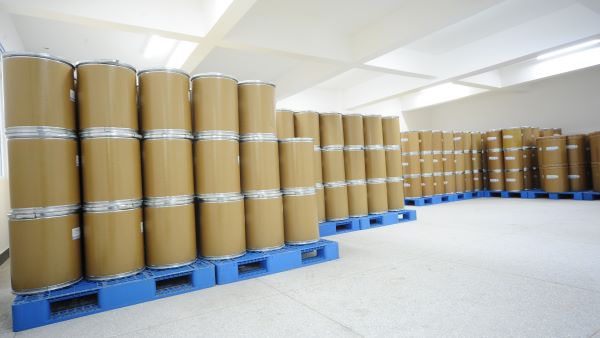
- Standard: 25 kg per cardboard drum with dual-layer polyethylene bag lining.
- Custom packaging available upon request (e.g., 10 kg, 50 kg, or customer-branded labels).
- All packaging complies with international shipping and storage standards.
Shipping Terms
- Domestic and international freight via DHL, FedEx, UPS, or sea freight (FCL/LCL).
- Express delivery: 3-7 business days.
- Sea freight: 15-30 business days depending on destination port.
- Free sample available for quality evaluation prior to bulk order.
Shelf Life & Storage
- Store in a cool, dry place below 25°C and protect from direct sunlight and moisture.
- Keep container tightly closed when not in use to maintain product integrity and prevent clumping.