Product Description
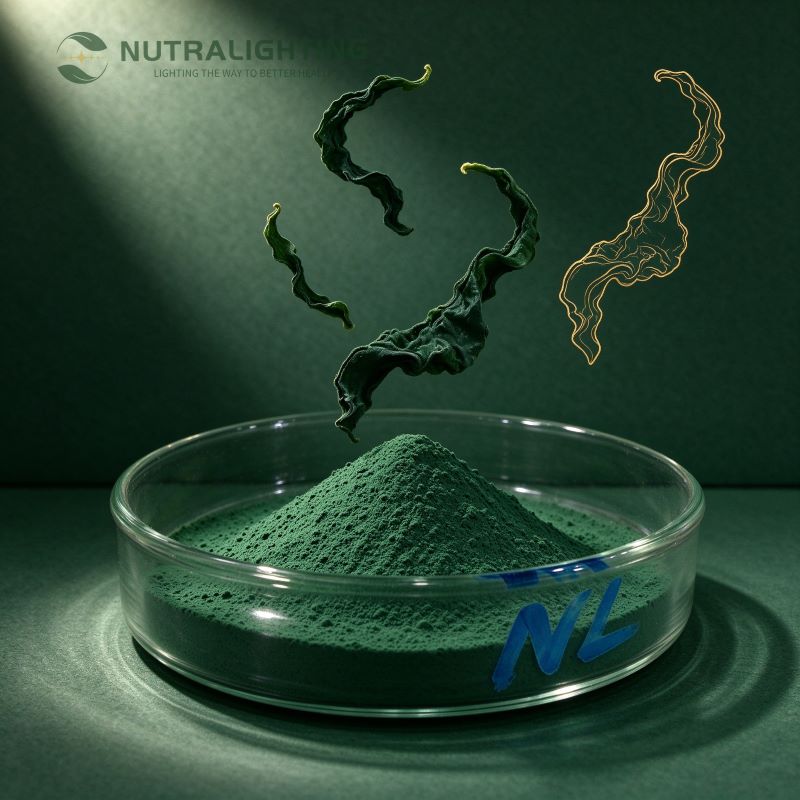
Nutralighting Spirulina Extract is a microalgae-derived botanical extract standardised for phycocyanin and polysaccharide content. Protein grades are 60%, 70%, and 85%. Phycocyanin grades are 20%, 40%, and 60% C-PC. Each grade is verified by UV spectrophotometry and Kjeldahl protein analysis. Designed for use in nutritional supplement, antioxidant-related, and sports-support formulations – delivering natural spirulina nutrition for functional food applications.
Basic Information
| Item | Content |
| Botanical Name | Arthrospira platensis (C. Agardh) Gomont (formerly Spirulina platensis) (Cyanobacteria) |
| Part Used | Biomass (whole cell dried powder / water extract) |
| Plant Origin | Cultivated in Inner Mongolia and Yunnan provinces, China. China accounts for ~60% of global spirulina production. Also cultivated in Inner Mongolia Ordos area and Yunnan Chenghai Lake natural basin |
| Solvent | Water (for phycocyanin extract); air-classified whole biomass (for protein powder) |
| Standardisation | Protein (Kjeldahl method N × 6.25); Phycocyanin / C-Phycocyanin (UV spectrophotometry at 620 nm); Total chlorophyll (ISO 20003) |
| Specifications | Protein grades: 60% / 70% / 85% protein (whole biomass); Phycocyanin grades: 20% / 40% / 60% C-PC (water-soluble extract, E6-E40 color value scale) |
| Appearance | Fine powder, deep blue-green (phycocyanin extract) to dark green (whole biomass) |
| Odour | Mild marine, characteristic |
| Taste | Mildly savory, slightly briny |
| Solubility | Partially soluble in water |
| Moisture | ≤ 6.0% (LoD) |
| Ash | ≤ 10.0% (Total ash) |
| Heavy Metals | Pb ≤ 2 ppm; As ≤ 1 ppm; Hg ≤ 0.1 ppm; Cd ≤ 0.3 ppm |
| Microbiological | Total aerobic count ≤ 10^3/g; Yeast & mould ≤ 10^2/g; E. coli negative; Salmonella negative; Aflatoxin B1 ≤ 0.5 ppb |
| Particle Size | 95% pass 80 mesh (180 μm) |
| Shelf Life | 24 months (store below 25°C, protected from light and moisture) |
| Target Market | China, USA, EU, Japan, Southeast Asia, Latin America |
| Core Application Areas | Nutritional supplements; Sports nutrition; Functional foods and beverages; Natural food colouring (E18); Weight management; Immune support |
Product Description
Spirulina Extract is derived from Arthrospira platensis, a species of blue-green microalgae (cyanobacterium). It is one of the most nutrient-dense organisms on earth. It contains up to 70% protein by dry weight, along with vitamins, minerals, and the distinctive blue pigment phycocyanin.
Two product lines are available. The protein-grade line – 60%, 70%, and 85% protein – is produced by air-classifying dried whole-cell biomass. These grades are suitable for general nutritional supplementation and sports nutrition. The phycocyanin-enriched line – 20%, 40%, and 60% C-PC – is produced by aqueous extraction and spray drying. These grades are used in high-potency antioxidant formulations and as natural blue colourants (EU food colour E18).
China is the world’s largest spirulina producer, accounting for approximately 60% of global supply. Major cultivation areas include Inner Mongolia (Ordos area) and Yunnan province (Chenghai Lake natural basin). Inner Mongolia raceway ponds cover more than 70 hectares across multiple commercial operations.
Arthrospira platensis has been consumed for centuries in Central Africa (Lake Chad, by the Kanembu people as “Dihei”) and in pre-Columbian Mexico (by the Aztecs). Modern commercial cultivation began in the 1960s and has since expanded globally.
Active Constituents
The bioactive profile of Spirulina Extract is defined by protein content and phycocyanin concentration, depending on the product line selected.
Protein Grade: Whole Biomass
Spirulina whole biomass contains 60-85% protein by dry weight, making it one of the most protein-dense natural sources available. The protein profile includes all nine essential amino acids. Essential fatty acids, including gamma-linolenic acid (GLA), are present in meaningful quantities. Vitamins (B-complex, beta-carotene, vitamin E) and minerals (iron, calcium, magnesium) contribute to the nutritional value.
Phycocyanin Grade: C-Phycocyanin (C-PC)
C-Phycocyanin is the primary blue phycobiliprotein in Arthrospira platensis. It has the molecular formula C33H38N4O6 for the phycocyanobilin chromophore (MW 586.70 Da). The holo-protein is a hexameric complex with a molecular weight of approximately 153-158 kDa. Phycocyanin is quantified by UV spectrophotometry at 620 nm and expressed as a percentage of dry weight. Commercial grades range from 20% to 60% C-PC, corresponding to EU food colour intensity designations E6 through E40.
COA Standard Specifications – Protein Grades
| Item | Specification | Method | Result Range |
| Protein | 60% / 70% / 85% | Kjeldahl (N × 6.25) | Varies by grade |
| Moisture | ≤ 6.0% | LoD 105°C | – |
| Ash | ≤ 10.0% | Char at 600°C | – |
| Lead (Pb) | ≤ 2 ppm | ICP-MS | – |
| Arsenic (As) | ≤ 1 ppm | ICP-MS | – |
| Mercury (Hg) | ≤ 0.1 ppm | ICP-MS | – |
| Cadmium (Cd) | ≤ 0.3 ppm | ICP-MS | – |
| Aflatoxin B1 | ≤ 0.5 ppb | HPLC-FLD | – |
| Microcystin-LR | Not detected | HPLC-MS/MS | – |
| Total aerobic count | ≤ 10^3/g | Ph. Eur. 2.6.12 | – |
| Yeast and mould | ≤ 10^2/g | Ph. Eur. 2.6.12 | – |
| E. coli | Negative | Ph. Eur. 2.6.12 | – |
| Salmonella | Negative | Ph. Eur. 2.6.12 | – |
COA Standard Specifications – Phycocyanin Grades
| Item | Specification | Method | Result Range |
| C-Phycocyanin (C-PC) | 20% / 40% / 60% | UV spectrophotometry 620 nm | Varies by grade |
| Protein (Kjeldahl) | ≥ 60% | N × 6.25 | – |
| Moisture | ≤ 6.0% | LoD 105°C | – |
| Ash | ≤ 8.0% | Char at 600°C | – |
| Lead (Pb) | ≤ 2 ppm | ICP-MS | – |
| Arsenic (As) | ≤ 1 ppm | ICP-MS | – |
| Mercury (Hg) | ≤ 0.1 ppm | ICP-MS | – |
| Cadmium (Cd) | ≤ 0.3 ppm | ICP-MS | – |
| Aflatoxin B1 | ≤ 0.5 ppb | HPLC-FLD | – |
| Microcystin-LR | Not detected | HPLC-MS/MS | – |
| Total aerobic count | ≤ 10^3/g | Ph. Eur. 2.6.12 | – |
| Yeast and mould | ≤ 10^2/g | Ph. Eur. 2.6.12 | – |
| E. coli | Negative | Ph. Eur. 2.6.12 | – |
| Salmonella | Negative | Ph. Eur. 2.6.12 | – |
Mechanism of Action
Antioxidant Activity
C-Phycocyanin is a potent antioxidant. It scavenges reactive oxygen species and superoxide radicals. It also inhibits lipid peroxidation and up-regulates endogenous antioxidant enzymes including superoxide dismutase and glutathione peroxidase.
Anti-inflammatory Effects
C-Phycocyanin suppresses inflammatory signalling pathways. It inhibits NF-κB activation and reduces the expression of COX-2, iNOS, and pro-inflammatory cytokines including TNF-α and IL-6. These actions support systemic inflammatory balance.
Immunomodulation
Spirulina polysaccharides and phycocyanin modulate immune function. They enhance natural killer cell activity and promote cytokine production. This immunomodulatory action supports both innate and adaptive immune responses.
Lipid Metabolism Support
Clinical studies demonstrate that spirulina supplementation reduces total cholesterol, LDL cholesterol, and triglycerides while increasing HDL cholesterol. The gamma-linolenic acid and phycocyanin content contribute to these lipid-modulating effects.
Traditional and Modern Use
Spirulina has been consumed for centuries as a traditional food source in Central Africa and Mexico. In contemporary practice, Arthrospira platensis is incorporated into dietary supplements, functional foods, and beverages for its exceptional nutritional profile.
Modern research has validated many traditional uses. Spirulina is widely used for nutritional supplementation, particularly in regions with protein deficiency. It is also incorporated into sports nutrition products for its complete amino acid profile and antioxidant properties.
In the food industry, phycocyanin-enriched spirulina extract serves as a natural blue colourant. It is authorised as EU food colour E18. It replaces synthetic colourants such as Brilliant Blue FCF (E133).
Regulatory Status
Spirulina is recognised in multiple regulatory frameworks.
In the United States, Arthrospira platensis is GRAS under GRAS Notice No. 394 (FDA, 2012). The notice covers dried biomass for use in beverages, breakfast cereals, and fruit juices at doses up to 6 g per day. C-phycocyanin-enriched water extract is GRAS under GRAS Notice No. 424 (FDA, 2012). The substance is also listed in the FDA EAFUS database (CAS 977047-96-3).
In the European Union, Arthrospira platensis is not listed as a Novel Food under Regulation (EU) 2015/2283. It has a long history of consumption in several EU member states. C-Phycocyanin (E18) is authorised as a food colour additive in the EU. Spirulina is also permitted in food supplements under Directive 2002/46/EC. The EFSA has evaluated silicon-enriched spirulina and confirmed that standard Arthrospira platensis is outside the scope of the Novel Food Regulation.
In China, Arthrospira platensis is approved as a health food raw material by the National Health Commission (NHC). It is listed in the “Health Food Raw Material Catalogue” and is widely used in domestic dietary supplements and functional foods.
The Codex Alimentarius has established standards for spirulina food products (CODEX STAN 310-2013), covering identity, purity, and contaminant limits.
Recommended Usage
Typical daily intake is 1-10 g of whole biomass spirulina, or 200-500 mg of phycocyanin-enriched extract, depending on the product grade and intended application.
Formulation guidance:
Protein grade 60%: Suitable for general nutritional supplementation at 2-5 g per day
Protein grade 70%: Optimal for sports nutrition and meal replacement at 1.5-3 g per day
Protein grade 85%: Best for high-protein clinical formulations at 1-2 g per day
Phycocyanin grade 20%: Suitable for multingredient antioxidant blends at 500-1,000 mg per day
Phycocyanin grade 40%: Optimal for single-ingredient antioxidant formulations at 250-500 mg per day
Phycocyanin grade 60%: Best for high-potency colouring and functional food applications at 100-300 mg per day
Clinical studies have used doses of 1-8 g per day of whole biomass. Typical effective doses are 2-4 g per day for lipid and antioxidant benefits. Doses up to 10 g per day have been reported as safe in controlled trials.
Precautions
IMPORTANT SAFETY NOTE: Spirulina produced in contaminated water sources may contain microcystins (hepatotoxic cyanotoxins). All batches must be tested for microcystin-LR using HPLC-MS/MS. Only batches confirming non-detection should be used in food and supplement products.
General Precautions
Do not exceed the recommended daily dosage. Individuals with phenylketonuria (PKU) should avoid spirulina because it contains the amino acid phenylalanine. Discontinue use at least two weeks before any scheduled surgery.
Drug Interactions
Consult a healthcare professional before use if taking immunosuppressant medications, as spirulina may stimulate immune function. It may also interact with anticoagulant medications due to its vitamin K content.
Contraindications
Not recommended for individuals with known hypersensitivity to cyanobacteria or algae. Not recommended for individuals with autoimmune conditions unless supervised by a healthcare professional.
When to Discontinue
Discontinue use and consult a healthcare provider if you experience gastrointestinal discomfort, allergic reaction, or any adverse effects. This product is not intended for self-treatment of serious medical conditions.
Disclaimer
This product is not intended to diagnose, treat, cure, or prevent any disease. Statements regarding this product have not been evaluated by the Food and Drug Administration.
Arthrospira platensis is marketed as a dietary supplement ingredient and food ingredient where applicable. It is GRAS in the United States and authorised in the European Union under food supplement and food colour regulations. Consumers should consult a healthcare professional before use, particularly if pregnant, nursing, taking medication, or managing a chronic health condition.
Spirulina should not be confused with other microalgae such as Chlorella vulgaris, which is a green alga with different constituents. Always verify supplier COA for microcystin-LR non-detection. Keep out of reach of children.
Why Choose Nutralighting
Verified phycocyanin or protein content
Every batch is tested by UV spectrophotometry or Kjeldahl analysis. A batch-specific COA is provided with each shipment.
Microcystin-tested material
All batches undergo HPLC-MS/MS testing for microcystin-LR non-detection — a mandatory QC checkpoint before shipment.
Custom phycocyanin grades
Our R&D team develops custom C-PC concentrations tailored to your formulation requirements. Contact us for details.
China-cultivated source material
Sourced from Inner Mongolia and Yunnan, China — regions representing approximately 60% of global spirulina production.
EU E18 colourant compliance
Phycocyanin grades meet EU food colour E18 specifications for intensity and purity. Full documentation is available upon request.
References
FDA GRAS Notice No. 394. “Dried biomass of Arthrospira platensis, also known as Spirulina platensis.” FDA, June 4, 2012.
FDA GRAS Notice No. 424. “C-c-phycocyanin-enriched water extract of the cyanobacterium Arthrospira maxima or Arthrospira platensis.” FDA, December 6, 2012.
European Food Safety Authority (EFSA). “Conclusion on the safety of silicon-enriched Spirulina (Arthrospira platensis).” EFSA Journal. 2022.
European Medicines Agency (EMA). “Spirulina: botanical descriptions and quality requirements.” EMA/HMWPC/2016.
Blahova, J., et al. (2012). “Spirulina as a source of phycocyanin in food supplements: an analytical challenge.” Food Additives & Contaminants: Part A, 29(6), 989-998.
World Health Organization (WHO). “Cyanobacterial toxins: microcystins.” Geneva: WHO; 2004. WHO/CDS/ERU/04.11.
Alibaba supplier listings. “Spirulina Extract Powder Phycocyanin E6 E18 E25 E40” – commercial COA data. Verified phycocyanin CAS 11016-15-2, EINECS 234-248-8. Protein grades 60-85% by Kjeldahl. Phycocyanin 20-60% by UV 620 nm.
Frequently Asked Questions
Our standard MOQ starts at 25 kg per batch. Bulk orders and private-label requirements can be discussed flexibly.
Yes. Our Spirulina Extract is produced without synthetic additives and can meet clean-label and organic certification requirements upon request.
Yes. Every batch is accompanied by a Certificate of Analysis (COA). Heavy metal, microbial, and allergen reports are available on request.
Absolutely. We support custom extraction specifications, packaging formats, and private-label production for qualified buyers.
Packaging & Shipping
Standard Packaging
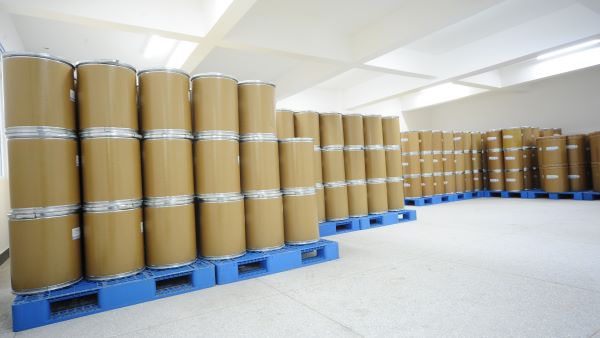
- Standard export packaging: 25 kg cardboard drums with double PE bags.
- Custom packaging available upon request, including smaller retail or lab packs.
Shipping Terms
- Shipped via sea freight, air freight, or courier depending on order size and destination.
- Export documentation and customs support provided for all international shipments.
Shelf Life & Storage
- Store in a cool, dry place away from direct sunlight and moisture.
- Keep containers tightly sealed. Recommended shelf life is 24 months when stored correctly.