Product Description
Tailored for urinary tract health, antioxidant support, and women’s wellness formulation needs, we offer Cranberry Extract in 10:1, 20:1 and 50:1 ratios. Every production lot undergoes strict testing to verify its anthocyanins and proanthocyanidin (PAC) content, delivering consistent, traceable active potency for your finished products.
Basic Information
| Item | Content |
| Botanical Name | Vaccinium macrocarpon Aiton (Ericaceae) |
| Part Used | Fruit (dried) |
| Plant Origin | Heilongjiang Province, China |
| Solvent | Food-grade ethanol / water (Ph. Eur. grade) |
| Standardisation | Proanthocyanidins / PAC (DMAC method); Total anthocyanins (HPLC-DAD) |
| Specifications | 10:1 / 20:1 / 50:1 extract ratio;anthocyanins≥1%, PAC ≥ 5-40% |
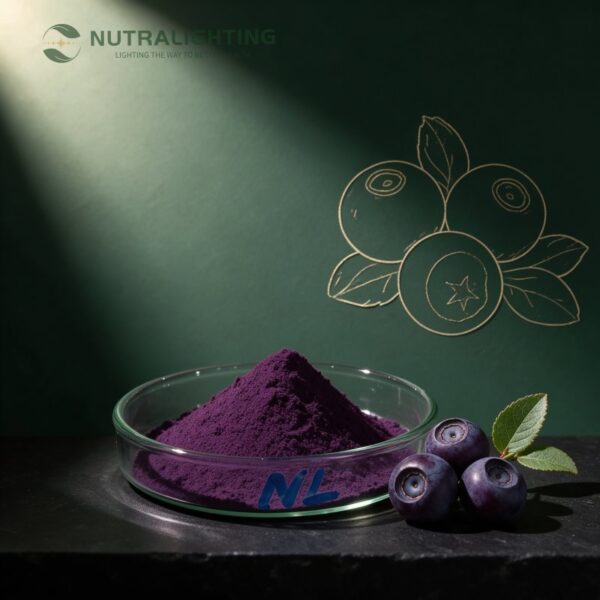
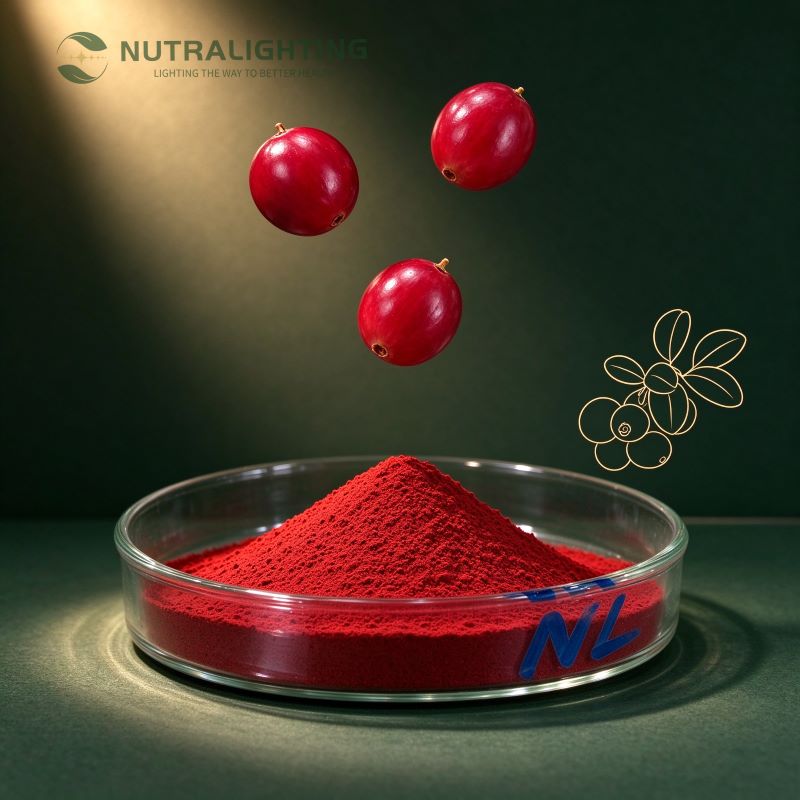
| Appearance | Fine powder, deep red to burgundy |
| Odour | Characteristic fruity, slightly tart |
| Taste | Very sour, astringent |
| Moisture | ≤ 6.0% (LoD) |
| Ash | ≤ 5.0% (Total ash); ≤ 1.0% (Acid-insoluble ash) |
| Heavy Metals | Pb ≤ 2 ppm; As ≤ 1 ppm; Hg ≤ 0.1 ppm; Cd ≤ 0.3 ppm |
| Residual Solvents | Ethanol ≤ 2,000 ppm (Ph. Eur. 2.4.24) |
| Microbiological | Total aerobic count ≤ 10^3/g; Yeast & mould ≤ 10^2/g; E. coli negative; Salmonella negative |
| Particle Size | 95% pass 80 mesh (180 μm) |
| Shelf Life | 24 months (store below 25°C, protected from light and moisture) |
| Target Market | USA, EU, Japan, Southeast Asia, Latin America |
| Core Application Areas | Urinary tract health supplements; Women’s wellness; Antioxidant blends; Functional beverages; Capsules and tablets |
Product Description
Cranberry Extract is obtained from the dried fruit of Vaccinium macrocarpon Aiton. It is a deciduous creeping shrub in the Ericaceae family, native to the northern United States and eastern Canada.
Three extract ratio grades are available – 10:1, 20:1, and 50:1. Each grade is independently verified for proanthocyanidin (PAC) content using the dimethylaminocinnamaldehyde (DMAC) method. The 10:1 grade offers a balanced option for general urinary tract support blends. The 20:1 grade is the most commonly specified concentration. The 50:1 grade delivers a highly concentrated extract for premium formulations.
The key bioactive constituents are A-type and B-type proanthocyanidins. A-type PACs are particularly notable, as they are found almost exclusively in cranberries and are responsible for the anti-adhesion activity against uropathogenic bacteria.
Cranberry is primarily cultivated in the northern United States (Massachusetts, Wisconsin, Maine) and Quebec, Canada. China also has wild cranberry populations in the Greater Khingan Range and cultivated areas in Fuyuan, Heilongjiang Province.
Active Constituents
The bioactive profile of Cranberry Extract is dominated by polyphenolic compounds, particularly proanthocyanidins (PACs) and anthocyanins. Our standardisation covers PAC content as the primary marker and total anthocyanins as a secondary quality indicator.
Primary Marker: Proanthocyanidins (PAC)
PAC content is quantified using the DMAC (dimethylaminocinnamaldehyde) method. This is the recognised standard method for measuring A-type and total PAC in cranberry products. The DMAC method provides selective detection of A-type PACs, which are the bioactive fraction responsible for urinary tract health benefits.
Cranberry PACs are distinguished by their unique A-type linkage. This structure confers superior anti-adhesive activity compared to B-type PACs found in other botanical sources. Examples include grape seed and pine bark extracts.
Secondary Marker: Total Anthocyanins
Total anthocyanin content is determined by HPLC-DAD. Anthocyanins in cranberry include cyanidin, delphinidin, and peonidin glycosides. They contribute to the antioxidant capacity and colour profile of the extract.
COA Standard Specifications
| Item | Specification | Method | Result Range |
| Proanthocyanidins (PAC, DMAC) | Varies by grade | DMAC spectrophotometric | ≥ 5% |
| Total anthocyanins | Varies by grade | HPLC-DAD | ≥ 1% |
| Loss on drying | ≤ 6.0% | LoD 105°C | – |
| Total ash | ≤ 5.0% | Char at 600°C | – |
| Acid-insoluble ash | ≤ 1.0% | HCl extraction | – |
| Ethanol residual | ≤ 2,000 ppm | GC (Ph. Eur. 2.4.24) | – |
| Lead (Pb) | ≤ 2 ppm | ICP-MS | – |
| Arsenic (As) | ≤ 1 ppm | ICP-MS | – |
| Mercury (Hg) | ≤ 0.1 ppm | ICP-MS | – |
| Cadmium (Cd) | ≤ 0.3 ppm | ICP-MS | – |
| Total aerobic count | ≤ 10^3/g | Ph. Eur. 2.6.12 | – |
| Yeast and mould | ≤ 10^2/g | Ph. Eur. 2.6.12 | – |
| E. coli | Negative | Ph. Eur. 2.6.12 | – |
| Salmonella | Negative | Ph. Eur. 2.6.12 | – |
Mechanism of Action
Anti-Adhesion Activity
A-type proanthocyanidins in cranberry prevent uropathogenic bacteria from adhering to the urinary tract epithelium. They inhibit fimbrial-mediated attachment of Escherichia coli to urothelial cells. This mechanism reduces bacterial colonisation and supports urinary tract cleanliness.
Antioxidant Activity
The anthocyanin and PAC fraction provides potent free radical scavenging activity. Cranberry extract has one of the highest ORAC values among common fruits. The polyphenol content contributes to overall oxidative stress reduction.
Urinary Acidification
Cranberry compounds may contribute to mild urinary acidification. An acidic urinary environment inhibits the growth of certain uropathogens. This effect complements the anti-adhesion mechanism.
Anti-Inflammatory Effects
Cranberry polyphenols modulate inflammatory signalling pathways. They inhibit NF-κB activation and reduce the expression of pro-inflammatory cytokines in the urinary tract. This supports comfort and tissue integrity.
Traditional and Modern Use
Cranberry has been used by Indigenous peoples of North America for centuries. They consumed the fruit to support urinary health and treat bladder discomfort.
In contemporary practice, Cranberry Extract is incorporated into dietary supplements targeting urinary tract health and women’s wellness. It is also used in functional beverages and juice blends.
The clinical research base for cranberry and urinary tract health is substantial. Multiple randomised controlled trials have investigated cranberry products for UTI prevention.
Regulatory Status
Cranberry is recognised in several regulatory frameworks.
In the United States, Vaccinium macrocarpon is not listed in the FDA EAFUS database. However, cranberry fruit is widely recognised as a food ingredient. Cranberry extract is marketed as a dietary supplement under DSHEA. The FDA has issued a qualified health claim regarding cranberry products and urinary tract infection risk. The agency notes that limited scientific evidence supports this claim.
In the European Union, Vaccinium macrocarpon is not listed as a Novel Food under Regulation (EU) 2015/2283. Cranberry fruit and extract may be placed on the market as food ingredients and in food supplements. EFSA has evaluated health claims related to cranberry and protection of DNA from oxidative damage under Article 13. Claims related to urinary tract health have not been approved under Regulation (EC) No 1924/2006.
In China, Cranberry is not listed in the Chinese Pharmacopoeia (2020 edition). However, the 2025 edition of the Chinese Pharmacopoeia has added a monograph for Cranberry Extract. Cranberry is also listed in the National Health Commission’s dietary supplement raw material catalog. Wild cranberry populations exist in Heilongjiang Province, but commercial cultivation in China remains limited. Most raw material is imported from North America.
The United States Botanical Safety Handbook classifies Vaccinium macrocarpon as low risk when used appropriately.
Recommended Usage
Typical daily intake is 36-72 mg of PAC (measured by the DMAC method), divided into one or two doses.
Formulation guidance by grade:
10:1 grade: Suitable for multi-ingredient blends at 1,000-2,000 mg per day
20:1 grade: Optimal for single-ingredient urinary tract support at 500-1,000 mg per day
50:1 grade: Best for high-potency formulations at 300-500 mg per day
Clinical trials have used cranberry extracts delivering 36-72 mg of PAC per day. Some studies used up to 1,200 mg of cranberry powder per day, equivalent to approximately 240-300 mL of cranberry juice cocktail.
Precautions
IMPORTANT SAFETY NOTE: Cranberry extract is generally well-tolerated. However, individuals with a history of kidney stones (particularly oxalate stones) should use cranberry products with caution, as cranberries contain moderate levels of oxalates. Consult a healthcare professional before use if you have a history of kidney stones.
General Precautions
Do not exceed the recommended daily dosage. Individuals with diabetes should be aware that some cranberry products contain added sugar. Discontinue use at least two weeks before any scheduled surgery.
Drug Interactions
Consult a healthcare professional before use if taking warfarin or other anticoagulant medications. Cranberry may potentially interact with warfarin and alter its anticoagulant effect. Monitor INR values closely if concurrent use is necessary.
Contraindications
Not recommended for individuals with known hypersensitivity to Vaccinium species or Ericaceae family plants. Individuals with a history of oxalate kidney stones should exercise caution.
When to Discontinue
Discontinue use and consult a healthcare provider if you experience gastrointestinal discomfort, headache, or any allergic reaction. This product is not intended for self-treatment of urinary tract infections or other medical conditions.
Disclaimer
This product is not intended to diagnose, treat, cure, or prevent any disease. Statements regarding this product have not been evaluated by the Food and Drug Administration.
Vaccinium macrocarpon is not approved as a drug by the FDA or any other regulatory authority. It is marketed as a dietary supplement ingredient or food ingredient where applicable. The FDA has issued a qualified health claim for cranberry products. Limited scientific evidence supports the relationship between cranberry consumption and reduced risk of urinary tract infections. Consumers should consult a healthcare professional before use, particularly if taking medication or managing a chronic health condition.
Keep out of reach of children. Store below 25°C in a dry place.
Why Choose Nutraligting Cranberry Extract
Directly Sourced Large-Fruited Cranberry Raw Materials From China’s Core Native Producing Areas
All raw materials are exclusively collected from the large-scale Asian cranberry planting base in Fuyuan, Heilongjiang. As China’s first core producing area that achieved large-scale high-yield cranberry cultivation, it has acidic peat soil and sufficient water sources perfectly matching the high-quality growth conditions of North American cranberries. Complete origin information is clearly stated in all traceability documents, which eliminates the freshness loss of raw materials caused by long-distance transoceanic transportation, and completely avoids the customs clearance uncertainties of imported raw materials.
Customizable Specifications Fully Adapted to Unique Formulation Needs
In addition to our regular standard ratios of 10:1, 20:1 and 50:1, our in-house R&D team can develop fully customized proanthocyanidin (PAC) content, anthocyanin levels and extract parameters according to your product design requirements. This saves you the high cost of independent extraction R&D, and you do not have to make compromises to your original unique product solution just to adapt to generic stock extracts.
Extracts Compliant With the Standards of the 2025 Edition of Chinese Pharmacopoeia
All our cranberry extracts strictly follow all the standardization requirements for cranberry extract specified in the 2025 Edition of Chinese Pharmacopoeia. On the basis of the general quality control standards for dietary supplement raw materials, we add an extra layer of authoritative quality endorsement, which greatly simplifies the import compliance procedures in China and multiple global markets.
References
Liu, R.H. (2023). “Cranberry: Chemistry, Health Benefits, and Applications.” Foods, 12(15), 2912. PMC12525006.
McDonald, J., et al. (2019). “Cranberries and Lower Urinary Tract Infection Prevention.” Clinical Journal of the American Society of Nephrology, 14(7), 1066-1067.
Bakker, M.E., et al. (2016). “Cranberry proanthocyanidin extracts for recurrent UTI prevention [PACCANN trial].” BMC Urology, 16, 41. PMC5930667.
European Food Safety Authority (EFSA). “Scientific Opinion on the substantiation of health claims related to Vaccinium macrocarpon and protection of DNA from oxidative damage.” EFSA Journal, 12(4), 3600.
European Food Safety Authority (EFSA). “Cranberry powder and defence against bacterial pathogens in the lower urinary tract.” EFSA Journal, 23(4), e09319. 2025.
FDA. “Qualified Health Claim: Cranberry and Reduced Risk of Urinary Tract Infections.” Federal Register, 2012.
Chinese Pharmacopoeia Commission. “Chinese Pharmacopoeia 2025, Vol. I” . Cranberry Extract monograph.
Alibaba supplier listings. “Cranberry Extract Vaccinium Macrocarpon 10:1 20:1 50:1 PAC 5-60% DMAC” – commercial COA data, verified Procyanidin A2 CAS 41743-41-3, C30H24O12, MW 576.5.
Frequently Asked Questions
Our standard Cranberry Extract is available in 10:1 and 20:1 ratios, with custom ratios available based on your specification requirements.
Yes, we can standardize Anthocyanins content from 10% up to 50% depending on your formulation needs. Pls contact our sales team for details.
Yes, samples of 10g-100g are available for quality evaluation. Sample fees and shipping costs apply, which can be credited against your first bulk order.
For standard specifications, lead time is typically 15-20 working days after order confirmation. Custom orders may require additional time depending on production scheduling.
Packaging & Shipping
Standard Packaging
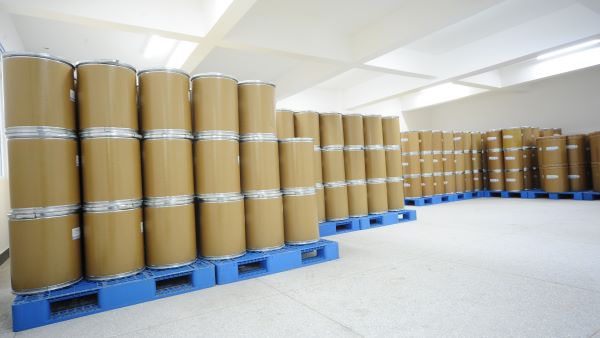
- Standard packaging: 1kg/aluminum foil bag + 25kg drum
- Custom packaging: Available per client requirements
- Labeling: Private labeling and OEM packaging supported
Shipping Terms
- Shipping methods: Express (DHL, FedEx, UPS), Air freight, Sea freight
- Delivery terms: FOB, CIF, DDP available
- Lead time: 15-20 working days for standard orders
- Sample shipping: 3-7 working days via express courier
Shelf Life & Storage
- Store in a cool, dry place away from direct light and heat
- Keep container tightly closed when not in use
- Avoid exposure to moisture and high temperatures
- Recommended storage temperature: 2-8°C for optimal shelf life