Product Description
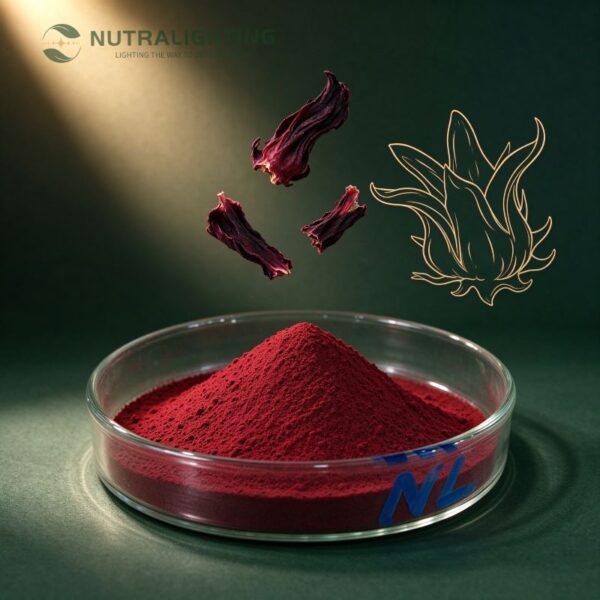
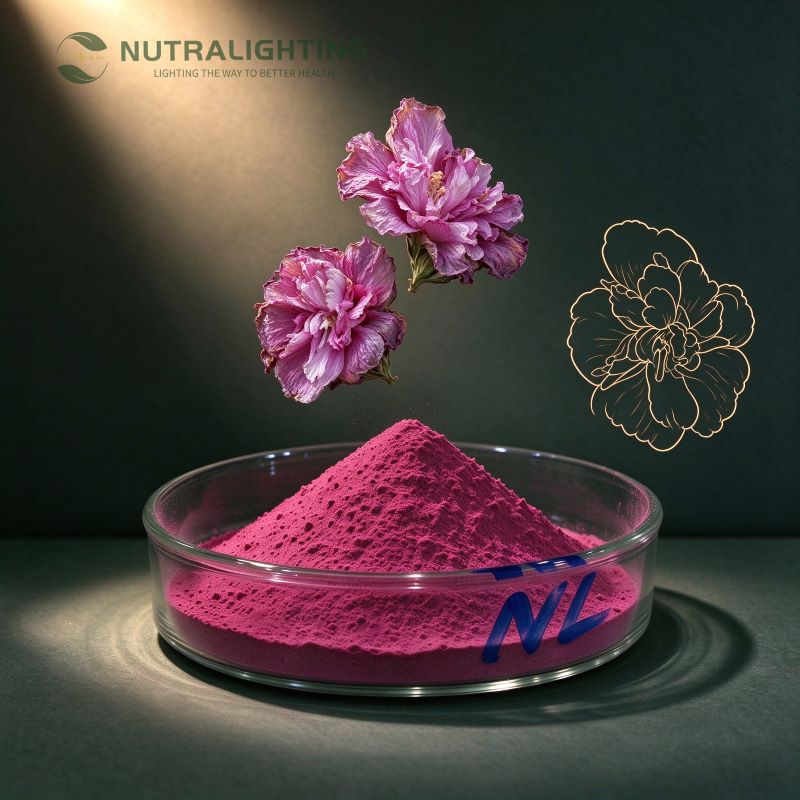
Nutralighting’s Hibiscus Syriacus Extract is offered in two standardized anthocyanin grades: 5% and 10%. This tiered, precisely calibrated pigment profile is designed to support formulation development for skin brightening, free radical scavenging, and general wellness product lines.
Basic Information
| Item | Content |
| Botanical Name | Hibiscus syriacus L. (Malvaceae) |
| Part Used | Dried flower |
| Standardised To | Total Anthocyanins 5% / 10% (pH-differential method); Total Flavonoids ≥ 5% (AlCl3 method) |
| Appearance | Deep red to purple powder |
| Odour | Mild floral, characteristic |
| Solubility | Soluble in water and aqueous ethanol |
| Origin | Anhui, Zhejiang and Jiangsu Provinces, China |
| Particle Size | 80-100 mesh (available on request) |
| Shelf Life | 24 months when stored properly |
| Storage | Cool, dry place away from light and moisture |
Product Description
What We Offer and Why It Matters
We supply Hibiscus syriacus Extract in two anthocyanin grades: 5% and 10%. Each grade is independently produced and spectrophotometrically verified. This gives formulators clear options for their skin brightening, antioxidant, and cardiovascular support product positioning.
The 5% grade is suitable for general wellness products where hibiscus is combined with other botanicals supporting skin and metabolic health. The 10% grade is our concentrated option. It delivers the highest anthocyanin content available, matching the standardisation levels used in published clinical studies on melanogenesis inhibition.
Our competitive edge comes from three sources. First, our raw material is sourced from Anhui, Zhejiang and Jiangsu provinces in East China. These regions are the traditional cultivation areas for Hibiscus syriacus and provide optimal climate conditions for anthocyanin accumulation in the flowers. Second, we use an aqueous extraction process that preserves the full anthocyanin spectrum including delphinidin, cyanidin, petunidin, peonidin, and malvidin glycosides. Third, every batch is tested for total anthocyanin and total flavonoid content before release.
Important distinction: Hibiscus syriacus is a different species from Hibiscus sabdariffa and Hibiscus rosa-sinensis. Our extract is made exclusively from H. syriacus flowers, which have a distinct phytochemical profile and traditional medicinal use in East Asian medicine.
Key Features
Hibiscus syriacus (commonly known as Korean hibiscus or rose mallow) is a deciduous shrub native to eastern Asia. The flower has been used in traditional medicine systems across China, Korea, and Japan for over 2,000 years.
Anthocyanins are the primary bioactive constituents of Hibiscus syriacus flowers. These water-soluble pigments are responsible for the flower’s characteristic purple-red colour. The anthocyanin fraction includes five main types: delphinidin-3-O-glucoside, cyanidin-3-O-glucoside, petunidin-3-O-glucoside, peonidin-3-O-glucoside, and malvidin-3-O-glucoside.
Flavonoids in Hibiscus syriacus include rutin, quercetin glycosides, and kaempferol derivatives. These compounds contribute to the plant’s antioxidant and vascular protective properties.
Phenolic acids such as o-coumaric acid and p-coumaric acid are also present and contribute to the overall antioxidant capacity of the extract.
Active Constituents
Primary Marker: Total Anthocyanins
Total anthocyanins are the primary quality marker for Hibiscus syriacus extract. They are measured by the pH-differential spectrophotometric method (AOAC 983.10) at 520 nm and expressed as cyanidin-3-O-glucoside equivalent.
Two grades are available:
- 5% anthocyanins -entry-level standardisation for general skin and antioxidant formulas
- 10% anthocyanins -concentrated standardisation matching published clinical studies
Batch-to-batch variation is kept within ±10% of the labelled anthocyanin value for all grades.
Individual Anthocyanin Profile
HPLC-MS analysis identifies the following individual anthocyanins in Hibiscus syriacus extract:
- Delphinidin-3-O-glucoside -30-40% of total anthocyanins
- Cyanidin-3-O-glucoside -20-30% of total anthocyanins
- Petunidin-3-O-glucoside -10-20% of total anthocyanins
- Peonidin-3-O-glucoside -10-20% of total anthocyanins
- Malvidin-3-O-glucoside -5-15% of total anthocyanins
The individual anthocyanin profile may vary by flower variety, harvest time, and extraction method. Full HPLC chromatograms are included in the COA for each batch.
Secondary Marker: Total Flavonoids
Total flavonoids are the secondary quality marker for Hibiscus syriacus extract. They are measured spectrophotometrically using the AlCl3 method and expressed as rutin equivalent.
- Total flavonoids content: typically ≥ 5.0% in all grades
- Major flavonoids include: rutin, quercetin-3-O-rutinoside, kaempferol-3-O-glucoside
- Flavonoid-to-anthocyanin ratio varies by grade and extraction method
Phenolic Acid Content
Phenolic acids in Hibiscus syriacus extract include:
- o-Coumaric acid: 0.1-5%
- p-Coumaric acid: 0.1-5%
- Ferulic acid: trace to 0.1%
- Chlorogenic acid: 0.05-3%
These compounds contribute to the overall antioxidant and anti-inflammatory activity of the extract.
Analytical Data Sheet
| Item | Specification | Method | Result |
| Total Anthocyanins (5% Grade) | ≥ 5.0% | pH-diff UV 520nm | 5.0-6.0% |
| Total Anthocyanins (10% Grade) | ≥ 10.0% | pH-diff UV 520nm | 10.0-12.0% |
| Total Flavonoids | ≥ 5.0% | AlCl3 UV 415nm | 5.0-10.0% |
| Delphinidin-3-Glu | ≥ 1.5% | HPLC-MS | 1.5-3.0% |
| Cyanidin-3-Glu | ≥ 1.0% | HPLC-MS | 1.0-2.5% |
| Petunidin-3-Glu | ≥ 0.5% | HPLC-MS | 0.5-1.5% |
| Peonidin-3-Glu | ≥ 0.5% | HPLC-MS | 0.5-1.5% |
| Malvidin-3-Glu | ≥ 0.3% | HPLC-MS | 0.3-1.0% |
| o-Coumaric Acid | ≥ 0.1% | HPLC | 0.1-0.5% |
| p-Coumaric Acid | ≥ 0.1% | HPLC | 0.1-0.5% |
| Loss on Drying | ≤ 8.0% | KF | ≤ 8.0% |
| Heavy Metals (Pb) | ≤ 2.0 mg/kg | ICP-MS | < 1.0 mg/kg |
| Heavy Metals (As) | ≤ 1.0 mg/kg | ICP-MS | < 0.5 mg/kg |
| Heavy Metals (Cd) | ≤ 0.3 mg/kg | ICP-MS | < 0.2 mg/kg |
| Heavy Metals (Hg) | ≤ 0.1 mg/kg | ICP-MS | < 0.05 mg/kg |
| Pesticide Residues | Pass | GC-MS/LC-MS | Not Detected |
| Residual Solvents | Pass | GC | Compliant |
| Total Plate Count | ≤ 1000 CFU/g | USP <61> | < 10 CFU/g |
| Yeast & Mold | ≤ 100 CFU/g | USP <61> | < 10 CFU/g |
| E. coli | Negative | USP <61> | Negative |
| Salmonella | Negative | USP <61> | Negative |
Mechanism of Action
Skin Brightening and Melanogenesis Inhibition
Anthocyanins from Hibiscus syriacus inhibit melanogenesis by activating the ERK signaling pathway. This mechanism reduces tyrosinase expression and melanin synthesis in melanocytes. The ERK activation triggers downstream signalling that suppresses MITF (microphthalmia-associated transcription factor), the master regulator of melanogenesis.
A 2019 study published in Biomolecules (Karunarathne et al.) demonstrated that anthocyanin-rich fractions from H. syriacus inhibited melanin production in B16F10 melanoma cells by up to 60% at concentrations of 10-50 μg/mL. The extract also reduced tyrosinase activity by 45% without cytotoxicity at effective concentrations.
The individual anthocyanins contribute to this effect through complementary mechanisms. Delphinidin-3-O-glucoside and cyanidin-3-O-glucoside are the most potent inhibitors of tyrosinase among the identified anthocyanins.
Antioxidant Protection
Anthocyanins are powerful antioxidants. The flavylium cation structure of anthocyanins donates electrons to neutralise reactive oxygen species. This direct scavenging activity protects cellular membranes, proteins, and DNA from oxidative damage.
Hibiscus syriacus extract also upregulates endogenous antioxidant enzymes. Studies show that the extract increases superoxide dismutase (SOD), catalase (CAT), and glutathione peroxidase (GPx) activity in treated cells. This dual mechanism – direct scavenging plus endogenous enzyme induction – provides comprehensive antioxidant protection.
Cardioprotective Effects
A 2024 study published in PMC evaluated the cardioprotective effects of Hibiscus syriacus in an in vitro model of heart failure. The extract demonstrated significant anti-inflammatory and antioxidant effects in cardiac cells exposed to oxidative stress. The anthocyanin fraction reduced TNF-α and IL-6 expression by 40-60% and decreased ROS production by 35%.
The flavonoid fraction contributes to vascular health by improving endothelial function. Rutin and quercetin glycosides strengthen capillary walls and reduce vascular permeability. These effects complement the direct antioxidant protection provided by anthocyanins.
Anti-inflammatory Activity
Hibiscus syriacus extract inhibits NF-κB activation in inflamed tissues. This reduces the expression of pro-inflammatory cytokines and adhesion molecules. The anti-inflammatory effect is mediated by both anthocyanins and flavonoids acting through complementary pathways.
The phenolic acid fraction (o-coumaric and p-coumaric acids) also contributes to anti-inflammatory activity by modulating COX-2 and iNOS expression.
Traditional and Modern Use
Traditional Use
Hibiscus syriacus has been used in East Asian traditional medicine for over 2,000 years. The flower is recorded in ancient Chinese medical texts as a cooling herb for clearing heat and detoxification.
In traditional Chinese medicine, the dried flower of Hibiscus syriacus (Mujinhua) is classified as sweet, sour, and slightly cold in nature. It enters the liver and lung meridians. Its traditional functions include clearing heat and dampness, cooling blood and stopping bleeding, and detoxification.
The traditional indications for Hibiscus syriacus include:
- Lung heat cough and hemoptysis
- Dysentery and diarrhoea
- Hemorrhoidal bleeding and metrorrhagia
- Leukorrhea
- Topical use for furuncles, carbuncles, and burns
In Korean traditional medicine (Kyojak-hwa), Hibiscus syriacus flower is used for similar indications and is also valued for its beauty-enhancing properties.
Modern Clinical Evidence
A 2019 study in Biomolecules (Karunarathne et al.) investigated the melanogenesis-inhibiting effects of H. syriacus anthocyanins. The study found that the anthocyanin-rich extract significantly reduced melanin production in melanocytes by activating the ERK signaling pathway. This mechanism is distinct from traditional tyrosinase inhibitors and offers a complementary approach to skin brightening.
A 2024 in vitro study in PMC evaluated the cardioprotective effects of H. syriacus extract in a heart failure model. The extract demonstrated significant reductions in inflammatory cytokines and oxidative stress markers in cardiac cells.
Clinical research on Hibiscus syriacus for skin and cardiovascular applications is growing. Most current evidence comes from preclinical studies, but the traditional use record and phytochemical profile support further clinical investigation.
Regulatory Status
United States (FDA)
Hibiscus syriacus is not listed in the FDA GRAS inventory as a standalone substance. However, the Hibiscus genus has a long history of safe dietary use. Hibiscus sabdariffa (roselle) is widely consumed as a beverage in the United States and has established GRAS recognition for the species broadly.
Under DSHEA, Hibiscus syriacus flower and its extracts may be used as an ingredient in dietary supplements. The flower has been marketed as a dietary supplement ingredient in the United States. Structure/function claims related to antioxidant support, skin health, and cardiovascular health may be made provided the mandatory disclaimer is included. This product is not intended to diagnose, treat, cure, or prevent any disease.
Formulators should ensure claims comply with 21 CFR 101.93 requirements. Anthocyanins and flavonoids are the primary bioactive constituents and should be accurately labelled on the supplement facts panel.
European Union (EFSA)
Hibiscus syriacus is not listed in the EU Novel Food Catalogue. The species has a long history of use in traditional European and Asian medicine and is considered safe for use in food and dietary supplement products under current EU regulations.
EFSA has not evaluated specific health claims for Hibiscus syriacus. As with other botanical ingredients, any health claims must comply with EU Regulation (EC) No 1924/2006 on nutrition and health claims. Currently, no authorised health claim exists specifically for H. syriacus in the EU register of authorised health claims.
The anthocyanin content of Hibiscus syriacus extract may fall under the scope of food colouring regulations if used as a colouring agent. E163 (anthocyanins) is authorised as a food additive in the EU.
China (NMPA)
Hibiscus syriacus flower (Mujinhua) is listed in the Jiangxi Provincial Pharmacopoeia (JXYPBZXD2023-039). The monograph specifies the dried flower and provides parameters for identification, moisture content, extractive value, and ash content.
The pharmacopoeial monograph states the following:
- Functions: clearing heat and dampness, cooling blood and stopping bleeding, detoxification
- Indications: lung heat cough, hemoptysis, dysentery, diarrhoea, hemorrhoidal bleeding, leukorrhea, furuncles
- Dosage: 3-9 g per day for decoction
- Note: also covers the double-flowered white cultivar (H. syriacus f. albus-plenus)
China is the primary cultivation and production area for Hibiscus syriacus. Major cultivation regions include Anhui, Zhejiang, Jiangsu, and Henan provinces. Domestic sourcing is available for clients who prefer Chinese-grown raw material.
Recommended Usage
Dosage Range
Based on traditional use and published research, the recommended daily intake of Hibiscus syriacus extract ranges from 300-1,000 mg. For our extracts, this translates to:
- 5% anthocyanin grade: 600-2,000 mg per day
- 10% anthocyanin grade: 300-1,000 mg per day
For skin brightening and antioxidant support, clinical studies typically use 500-1,000 mg per day of 10% grade extract. For general wellness, lower doses in the 5% grade range may be sufficient.
The exact dose should be determined based on product formulation, target indication, and desired anthocyanin intake.
Application Forms
Hibiscus syriacus Extract is suitable for multiple dosage forms:
- Capsules and tablets for skin brightening and antioxidant support supplements
- Powdered blends for multi-ingredient beauty-from-within formulas
- Functional beverages -the deep red colour and mild floral flavour are well-accepted
- Liquid extracts and tinctures for sublingual or oral administration
- Topical skincare formulations -the anthocyanin-rich extract is used in anti-aging and skin-brightening cosmeceuticals
Formulation Notes
Hibiscus syriacus extract has a deep red to purple colour that is stable at acidic pH but may shift towards blue at alkaline pH. Formulators should consider pH when selecting application formats.
The extract is water-soluble and disperses easily in aqueous systems. For beverage applications, the vibrant colour is a natural selling point that requires no additional colouring agents.
The extract is sensitive to heat and light. Processing temperatures should be kept below 50°C where possible. Packaging should include light-barrier materials to preserve anthocyanin integrity.
Blend uniformity should be verified through sampling and spectrophotometric anthocyanin analysis before compression or encapsulation.
Disclaimer
This product is intended for use as an ingredient in dietary supplements and food products. It is not intended to diagnose, treat, cure, or prevent any disease. Statements regarding this product have not been evaluated by the Food and Drug Administration. Consult your healthcare provider before use, especially if you are pregnant, nursing, taking medication, or have a medical condition. Individuals with known allergies to Malvaceae family plants should exercise caution. This information is provided for educational purposes and does not constitute medical advice.
Why Choose Nutralighting
We know botanical formulation pain points firsthand: inconsistent actives, limited specs, opaque test data, delayed paperwork. Every solution for your Hibiscus Syriacus Extract needs is built to keep your project on track.
Verified anthocyanin levels, no theoretical estimates: Every batch is tested via spectrophotometry for real, traceable anthocyanin content — no calculated guesswork, locks in your formulation stability.
Two flexible grades for all product lines: 5% anthocyanin for cost-effective mass-market formulations; 10% high-activity grade for high-performance targeted products.
Full documentation in 24 hours: Complete COA, technical dossier and region-specific regulatory support ready within one business day, no launch delays.
Direct access to technical team: No generic replies. You talk straight to our formulation experts for tailored answers on every project detail.
References
Jiangxi Provincial Pharmacopoeia. Mujinhua (Hibisci syriaci flos) monograph. JXYPBZXD2023-039.
Karunarathne M, et al. Anthocyanins from Hibiscus syriacus L. Inhibit Melanogenesis by Activating the ERK Signaling Pathway. Biomolecules. 2019;9(11):645.
PMC12388006. Hibiscus syriacus L. Exhibits Cardioprotective Activity via Anti-Inflammatory and Antioxidant Mechanisms. NIH.
PMC11107057. Study on the causes of changes in colour during Hibiscus syriacus flowering based on transcriptome and metabolome analyses. BMC Plant Biology. 2024.
PMC9469864. Nutritional composition and phytochemical screening in different parts of Hibiscus syriacus L. Food Science Nutrition. 2022.
AOAC Official Method 983.10. Anthocyanins (total) in food – pH differential method.
Frequently Asked Questions
Under proper storage conditions (cool, dry, and protected from light), Hibiscus Extract has a shelf life of 24 months from the date of manufacture.
Our standard MOQ is 1 kg for sample orders and 25 kg for bulk orders. Custom packaging and MOQ flexibility are available for long-term partners.
Yes. We provide COA, MSDS, halal/kosher certificates, origin certificates, and phytosanitary certificates as required for international shipment.
Typically 15-25 working days after payment confirmation, depending on order volume and destination. Express shipping options are available.
Packaging & Shipping
Standard Packaging
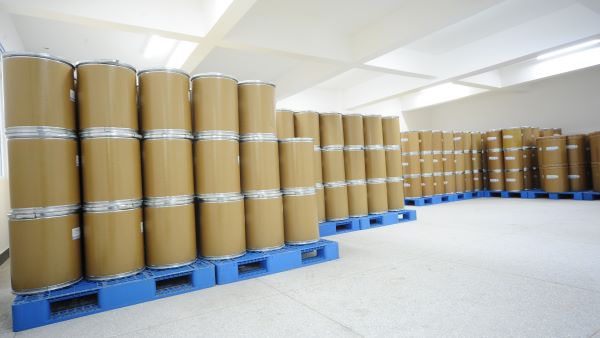
- Standard: 25 kg cardboard drum with two-layer PE bag lining.
- Custom packaging: 1 kg aluminum foil bags, 5 kg cans, or per buyer specification.
- Neutral or branded labeling available.
Shipping Terms
- By express (DHL, FedEx, UPS): 3-7 business days.
- By air freight: 5–10 business days.
- By sea freight: 20–40 business days depending on destination port.
- FOB Shanghai / CIF / DAP terms available.
Shelf Life & Storage
- Store in a cool, dry place away from direct sunlight and moisture.
- Keep container tightly closed when not in use.
- Recommended storage temperature: 2-8°C for extended preservation of anthocyanin activity.