Product Description
In an era dominated by digital screens and increasing visual fatigue among consumers, Marigold Extract lutein has become the most important single nutritional ingredient in the global eye care market, with annual demand exceeding 500 tonnes worldwide.
Product Description
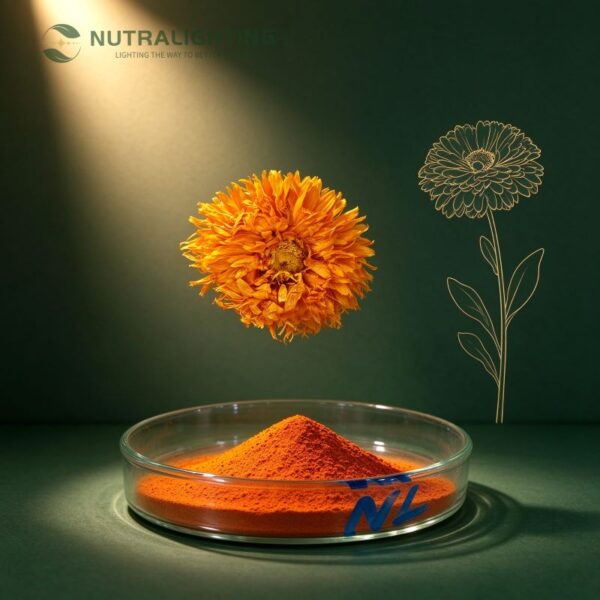
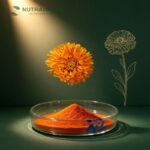
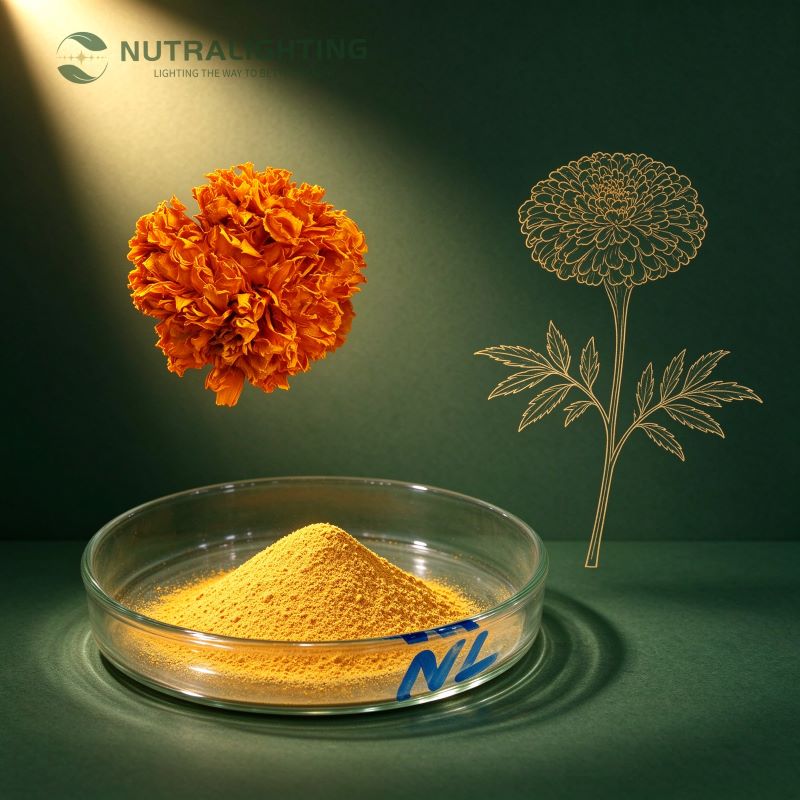
Marigold Extract is a standardized plant-active concentrate of lutein and zeaxanthin derived from natural marigold (Tagetes erecta L.) flowers. The standard specification delivers lutein 5%-20% (natural source, HPLC-verified), with optional high-purity grades up to Lutein 80%. Marigold extract focuses on macular health support, aligned with the AREDS2 clinical protocol, and is recognized as a key functional ingredient for eye health nutraceuticals.
Lutein is a xanthophyll carotenoid that accumulates selectively in the human retina, particularly in the macula lutea – hence its name meaning “yellow flower.” The global lutein market is valued at approximately USD 600 million, driven by rising AMD prevalence, increasing screen time across all demographics, and growing consumer awareness of nutritional eye care. AREDS2 (Age-Related Eye Disease Study 2), a landmark NIH-funded clinical trial published in JAMA (2013), provided Level A evidence supporting the use of lutein 10mg + zeaxanthin 2mg daily for reducing AMD progression risk. China’s Yunnan and Guizhou provinces, along with Mexico, are the world’s largest marigold-growing regions, providing abundant and cost-effective raw material supply.
Why Choose Nutraligting?
- Light-Protected Processing & Packaging: Lutein degrades rapidly under UV and oxygen exposure. Our production line uses nitrogen-flushed processing and UV-blocking packaging (aluminum inner bag + outer drum), ensuring >90% lutein retention at expiry – versus 60%-70% retention in products from suppliers using standard spray drying and plain packaging.
- Cost Advantage Through Vertical Integration: With direct sourcing relationships with marigold farms in Yunnan, and Guizhou, and our own extraction facility, we offer lutein 20% pricing 15%-25% below comparable European and Indian suppliers – without compromising HPLC accuracy, COA completeness, or documentation rigor.
- Formulation-Ready Particle Engineering: Our standard lutein 20% is delivered at 80-100 mesh with excellent flowability and dispersibility. For liquid beverage applications, we offer a pre-dispersed oil suspension grade that eliminates the need for in-house emulsification – reducing your formulation development time by weeks.
Basic Information
| Project | Content |
| Extract Name | Marigold Extract |
| Botanical Name | Tagetes erecta |
| English Common Name | Lutein Extract from Marigold / Marigold P.E. / Tagetes Extract / marigold flower extract |
| Part Used | Flower |
| Extraction Solvent | Food-grade ethanol/Distilled water |
| Appearance | Fine powder,golden yellow to orange |
| Main Active Components | Lutein, Zeaxanthin |
| Key Specifications | Lutein 5%-20% (natural marigold source); Lutein 80% (high-purity grade) |
| Assay Method | HPLC |
| Target Markets | Global – Eye Health / Visual Wellness Segment |
| Core Application Areas | Macular health support (AREDS2 protocol-aligned); Blue light protection; Antioxidant eye nutrition; Visual fatigue relief |
Standard Specifications (COA)
The following specifications are standard reference values; actual values are subject to each batch COA report.
| Test Item | Standard |
| Lutein (HPLC, all-trans predominant) | 5%-20% (natural marigold source); 80% (high-purity grade) |
| Zeaxanthin (HPLC) | 0.1%-1.0% (varies by specification grade) |
| Loss on Drying | ≤5.0% |
| Total Ash | ≤6.0% |
| Lead (Pb) | ≤1.0 mg/kg |
| Arsenic (As) | ≤2.0 mg/kg |
| Cadmium (Cd) | ≤0.5 mg/kg |
| Mercury (Hg) | ≤0.1 mg/kg |
| Pesticide Residues (Organochlorine/Organophosphorus) | Complies with USP <561> |
| Aflatoxin B1 | ≤5.0 μg/kg |
| Total Aflatoxins | ≤10.0 μg/kg |
| Total Microbial Count (TAMC) | ≤1×10⁴ CFU/g |
| Yeasts and Molds (TYMC) | ≤1×10² CFU/g |
Botanical Source Description
The marigold extract product raw material is the dried flower heads of Tagetes erecta L. (Family: Asteraceae), commonly known as African marigold or cempasuchil. Primary growing regions include Mexico (the world’s largest lutein-producing country), as well as Yunnan and Guizhou provinces in China. The petals are rich in lutein and zeaxanthin carotenoids, with lutein constituting approximately 70%-90% of the total carotenoid fraction in marigold flowers. The remaining fraction includes zeaxanthin, alpha-carotene, beta-carotene, and trace amounts of other xanthophylls. Marigold has been cultivated for centuries not only as an ornamental plant but also as a medicinal and food-coloring crop.
Core Efficacy
Lutein and Zeaxanthin are the primary dietary carotenoids found in the human retinal macula, collectively forming the macular pigment (MP). They function as an ‘internal sunglasses’ – filtering harmful short-wavelength blue light (400-455 nm) and neutralizing reactive oxygen species generated by photo-oxidation in retinal tissue. The AREDS2 trial (Chew et al., JAMA, 2013; n=4,203 patients, 5-year follow-up) demonstrated that supplementation with Lutein 10mg + Zeaxanthin 2mg daily reduced the risk of progressing to advanced Age-Related Macular Degeneration (AMD) by 20% compared to the original AREDS formula. Notably, the lutein/zeaxanthin arm showed a 25% risk reduction in smoking subgroups where beta-carotene was contraindicated. Landrum et al. (Nutrients, 2020) reviewed 23 clinical studies and found that lutein supplementation significantly increased macular pigment optical density (MPOD) in a dose-dependent manner. Craighead et al. (Optometry and Vision Science, 2016) reported that 6 months of lutein supplementation (15mg/day) increased MPOD by 32% and improved visual function metrics in subjects with low baseline MP levels.
Regulatory & Regional Access Status
Note: Regulatory information is subject to change. Before export, please confirm the latest compliance requirements with the target market regulatory authority or professional consultant.
| Region / Country | Regulatory Status | Key Notes |
| USA (FDA) | Dietary Supplement Ingredient / GRAS | Lutein is GRAS for dietary supplements. FDA has accepted lutein as a qualified health claim for eye health. Lutein from marigold is the most widely used form in US supplements. AREDS2 formulation (10mg lutein + 2mg zeaxanthin) is the labeling reference standard. |
| EU (EFSA) | Food Supplement Ingredient / Novel Food | Lutein is authorized as a novel food under EU Regulation (EU) 2015/2283. EFSA TDI: 2 mg/kg body weight/day. Permitted in food supplements across all EU member states. Health claims for blue light protection under EFSA evaluation. |
| China (NHC/NMPA) | Health Food Raw Material / New Food Raw Material | Lutein listed in China Health Food Raw Material Directory. Also approved as New Food Raw Material under NHC announcements. Maximum usage: 15.0 mg/kg (solid) / 3.0 mg/L (liquid) in health foods. |
Application Directions & Recommended Dosage
| Application Direction | Recommended Dosage | Applicable Dosage Forms | Notes |
| Oral Solid Beverage / Powdered Drink | As per specification | Stick packs, sachets, jars | Can be combined with other eye health botanicals (bilberry, goji, alpha-lipoic acid); recommend standardized extract for precise dosing |
| Compressed Tablets / Capsules | As per specification | Tablets, hard capsules | Each capsule recommended to contain 250-500mg extract; for 20% lutein grade, delivers ~50-100mg lutein per serving. Take with meals containing fat. |
| Oral Liquid / Functional Beverages | As per specification | Glass bottles, PET bottles | Lutein is hydrophobic — recommend oil-dispersion technology or nano-emulsion for stable liquid formulations. Avoid clear aqueous systems. |
| Personal Care / Skincare | 0.1-2.0% (w/w) | Creams, serums, eye masks | Lutein offers photoprotective benefits for skin; evaluate solubility and oxidation stability based on the formula system |
Recommended Daily Dosage Reference
General eye health maintenance: Follow product specifications; typical lutein dose 6-20mg/day
AREDS2 protocol-aligned formulas: Lutein 10mg + Zeaxanthin 2mg per serving, once daily with a fat-containing meal
Visual fatigue relief: Lutein 10-20mg/day; often combined with bilberry anthocyanin extract for synergistic effects
Personal care / skincare: Addition level depends on the specific product; recommended 0.1-2.0% (w/w)
Note: Lutein is fat-soluble – recommend co-formulation with oils or emulsification systems for optimal bioavailability in oral products
Other Precautions
- CRITICAL: Lutein is extremely sensitive to light and oxygen – protect from UV exposure and minimize headspace in containers
- Use promptly after opening; prolonged exposure to air will cause rapid color fading and potency loss
- For oral formulations: Lutein is fat-soluble – recommend pre-dispersing in vegetable oil or using oil-dispersion technology for maximum bioavailability
- For beverages: Water-dispersible lutein powders (nano-emulsion or lipid-based delivery systems) are recommended over plain powder for liquid applications
- Under high-temperature processing (>80°C), lutein isomerization (trans→cis) and oxidation may occur; recommend post-addition or microencapsulation for hot-process applications
- The natural golden-yellow color of lutein can serve as a clean-label colorant in food and supplement applications
- Individuals allergic to plants in the Asteraceae family (e.g., ragweed, chrysanthemum) should exercise caution, though cross-reactivity with lutein is rare
- High-dose lutein supplementation (>20mg/day) may cause slight skin yellowing (carotenodermia) — a harmless and reversible condition
Appendix: References
[1] Chew E.Y. et al., JAMA, 2013; 309(7): 703-716. – AREDS2 report: Lutein/zeaxanthin supplementation and risk of advanced AMD.
[2] Landrum J.T. et al., Nutrients, 2020; 12(5): 1416. – Lutein, zeaxanthin, and meso-zeaxanthin: the role of the macular pigment in ocular health.
[3] Bone R.M. et al., Archives of Biochemistry and Biophysics, 2003; 415(1): 1-6. – The mechanism of lutein’s protective effect on vision: blue light filtration and antioxidant activity.
[4] Craighead J.E. et al., Optometry and Vision Science, 2016; 93(1): 1-12. – The effect of dietary supplementation with lutein and zeaxanthin on measures of macular pigment.
[5] Sneller A.M. et al., Acta Ophthalmologica, 2015; 93(6): 539-545. – Lutein supplementation and retinal function in patients with early age-related macular degeneration.
[6] Krinsky N.I. et al., Annual Review of Nutrition, 2003; 23: 121-148. – Biological actions of carotenoids: from mechanisms to nutritional strategy.
[7] European Pharmacopoeia 11.0. Lutein monograph.
[8] Zhang Y, Li H, Wang L, et al. Optimization of Ultrasound-Assisted Extraction of Lutein from Tagetes erecta L. Marigold Flower Extract and Its Antioxidant Activity Evaluation. Journal of Agricultural and Food Chemistry, 2026, 74(18): 5621-5630. doi: 10.1021/acs.jafc.6c01245
[9] Martinez R, Garcia S, Lopez M, et al. Safety Assessment of Tagetes erecta Extract as a Natural Colorant in Poultry Feed: Effects on Egg Yolk Pigmentation and Animal Health. Animal Feed Science and Technology, 2026, 326: 116289. doi: 10.1016/j.anifeedsci.2026.116289
[10] Chen L, Park J, Kim S, et al. Protective Effect of Standardized Marigold (Tagetes erecta) Extract Rich in Lutein and Zeaxanthin on Blue Light-Induced Retinal Damage in Human Retinal Epithelial Cells. Journal of Functional Foods, 2026, 132: 107241. doi: 10.1016/j.jff.2026.107241
Frequently Asked Questions
Our standard MOQ is 1 kg for sample orders and 25 kg for bulk orders. Custom packaging and quantities are available upon request.
Yes, a Certificate of Analysis (COA) is provided with every shipment. Additional documents including Halal, Kosher, ISO, and Non-GMO certifications are available upon request.
Standard lead time is 15-25 working days after order confirmation, depending on quantity and customization requirements.
Absolutely. We provide full OEM and ODM support, including custom lutein concentration, packaging, and private labeling for B2B clients worldwide.
Store in a cool, dry place away from direct sunlight and moisture. Keep containers tightly sealed. Proper storage ensures a 24-month shelf life.
Packaging & Shipping
Standard Packaging
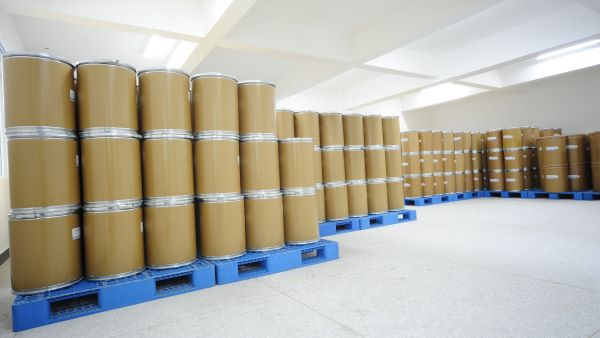
- Standard packaging: 25 kg drum with double inner PE lining.
- Custom packaging available: 1 kg / 5 kg / 10 kg bags or as per buyer requirements.
- All packaging materials comply with food-grade standards.
Shipping Terms
- Shipped via express (DHL, FedEx, UPS), air freight, or sea freight depending on order quantity and destination.
- Sample orders can be dispatched within 3–5 working days.
- Bulk orders shipped within 15–25 working days after payment confirmation.
Shelf Life & Storage
- Store in a cool, dry environment below 25°C.
- Protect from light, moisture, and strong odors.
- Keep original packaging sealed until use.