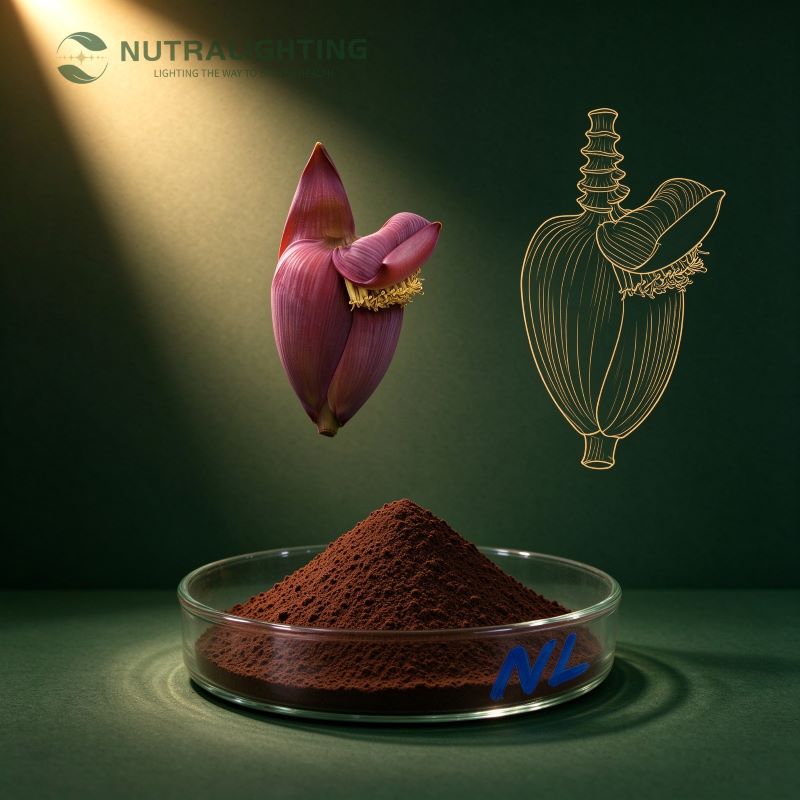
Product Description
Our Banana Flower Extract sourced from fresh banana blossoms (Musa paradisiaca), The extract is standardized to deliver consistent levels of polyphenols, flavonoids, tannins, and essential minerals, making it an ideal raw material for formulators seeking clean-label, plant-powered solutions.
Product Description
Nutraligting supplies Banana Flower Extract from the dried flower buds of Musa paradisiaca L. (Family: Musaceae). Our raw material is cultivated in tropical growing areas across Guangdong, Guangxi, and Hainan provinces in Southern China. The extract is standardised to 5.0%-10.0% total polyphenols, measured by Folin-Ciocalteu method. The main active compounds include polyphenols, dopamine, and serotonin. This extract is designed for formulators working in the antioxidant, digestive health, and skin-care segments of the global B2B market.
Banana flower (also called banana blossom) is a traditional food ingredient in Southeast Asia and South Asia. It is widely used in Thai, Malaysian, Indian, and Filipino cuisines. The flower bud is steamed, boiled, or pickled and served as a vegetable dish. In traditional medicine systems across these regions, banana flower has been used to reduce inflammation, stop bleeding, and support digestive health. The pharmacologically active compounds are mainly polyphenolic compounds. These include flavonoids such as quercetin and luteolin, as well as dopamine and serotonin. Polyphenol content in banana flower is relatively high. Typical values range from 5.0% to 10.0% on a dry weight basis. The antioxidant capacity of banana flower extract has been measured in several laboratory studies.
In vitro studies have shown that banana flower ethanol extract at 100 μg/mL can clear 78% of DPPH free radicals. The FRAP value is approximately 22.5 mmol Fe2+/g. These results indicate strong antioxidant activity. The polyphenols in banana flower also show anti-inflammatory effects. Quercetin and luteolin inhibit the NF-κB signalling pathway. This leads to reduced expression of TNF-α in lipopolysaccharide-stimulated cells. In animal studies, banana flower extract at 500 mg/kg/day significantly reduced gastric ulcer index by 62%. It also increased PGI2 levels in gastric mucosa by 45%. These findings suggest potential benefits for digestive health.
Banana flower contains significant amounts of dietary fibre, particularly pectin. Pectin promotes intestinal motility. In animal models, pectin-rich banana flower extract shortened colonic transit time by approximately 32%. In addition, banana flower extract has shown inhibitory activity against α-glucosidase in vitro (IC50 = 25 μg/mL). This suggests a potential role in blood sugar management after meals. However, human clinical data for banana flower extract specifically is still limited. Most evidence comes from animal studies and in vitro experiments. Formulators should be cautious about making strong health claims without additional human studies.
From a regulatory standpoint, banana (Musa paradisiaca) fruit is widely consumed as food worldwide. The flower is also consumed as food in Southeast Asian countries. However, banana flower extract is not specifically listed in the FDA EAFUS database or GRAS notices. It would generally be regulated as a dietary supplement ingredient under DSHEA in the US market. In the EU, banana flower may be considered a novel food depending on the specific preparation and intended use. Formulators targeting the EU should verify Novel Food status with their regulatory team. In China, banana flower is a traditional food ingredient. It is consumed commonly in southern provinces. No special regulatory restrictions apply to its use as a food or food ingredient.
Our production process uses low-temperature extraction to preserve the heat-sensitive polyphenol fraction. The extract is concentrated under reduced pressure and then spray-dried into a fine powder. We offer a standard grade of 5.0%-10.0% total polyphenols. Higher or lower standardisation levels are available for qualifying orders. All processing aids and solvents meet food-grade standards. No synthetic carriers or anti-caking agents are added to the final powder.
Basic Information
| Item | Content |
| Extract Name | Banana Flower Extract |
| Botanical Name | Musa paradisiaca (Banana Flower) |
| Part Used | Flower/Blossom |
| English Common Name | Banana Blossom Extract, Musa Extract |
| Extraction Ratio | 5:1/10:1(Customizable) |
| Main Active Components | Polyphenols, Dopamine, Serotonin, Quercetin, Luteolin |
| Key Specifications | Total Polyphenols 5.0%-10.0% (Folin-Ciocalteu); individual compounds declared |
| Appearance | Brown to dark brown powder |
| Mesh Size | 80 mesh |
| Target Markets | Asia-Pacific, Europe, North America – Antioxidant, Digestive Health, Skin Care segments |
| Core Application Areas | Dietary supplements and capsule formulations Functional beverages and herbal teas Cosmetics and skincare products (serums, creams, masks) Nutraceutical and wellness formulations Traditional herbal medicine preparations |
Standard Specifications (COA)
The values below are typical specifications for our standard total polyphenols 5.0%-10.0% grade. Actual values for each batch are reported in the accompanying COA. Custom specification ranges are available for qualifying orders.
| Test Item | Standard |
| Total Polyphenols (Folin-Ciocalteu) | 5.0%-10.0% |
| Dopamine | Characterised and declared (% w/w) |
| Serotonin | Characterised and declared (% w/w) |
| Quercetin | Characterised and declared (% w/w) |
| Luteolin | Characterised and declared (% w/w) |
| Loss on Drying | <=8.0% |
| Total Ash | <=8.0% |
| Lead (Pb) | <=1.0 mg/kg |
| Arsenic (As) | <=2.0 mg/kg |
| Cadmium (Cd) | <=0.5 mg/kg |
| Mercury (Hg) | <=0.1 mg/kg |
| Pesticide Residues | Complies with USP <561> |
| Microbiological (TAMC/TYMC/E.coli/Salmonella) | Complies with USP <61> and <62> |
Botanical Source Description
Banana Flower Extract product is derived from the dried flower buds (inflorescence) of Musa paradisiaca L. (Family: Musaceae). Musa paradisiaca is commonly known as the banana or plantain. It is a large herbaceous plant native to the tropical regions of Southeast Asia and the Indo-Malayan area. The flower bud is the large, purple-red structure found at the end of the banana stem. It protects the developing flowers and eventual fruit. In Southeast Asian cuisine, the banana flower is a popular vegetable. It is used in curries, salads, soups, and pickles. The flower has a slightly astringent taste. It is rich in polyphenols and dietary fibre.
In China, Musa paradisiaca and related Musa species are cultivated in tropical and subtropical provinces. The main growing areas include Guangdong, Guangxi, Hainan, and Fujian. These southern provinces provide the warm, humid climate that banana plants require. China is one of the world’s largest banana producers. The annual output exceeds 13 million tonnes. This means there is a substantial supply of banana flowers as a by-product of banana cultivation. Our raw material is sourced from organised banana farms in these southern provinces. All incoming lots are authenticated through macroscopic identification and HPLC fingerprinting.
The polyphenol content in banana flower can vary by growing region, harvest timing, and post-harvest handling. Drying temperature is particularly important. High-temperature drying can degrade heat-sensitive polyphenols and neurotransmitters like dopamine and serotonin. Our procurement protocol specifies low-temperature drying (<=50 deg.C) to preserve the full polyphenol profile. We select raw material with total polyphenol content >=5% (dry basis). Material that does not meet this standard is rejected.
Core Efficacy
The following efficacy summary is based on published scientific literature and traditional use. It is provided for technical reference only. End-product health claims should be validated against the regulations of the target market.
The primary pharmacological activity of Banana Flower Extract is mediated by its polyphenol fraction. Polyphenols are powerful antioxidants. They neutralise free radicals and reduce oxidative stress. In laboratory studies, banana flower ethanol extract at a concentration of 100 μg/mL cleared 78% of DPPH free radicals. The FRAP value was approximately 22.5 mmol Fe2+/g. These results demonstrate strong antioxidant capacity.
The anti-inflammatory properties of banana flower are linked to its flavonoid content. Quercetin and luteolin are the main flavonoids present. These compounds inhibit the NF-κB signalling pathway. In vitro, this led to a 55% reduction in TNF-α expression in lipopolysaccharide-stimulated RAW264.7 cells (P<0.001). This suggests that banana flower extract may help modulate inflammatory responses.
For digestive health, animal studies have shown promising results. Banana flower extract at 500 mg/kg/day reduced gastric ulcer index by 62% in rat models (P<0.001). It also increased PGI2 levels in gastric mucosa by 45% (P<0.01). The dietary fibre in banana flower, particularly pectin, promotes intestinal motility. In animal models, pectin-rich banana flower extract shortened colonic transit time by approximately 32% (P<0.01). In addition, banana flower extract inhibited α-glucosidase in vitro (IC50 = 25 μg/mL). This enzyme breaks down carbohydrates into glucose. Inhibition of α-glucosidase may help moderate post-meal blood sugar spikes.
It is important to note that most of the above evidence comes from in vitro and animal studies. Human clinical trials on banana flower extract specifically are limited. Formulators should be aware of this evidence gap when developing product claims. Traditional use in Southeast Asia provides some support for safety and tolerability. But robust human data is still needed for definitive efficacy claims.
Regulatory & Regional Access Status
The regulatory information below is based on publicly available data. Always verify current requirements with your target market regulator before product launch.
Note: Regulatory status can change. Confirm with the relevant authority or a regulatory consultant prior to export.
| Region / Country | Regulatory Status | Key Notes |
| USA (FDA) | Dietary Supplement (DSHEA) | Banana is widely consumed as food in the US. Banana flower is not commonly consumed but is recognised as safe in Southeast Asian communities. Banana flower extract would be regulated as a dietary supplement ingredient under DSHEA. It is not specifically listed in the FDA EAFUS database. Formulators should ensure their product complies with 21 CFR Part 111. Structure/function claims are permitted under 21 CFR 101.93 with mandatory disclaimer. The FDA has not approved banana flower extract as a drug. |
| EU (EFSA) | Novel Food Assessment May Apply | Banana is a traditional food in the EU. Banana flower is consumed in some Southeast Asian and Mediterranean communities. However, banana flower extract may require a Novel Food authorisation under Regulation 2015/2283 depending on the extraction method and intended use. Formulators should verify Novel Food status with their regulatory team before placing the product on the EU market. No authorised health claims exist for banana flower under Regulation 1924/2006. |
| China (NHC/NMPA) | Traditional Food Ingredient | Banana is a common fruit in China. Banana flower is consumed as a vegetable in southern provinces including Guangdong, Guangxi, and Hainan. It is not a pharmacopoeial medicinal material but is used in TCM practice. No special regulatory restrictions apply to its use as a food or food ingredient. |
Application Directions & Recommended Dosage
| Application | Recommended Dosage | Dosage Forms | Notes |
| Capsules / Tablets | 250-500 mg per serving | Hard capsules, tablets | Typical serving: 250-500 mg extract per capsule. Take 1-2 capsules daily. Compatible with other antioxidant botanicals such as green tea, ginkgo, and turmeric for blending. |
| Oral Powder | 250-500 mg per serving | Stick packs, sachets, jars | Water-soluble. Pre-disperse in warm water before incorporating. The astringent taste may require flavour masking with citrus or berry flavours. |
| Cosmetic / Personal Care | 0.1%-2.0% (w/w) | Lotions, serums, masks, creams | Banana flower extract can be incorporated into aqueous or emulsified cosmetic systems. Evaluate pH stability. The polyphenol content provides antioxidant benefits for skin care formulations. |
Recommended Daily Dosage Reference
- General antioxidant support: 250-500 mg standardised banana flower extract per day, divided into 1-2 doses.
- Digestive health: 500-1,000 mg standardised extract per day, taken with or after meals.
- Skin-care (topical): 0.1%-2.0% (w/w) in cosmetic formulations such as lotions, serums, and masks.
- Formulation note: Banana flower extract is water-soluble. Pre-disperse in warm water before adding to the main batch. The extract has a characteristic astringent taste. Flavour masking may be needed for oral products.
Other Precautions
- Keep containers tightly closed after opening. The extract is hygroscopic. Polyphenols degrade under humid and light-exposed conditions.
- For capsules and tablets: The extract is compatible with common excipients. Consider adding a flow agent such as silicon dioxide if flowability is an issue.
- For oral powders: Pre-disperse in a small volume of warm water before incorporating into the main batch. The characteristic astringent taste may require flavour masking with citrus, berry, or mint flavours.
- For heat-processed products: Polyphenols are moderately heat-stable. However, prolonged thermal exposure (>80 deg.C) may affect some active constituents. Conduct stability testing in your final formulation.
- For cosmetic formulations: Banana flower extract can be incorporated into both aqueous and emulsified systems. Evaluate pH stability. The extract works well at pH 4.0-7.0.
- BANANA FLOWER IS CONSUMED AS FOOD IN SOUTHEAST ASIA AND SOUTHERN CHINA. It is generally recognised as safe when consumed in normal dietary amounts. However, banana flower extract in concentrated form is not specifically listed in the FDA EAFUS database. Formulators should ensure compliance with DSHEA requirements for dietary supplements in the US market.
- ALLERGY WARNING: Individuals with latex-fruit allergy syndrome may react to banana flower. This is a known cross-reactivity between latex proteins and banana proteins. Inform consumers with known latex allergies to exercise caution.
- PREGNANCY AND LACTATION: There is insufficient clinical data on the safety of concentrated banana flower extract during pregnancy and breastfeeding. We recommend that pregnant or nursing women consult a healthcare provider before use.
- DRUG INTERACTIONS: Banana flower contains dopamine and serotonin. While the amounts in typical supplement doses are small, individuals taking MAO inhibitors or serotonergic medications should consult a healthcare provider before use.
This product information is provided for B2B technical and purchasing reference only. It does not constitute medical advice or authorised health claims for end consumers. Brand owners are responsible for ensuring their product labelling complies with all applicable regulations in their target market. Structure/function claims on US dietary supplement labels must comply with 21 CFR 101.93 and include the mandatory disclaimer: “This statement has not been evaluated by the Food and Drug Administration. This product is not intended to diagnose, treat, cure, or prevent any disease.”
Why Choose Nutraligting Banana Flower Extract?
You want a stable supply at a competitive price. Banana is a major crop in Southern China. We have years of experience sourcing from organised farms in Guangdong, Guangxi, and Hainan. Our strategic reserves of dried flowers ensure consistent supply all year round. This gives you reliable delivery and better pricing.
You need flexible specification options. Most suppliers only offer one fixed grade. We can adjust the polyphenol standardisation level. We can also customise the extraction ratio and packaging size. Just tell us what you need. We will give you a clear quote before you commit.
You want a partner who understands the unique challenges of this ingredient. Banana flower has a strong astringent taste. Polyphenols are sensitive to heat and light. Dopamine and serotonin can degrade during processing. Our technical team has practical experience solving these issues. We share formulation tips and taste-masking strategies with you.
Appendix: References
(The following references are provided for technical reference. Some are open access and can be accessed via PubMed, PMC, or the journal websites.)
[1] Sreelatha S. et al., Journal of Agricultural and Food Chemistry, 2009; 57(22): 10628-10634. – DPPH radical scavenging (78% at 100 μg/mL), FRAP value 22.5 mmol Fe2+/g.
[2] Kumar S. et al., Journal of Ethnopharmacology, 2012; 141(2): 625-631. – Anti-ulcer effect: 500 mg/kg reduced gastric ulcer index by 62%; increased PGI2 by 45%.
[3] Pham-Huu C.F. et al., Journal of Ethnopharmacology, 2006; 103(1): 113-118. – α-glucosidase inhibition (IC50 = 25 μg/mL); anti-inflammatory via NF-κB pathway.
[4] ASEAN Traditional Food Database. Musa paradisiaca flower as traditional food ingredient in Southeast Asia.
[5] China Banana Industry Association. China banana production and distribution data, 2024. – Annual output >13 million tonnes; main growing provinces: Guangdong, Guangxi, Hainan, Fujian.
Frequently Asked Questions
We offer standard ratios of 5:1 and 10:1, with custom ratios available upon request to meet your formulation requirements.
Yes, our Banana Flower Extract is 100% plant-derived, vegan-friendly, and free from common allergens. We can provide allergen testing documentation upon request.
Absolutely. We provide sample quantities starting from 1 kg. Please contact our sales team for sample pricing and lead time.
Yes, we offer ODM/OEM services including custom packaging, labeling, and specification adjustments. Please reach out to discuss your requirements.
Our products come with COA, MSDS, and certificates of origin. ISO and Halal are available upon request. We also support GMP-compliant facility documentation.
Packaging & Shipping
Standard Packaging
- Standard packaging: 1 kg/aluminum foil bag + 2-layer cartons.
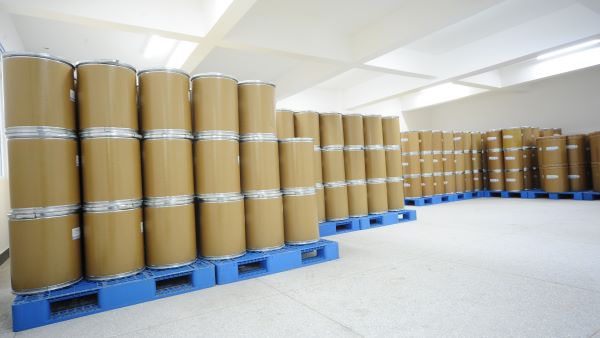
- Bulk packaging: 25 kg/drum or as per customer requirements.
- Custom packaging and labeling available for bulk orders.
Shipping Terms
- Sample orders: shipped via express courier (DHL, FedEx, UPS) within 3–5 business days.
- Bulk orders: shipped by air freight or sea freight depending on order volume and destination.
- Lead time: 7–15 business days after order confirmation, subject to order quantity.
Shelf Life & Storage
- Store in a cool, dry place away from direct sunlight and moisture.
- Keep containers tightly sealed when not in use.
- Recommended storage temperature: 2–8°C for optimal stability.