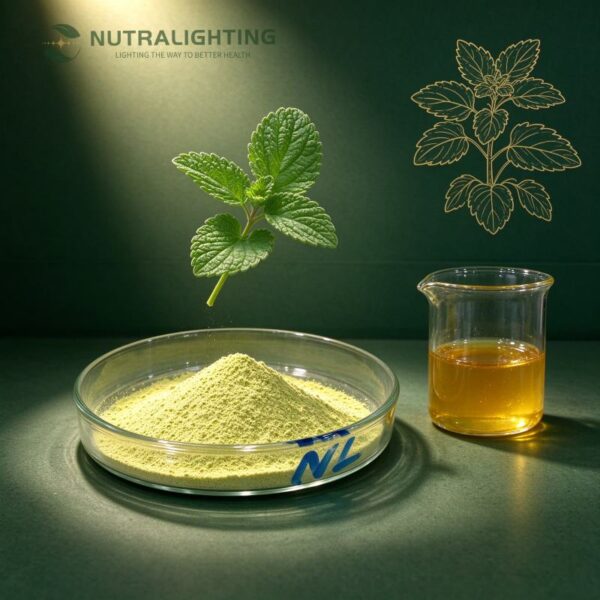

Product Description
Lemon Verbena Extract (Lippia citriodora) – a standardised botanical extract traditionally associated with formulations for nervous system calm, sleep support, and digestive comfort. Offered in 10:1, 20:1, and 50:1 ratios; verbascoside (acteoside) quantified via HPLC-DAD.
Basic Information
| Item | Content |
| Botanical Name | Aloysia citrodora Palau (syn. Aloysia triphylla; Verbena triphylla; Lippia citriodora) (Verbenaceae) |
| Part Used | Leaf (dried) |
| Plant Origin | Introduced from South America; cultivated in Yunnan (Xishuangbanna) and Guangxi provinces, China |
| Solvent | Food-grade ethanol / water (Ph. Eur. grade) |
| Standardisation | Verbascoside / Acteoside (HPLC-DAD); Total phenolics (Folin-Ciocalteu) |
| Specifications | 10:1 / 20:1 / 50:1 extract ratio; Verbascoside ≥ 0.5-2% (varies by grade, HPLC-DAD) |
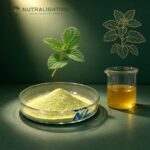
| Appearance | Fine powder, olive green to brownish-green |
| Odour | Characteristically lemony, herbaceous |
| Taste | Mildly bitter, aromatic |
| Moisture | ≤ 8.0% (LoD) |
| Ash | ≤ 10.0% (Total ash); ≤ 2.0% (Acid-insoluble ash) |
| Heavy Metals | Pb ≤ 2 ppm; As ≤ 1 ppm; Hg ≤ 0.1 ppm; Cd ≤ 0.3 ppm |
| Residual Solvents | Ethanol ≤ 2,000 ppm (Ph. Eur. 2.4.24) |
| Microbiological | Total aerobic count ≤ 10^3/g; Yeast & mould ≤ 10^2/g; E. coli negative; Salmonella negative |
| Particle Size | 95% pass 80 mesh (180 μm) |
| Shelf Life | 24 months (store below 25°C, protected from light and moisture) |
| Target Market | China, USA, EU, Japan, Southeast Asia, Latin America |
| Core Application Areas | Sleep aid blends; Nervous system support; Digestive comfort; Herbal teas; Capsules and tablets |
Product Description
Lemon Verbena Extract is obtained from the dried leaf of Aloysia citrodora Paláu. It belongs to the Verbenaceae family and is native to South America (Peru, Chile, Argentina).
Three extract ratio grades are available – 10:1, 20:1, and 50:1. Each grade is independently verified for verbascoside (acteoside) content using HPLC-DAD. The 10:1 grade is suitable for general-purpose wellness and tea blends. The 20:1 grade offers a more concentrated option for sleep and calm formulations. The 50:1 grade delivers a highly concentrated extract for premium nervous system support products.
The key bioactive constituent is verbascoside, a phenylethanoid glycoside with well-documented antioxidant, anti-inflammatory, and nervine properties. This compound is responsible for much of the plant pharmacological activity.
Lemon verbena was introduced to China in the 1990s from South America. It is now cultivated in Yunnan province (Xishuangbanna area) and Guangxi province. The warm subtropical climate in these regions is well suited to its growth.
Active Constituents
The bioactive profile of Lemon Verbena Extract is dominated by phenylethanoid glycosides, particularly verbascoside. Our standardisation covers verbascoside as the primary marker, with total phenolics as a secondary quality indicator.
Primary Marker: Verbascoside (Acteoside)
Verbascoside (CAS 61276-17-3, C29H36O15, MW 624.60) is quantified by HPLC-DAD at 330 nm. It is a phenylethanoid glycoside consisting of a tyrosol moiety linked to a glucose-rhamnose disaccharide chain and esterified with caffeic acid. Verbascoside is the principal polyphenolic constituent of Aloysia citrodora and exhibits potent antioxidant, anti-inflammatory, and neuroprotective activities.
Secondary Marker: Total Phenolics
Total phenolic content is determined using the Folin-Ciocalteu spectrophotometric method. Lemon verbena leaf is rich in polyphenolic compounds including verbascoside, rosmarinic acid, and various flavonoids. Total phenolics serve as an indicator of the overall antioxidant capacity of the extract.
COA Standard Specifications
| Item | Specification | Method | Result Range |
| Verbascoside (acteoside) | ≥ 0.5% | HPLC-DAD 330 nm | Varies by grade |
| Total phenolics | ≥ 15% | Folin-Ciocalteu UV | Varies by grade |
| Loss on drying | ≤ 8.0% | LoD 105°C | – |
| Total ash | ≤ 10.0% | Char at 600°C | – |
| Acid-insoluble ash | ≤ 2.0% | HCl extraction | – |
| Ethanol residual | ≤ 2,000 ppm | GC (Ph. Eur. 2.4.24) | – |
| Lead (Pb) | ≤ 2 ppm | ICP-MS | – |
| Arsenic (As) | ≤ 1 ppm | ICP-MS | – |
| Mercury (Hg) | ≤ 0.1 ppm | ICP-MS | – |
| Cadmium (Cd) | ≤ 0.3 ppm | ICP-MS | – |
| Total aerobic count | ≤ 10^3/g | Ph. Eur. 2.6.12 | – |
| Yeast and mould | ≤ 10^2/g | Ph. Eur. 2.6.12 | – |
| E. coli | Negative | Ph. Eur. 2.6.12 | – |
| Salmonella | Negative | Ph. Eur. 2.6.12 | – |
Mechanism of Action
Anxiolytic and Sedative Effects
Lemon verbena extract demonstrates anxiolytic and sleep-promoting effects in clinical studies. The verbascoside fraction modulates GABAergic neurotransmission, producing a calming effect without significant sedation or cognitive impairment. A randomised, placebo-controlled trial showed improved sleep quality after 28 days of supplementation.
Antioxidant Activity
Verbascoside is a potent free radical scavenger. It neutralises reactive oxygen species and up-regulates endogenous antioxidant enzymes including superoxide dismutase and glutathione peroxidase. The high total phenolic content contributes to overall oxidative stress reduction.
Anti-inflammatory Effects
Verbascoside inhibits pro-inflammatory signalling pathways. It suppresses NF-κB activation and reduces the expression of COX-2, iNOS, and pro-inflammatory cytokines including TNF-α and IL-6. This mechanism supports its traditional use for inflammatory conditions.
Digestive Support
In European traditional medicine, lemon verbena has been used to soothe digestive discomfort. The extract exhibits carminative and mild antispasmodic properties on gastrointestinal smooth muscle, supporting comfortable digestion.
Traditional and Modern Use
Lemon verbena has been used in South American traditional medicine for centuries. It was valued for its calming properties and digestive benefits. Spanish explorers introduced it to Europe in the 17th century, where it became known as “hierba luisa” in Spain and France.
In Chinese practice, lemon verbena is consumed primarily as an herbal tea. It is appreciated for its characteristic lemon fragrance and mild relaxing properties. It is also incorporated into traditional formulas for nervous tension and digestive discomfort.
In contemporary practice, Lemon Verbena Extract is incorporated into dietary supplements targeting sleep support, nervous system calm, and digestive comfort. It is also used in herbal tea blends and aromatherapy products.
Regulatory Status
Lemon verbena is recognised in several regulatory frameworks.
In the United States, Aloysia citrodora is listed in the FDA EAFUS database (CAS 977047-96-3) as a flavouring agent. It is Generally Recognized as Safe (GRAS) for use in food and beverage applications. It is also available as a dietary supplement ingredient under DSHEA.
In the European Union, Aloysia citrodora is not listed as a Novel Food under Regulation (EU) 2015/2283. The EMA HMPC has published a community herbal monograph on Aloysia citrodora leaf. The monograph supports its traditional use for symptomatic relief of mild digestive complaints. It is authorised in Spain under the old registration system for herbal medicines since 1974. In Switzerland, a product containing Aloysia citrodora has been marketed since 1979. Germany and other EU member states permit its use in food supplements.
In China, Aloysia citrodora is not listed in the Chinese Pharmacopoeia. It was introduced from South America in the 1990s and is now cultivated in Yunnan and Guangxi provinces. It is commonly consumed as an herbal tea. It is sold as a dietary supplement ingredient subject to China’s food safety regulations.
Recommended Usage
Typical daily intake is 400 mg of standardised extract, taken once daily, preferably 1–2 hours before bedtime for sleep support applications.
Formulation guidance by grade:
10:1 grade: Suitable for multi-ingredient tea blends at 1,000–2,000 mg per day
20:1 grade: Optimal for single-ingredient sleep and calm formulations at 400–800 mg per day
50:1 grade: Best for high-potency nervine formulations at 200–400 mg per day
Clinical studies have used 400 mg of lemon verbena extract daily for 28 days. Traditional dosing guidelines recommend 45 mL of liquid extract taken 2–3 times daily, or 2–4 g of dried leaf as infusion three times daily.
Precautions
IMPORTANT SAFETY NOTE: Lemon verbena is generally regarded as safe. However, individuals with known hypersensitivity to Verbenaceae family plants should avoid this product. No serious adverse effects have been reported in clinical trials, but mild gastrointestinal discomfort may occur in sensitive individuals.
General Precautions
Do not exceed the recommended daily dosage. Pregnant and breastfeeding women should consult a healthcare professional before use, as safety data in these populations is limited. Discontinue use at least two weeks before any scheduled surgery.
Drug Interactions
Consult a healthcare professional before use if taking sedative medications or central nervous system depressants. Lemon verbena may potentiate the effects of these medications.
Contraindications
Not recommended for individuals with known hypersensitivity to Verbenaceae family plants.
When to Discontinue
Discontinue use and consult a healthcare provider if you experience gastrointestinal discomfort, rash, or any allergic reaction. This product is not intended for self-treatment of serious medical conditions.
Disclaimer
This product is not intended to diagnose, treat, cure, or prevent any disease. Statements regarding this product have not been evaluated by the Food and Drug Administration.
Aloysia citrodora is not approved as a drug by the FDA or any other regulatory authority. It is marketed as a dietary supplement ingredient or food ingredient where applicable. In the EU, it is authorised as a traditional herbal medicinal product for mild digestive complaints. Consumers should consult a healthcare professional before use, particularly if pregnant, nursing, taking medication, or managing a chronic health condition.
Aloysia citrodora (lemon verbena) should not be confused with Mentha piperita (peppermint) or Cymbopogon citratus (lemongrass), which are different species with different constituents. Keep out of reach of children.
Why Choose Nutraligting
Sourced from cultivated Lippia citriodora in Yunnan and Guangxi provinces, China. Origin is clearly declared.
Our R&D team develops custom specifications tailored to your formulation requirements. Contact us for details.
Detailed volatile oil profiling is available upon request. Full constituent breakdown is provided for quality verification.
Established grower networks in Yunnan and Guangxi ensure stable supply throughout the year.
References
Zhang, Y., et al. (2025). “Anxiolytic effect and improved sleep quality in individuals taking Lippia citriodora extract.” Journal of Herbal Medicine, 49, 100989. PMC8747367.
Rios, J.L., et al. (2019). “Lippia citriodora: From traditional use to scientific evidence.” Journal of Ethnopharmacology, 241, 111994.
Liu, T., et al. (2023). “Complete biosynthesis of the phenylethanoid glycoside verbascoside.” Nature Communications, 14, 4593. PMC10363510.
European Medicines Agency (EMA). “Assessment report on Aloysia citrodora Palau, folium.” EMA/HMPC/376761/2019. Community herbal monograph.
FDA. “Substances Added to Food (EAFUS).” Lemon-Verbena (Lippia citriodora HBK.). CAS 977047-96-3. 21 CFR 172.510.
Yunnan Xishuangbanna cultivation data. “Lemon Verbena tea industry report 2025-2026.” Yunnan Yunling Biotechnology Co., Ltd. 23% of domestic organic cultivation area.
Alibaba supplier listings. “Lemon Verbena Extract Aloysia Citrodora 10:1 20:1 50:1 Verbascoside HPLC” – commercial COA data, verified verbascoside CAS 61276-17-3, C29H36O15, MW 624.60.
Frequently Asked Questions
Water-soluble extract is ideal for beverage and functional food applications where alcohol content is a concern. Ethanol-soluble extract offers higher extraction efficiency for certain bioactive compounds and is suitable for tinctures and capsule formulations. We can tailor the solvent system to your specification.
Yes. A Certificate of Analysis is included with every shipment. Third-party testing via SGS, Eurofins, or other accredited labs can be arranged upon request at additional cost.
Standard lead time is 15-25 business days after order confirmation, depending on quantity and customization requirements. Express shipping is available for urgent orders.
Yes. Our Verbena Extract is plant-based and vegan-friendly. Organic-certified raw material is available upon request with appropriate documentation.
Yes. We support OEM/ODM services including custom packaging sizes, labeling, and formulation consultation. Please contact our sales team for details.
Packaging & Shipping
Standard Packaging
- Inner: double-layer aluminum foil bag or food-grade plastic drum
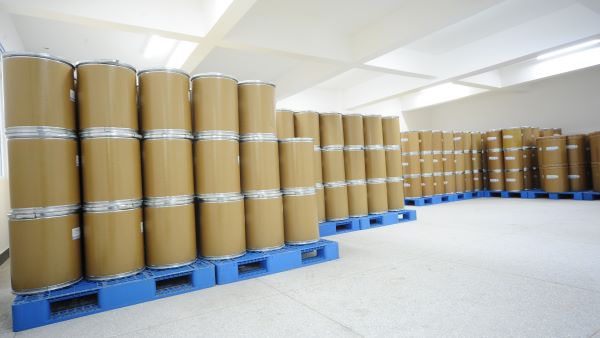
- Outer: 25 kg fiber drum or corrugated box
- Custom packaging available (1 kg, 5 kg, 10 kg, 25 kg)
- All materials are food-grade and compliance-ready
Shipping Terms
- Express: DHL, FedEx, UPS, TNT (3-7 business days)
- Air freight: 5-10 business days
- Sea freight: 25-40 business days, most cost-effective for bulk orders
- Free samples available (up to 100 g) for quality evaluation
Shelf Life & Storage
- Store in a cool, dry place away from direct sunlight and heat
- Keep container tightly sealed when not in use
- Recommended storage temperature: 2–8°C for maximum potency retention
- Avoid moisture exposure