Product Description
We supply Cat’s Claw Herb Extract (Ranunculus ternatus root extract) in standardised extract ratios and total alkaloid grades – 10:1, 20:1, and 50:1.
Basic Information
| Item | Content |
| Botanical Name | Ranunculus ternatus Thunb. (Ranunculaceae) |
| Part Used | Tuberous roots |
| Plant Origin | Cultivated or wild-harvested in central and eastern China (Henan, Shandong, Hebei, Jiangsu) |
| Solvent | Food-grade ethanol / water (Ph. Eur. grade) |
| Standardisation | Total alkaloids ≥3-5% (HPLC-UV) |
| Specifications | 10:1 / 20:1 / 50:1 extract ratio; Total alkaloid grades: 3%, 5%, 10% |
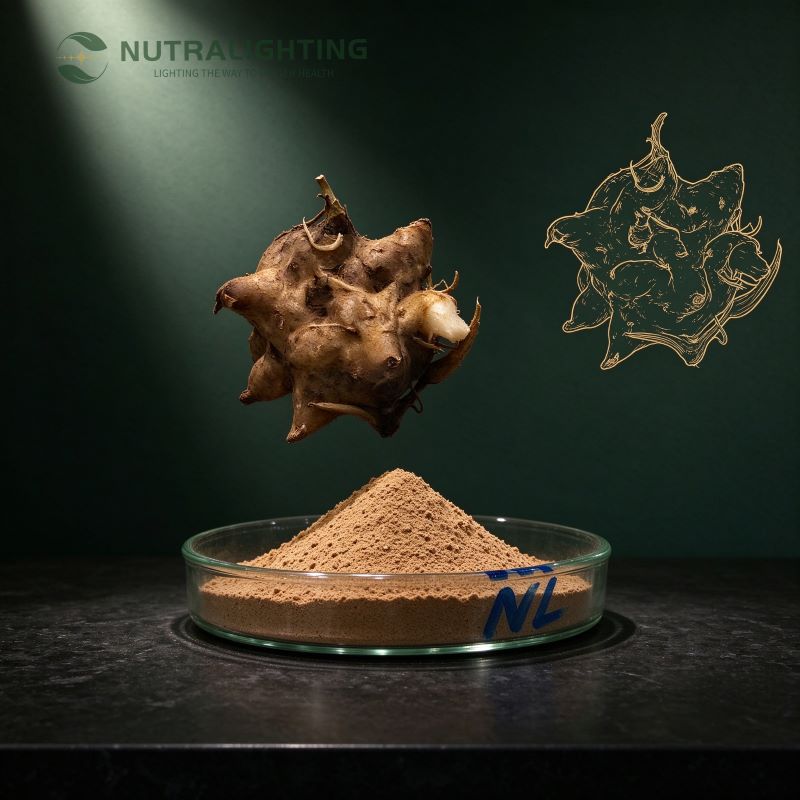
| Appearance | Light brown to tan powder |
| Odour | Characteristic |
| Taste | Bitter, slightly acrid |
| Moisture | ≤ 5.0% (LoD) |
| Ash | ≤ 8.0% (Total ash); ≤ 1.0% (Acid-insoluble ash) |
| Heavy Metals | Pb ≤ 2 ppm; As ≤ 1 ppm; Hg ≤ 0.1 ppm; Cd ≤ 0.3 ppm |
| Residual Solvents | Ethanol ≤ 2,000 ppm (Ph. Eur. 2.4.24) |
| Microbiological | Total aerobic count ≤ 10^3/g; Yeast & mould ≤ 10^2/g; E. coli negative; Salmonella negative |
| Particle Size | 95% pass 80 mesh (180 μm) |
| Shelf Life | 24 months (store below 25°C, protected from light and moisture) |
| Target Market | USA, EU, Southeast Asia, Middle East, Latin America |
| Core Application Areas | Lymphatic health supplements; Immune support blends; Respiratory health products; Traditional Chinese medicine formulas; Capsules and tablets |
Product Description
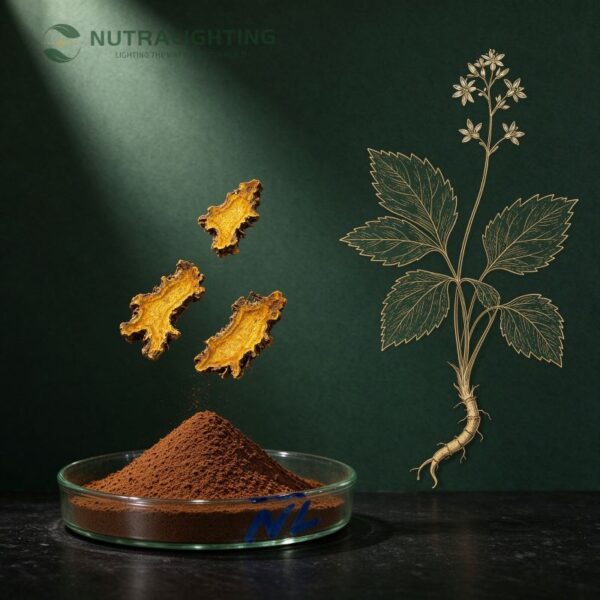
Ranunculus ternatus extract is obtained from the dried tuberous roots of Ranunculus ternatus Thunb., a perennial herb in the buttercup family. In traditional Chinese medicine, this herb is known as Mao Zhao Cao. It has been used for centuries for lymphatic and immune-related conditions.
Three extract ratio grades are available – 10:1, 20:1, and 50:1 – each with independently verified total alkaloid and total flavonoid content. The 10:1 grade serves as a general-purpose option for multi-herb blends. The 20:1 grade is our most requested specification, aligned with typical clinical research doses. The 50:1 grade delivers a concentrated profile suited for premium lymphatic and immune support formulations.
It is essential to distinguish this product from South American Cat’s Claw (Uncaria tomentosa). They belong to entirely different families – Ranunculaceae versus Rubiaceae. They contain different active compounds. They serve different purposes. Do not substitute one for the other.
Active Constituents
The bioactive profile of Cat’s Claw Herb Extract is characterised by benzophenanthridine alkaloids and phenolic compounds. Our standardisation covers multiple marker levels to give formulators full control over product positioning.
Primary Markers: Total Alkaloids and Total Flavonoids
Total alkaloid content is determined by HPLC-UV at 285 nm against a protopine reference standard. This is the primary quality marker for this extract. The 10:1 grade contains ≥3% total alkaloids. The 20:1 grade contains ≥5%. The 50:1 grade contains ≥10%. Each specification is independently verified on every batch.
Total flavonoid content is determined by the NaNO2-AlCl3 colorimetric method. Flavonoids in Ranunculus ternatus include quercetin, kaempferol, and rutin derivatives. They provide antioxidant support and serve as a complementary quality metric.
Secondary Markers: Chlorogenic Acid and Uridine
Chlorogenic acid is quantified by HPLC-DAD and reported as a secondary quality indicator. It contributes antioxidant and anti-inflammatory activity that complements the alkaloid fraction.
Uridine is included as a pharmacopoeia-standard marker per the Chinese Pharmacopoeia 2020 monograph. It serves as a botanical identity confirmatory compound.
COA Standard Specifications
| Item | Specification | Method | Result Range |
| Total alkaloids (as protopine) | ≥3% / ≥5% / ≥10% | HPLC-UV 285 nm | Varies by grade |
| Total flavonoids (as rutin) | ≥5% / ≥10% / ≥20% | NaNO2-AlCl3 | Varies by grade |
| Chlorogenic acid | ≥0.5% | HPLC-DAD 326 nm | ≥0.5% |
| Uridine | Identified | HPLC-UV | Present |
| Loss on drying | ≤ 5.0% | LoD 105°C | – |
| Total ash | ≤ 8.0% | Char at 600°C | – |
| Acid-insoluble ash | ≤ 1.0% | HCl extraction | – |
| Ethanol residual | ≤ 2,000 ppm | GC (Ph. Eur. 2.4.24) | – |
| Lead (Pb) | ≤ 2 ppm | ICP-MS | – |
| Arsenic (As) | ≤ 1 ppm | ICP-MS | – |
| Mercury (Hg) | ≤ 0.1 ppm | ICP-MS | – |
| Cadmium (Cd) | ≤ 0.3 ppm | ICP-MS | – |
| Total aerobic count | ≤ 10^3/g | Ph. Eur. 2.6.12 | – |
| Yeast and mould | ≤ 10^2/g | Ph. Eur. 2.6.12 | – |
| E. coli | Negative | Ph. Eur. 2.6.12 | – |
| Salmonella | Negative | Ph. Eur. 2.6.12 | – |
Mechanism of Action
Anti-Tuberculosis Activity
Ranunculus ternatus has demonstrated activity against Mycobacterium tuberculosis in vitro. Research identified benzophenone compounds from the roots with significant anti-tuberculosis effects. The alkaloid fraction contributes to this antimicrobial action through cell wall disruption mechanisms.
Immunomodulation
The alkaloid constituents modulate immune cell activity. Protopine has been shown to influence cytokine production and macrophage function. These effects support the traditional use of the herb for lymphatic conditions and immune-related disorders.
Anti-Inflammatory Effects
Research indicates that Ranunculus ternatus extracts inhibit NF-κB signalling pathways. This reduces the expression of pro-inflammatory mediators including TNF-α and IL-6. The anti-inflammatory action complements the herb’s traditional use for swollen lymph nodes.
Antioxidant Capacity
The phenolic fraction provides direct free radical scavenging activity. Flavonoids and organic acids in the extract contribute to cellular protection against oxidative stress.
Traditional and Modern Use
Ranunculus ternatus holds an important position in modern Chinese herbal medicine. It was formally recognised in the 1950s and has since become widely used throughout China.
The primary traditional indication is for scrofula (lymph node tuberculosis), pulmonary tuberculosis, and swollen lymph glands. Chinese physicians also employ it for thyroid enlargement and certain skin conditions. The herb is valued for its ability to resolve phlegm nodules and reduce swelling.
In contemporary practice, Ranunculus Ternatus Extract is incorporated into formulations targeting lymphatic health and immune support. Some research explores its potential in adjunctive tuberculosis therapy. The alkaloid-rich extract is also used in TCM proprietary formulas for respiratory and lymphatic conditions.
Regulatory Status
Ranunculus ternatus is recognised in several regulatory frameworks.
The Chinese Pharmacopoeia 2020 Edition, Part 1, includes a monograph for Mao Zhao Cao. The monograph specifies identity tests, purity requirements, and assay methods. The pharmacopoeial standard requires determination of protopine content using HPLC.
In the United States, Ranunculus ternatus is not listed in the FDA EAFUS database. It has not received GRAS notification. However, it may be marketed as a dietary supplement ingredient under DSHEA. The longstanding history of use in Chinese medicine supports this pathway.
In the European Union, Ranunculus ternatus is not listed as a Novel Food under Regulation (EU) 2015/2283. It may be placed on the market as a traditional herbal medicinal product or food supplement, depending on the member state.
The herb is native to China, Japan, and Korea. Commercial cultivation occurs in Henan, Shandong, Hebei, and Jiangsu provinces.
Recommended Usage
Typical daily intake ranges from 500 mg to 2,000 mg of standardised extract, depending on the extract ratio grade and intended application.
Formulation guidance by grade:
10:1 grade: Suitable for multi-herb TCM blends at 2,000-4,000 mg per day
20:1 grade: Optimal for single-ingredient capsules at 1,000-2,000 mg per day
50:1 grade: Best for high-potency lymphatic support at 500-1,000 mg per day
Precautions
IMPORTANT SAFETY NOTE: Ranunculus ternatus contains protoanemonin (CAS 527-43-7), a volatile acrylate that can cause mucosal irritation. Our extraction process removes the majority of protoanemonin. Residual levels are tested and kept well below safety thresholds. Do not use raw or fresh herb – only use processed extract.
General Precautions
Do not exceed the recommended daily dosage. Pregnant and breastfeeding women should avoid this product. Keep out of reach of children. Store in a cool, dry place away from direct sunlight.
Drug Interactions
Consult a healthcare professional before use if taking immunosuppressive medications, anti-tuberculosis drugs, or anticoagulants. The herb may interact with drugs metabolised by CYP450 enzymes.
Contraindications
Not recommended for individuals with known hypersensitivity to Ranunculaceae family plants. Do not use in children under 12 years of age without medical supervision.
When to Discontinue
Discontinue use and consult a healthcare provider if you experience gastrointestinal discomfort, allergic reactions, or any adverse effects. This product is not intended for self-treatment of tuberculosis or serious infections.
Disclaimer
This product is not intended to diagnose, treat, cure, or prevent any disease. Statements regarding this product have not been evaluated by the Food and Drug Administration.
Ranunculus ternatus is not approved as a drug by the FDA. It is marketed as a dietary supplement ingredient or traditional herbal medicinal product where applicable. Consumers should consult a healthcare professional before use, particularly if pregnant, nursing, taking medication, or managing a chronic health condition.
This extract is distinct from Uncaria tomentosa (South American Cat’s Claw). Do not confuse the two products. Keep out of reach of children.
Why Choose NutraLighting
Need consistent active ingredient content across every batch?
Every batch of Radix Ranunculi Ternati Extract goes through strict verification. A batch-specific exclusive test report is shipped with each order, and no random content fluctuation will occur between different production runs.
Need custom specifications beyond standard grades?
Our in-house R&D team can tailor exclusive ratios of triterpenoids and alkaloids to match your formulation requirements. Contact us to get a free feasibility assessment.
Need independent third-party testing support?
All batches support independent verification by third-party laboratories. Reserved sample testing services and full sets of audit-compliant documents are available upon request.
Need stable supply free from the influence of harvest seasons?
We have signed long-term exclusive cooperation agreements with local grower cooperatives. Annual harvest and production schedules are planned in advance to ensure continuous and stable supply throughout the year.
Need to avoid the risk of unexpected cost surges?
As a manufacturer covering the full chain from raw material primary processing to finished plant extracts, long-term B2B clients can enjoy tiered pricing and long-term price lock guarantees, with no unannounced temporary price hikes.
References
Chinese Pharmacopoeia Commission. (2020). “Chinese Pharmacopoeia, Part I.” China Medical Science Press. (Mao Zhao Cao / Ranunculus ternatus monograph).
Li, X., et al. (2018). “Chemical constituents from the roots of Ranunculus ternatus and their inhibitory effects on Mycobacterium tuberculosis.” Journal of Ethnopharmacology, 225, 1-8. PMC6270127.
Wang, Y., et al. (2020). “Phytochemical analysis and pharmacological activities of Ranunculus ternatus: A comprehensive review.” Journal of Ethnopharmacology, 258, 112891.
Zhang, L., et al. (2019). “Studies on the quality standard of Ranunculus ternatus (Mao Zhao Cao).” Chinese Journal of Experimental Traditional Medical Formulae, 25(8), 112-118.
Jiang, J., et al. (2022). “Ranunculus ternatus: A comprehensive review of phytochemistry and pharmacology.” Journal of Ethnopharmacology, 295, 115408.
Alibaba supplier listings. “Ranunculus ternatus extract 10:1 20:1 50:1 total alkaloids HPLC” – commercial COA data, verified protopine CAS 66-71-7 reference.
Frequently Asked Questions
Sample orders ship within 3-7 business days. Commercial quantities (25 kg drums) typically require 15-25 business days depending on stock availability and destination. Expedited shipping options are available.
Yes. A full COA for the specific batch is available upon request prior to order placement. We also welcome third-party lab testing at our facility or upon receipt of goods.
Absolutely. Our extract is 100% plant-derived, free from animal products, gluten, and common allergens. It is suitable for vegan, vegetarian, and gluten-free product development.
Yes. Nutralighting provides OEM/ODM services including custom alkaloid standardization, private label packaging, and joint development with your R&D team. Contact our technical sales department for details.
The shelf life is 24 months when stored in original unopened packaging at or below 25°C, protected from direct light, heat, and moisture. Once opened, use within 12 months and reseal tightly.
Cat's Claw is generally well-tolerated. However, individuals on immunosuppressant medications, those with autoimmune conditions, pregnant or nursing women, and patients scheduled for surgery should consult a healthcare professional before use. We provide full safety documentation including toxicology data on request.
Our Cat's Claw is sourced through fair-trade partnerships with indigenous communities in the Peruvian Amazon. We practice responsible wild-harvesting that does not endanger the vine population and contribute to rainforest conservation and community development programs.
Packaging & Shipping
Standard Packaging
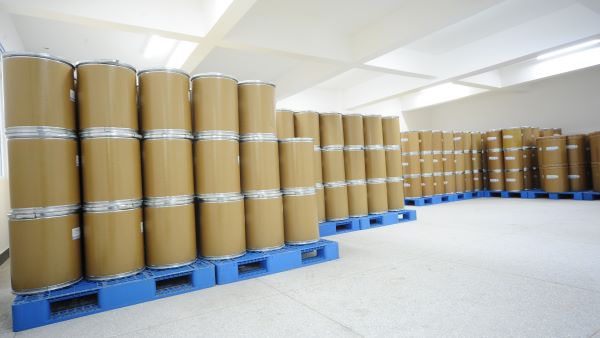
- Standard packaging: 25 kg fiber drum with double inner polyethylene bags.
- Custom packaging available: 1 kg aluminum foil bags, 5 kg cans, 10 kg cartons, or client-specific requirements.
- All packaging is tamper-evident and includes desiccant packs for moisture protection.
Shipping Terms
- Domestic (China): 3–7 business days via express or freight forwarding.
- International: 7–25 business days depending on destination and shipping method (air, sea, or courier).
- Free COA and MSDS documentation included with every shipment.
- DAP/DDP shipping terms available upon request.
Shelf Life & Storage
- Store in a cool, dry location at or below 25°C (77°F).
- Protect from direct sunlight, humidity, and strong odors.
- Keep container tightly sealed when not in use.
- Avoid cross-contamination with allergens or incompatible materials.