
Product Description
Tailored for respiratory comfort, yin-nourishing wellness support, and traditional herbal formula applications, we offer standardized Ophiopogon Extract in 10:1, 20:1 and 30:1 ratios. Every batch undergoes full content verification for total saponins (calculated as ruscogenin) and total polysaccharides, delivering consistent active potency that perfectly aligns with your modern herbal supplement and traditional formula development needs.
Basic Information
| Item | Content |
| Botanical Name | Ophiopogon japonicus (L.f.) Ker-Gawl. (Liliaceae) |
| Part Used | Tuberous root (dried) |
| Plant Origin | Cultivated in Sichuan and Zhejiang provinces, China (Chuan Maidong and Zhe Maidong) |
| Solvent | Water / ethanol (Ph. Eur. grade) |
| Standardisation | Total saponins (UV at 254 nm, as ruscogenin CAS 472-11-7); Total polysaccharides (phenol-sulphuric acid method) |
| Specifications | 10:1 / 20:1 / 30:1 extract ratio; Total saponins ≥ 5%; Total polysaccharides ≥ 20-40% (varies by grade) |
| Appearance | Fine powder, light brown to yellowish-brown |
| Odour | Characteristic mild herbal |
| Taste | Slightly bitter, mildly sweet |
| Moisture | ≤ 7.0% (LoD) |
| Ash | ≤ 6.0% (Total ash); ≤ 2.0% (Acid-insoluble ash) |
| Heavy Metals | Pb ≤ 2 ppm; As ≤ 1 ppm; Hg ≤ 0.1 ppm; Cd ≤ 0.3 ppm |
| Residual Solvents | Ethanol ≤ 2,000 ppm (Ph. Eur. 2.4.24) |
| Microbiological | Total aerobic count ≤ 10^3/g; Yeast & mould ≤ 10^2/g; E. coli negative; Salmonella negative |
| Particle Size | 95% pass 80 mesh (180 μm) |
| Shelf Life | 24 months (store below 25°C, protected from light and moisture) |
| Certifications | ISO 22000 / HACCP / Kosher / Halal / NON-GMO / Vegan |
| Target Market | China, USA, EU, Japan, Southeast Asia |
| Core Application Areas | Traditional herbal formulas; Respiratory comfort blends; Immune support; Tonic and adaptogen products; Capsules and tablets |
Product Description
Ophiopogon Extract is obtained from the dried tuberous root of Ophiopogon japonicus (L.f.) Ker-Gawl. It belongs to the Liliaceae family and is known in Chinese as Maidong.
Three extract ratio grades are available – 10:1, 20:1, and 30:1. Each grade is independently verified for total saponins and total polysaccharides. The 10:1 grade is suitable for general-purpose traditional formula blends. The 20:1 grade offers a balanced concentration for premium wellness products. The 30:1 grade delivers a highly concentrated extract for high-potency formulations.
Two main cultivation origins are recognised in the Chinese materia medica. Chuan Maidong is cultivated in Sichuan province and harvested after one growing season. Zhe Maidong is cultivated in Zhejiang province and harvested after two to three growing seasons. Zhe Maidong is generally regarded as superior quality and contains higher levels of homoisoflavonoids.
In August 2024, the National Health Commission of China added Ophiopogon japonicus to the list of substances that are both food and traditional Chinese medicine. This recognises its long history of safe consumption in soups, teas, and congee.
Active Constituents
The bioactive profile of Ophiopogon Extract is dominated by steroidal saponins and polysaccharides. Our standardisation covers total saponins and total polysaccharides as primary markers. Ruscogenin serves as the reference compound for saponin quantification.
Primary Markers: Total Saponins and Total Polysaccharides
Total saponin content is determined by UV spectrophotometry at 254 nm, calculated as ruscogenin equivalent. This is the method specified in the Chinese Pharmacopoeia (2020 edition). Steroidal saponins in Ophiopogon japonicus include ophiopogonins B, D, and E, as well as ruscogenin glycosides.
Total polysaccharide content is measured using the phenol-sulphuric acid spectrophotometric method. Ophiopogon polysaccharides include beta-glucans and other water-soluble fractions. Polysaccharide content is one of the primary quality indicators in the Chinese Pharmacopoeia monograph.
Secondary Marker: Ruscogenin
Ruscogenin (CAS 472-11-7, C27H42O4, MW 430.62) is the aglycone reference standard used for total saponin quantification. It is a spirostane-type steroidal sapogenin. Major saponins in Ophiopogon include ophiopogonin D (CAS 945619-74-9, C44H70O16, MW 855.02) and ophiopogonin B, which are glycosides of ruscogenin and diosgenin respectively.
COA Standard Specifications
| Item | Specification | Method | Result Range |
| Total saponins (as ruscogenin) | ≥ 5% | UV 254 nm | Varies by grade |
| Total polysaccharides | ≥ 20% | Phenol-sulphuric acid UV | ≥ 20% |
| Loss on drying | ≤ 7.0% | LoD 105°C | – |
| Total ash | ≤ 6.0% | Char at 600°C | – |
| Acid-insoluble ash | ≤ 2.0% | HCl extraction | – |
| Ethanol residual | ≤ 2,000 ppm | GC (Ph. Eur. 2.4.24) | – |
| Lead (Pb) | ≤ 2 ppm | ICP-MS | – |
| Arsenic (As) | ≤ 1 ppm | ICP-MS | – |
| Mercury (Hg) | ≤ 0.1 ppm | ICP-MS | – |
| Cadmium (Cd) | ≤ 0.3 ppm | ICP-MS | – |
| Total aerobic count | ≤ 10^3/g | Ph. Eur. 2.6.12 | – |
| Yeast and mould | ≤ 10^2/g | Ph. Eur. 2.6.12 | – |
| E. coli | Negative | Ph. Eur. 2.6.12 | – |
| Salmonella | Negative | Ph. Eur. 2.6.12 | – |
Mechanism of Action
Respiratory Support
Ophiopogon has been used traditionally to moisten the lungs and relieve dry cough. Polysaccharides and saponins in the extract exhibit expectorant and bronchial soothing properties. Preclinical studies suggest anti-inflammatory effects on respiratory epithelial tissue.
Immune Modulation
Ophiopogon polysaccharides activate immune cells including macrophages and dendritic cells. They enhance cytokine production and promote immune surveillance. Beta-glucan-type polysaccharides contribute to innate immune activation through pattern recognition receptors.
Anti-inflammatory Activity
Steroidal saponins such as ophiopogonin D and ruscogenin exhibit anti-inflammatory effects. They inhibit NF-κB signalling and reduce the expression of pro-inflammatory mediators including COX-2 and iNOS. This action supports systemic inflammatory balance.
Antioxidant Effects
Both saponins and polysaccharides in Ophiopogon demonstrate antioxidant activity. They scavenge free radicals and enhance endogenous antioxidant enzyme activity. The polysaccharide fraction has been shown to protect against oxidative stress in multiple organ systems.
Gut Microbiota Modulation
Ophiopogon polysaccharides serve as prebiotic substrates. They promote the growth of beneficial gut bacteria including Bifidobacterium and Lactobacillus species. This microbiota modulation may support overall health and nutrient absorption.
Traditional and Modern Use
Ophiopogon (Maidong) has been used in Traditional Chinese Medicine for over 2,000 years. It is classified as a yin-nourishing herb in classical texts. It is commonly used to moisten the lungs, nourish stomach yin, and generate body fluids.
Traditional applications include supporting dry cough and respiratory discomfort, promoting fluid production during febrile conditions, and aiding digestive comfort. It is frequently combined with other herbs in classical formulas such as Shen Mai San and Mai Wei Di Huang Wan.
In contemporary practice, Ophiopogon Extract is incorporated into dietary supplements targeting respiratory comfort and immune support. It is also used in traditional herbal formulas and modern adaptogenic blends.
Regulatory Status
Ophiopogon is recognised in several regulatory frameworks.
In the United States, Ophiopogon japonicus is not listed in the FDA EAFUS database. It is not subject to GRAS notification. However, it is widely available as a dietary supplement ingredient under DSHEA. The extensive history of use in Traditional Chinese Medicine supports this pathway.
In the European Union, Ophiopogon japonicus is not listed as a Novel Food under Regulation (EU) 2015/2283. It is authorised for use in food supplements in France under the 2014 decree on authorised medicinal plants in food supplements. Other EU member states may have varying national authorisations.
In China, Ophiopogon japonicus is listed in the Chinese Pharmacopoeia (2020 edition). On 12 August 2024, the National Health Commission issued Announcement No. 4, adding Ophiopogon to the list of substances that are both food and traditional Chinese medicine. This allows its use as a food ingredient in China. Main cultivation areas are Sichuan and Zhejiang provinces. The pharmacopoeia specifies total saponins (calculated as ruscogenin) and total polysaccharides as quality control indicators.
Important: Do not confuse Ophiopogon japonicus (Maidong) with Liriope spicata (Shan Maidong), which is a different species from the same family. Both are listed in the Chinese Pharmacopoeia, but Ophiopogon japonicus is the primary species for yin-nourishing applications.
Recommended Usage
Typical daily intake is 1,500-3,000 mg of standardised extract, depending on the extract ratio grade and intended application.
Formulation guidance by grade:
10:1 grade: Suitable for multi-ingredient traditional formula blends at 1,500-3,000 mg per day
20:1 grade: Optimal for single-ingredient respiratory and immune support at 750-1,500 mg per day
30:1 grade: Best for high-potency adaptogen formulations at 500-1,000 mg per day
Traditional clinical dosage of the raw herb is 6-15 g per day as decoction. Standardised extracts allow proportionally lower doses due to concentrated bioactive content.
Precautions
IMPORTANT SAFETY NOTE: Ophiopogon is generally well-tolerated. However, individuals with excessive dampness or phlegm-damp constitution should use it with caution. Its yin-nourishing properties may exacerbate these conditions in Traditional Chinese Medicine theory.
General Precautions
Do not exceed the recommended daily dosage. Pregnant and breastfeeding women should consult a healthcare professional before use. Discontinue use at least two weeks before any scheduled surgery.
Drug Interactions
Consult a healthcare professional before use if taking immunosuppressant medications or antidiabetic drugs. Ophiopogon may potentiate the effects of these medications.
Contraindications
Not recommended for individuals with known hypersensitivity to Liliaceae family plants. In Traditional Chinese Medicine, it is contraindicated in cases of cold-damp or phlegm-damp excess without yin deficiency.
When to Discontinue
Discontinue use and consult a healthcare provider if you experience gastrointestinal discomfort, loose stools, or any adverse effects. This product is not intended for self-treatment of serious medical conditions.
Disclaimer
This product is not intended to diagnose, treat, cure, or prevent any disease. Statements regarding this product have not been evaluated by the Food and Drug Administration.
Ophiopogon japonicus is not approved as a drug by the FDA or any other regulatory authority. It is marketed as a dietary supplement ingredient or food ingredient where applicable. Consumers should consult a healthcare professional before use, particularly if pregnant, nursing, taking medication, or managing a chronic health condition.
Ophiopogon japonicus should not be confused with Liriope spicata, which is a related but different species. Keep out of reach of children.
Why Choose Nutraligting’s Ophiopogon Extract
Full Verification of Dual Active Components
Every batch undergoes independent spectrophotometric testing for the content of total saponins and total polysaccharides. A batch-specific COA report is provided with each shipment, enabling full traceability throughout the process.
Authentic Dao-di Origin
All raw materials are sourced exclusively from the two traditional Dao-di Ophiopogon planting regions in Sichuan and Zhejiang. No low-quality substitute materials such as Liriope spicata are ever mixed in.
Fully Customizable Specifications for Perfect Adaptation
In addition to our regular standard ratios of 10:1, 20:1 and 30:1, the R&D team can adjust extraction parameters, active content and solubility as required, to fully match your formulation needs.
Pharmacopoeia-Grade Compliance Quality
All extracts strictly meet the standards specified in the 2020 Edition of Chinese Pharmacopoeia. The complete set of compliance documents can be directly used for product filing in China and multiple global markets, greatly simplifying the whole process.
Stable Supply Without Unexpected Stockouts
Backed by long-term direct cooperation with planting bases across southern China, we maintain dedicated safety buffer stock all year round, completely eliminating the risk of sudden stockouts and ensuring on-time delivery of every order.
References
Chen, Y., et al. (2023). “Ophiopogonin D: A Review of Its Pharmacological Activities and Mechanisms.” Frontiers in Pharmacology, 14, 1129524. PMC11295246.
Zha, X., et al. (2022). “Identification of active compounds in Ophiopogonis Radix from different geographical origins by UPLC-Q/TOF-MS combined with GC-MS approaches.” Open Life Sciences, 17(1), 865-880. PMC9375982.
Hu, L., et al. (2020). “Quality Evaluation of Ophiopogonis Radix from Two Different Producing Areas.” Molecules, 25(18), 4129. PMC7878543.
European Food Safety Authority (EFSA). ” opinion on Ophiopogon japonicus in food supplements.” EFSA Journal. 2025.
National Health Commission of China. “(Announcement No. 4, 2024). Adding Ophiopogon japonicus to the dual-use food and medicine ” catalog. 12 August 2024.
Chinese Pharmacopoeia Commission. “Chinese Pharmacopoeia 2020, Vol. I”. Ophiopogonis Radix monograph. Total saponins (calculated as ruscogenin, CAS 472-11-7); Total polysaccharides specified.
Alibaba supplier listings. “Ophiopogon Japonicus Extract Powder 10:1 20:1 30:1 Polysaccharides 30-50%” – commercial COA data, verified ruscogenin CAS 472-11-7, C27H42O4, MW 430.62.
Frequently Asked Questions
The shelf life is 24 months when stored properly in a cool, dry place away from direct sunlight and moisture.
Yes, we offer customized extraction ratios and can standardize active ingredient content based on customer requirements. Please contact our technical team for details.
Absolutely. A Certificate of Analysis (COA) and HPLC report are provided with each shipment. Third-party testing can also be arranged upon request.
Our standard MOQ is 1 kg for sample orders and 25 kg for commercial bulk orders. Smaller or larger quantities can be discussed.
Yes, our Ophiopogon Extract is plant-derived and free from common allergens. It is suitable for vegan formulations.
Packaging & Shipping
Standard Packaging
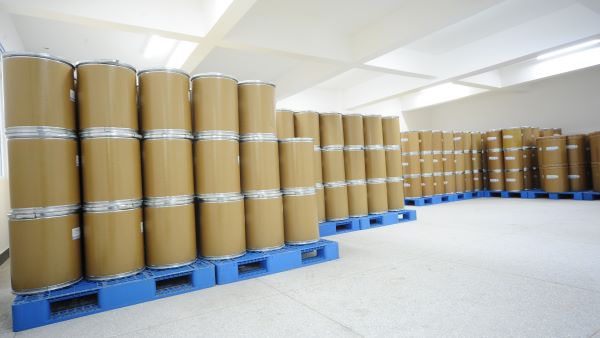
- Standard packaging: 25 kg cardboard drum with double PE inner lining.
- Custom packaging available in 1 kg, 5 kg, 10 kg aluminum foil bags or as per buyer requirements.
- All packaging is sealed to prevent moisture absorption.
Shipping Terms
- Shipped via express (DHL, FedEx, UPS) for sample orders.
- Air freight or sea freight for bulk orders.
- Export documentation and customs support provided.
- Lead time: 7–15 working days after order confirmation.
Shelf Life & Storage
- Store in a cool, dry place below 25°C.
- Keep away from direct sunlight and sources of heat.
- Ensure packaging remains tightly sealed to prevent moisture uptake.