Product Description
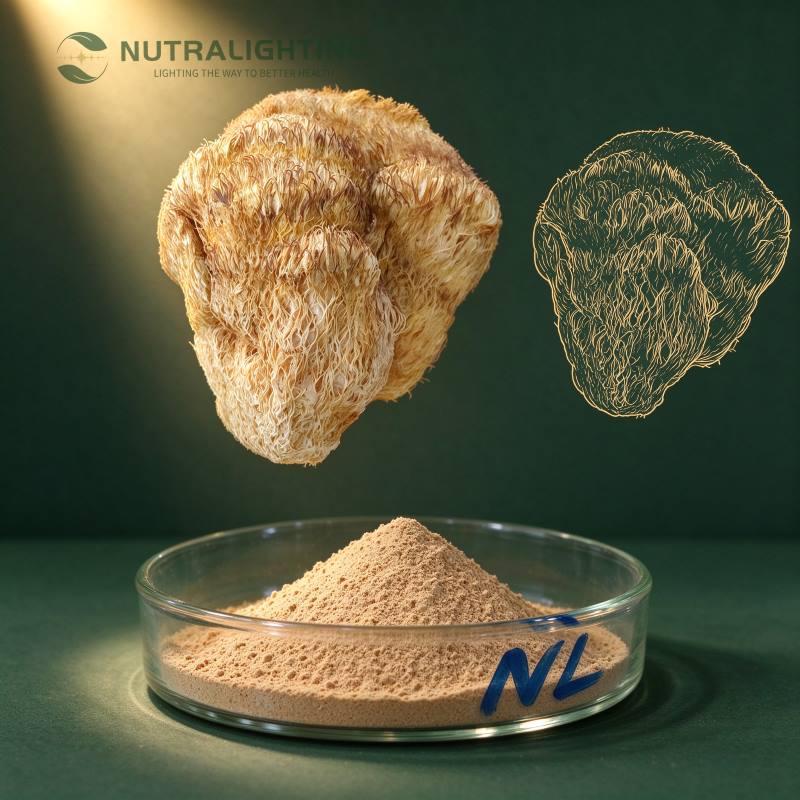
Nutraligting offers premium Lion’s Mane Mushroom Extract sourced from Hericium erinaceus, a renowned medicinal mushroom cultivated in organized bases across Hunan, Heilongjiang, and Yunnan provinces, China. Our extract is available in two forms: fruiting body extract (rich in hericenones) and mycelium extract (rich in erinacines), both standardized to high β-glucan content.
Product Description
Lion’s Mane has been used for over 1,000 years in traditional Chinese medicine and is recognized as a food ingredient in Japan. Lion’s Mane extract supports cognitive function, nerve health, and immune system balance, making it a sought-after ingredient in the global dietary supplement and functional food market.
Hericium erinaceus, commonly known as Lion’s Mane, is a unique edible and medicinal mushroom characterized by its distinctive cascading spines. In China, it is known as Hou Tou Gu and has a long history of use in traditional cuisine and medicine. The mushroom is celebrated for its neuroprotective properties, primarily attributed to two classes of bioactive compounds: hericenones found in the fruiting bodies and erinacines found in the mycelium. Both compounds can stimulate nerve growth factor (NGF) synthesis. Modern research has further validated its potential benefits for cognitive function, gut health, and immune modulation. China is the world’s largest producer of Lion’s Mane, with industrial cultivation methods well-established since the 1980s.
Our manufacturing process employs advanced extraction technology using food-grade solvents to selectively recover β-glucans, hericenones, and erinacines. The hericium erinaceus extract undergoes concentration, spray drying (or freeze drying for premium grades), and rigorous quality testing. We offer both fruiting body extracts and mycelium-on-grain extracts, with customization available for specific β-glucan content and active compound profiles. Our facility operates under GMP standards with full traceability from cultivation to finished product.
Quality assurance follows international standards including USP monographs for Hericium erinaceus. Each batch is accompanied by a comprehensive Certificate of Analysis covering β-glucan content.
Basic Information
| Item | Content |
| Extract Name | Lion’s Mane Extract |
| Botanical Name | Hericium erinaceus |
| Part Used | Fruiting Body |
| English Common Name | Lion’s Mane Mushroom Extract, Hericium Extract |
| Extraction Method | Hot Water / Dual Extraction |
| Physical Form | Fine Powder (80-100 mesh) |
| Color | Light beige to tan |
| Odor | Characteristic, mild mushroom |
| Main Active Components | β-glucans, Hericenones (fruiting body), Erinacines (mycelium), Polysaccharides |
| Key Specifications | β-glucan 30%-50% (standard); Customizable 20%-60%; Hericenone/Erinacine content as specified |
| Target Markets | North America, Europe, Japan, Asia-Pacific – Cognitive Support & Immune Health segments |
| Core Application Areas | Dietary supplements; Functional foods and beverages; Nutraceuticals; Health products, Traditional Chinese medicine (TCM) ingredient supply |
Standard Specifications (COA)
The values below are typical specifications for our standard β-glucan 30%-50% grade. Actual values for each batch are reported in the accompanying COA. Custom specification ranges are available for qualifying orders.
| Test Item | Standard |
| β-Glucan Content | 30%-50% (standard grade; 20%-60% available) |
| Hericenones (Fruiting Body Extract) | As per specification |
| Erinacines (Mycelium Extract) | As per specification |
| Loss on Drying | ≤8.0% |
| Total Ash | ≤8.0% |
| Heavy Metals: | – |
| Lead (Pb) | ≤1.0 mg/kg |
| Arsenic (As) | ≤2.0 mg/kg |
| Cadmium (Cd) | ≤0.5 mg/kg |
| Mercury (Hg) | ≤0.1 mg/kg |
| Pesticide Residues | Complies with USP <561> |
| Aflatoxin B1 | ≤5.0 μg/kg |
| Total Aflatoxins | ≤10.0 μg/kg |
| Microbial Parameters | Complies with pharmacopoeial standards |
Botanical Source Description
Our Lion’s Mane Extract product is derived from Hericium erinaceus (Bull.:Fr.) Pers., Family: Hydnaceae, commonly known as Lion’s Mane, Monkey Head Mushroom, or Hou tou gu in Chinese. The mushroom is native to temperate forests in the Northern Hemisphere, particularly widespread in China, Japan, and Korea. In traditional Chinese medicine, it has been used for over a millennium to support digestive health and overall wellness. The distinctive appearance of the mushroom features long, cascading teeth-like spines that resemble a lion’s mane, hence its English common name.
China is the world’s largest producer of cultivated Lion’s Mane, with major production bases in Hunan, Heilongjiang, Yunnan, and other provinces. Modern cultivation techniques allow for year-round production of high-quality fruiting bodies and mycelium. The fruiting body contains hericenones, while the mycelium contains erinacines – both are unique bioactive compounds that can cross the blood-brain barrier and stimulate nerve growth factor (NGF) synthesis. Our raw materials are cultivated under controlled conditions to ensure consistent quality and purity.
Core Efficacy
The following efficacy summary is based on published scientific literature and is provided for technical reference. End-product health claims should be validated against the regulations of the target market.
Lion’s Mane mushroom contains unique bioactive compounds with multiple mechanisms of action. The hericenones (found in fruiting bodies) and erinacines (found in mycelium) are cyathane diterpenoids that can cross the blood-brain barrier and stimulate nerve growth factor (NGF) synthesis and release, promoting neuronal survival and regeneration (Mori et al., Phytotherapy Research, 2009). Clinical studies have demonstrated cognitive benefits: a 16-week double-blind, placebo-controlled trial in patients with mild cognitive impairment showed significant improvement in cognitive scores with 3g/day of Lion’s Mane powder (Mori et al., 2009). Another study found that 4 weeks of supplementation improved mood and reduced anxiety symptoms in postmenopausal women (Nagano et al., Biomedical Research, 2010). The β-glucans in Lion’s Mane exhibit immunomodulatory effects, enhancing innate immune function through activation of macrophages and natural killer cells. Preclinical studies have also shown gastroprotective effects, with extracts protecting against ethanol-induced gastric ulcers through antioxidant mechanisms and mucus secretion promotion (Wong et al., Evidence-Based Complementary and Alternative Medicine, 2013). Additionally, Lion’s Mane has demonstrated neuroprotective potential in models of neurodegenerative diseases, though human clinical evidence is still emerging.
Regulatory & Regional Access Status
The regulatory information below is based on publicly available data. Always verify current requirements with your target market regulator before product launch.
Note: Regulatory status can change. Confirm with the relevant authority or a regulatory consultant prior to export.
| Region / Country | Regulatory Status | Key Notes |
| USA (FDA) | Dietary Supplement Ingredient | Lion’s Mane (Hericium erinaceus) is recognized as Generally Recognized As Safe (GRAS) through its long history of use as a food and traditional medicine. GRAS Notice GRN 1124 was submitted for β-glucans from H. erinaceus (later withdrawn by notifier). The mushroom is legal to market as a dietary supplement under DSHEA. Structure/function claims are permitted under 21 CFR 101.93 with mandatory disclaimer. No FDA-approved drug indications exist. |
| EU (EFSA/EMA) | Traditional Herbal Medicine / Novel Food | Hericium erinaceus is not listed in the EU Traditional Herbal Medicinal Products registry. EFSA has not authorized health claims for Lion’s Mane. In some EU countries, it may be marketed as a food supplement. Novel Food status should be verified for each member state. The EMA has not issued a monograph for this species. |
| China (NHC/NMPA) | Health Food Raw Material / Traditional Medicine | Hericium erinaceus is listed in the Chinese Pharmacopoeia and approved for use in health foods. It is recognized as a traditional medicinal mushroom with approved functions including supporting immune function and aiding digestion. Export compliance should follow target market regulations. |
Application Directions & Recommended Dosage
Recommended Daily Dosage Reference
- Cognitive support: 500-1000 mg standardized extract per day (delivering 150-500 mg β-glucans), typically divided into 2-3 doses
- Immune support: 300-600 mg per day, aligned with clinical study dosages
- Functional food/beverage: 0.5%-2.0% (w/w) in powdered or liquid formulations; evaluate solubility and organoleptic properties
- Formulation note: Extract is soluble in hot water. For cold-water applications, consider pre-dispersion or use of water-soluble grades.
| Application | Recommended Dosage | Dosage Forms | Notes |
| Oral Powder / Capsules | As per specification | Capsules, tablets, powder sticks | Typical serving: 500-1000 mg extract per day. Compatible with other nootropic ingredients such as Ginkgo biloba, Bacopa monnieri, or phosphatidylserine. |
| Functional Beverages | As per specification | Ready-to-drink bottles, powder mixes | Water-soluble grades available for beverage applications. Flavor masking may be needed due to natural earthy taste. Stable in pH 3.0-7.0 range. |
| Nutraceutical Blends | As per specification | Multi-ingredient capsules/tablets | Excellent synergy with other adaptogenic mushrooms (Reishi, Cordyceps) and cognitive support ingredients. Formulation compatibility testing recommended. |
| Traditional Medicine Formulations | As per specification | Powder, capsules, tinctures | Compatible with traditional Chinese medicine formulations. Can be combined with other medicinal mushrooms and herbs for synergistic effects. |
Other Precautions
- Keep containers tightly closed after opening -the extract is hygroscopic and β-glucan content may degrade in humid conditions
- For liquid formulations: Pre-disperse in warm water before incorporating into the main batch; stable in pH 3.0-7.0 range
- For heat-processed products: β-glucans are generally heat-stable, but prolonged high-temperature processing may affect some bioactive compounds. Evaluate stability in your final formulation.
- For combination formulas: Excellent compatibility with other medicinal mushrooms and cognitive support ingredients. Conduct compatibility testing before scale-up.
- Lion’s Mane is generally recognized as safe with a long history of culinary and medicinal use. Clinical studies have reported excellent tolerability with only mild gastrointestinal complaints in rare cases.
- No serious adverse events have been reported in clinical trials. The WHO and other health authorities recognize Lion’s Mane as safe for consumption.
- Pregnant or breastfeeding individuals should consult a healthcare provider before using concentrated Lion’s Mane supplements, as safety data in these populations is limited.
- Individuals with mushroom allergies should exercise caution when using Lion’s Mane products.
Why Choose Nutraligting Lion’s Mane Mushroom Extract?
Nutraligting aims to become a trusted global partner for Lion’s Mane mushroom extract in the cognitive support and immune health ingredient segments. Below are the reasons our B2B customers choose us:
- You need reliable supply of a premium medicinal mushroom, but Lion’s Mane cultivation is complex and yields vary significantly by growing conditions. China is the world’s largest producer with established cultivation bases in Hunan, Heilongjiang, and Yunnan, giving us direct access to consistent, high-quality raw material at competitive prices -without the volatility of wild-harvested supply chains.
- You need flexibility in extraction methods and active compound profiles, but most suppliers offer only one type of extract. We offer both fruiting body extracts (rich in hericenones) and mycelium extracts (rich in erinacines), allowing you to select the optimal profile for your product positioning and target market requirements.
- You require a supplier who understands the unique challenges of mushroom extracts -from solubility issues in beverage formulations to compatibility with other functional ingredients. Our technical team provides formulation support and application guidance, helping you optimize your product for performance and consumer experience.
- You want to partner with a company that stays current with the latest research on Lion’s Mane, but the science is rapidly evolving with new clinical trials published regularly. We monitor the latest research and update our technical documentation accordingly, ensuring you have access to the most current scientific evidence for your marketing and regulatory needs.
Appendix: References
(The following references are provided for technical reference. Some are open access and can be accessed via PubMed, PMC, or the journal websites.)
[1] Mori K. et al., Phytotherapy Research, 2009; 23: 367-372. – Double-blind placebo-controlled trial: 3g/day of Lion’s Mane powder improved cognitive function in patients with mild cognitive impairment over 16 weeks.
[2] Nagano M. et al., Biomedical Research, 2010; 31: 231-237. – Randomized controlled trial: 2g/day of H. erinaceus reduced depression and anxiety scores in postmenopausal women over 4 weeks.
[3] Wong et al., Evidence-Based Complementary and Alternative Medicine, 2013; 2013: 492976. – Gastroprotective effects of H. erinaceus extract against ethanol-induced gastric ulcers in rats.
[4] FDA GRAS Notice No. GRN 1124. – β-glucans from Hericium erinaceus strain BCRC 35669. (Note: Notice was withdrawn by notifier upon request.)
[5] 21 CFR 101.93. – Structure/function claims on dietary supplement labels – requirements and mandatory disclaimer.
[6] StatPearls [NCBI Bookshelf]. Lion’s Mane. Last updated January 2024. – Comprehensive review of pharmacology, clinical evidence, safety, and dosing.
[7] Japanese Ministry of Health, Labour and Welfare. – Lion’s Mane (Yamabushitake) classified as a Food with Function Claims in Japan.
Frequently Asked Questions
Water-soluble extraction captures beta-glucans and polysaccharides. Dual extraction (water + alcohol) additionally recovers hericenones and erinacines, which are alcohol-soluble compounds. Dual-extracted products offer broader bioactive coverage.
Yes. We offer 10g-50g samples for quality evaluation. Sample fees are refundable against your first bulk order.
Yes. Our Lion's Mane products are 100% vegan, gluten-free, and free from common allergens. Third-party testing confirms purity.
Yes. We support OEM/ODM services including custom extraction standards, private label packaging, and blend formulation for B2B clients worldwide.
Each shipment includes a Certificate of Analysis (COA), MSDS, and phytosanitary certificate. Organic certificates and Halal/Kosher certifications are available on request.
Packaging & Shipping
Standard Packaging
- 1 kg / 5 kg · double food-grade PE bag inside, aluminum foil bag outside
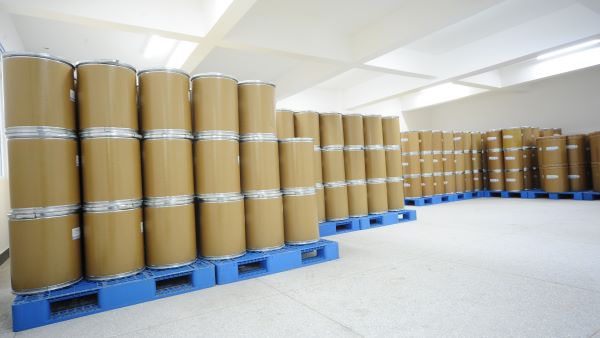
- 25 kg / 50 kg · paper drum with double plastic liner
- Custom packaging available on request
Shipping Terms
- Express: DHL / FedEx / UPS (3–7 days)
- Air freight: 7-15 days
- Sea freight: 15-40 days (FCL / LCL)
- Incoterms: EXW / FOB / CIF / DDP
Shelf Life & Storage
- Shelf life: 24 months in original sealed container
- Store in a cool, dry place away from direct sunlight
- Keep container tightly closed after opening