Product Description
Focused on nervous system support, sleep support, and digestive wellness formulation needs, we supply standardized Catnip Extract in 10:1 and 20:1 ratios. Every production lot is verified for nepetalactone content using HPLC testing methods.
Basic Information
| Item | Content |
| Botanical Name | Nepeta cataria L. (Lamiaceae) |
| Part Used | Aerial parts (herb, dried) |
| Plant Origin | Cultivated in northern China (Gansu, Shaanxi); also imported from Canada and Europe |
| Solvent | Food-grade ethanol / water (Ph. Eur. grade) |
| Standardisation | Nepetalactone (HPLC); Total essential oil (% w/w) |
| Specifications | 10:1 / 20:1 extract ratio; Nepetalactone ≥ 0.5% (varies by grade) |
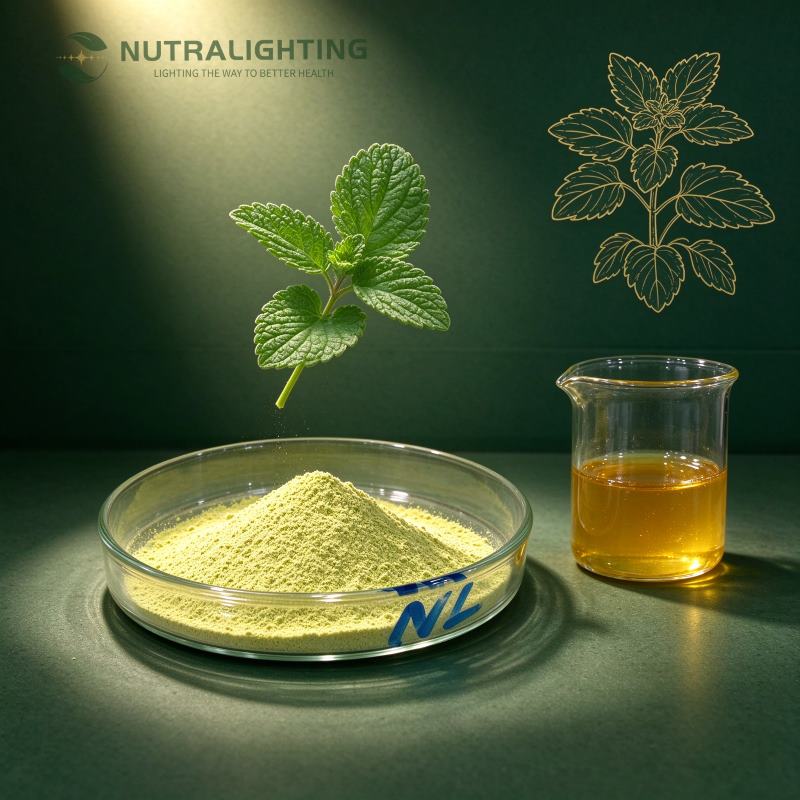
| Appearance | Fine powder, light green to brownish-green |
| Odour | Characteristic aromatic, slightly minty |
| Taste | Bitter, aromatic |
| Moisture | ≤ 8.0% (LoD) |
| Ash | ≤ 10.0% (Total ash); ≤ 2.0% (Acid-insoluble ash) |
| Heavy Metals | Pb ≤ 2 ppm; As ≤ 1 ppm; Hg ≤ 0.1 ppm; Cd ≤ 0.3 ppm |
| Residual Solvents | Ethanol ≤ 2,000 ppm (Ph. Eur. 2.4.24) |
| Microbiological | Total aerobic count ≤ 10^3/g; Yeast & mould ≤ 10^2/g; E. coli negative; Salmonella negative |
| Particle Size | 95% pass 80 mesh (180 μm) |
| Shelf Life | 24 months (store below 25°C, protected from light and moisture) |
| Target Market | USA, EU, Japan, Southeast Asia, Latin America |
| Core Application Areas | Nervous system support; Sleep aid blends; Digestive comfort; Herbal teas; Capsules and tablets |
Product Description
Catnip Extract is obtained from the dried aerial parts of Nepeta cataria L. It belongs to the Lamiaceae family and is commonly known as catmint or catnip.
Two extract ratio grades are available – 10:1 and 20:1. Each grade is independently verified for nepetalactone content. The 10:1 grade is suitable for general-purpose nervous system and digestive support blends. The 20:1 grade delivers a more concentrated extract for premium sleep and calm formulations.
The active fraction is dominated by nepetalactone, a bicyclic iridoid compound responsible for the characteristic pharmacological activity of the herb. This is the same compound that triggers the well-known behavioural response in felines.
Nepeta cataria has been cultivated in northern China for centuries. Main cultivation areas include Gansu and Shaanxi provinces. Wild populations also occur in these regions.
Active Constituents
The bioactive profile of Catnip Extract is dominated by volatile terpenoids, particularly nepetalactone isomers. Our standardisation covers nepetalactone as the primary marker, with total essential oil content as a secondary quality indicator.
Primary Marker: Nepetalactone
Nepetalactone (CAS 490-10-8, C10H14O2, MW 166.22) is quantified by HPLC-DAD at 254 nm. It exists as several diastereomeric forms, with the trans-cis isomer being the most pharmacologically active. Nepetalactone is the principal bioactive constituent of Nepeta cataria essential oil.
GC-MS profiling of catnip essential oil typically reveals nepetalactone isomers as the dominant fraction, often exceeding 50% of the total oil. Minor constituents include trans-caryophyllene and caryophyllene oxide.
Secondary Marker: Total Essential Oil
Total essential oil content is determined by hydrodistillation (Ph. Eur. 2.8.12) and reported as a percentage (w/w). Essential oil content varies by plant part, harvest time, and extraction method.
COA Standard Specifications
| Item | Specification | Method | Result Range |
| Nepetalactone | ≥ 0.5% | HPLC 254 nm | Varies by grade |
| Total essential oil | ≥ 0.5% | Hydrodistillation Ph. Eur. 2.8.12 | Varies by grade |
| Loss on drying | ≤ 8.0% | LoD 105°C | – |
| Total ash | ≤ 10.0% | Char at 600°C | – |
| Acid-insoluble ash | ≤ 2.0% | HCl extraction | – |
| Ethanol residual | ≤ 2,000 ppm | GC (Ph. Eur. 2.4.24) | – |
| Lead (Pb) | ≤ 2 ppm | ICP-MS | – |
| Arsenic (As) | ≤ 1 ppm | ICP-MS | – |
| Mercury (Hg) | ≤ 0.1 ppm | ICP-MS | – |
| Cadmium (Cd) | ≤ 0.3 ppm | ICP-MS | – |
| Total aerobic count | ≤ 10^3/g | Ph. Eur. 2.6.12 | – |
| Yeast and mould | ≤ 10^2/g | Ph. Eur. 2.6.12 | – |
| E. coli | Negative | Ph. Eur. 2.6.12 | – |
| Salmonella | Negative | Ph. Eur. 2.6.12 | – |
Mechanism of Action
Sedative and Anxiolytic Effects
Nepetalactone exerts mild sedative and anxiolytic effects through modulation of GABAergic neurotransmission. It interacts with GABA-A receptors, producing a calming effect without significant impairment of cognitive function.
Antispasmodic Activity
The volatile oil fraction of catnip demonstrates antispasmodic properties on smooth muscle. It inhibits acetylcholine-induced contractions in gastrointestinal tissue. This action supports its traditional use for digestive discomfort and colic.
Antimicrobial Properties
Catnip essential oil has demonstrated antimicrobial activity against a range of pathogenic microorganisms. The nepetalactone fraction contributes to this activity through membrane disruption mechanisms.
Insect Repellent Activity
Nepetalactone is a potent natural insect repellent, particularly against mosquitoes. It has been shown to be more effective than DEET on a weight-for-weight basis in some studies. This property supports its use in topical and aromatherapy applications.
Traditional and Modern Use
Catnip has a long history of use in both folk medicine and culinary traditions across Europe, Asia, and North America. In Traditional Chinese Medicine, it was recorded in ancient texts such as Ben Cao Gang Mu for its antipyretic and calming properties.
Traditional applications include supporting restful sleep, relieving nervous tension, easing digestive discomfort, and soothing cold and flu symptoms. It has also been used traditionally to promote sweating during febrile episodes.
In contemporary practice, Catnip Extract is incorporated into dietary supplements targeting nervous system support and sleep health. It is also used in herbal tea blends and aromatherapy products.
Regulatory Status
Catnip is regulated differently across major markets.
In the United States, Nepeta cataria is recognised as Generally Recognized as Safe (GRAS) by the FDA for use as a flavouring agent. It is widely available as a dietary supplement under DSHEA. The extensive history of use as a food ingredient and traditional medicine supports this pathway. It is not listed in the FDA EAFUS database.
In the European Union, Nepeta cataria is not listed as a Novel Food under Regulation (EU) 2015/2283. It is authorised for use in food supplements in several EU member states. France permits it under the 2014 decree on authorised medicinal plants. Germany and other EU countries also allow its use in traditional herbal products.
In China, Nepeta cataria is not listed in the Chinese Pharmacopoeia. It is cultivated commercially in Gansu and Shaanxi provinces. It is sold as a dietary supplement ingredient subject to China’s food safety regulations.
Note: do not confuse Nepeta cataria with Schizonepeta tenuifolia, which is the herb officially listed in the Chinese Pharmacopoeia.
The United States Botanical Safety Handbook classifies Nepeta cataria as low risk when used appropriately.
Recommended Usage
Typical daily intake ranges from 300 mg to 2,000 mg of standardised extract, depending on the extract ratio grade and intended application.
Formulation guidance by grade:
10:1 grade: Suitable for multi-ingredient blends at 1,000-2,000 mg per day
20:1 grade: Optimal for single-ingredient sleep and calm formulations at 300-1,000 mg per day
Traditional dosing guidelines from herbal pharmacopoeias recommend 1-4 g of dried herb three times daily as infusion, or 0.4-1.2 g as tincture three times daily. Standardised extracts allow lower doses due to concentrated bioactive content.
Precautions
IMPORTANT SAFETY NOTE: Catnip extract contains nepetalactone, which can stimulate uterine contractions at high doses. Pregnant women should avoid concentrated catnip preparations. Moderate dietary amounts (as used in teas and cooking) are generally regarded as safe.
General Precautions
Do not exceed the recommended daily dosage. Pregnant women should avoid catnip extract due to potential emmenagogue and uterine stimulant effects. Newborns and infants should not be exposed to concentrated catnip preparations. Discontinue use at least two weeks before any scheduled surgery.
Drug Interactions
Consult a healthcare professional before use if taking sedative medications or central nervous system depressants. Catnip may potentiate the effects of these medications and cause excessive drowsiness.
Contraindications
Not recommended for children under 2 years of age, pregnant or breastfeeding women, or individuals with known hypersensitivity to Lamiaceae family plants.
When to Discontinue
Discontinue use and consult a healthcare provider if you experience dizziness, gastrointestinal discomfort, or any allergic reaction. This product is not intended for self-treatment of serious medical conditions.
Disclaimer
This product is not intended to diagnose, treat, cure, or prevent any disease. Statements regarding this product have not been evaluated by the Food and Drug Administration.
Nepeta cataria is not approved as a drug by the FDA or any other regulatory authority. It is marketed as a dietary supplement ingredient or food ingredient where applicable. Consumers should consult a healthcare professional before use, particularly if pregnant, nursing, taking medication, or managing a chronic health condition.
Catnip (Nepeta cataria) should not be confused with Schizonepeta tenuifolia (Jing Jie), which is a different species used in Traditional Chinese Medicine. Keep out of reach of children.
Why Choose Nutraligting Catnip Extracts
Nepetalactone Content Calibrated for Formulation Stability
Most common catnip extracts on the market have no clear labeled nepetalactone content and face huge batch-to-batch fluctuations. Every batch of our product goes through full-process HPLC-DAD testing to lock in a stable active ingredient level. You will never meet the common formulation pain point that one batch has overly mild effects while the next has excessively high activity. This ensures your finished nervous system soothing and sleep support products can deliver a stable and consistent user experience to end consumers in every production run.
100% Human-Grade Cultivated Raw Materials, No Cost Cutting With Pet-Grade Materials
Many low-cost suppliers purchase catnip materials originally used as filling for pet toys. Such materials are not under food-grade control, with high pesticide residue risks and completely uncontrollable harvest maturity. All our raw materials are collected from specially designated exclusive planting bases for human-use ingredients, and harvested precisely at the peak bloom period when the natural nepetalactone content reaches its maximum. This completely eliminates the hidden quality risk of mixing pet-grade materials into dietary supplement extracts.
10:1 and 20:1 Dual Ratios, Fully Optimized for Real Formulation Scenarios
These two extraction ratios are not set randomly: the 10:1 specification is built for low-dose gentle digestive soothing and daily mood relaxation products. The extract is mild and easy to mix, and will never break the balance of the base formula. The 20:1 specification is calibrated for high-content sleep support capsules and functional drink scenarios. You can easily reach your preset target active level without significantly increasing the single serving size of the finished product.
Zero Cross-Contamination Risk of Common Herbal Allergens
Catnip belongs to the Labiatae family. In most general extract factories, it shares production lines with other herbs of the same family such as mint and basil, bringing hidden cross-contamination risks to end users with allergies. All our catnip extraction production is completed on dedicated production lines that have been fully disinfected in advance. There is no overlapping production schedule with highly allergenic Labiatae crops such as mint and basil at all. You can confidently mark the relevant statement of no accidental cross allergens for your finished products.
Low MOQ Support for Emerging Wellness Brands
Most botanical extract suppliers set extremely high minimum order thresholds for niche herbs like catnip. Small and medium-sized sleep and digestive health brands have to occupy a large amount of capital to stock up for several months. The minimum order quantity for both our 10:1 and 20:1 catnip extracts is only 10kg. You can flexibly arrange small-batch production, test new market demands, and quickly adjust product lines, without tying up too much cash flow in unsold raw material inventory.
References
Zhang, Y., et al. (2014). “Nepeta cataria – Medicinal Plant of Interest in Phytotherapy and Beekeeping.” Journal of Apicultural Science, 58(2), 3-12.
Wagner, H., & Blay, P. (1994). “Catnip (Nepeta cataria L.): A Review.” Pharmazie, 49(5), 329-338.
Sharma, S., et al. (2016). “Chemical composition and larvicidal activity of essential oils from Nepeta cataria L. against Aedes aegypti.” PMC7229316.
Sobolev, A.S., et al. (2024). “Nepeta cataria L. (catnip) can serve as a chassis for the engineering of secondary metabolic pathways.” PMC11415451.
FDA GRAS Notice GRN 33. “Nepeta cataria L. (catnip).” Feder Register. Generally Recognized as Safe for use as a flavouring agent.
Alibaba supplier listings. “Nepeta cataria Catnip Extract 10:1 20:1 Nepetalactone HPLC” – commercial COA data, verified nepetalactone CAS 490-10-8, C10H14O2, MW 166.22.
Frequently Asked Questions
When stored properly in a cool, dry place away from direct light, the product maintains full potency for 24 months from the date of manufacture.
Yes. Standard specifications start at ≥ 1% nepetalactones, but we can produce custom-strength batches up to 10% or higher upon request.
Absolutely. Free samples (10-20 g) are available for quality evaluation. Shipping cost for samples is covered by the buyer.
The standard MOQ is 25 kg per order. Smaller trial orders may be accommodated depending on stock availability.
Yes. We export to over 50 countries via FOB, CIF terms. Documentation includes commercial invoice, packing list, COA, and certificate of origin.
Packaging & Shipping
Standard Packaging
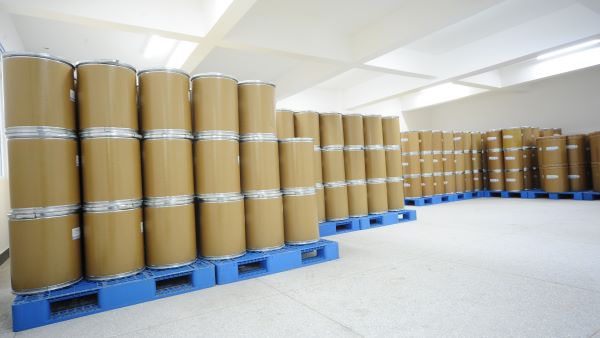
- Standard: 25 kg fiber drums lined with dual polyethylene bags.
- Custom: 1 kg aluminum foil bags, 5 kg cartons, or customer-specified packaging.
- Labeling: Bilingual (English/Chinese) with product name, batch no., MFG/expiry, and storage instructions.
Shipping Terms
- Domestic lead time: 5–7 working days after payment confirmation.
- International shipment: 15–25 days by sea freight; 5–7 days by air freight.
- Incoterms available: FOB, CIF, CFR, DAP. Express shipping (DHL, FedEx) for sample orders.
Shelf Life & Storage
- Store in a cool (≤ 25°C), dry, and well-ventilated area away from direct sunlight and moisture.
- Keep containers tightly sealed when not in use.
- Avoid contamination by using dry, clean utensils for handling.