Product Description
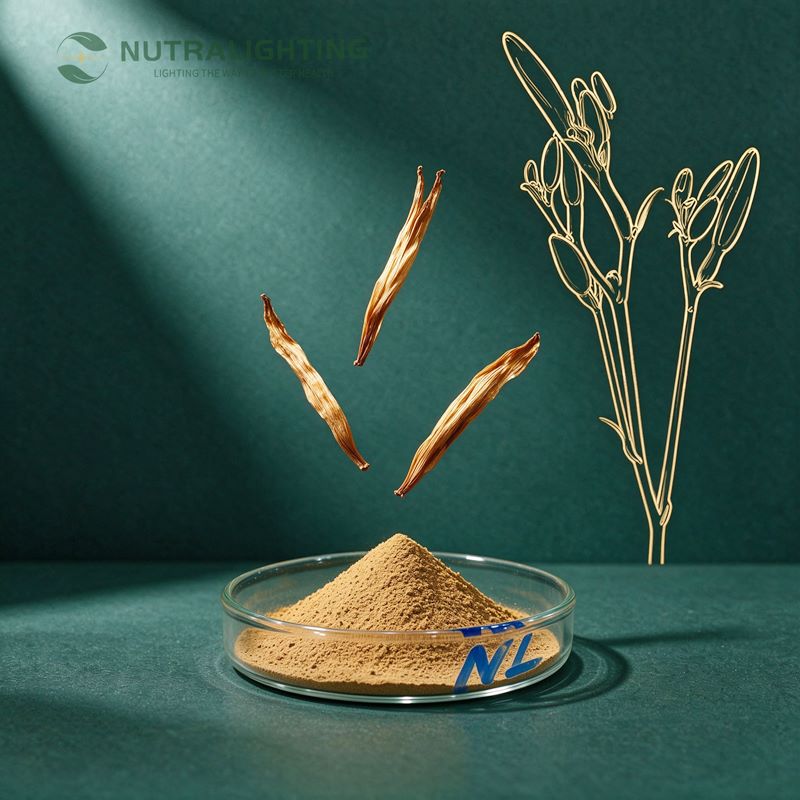
Hemerocallis citrina Borani (huang hua cai in Chinese), commonly known as “wangyoucao” (daylily) or “anshencai” (calming vegetable), is a traditional edible and medicinal plant with a long history of use in China. Our daylily extracts are produced via standardized processes and available in three specifications: 10:1, 20:1 and 50:1. Every batch is tested and verified for total flavonoid and total polyphenol content, and can be used as a flavor ingredient or raw material in traditional herbal tea blending, flavonoid supplement formulations and various food applications.
Basic Information
| Item | Content |
|---|---|
| Product Name | Daylily Extract / Hemerocallis citrina extract |
| Botanical Name | Hemerocallis citrina Baroni |
| English Common Name | Lemon lily extract; day lily extract; golden day lily extract; daylily flower extract;Daylily Extract; Hemerocallis citrina p.e. |
| Plant Family | Asphodelaceae (daylily family), genus Hemerocallis |
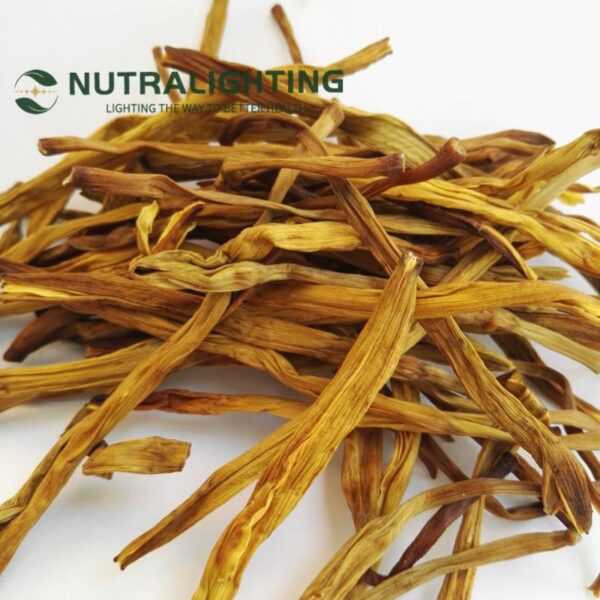
| Part Used | Dried flower buds |
| Verification Markers | Total flavonoids (UV); total polyphenols (Folin-Ciocalteu) |
| Specifications | Extract ratios 10:1, 20:1, and 50:1 |
| Appearance | Light-yellow to brown fine powder |
| Mesh Size | 80 mesh |
| Extraction Solvent | Ethanol and water |
| Raw Material Note | Properly processed dried buds only; never fresh flowers |
| Shelf Life | 24 months in sealed original packaging |
| Target Market | Herbal teas, dietary supplements, and cosmetics |
| Core Application Areas | Antioxidant support, traditional calming herbal use, food-inspired wellness blends |
Product Description
Daylily Extract is produced from the dried flower buds of Hemerocallis citrina Baroni. This species belongs to the family Asphodelaceae. It is known as the lemon lily or golden day lily. The dried buds are a traditional Chinese food. They are called jinzhencai in local markets.
One important distinction: not every Hemerocallis species is edible. The ornamental orange daylily, Hemerocallis fulva, is a different species. Some related species carry higher alkaloid levels. Our raw material is dried buds of H. citrina only. Also note: fresh daylily flowers contain colchicine-related compounds. Proper drying and soaking reduce them sharply. We use pre-processed dried buds as the starting material.
We extract the dried buds with food-grade ethanol and water. Three ratios are offered: 10:1, 20:1, and 50:1. Each batch is verified for total flavonoids and total polyphenols. TLC fingerprinting confirms identity. A colchicine control test is run on every batch. Each shipment includes a full certificate of analysis.
Active Constituents
Daylily flowers are rich in flavonol glycosides. Quercetin and kaempferol derivatives are the main forms. Total flavonoids and total polyphenols serve as verification markers. The table below lists the key constituents.
| Constituent | CAS No. | Molecular Formula | Molecular Weight |
|---|---|---|---|
| Quercetin | 117-39-5 | C15H10O7 | 302.24 |
| Kaempferol | – | C15H10O6 | 286.24 |
| Total flavonoids (NaNO2-AlCl3) | – | – | – |
| Total polyphenols (Folin-Ciocalteu) | – | – | – |
Colchicine occurs naturally in fresh daylily tissue. It is not an added or promoted component. Drying and processing reduce it substantially. This product is controlled for it, not standardized on it.
The production processes for 3-O-p-coumaroylquinic acid and 4-O-p-coumaroylquinic acid are specialised; please contact us to discuss bespoke production.
Certificate of Analysis (COA) – Typical Results
| Item | Specification | Method | Result Range |
|---|---|---|---|
| Appearance | Light-yellow to brown powder | Visual | Conforms |
| Odor | Characteristic | Organoleptic | Conforms |
| Mesh size | 80 mesh pass | Sieve test | Conforms |
| Moisture | ≤ 5.0% | Loss on drying | Conforms |
| Ash | ≤ 5.0% | Total ash | Conforms |
| Lead (Pb) | ≤ 5.0 ppm | ICP-MS | Conforms |
| Arsenic (As) | ≤ 2.0 ppm | ICP-MS | Conforms |
| Cadmium (Cd) | ≤ 1.0 ppm | ICP-MS | Conforms |
| Mercury (Hg) | ≤ 0.2 ppm | ICP-MS | Conforms |
| Total aerobic count | ≤ 10,000 CFU/g | Plate count | Conforms |
| Yeast and mold | ≤ 1,000 CFU/g | Plate count | Conforms |
| Escherichia coli | Negative | Plate method | Conforms |
| Salmonella | Negative (25 g) | Plate method | Conforms |
| Extract ratio | 10:1, 20:1, or 50:1 | Batch record | Per selected ratio |
| Total flavonoids | Reported per batch | NaNO2-AlCl3 (UV) | Reported |
| Total polyphenols | Reported per batch | Folin-Ciocalteu (UV) | Reported |
| Identity fingerprint | Consistent with reference | TLC | Conforms |
| Colchicine control | Not added; monitored | HPLC | Reported per batch |
| Shelf life | 24 months | Stability study | – |
Mechanism of Action
The notes below combine traditional food use with preclinical phytochemistry. Human clinical data are limited.
Flavonoid Antioxidant Activity
Flavonol glycosides scavenge free radicals in laboratory tests. These compounds are studied for oxidative stress pathways. Most evidence comes from chemical and cell models. Human outcomes are not established.
Traditional Calming Use
Chinese herbal references describe a mood-easing tradition. The plant name association with forgetting worry reflects this heritage. These are traditional descriptions, not clinical claims.
Heat-Clearing and Diuretic Tradition
Provincial herbal standards describe clearing damp-heat and cooling blood. Traditional decoctions used the dried flower. Modern evidence for defined outcomes is limited.
Safety Chemistry Note
Colchicine-related compounds occur in fresh plant material. They are a food-safety topic, not a wellness feature. This extract is not a colchicine product. Colchicine itself is a prescription drug with serious toxicity risks.
Traditional and Modern Use
Chinese Food Tradition
Dried daylily buds are a classic soup and stir-fry ingredient. They appear in stews, braises, and festive dishes. The buds are soaked and cooked before use. Drying and proper preparation reduce alkaloid content. Commercial growing bases span central and northwest China. Hunan province hosts the largest traditional region.
Herbal References
Daylily flower is not listed in the Chinese Pharmacopoeia. A Shanghai provincial standard records the dried flower. Traditional functions describe easing depression and clearing heat. Historical texts list the dried bud as food.
Modern Applications
Tea blenders use daylily extract in herbal infusions. Supplement developers explore flavonoid-rich botanical powders. Cosmetic formulators consider antioxidant positioning. Research customers study Hemerocallis flavonoid chemistry.
Regulatory Status
| Region | Status | Notes |
|---|---|---|
| China | Traditional food ingredient (dried buds); provincial herbal standard | Not in the Chinese Pharmacopoeia; not on the national medicine-food substance list |
| European Union | No entry found in the Novel Food catalogue | Verify Novel Food status before any EU food use; cosmetic status unverified |
| United Kingdom | Herbal ingredient context | Verify UK novel food and claim rules before launch |
| United States | No GRAS notice identified; DSHEA pathway only | Not approved as a conventional food ingredient; claims must carry the FDA disclaimer |
| Japan / Korea | Limited traditional use context | Check local positive ingredient lists before marketing |
| Other regions | Varies by country | Verify local import and claim rules before launch |
Recommended Usage
Traditional food use: cooked dried buds are commonly used at 15–30 g per dish. No official daily intake for the extract has been established. Use levels depend on the finished-product format and local rules. For general reference only. Consult a qualified regulatory expert before product launch.
Precautions
General Precautions
Never consume fresh daylily flowers. Improper preparation can cause nausea, vomiting, and diarrhea. Use only properly dried and processed material. Pregnant and nursing users should avoid concentrated products. Safety data in these groups are insufficient. Keep all products away from children.
Drug Interactions
No clinical interaction data are available. Do not combine with prescription colchicine without medical supervision. Users on regular medication should consult a qualified professional first.
Contraindications
People with kidney or liver impairment should avoid use without medical advice. Do not use as a substitute for colchicine-containing prescription medicines.
When to Discontinue
Stop use at the first sign of stomach upset or allergy. Seek prompt medical care after any raw or undercooked flower intake. Consult a professional if symptoms persist during use.
Disclaimer
This product is not intended to diagnose, treat, cure, or prevent any disease. This document is a B2B technical reference for professional customers. Final product claims must comply with the regulations of each market. This ingredient is a food-derived botanical, not a medicine. It is not a source of prescription colchicine. Novel Food and GRAS status must be verified in each target market.
References
Zhang, Y. H., Zhao, Y., Zhang, Y. P., Liu, X. X., & Ou, Q. M. (2023). Research progress on postharvest preservation and active component extraction methods of daylily. Packaging Engineering, 44(13), 103-111.
Xie, X. M., Li, X. R., Li, C. Y., Wei, X. C., He, J. G., Qiang, Z. Z., Li, Y., Yan, Y. T., & Fu, K. R. (2024). Research progress on chemical constituents and pharmacological effects of Hemerocallis citrina Baroni. Chinese Traditional Patent Medicine, 46(10), 3379-3387.
E, F. X., Wang, Y. Q., & Tian, X. J. (2024). Research progress on biological activity and intensive processing technology of daylily. Chinese Journal of Food Science, 24(8), 412-421.
He, L. P., & Li, H. F. (2026). Structural characterization of daylily polysaccharides and their proliferative effects on probiotics. Food and Fermentation Industries, 52(12), 186-194.
Ma, L. F., Li, H. F., Ma, L. N., & Hu, L. (2025). Optimization of extraction process and in vitro antioxidant analysis of total flavonoids from day lily by RSM. Molecular Plant Breeding, 23(1), 237-244.
Qin, X. Y., Zhang, L., Wen, Y. B., Li, J. M., & Zhang, Y. L. (2022). Interference effect of daylily methanol extract on glycolipid damage. Modern Food Science and Technology, 38(12), 14-22.
Mi, Z., Liu, L. Z., & Li, H. (2022). Optimization of extraction process of daylily polyphenols by response surface methodology and its antioxidant activity. China Food Additives, 33(3), 112-119.
Frequently Asked Questions
Hemerocallis citrina (golden daylily) is the species used for our extract. Hemerocallis fulva (orange daylily) is a different ornamental species that may carry higher alkaloid levels. We use only properly processed H. citrina dried buds.
Colchicine-related compounds occur naturally in fresh daylily tissue. Proper drying and processing reduce them substantially. This product is controlled for colchicine and tested by HPLC; it is below detection limit. It is not an added or standardized component.
We offer three standard ratios: 10:1, 20:1, and 50:1. Each batch is verified for total flavonoid and total polyphenol content. The production processes for 3-O-p-coumaroylquinic acid and 4-O-p-coumaroylquinic acid are specialised; please contact us to discuss bespoke production.
It is suitable for traditional herbal tea blending, flavonoid supplement formulations, functional foods, and cosmetic applications.
Packaging & Shipping
Standard Packaging
- 1 kg/aluminum foil bag with two inner plastic liners;
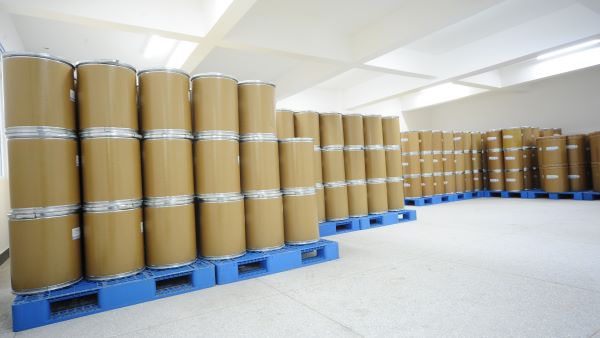
- 25 kg/drums.
Shipping Terms
- Shipped worldwide via express courier, air freight, or sea freight.
- Sample orders available. Lead time depends on quantity and specification.
Shelf Life & Storage
- Store in a cool, dry place protected from light and moisture.
- Keep container tightly sealed when not in use.