Product Description
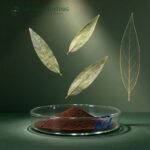
Ginkgo biloba extract is a standardized plant extract which mainly uses ginkgo leaves as raw material to extract and purify ginkgo flavone glycosides and terpene lactones. In the industry, it is usually directly called ginkgo leaf extract. Its standard specification contains 24% ginkgo flavone glycosides + 6% terpene lactones (ginkgolides/bilobalide), that is, the EGb 761 system. In both traditional use and modern research, it is mainly used to help improve brain and peripheral blood circulation, cognition and memory, and to resist oxidation, and it is a classic and major product in the foreign trade of plant extracts.
Flavone Glycosides: They mainly include the glycoside forms of Quercetin, Kaempferol and Isorhamnetin. They have strong antioxidant and free radical scavenging activity, and can protect cells from oxidative damage.
Terpene Lactones: They include Ginkgolides A, B and C, and Bilobalide. Among them, Ginkgolide B is an effective antagonist of Platelet-Activating Factor (PAF). It can inhibit platelet aggregation, improve microcirculation, and also shows neuroprotective potential.
The standard specification EGb 24/6 is consistent with the EGb 761 reference extract specification of the European Pharmacopoeia, and it is the most widely used ginkgo raw material specification in the formulas of dietary supplements, functional foods and herbal medicines around the world.
Basic Information Table
| Item | Content |
|---|---|
| Chinese Name | Ginkgo Biloba Extract |
| Aliases | Ginkgo Extract / Ginkgo Flavones / Ginkgolide Extract / GBE |
| English Name | Ginkgo Biloba Extract / Ginkgo Leaf Extract |
| Abbreviation | GBE / EGb / GBE 24/6 |
| Latin Name | Ginkgo biloba L. |
| Family | Ginkgoaceae |
| Part Used | Dried Leaf |
| CAS No. | 90045-36-6 |
| INCI Name | Ginkgo Biloba Leaf Extract |
| HS Code | 1302.19 |
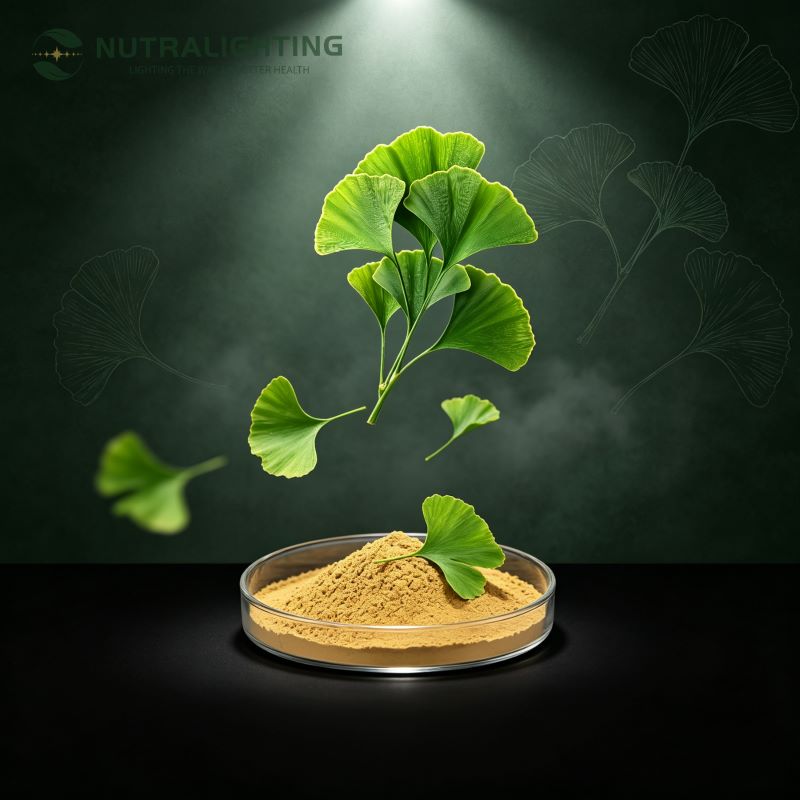
| Appearance | Light yellow-brown to brown fine powder |
| Odor | Slightly bitter, with a mild herbal note |
| Solubility | Slightly soluble in water; soluble in dilute alcohol |
| Extraction Solvent | Dilute ethanol / acetone aqueous solution |
Mainstream Specification: 24/6 Standard Extract
| Test Item | Specification | Test Method |
|---|---|---|
| Total Flavonol Glycosides | ≥24.0% | HPLC |
| Total Terpene Lactones | ≥6.0% | HPLC |
| – Ginkgolides A+B+C | 2.8%-3.4% | HPLC |
| – Bilobalide | 2.6%-3.2% | HPLC |
| Ginkgolic Acids | ≤5 ppm (Premium grade: ≤1 ppm) | HPLC |
| Loss on Drying | ≤5.0% | USP |
| Residue on Ignition | ≤1.0% | USP |
| Heavy Metals (as Pb) | ≤10 ppm | ICP-MS |
| Arsenic (As) | ≤1 ppm | ICP-MS |
| Pesticide Residues | Complies with EU 396/2005 | GC/LC-MS |
| Total Microbial Count | ≤10,000 CFU/g | USP |
| Coliforms | Negative | USP |
| Aflatoxins | ≤10 ppb | ELISA |
| Particle Size | Passes 80 mesh (customizable) | Sieve shaker |
Optional Specifications
- 50:1 Concentrated Extract (non-standardized)
- 40% Flavones / 12% Terpene Lactones (highly standardized version)
- Water-dispersible form
- Organic Certified version
Botanical Raw Material Introduction
Ginkgo (Ginkgo biloba L.) is one of the oldest surviving tree species on Earth. Its geological record dates back approximately 270 million years, and it coexisted with the dinosaurs, earning it the title of “Living Fossil.” It belongs to the Ginkgoaceae family as a single-genus, single-species plant, having no close relatives among extant species, which gives it an extremely unique botanical status.
The tree is tall and upright, reaching over 30 meters in height, with a lifespan that can exceed a thousand years. It is known for its strong resistance to pests and diseases and its tolerance to environmental pollution. Its leaves are fan-shaped and turn golden yellow in autumn, which is its iconic morphological feature. It is native to China, with major production areas concentrated in Zhejiang, Jiangsu, Guangxi, Hubei, Sichuan and other provinces. Among them, Lin’an in Zhejiang and Taixing in Jiangsu are the world’s most important raw material production areas for ginkgo leaves, with a foundation for large-scale GAP cultivation.
The raw material for the extract uses mature green leaves harvested in the same year (harvest period: August to September). After drying and crushing, the leaves are extracted by reflux extraction with dilute ethanol, and then purified and concentrated through macroporous adsorption resin technology, ultimately producing a standardized extract powder. This process is recorded in the Pharmacopoeia of the People’s Republic of China (2020 edition) and can effectively remove ginkgolic acids, which carry sensitization risks, ensuring the safety of the finished product.
Ginkgo has a history of several hundred years of use in traditional Chinese medicine. The standardized extraction technology of the modern plant extraction industry, however, originated in Germany in the 1960s, making ginkgo one of the most deeply studied plant extract raw materials in the world with the richest clinical data, and it has long occupied a leading position on the bestseller lists of herbal supplements in Europe and the United States.
Core Efficacy and Literature Evidence
Disclaimer: The following literature summaries are for B2B raw material procurement reference only and do not constitute any health claim basis for end products. Claims for end products must comply with the regulations of the target sales market.
1. Cognitive Health and Memory Support
Multiple randomized controlled trials (RCTs) show that standardized ginkgo biloba leaf extract (120-240 mg/day) can have a positive effect on cognitive function, with relatively sufficient evidence in elderly populations and populations with mild cognitive impairment.
Clinical RCTs
Gauthier, S., & Schlaefke, S. (2014). Efficacy and tolerability of Ginkgo biloba extract EGb 761 in dementia: A systematic review and meta-analysis of randomized placebo-controlled trials. Clinical Interventions in Aging, 9, 2065-2077. https://doi.org/10.2147/CIA.S72728
Cui, M., You, T., Zhao, Y., Liu, R., Guan, Y., Liu, J., Liu, X., Wang, X., & Dong, Q. (2023). Ginkgo biloba extract EGb 761 improves cognition and overall condition after ischemic stroke: Results from a pilot randomized trial. Frontiers in Pharmacology, 14, 1147860. https://doi.org/10.3389/fphar.2023.1147860
Zhu, C., Liu, J., Lin, J., Xu, J., & Yu, E. (2024). Investigating the effects of Ginkgo biloba leaf extract on cognitive function in Alzheimer’s disease. CNS Neuroscience & Therapeutics, 30(9), e14914. https://doi.org/10.1111/cns.14914
In vitro / Animal studies
Wang, N., Chen, X., Geng, D., Huang, H., & Zhou, H. (2013). Ginkgo biloba leaf extract improves the cognitive abilities of rats with D-galactose induced dementia. Journal of Biomedical Research, 27(1), 23-31. https://doi.org/10.7555/JBR.27.20120047
2. Antioxidant and Neuroprotective Effects
In vitro / Animal studies
Shi, C., Zhao, L., Zhu, B., Li, Q., Yew, D. T., Yao, Z., & Xu, J. (2009). Protective effects of Ginkgo biloba extract (EGb761) and its constituents quercetin and ginkgolide B against beta-amyloid peptide-induced toxicity in SH-SY5Y cells. Chemico-Biological Interactions, 181(1), 115-123. https://doi.org/10.1016/j.cbi.2009.05.010
Jiang, M., Li, J., Peng, Q., et al. (2014). Neuroprotective effects of bilobalide on cerebral ischemia and reperfusion injury are associated with inhibition of pro-inflammatory mediator production and down-regulation of JNK1/2 and p38 MAPK activation. Journal of Neuroinflammation, 11, 167. https://doi.org/10.1186/s12974-014-0167-6
Review
Hashiguchi, M., et al. (2026). Neuroprotective effects of Ginkgo biloba extract in neurological disorders: Integrating anti-inflammatory and antioxidant mechanisms. Complementary Medicine Research. https://doi.org/10.1159/000552633
3. Circulatory System and PAF Antagonism
Mechanism study
Smith, P. F., Maclennan, K., & Darlington, C. L. (1996). The neuroprotective properties of the Ginkgo biloba leaf: A review of the possible relationship to platelet-activating factor (PAF). Journal of Ethnopharmacology, 50(3), 131-139. https://doi.org/10.1016/0378-8741(96)01379-7
4. Comprehensive Network Meta-Analysis of Cognitive Efficacy
Frontiers in Pharmacology (2025). Effects of natural extracts in cognitive function of healthy adults: A systematic review and network meta-analysis (27 RCTs, n=2,334; ginkgo-related combination regimens ranked at the forefront in SUCRA values on memory and executive function dimensions). https://doi.org/10.3389/fphar.2025.1573034
Application Directions and Recommended Dosage
Main Application Fields
- Dietary supplements (hard capsules / soft capsules / tablets)
- Functional foods and functional beverages
- Botanical drug raw material (recorded in EU / Chinese Pharmacopoeia)
- Cosmetic raw material (antioxidant / anti-aging formulations)
Clinical Reference Dosage
- Standard dosage: 120-240 mg/day (calculated on the 24/6 standard extract)
- Common dosage form allocation: 40 mg × 3 times/day, or 120 mg × 1-2 times/day
Frequently Asked Questions
The most common standard specification is EGb 24/6, containing 24% Ginkgo flavone glycosides and 6% terpene lactones (ginkgolides A/B/C and bilobalide), consistent with the European Pharmacopoeia EGb 761 reference extract.
The two main groups of active ingredients are flavone glycosides (quercetin, kaempferol, and isorhamnetin glycosides) and terpene lactones (ginkgolides A, B, C, and bilobalide). Ginkgolide B acts as a potent PAF antagonist.
It is widely used in dietary supplements, functional foods, and botanical medicines. It is primarily applied to support cerebral and peripheral blood circulation, cognitive function, memory, and antioxidant protection.
It should be stored in a cool, dry, and well-ventilated place, protected from light and moisture. The recommended storage temperature is below 25°C.
Yes, we provide full Certificate of Analysis (COA) and Material Safety Data Sheet (MSDS) for each batch. Custom specifications and third-party testing are also available upon request.
Packaging & Shipping
Standard Packaging
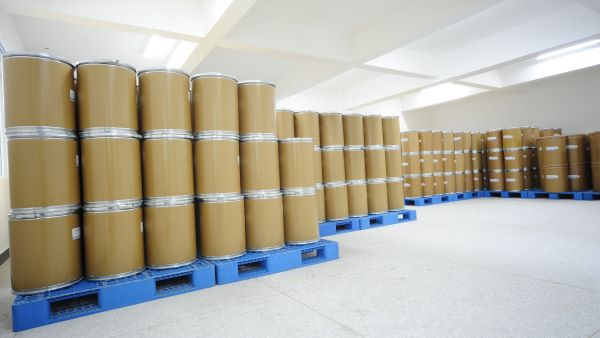
- Inner packaging: 1kg/aluminum foil bag or 25kg/drums.
- Outer packaging: 25kg fiber drums with two plastic bags inside.
- Custom packaging is available according to customer requirements.
Shipping Terms
- Samples: 3-5 working days by express.
- Bulk orders: 15-25 working days after receipt of payment.
- Support FOB, CIF, and other trade terms.
- Shipped from major ports in China.
Shelf Life & Storage
- Store in a cool, dry, and well-ventilated place.
- Protect from light, heat, and moisture.
- Keep sealed when not in use.
- Recommended storage temperature: below 25°C.