
Product Description
We target the development and supply of high-quality ingredients for antioxidant-focused dietary supplements, topical skin health and UV-overexposure support formulations, as well as compliant functional foods and beverages. We offer our Haematococcus Pluvialis Extract in standardized astaxanthin potency grades of 2%, 5% and 10%, all quantified via validated HPLC testing methods. Our product line includes both oil-soluble oleoresin formats and water-dispersible beadlet powder formats, to meet diverse formulation solubility requirements across different end product categories.
Basic Information
| Item | Content |
|---|---|
| Product Name | Haematococcus Pluvialis Extract (Natural Astaxanthin) |
| Botanical Source | Haematococcus pluvialis Flotow |
| Family | Haematococcaceae (freshwater green microalga) |
| Part / Stage Used | Whole algal cells (astaxanthin-rich cyst stage) |
| Extraction Solvent | Food-grade ethanol or supercritical CO2 |
| Active Marker | Astaxanthin (free and esterified forms) |
| Specifications | Astaxanthin 2% / 5% / 10% (HPLC); oleoresin and beadlet powder |
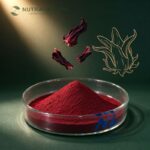
| Appearance | Reddish-brown to deep red powder; red viscous oleoresin |
| CAS (Astaxanthin) | 472-61-7 |
| Target Market | Dietary supplements, functional foods and beverages, cosmetics |
| Core Application Areas | Antioxidant support, skin health, eye and cardiovascular support, exercise recovery |
Product Description
Haematococcus pluvialis is a freshwater green microalga. It is the richest natural source of astaxanthin. Under stress, the alga turns red. It builds protective carotenoid oil droplets inside each cell. Our extract starts from these protected cells.
Astaxanthin is a keto-carotenoid pigment. The human body cannot produce it. It must come from food or supplements. Salmon, krill, and shrimp get their red colour from this pigment. They obtain it from algae such as Haematococcus.
Nutralighting supplies natural astaxanthin from cultured Haematococcus pluvialis. We offer oil-soluble oleoresin and water-dispersible beadlet powder. Grades cover 2%, 5%, and 10% astaxanthin by HPLC. Domestic algal farms in Yunnan support our base supply. Imported material from Israel is also available.
Active Constituents
Characteristic Compounds
| Compound | CAS | Molecular Formula | Molecular Weight | Notes |
|---|---|---|---|---|
| Astaxanthin | 472-61-7 | C40H52O4 | 596.8 | Ketocarotenoid; main marker compound |
| Astaxanthin esters | – | – | – | Dominant natural form in algal oil |
| Total carotenoids | – | – | – | Verification indicator (spectrophotometry) |
COA Standard Specifications
| Item | Specification | Method | Result Range |
|---|---|---|---|
| Astaxanthin (2% grade) | 2.0-2.5% | HPLC | Per batch COA |
| Astaxanthin (5% grade) | 5.0-6.0% | HPLC | Per batch COA |
| Astaxanthin (10% grade) | 10.0-11.0% | HPLC | Per batch COA |
| Total carotenoids | Reported per batch | UV-Vis | Per batch COA |
| Appearance | Red to reddish-brown powder | Visual | Conforms |
| Moisture | ≤ 5.0% | Gravimetric | Conforms |
| Ash | ≤ 5.0% | Gravimetric | Conforms |
| Lead (Pb) | ≤ 2 ppm | ICP-MS | Conforms |
| Arsenic (As) | ≤ 1 ppm | ICP-MS | Conforms |
| Cadmium (Cd) | ≤ 0.5 ppm | ICP-MS | Conforms |
| Mercury (Hg) | ≤ 0.1 ppm | ICP-MS | Conforms |
| Total plate count | ≤ 1000 CFU/g | Plate count | Conforms |
| Yeast & mold | ≤ 100 CFU/g | Plate count | Conforms |
| E. coli | Negative | MPN | Negative |
| Salmonella | Negative | Qualitative | Negative |
| Particle size | 95% pass 80 mesh | Sieve | Conforms |
| Solvent residue | Ethanol only (food-grade) | GC | Conforms |
| Shelf life | 24 months (sealed, dark, cool) | – | – |
Mechanism of Action
Astaxanthin has a unique membrane shape. Its polar ends anchor at the membrane surfaces. Its long carbon chain crosses the lipid core. This lets it defend both sides of the cell membrane at once.
In laboratory systems, astaxanthin is a strong singlet-oxygen quencher. It outperforms many common antioxidants in these test-tube models. Lab potency is not the same as proven human effect. Human trials still report supportive antioxidant markers.
Skin research links oral astaxanthin with UV-exposure endpoints. Eye and vascular studies look at blood flow and oxidative markers. Exercise studies examine recovery and muscle soreness. Reported effects are modest and build over weeks of daily intake.
Traditional and Modern Use
This alga has no ancient food history. It entered the modern market through aquaculture first. Salmon farms used astaxanthin to colour farmed fish. Human supplements followed in the 2000s.
China approved Haematococcus pluvialis as a new resource food in 2010. Farms now grow it in open raceway ponds and closed photobioreactors. Two forms dominate the market: whole-cell powder and extracted astaxanthin.
Natural versus synthetic matters. Most feed-grade astaxanthin is synthetic. Our product is natural, from algae. The label states the source clearly. Buyers may request ester and isomer profile data.
Regulatory Status
| Region | Status | Notes |
|---|---|---|
| China | New resource food (Novel food raw material) | NHC (former MOH) Announcement No. 17 of 2010. Intake ≤ 0.8 g/day (dry basis). Not for infant food. |
| European Union | Novel food framework | Astaxanthin from Haematococcus pluvialis is handled under Regulation (EU) 2015/2283. Conditions of use apply; check the EU Novel Food Catalogue before launch. |
| United Kingdom | Retained novel food rules | Assess against the GB novel food list before placing on market. |
| United States | Dietary supplement ingredient (DSHEA) | No FDA-approved disease claims. Some suppliers hold independent GRAS determinations for Haematococcus-derived astaxanthin. |
| Japan & South Korea | Established supplement ingredient | Long consumption history in Japanese supplements; permitted in Korean functional food categories. |
| Australia / NZ & others | Market-dependent | Novel food assessment may be required. Confirm local status before import. |
Recommended Usage
Human trials commonly used 4-12 mg of astaxanthin per day. Final dosing belongs to the brand owner. The figures below are for general reference only.
| Form | Typical Daily Range | Basis |
|---|---|---|
| Astaxanthin 2% beadlet powder | 200-600 mg | Equivalent to 4-12 mg astaxanthin |
| Astaxanthin 5% powder | 80-240 mg | Equivalent to 4-12 mg astaxanthin |
| Astaxanthin 10% oleoresin | 40-120 mg | Equivalent to 4-12 mg astaxanthin |
| Whole-cell powder (China limit) | ≤ 800 mg | Per 2010 new resource food announcement |
Astaxanthin is fat-soluble. Take it with a meal containing fat. Absorption improves clearly with food. Formulators should match the grade to the target mg per serving.
Precautions
General Precautions
This product is NOT recommended for:
– Pregnant or breastfeeding women (human safety data are limited)
– Children, unless supervised by a qualified professional
Stop use two weeks before scheduled surgery. Discuss supplements with your clinician.
Possible Effects at High Intake
High or prolonged intakes may cause mild skin pigmentation. Stool colour may change with whole-cell powder. These effects are generally reversible when intake is reduced.
Interactions and Cautions
Astaxanthin may support lower blood pressure and blood sugar levels. Users on antihypertensive or antiglycemic medication should monitor closely. Early laboratory research suggested hormonal-pathway activity. People on hormone therapy should consult a clinician first.
Other Notes
Oral astaxanthin is not a sunscreen. It does not replace UV protection. Algal-derived astaxanthin contains no shellfish protein. It suits buyers who avoid krill- or shrimp-sourced material.
Why Choose Nutralighting
Raw Material Advantages
All our Haematococcus Pluvialis raw materials come from our self-controlled aquaculture bases in Yunnan, the premium microalgae production region. The whole cultivation process follows closed and standardized management, which completely blocks the common pollution risks in open-air farming, such as mixed algae, heavy metals and microorganisms. We lock the high activity foundation of natural astaxanthin right from the algae strain selection stage.
R&D and Formulation Support Advantages
We provide free application technical services. Our R&D team offers free formulation guidance for different dosage forms, covering soft capsules, pressed candies, clear beverages, essence emulsions and other scenarios. It helps you solve the common industry problems of astaxanthin, such as poor water solubility, easy discoloration and unstable compatibility.
Each batch comes with a complete third-party inspection report. Apart from the regular HPLC content test, we also provide customized particle size adjustment services. According to the needs of your final products, we can precisely control the particle size of water-dispersible astaxanthin powder within the specified range, to meet the special formulation needs of beverages with different transparency and skincare products with different skin feels.
Supply Chain and Compliance Guarantee Advantages
We keep full-spec safety stocks. Both 2%, 5% and 10% astaxanthin oleoresin and water-soluble powder are in stock. There will be no common industry problems such as stock shortage or order waiting for more than 30 days, which ensures your production line will not stop due to raw material gaps.
Our complete set of compliance documents covers all major global markets. We support flexible MOQ customization. Apart from regular stock specifications, small-batch customized orders can be started with a minimum of 5kg. It fits the new product testing needs of small and medium brands and the small-batch production demands of niche market segments. You do not have to place a large order and overstock just to obtain raw material qualifications.
We provide an exclusive one-on-one customer communication channel. From sample testing, formulation adjustment to bulk order follow-up and after-sales response, a fixed technical contact will follow the whole process. You do not need to transfer between multiple departments such as purchasing, R&D and quality inspection repeatedly, which greatly reduces your communication cost.
References
Stachowiak B, Szulc P. (2021). “Astaxanthin for the Food Industry.” Molecules, 26(9): 2666. PMID: 34063189.
Liu ZW, et al. (2018). “The efficiency and comparison of novel techniques for cell wall disruption in astaxanthin extraction from Haematococcus pluvialis.” International Journal of Food Science & Technology, 53(9).
National Health Commission / former Ministry of Health of the PRC. Announcement No. 17 of 2010, approving Haematococcus pluvialis as a new resource food.
PubChem. Compound record for Astaxanthin (CAS 472-61-7). NIH, Bethesda, MD.
European Commission. Regulation (EU) 2015/2283 on novel foods, and the EU Novel Food Catalogue. EUR-Lex.
Peinsipp, P., et al. Antiviral activity of Haematococcus pluvialis algae extract is not exclusively due to astaxanthin. Pathogens, 2025, 14(8): 791. DOI: 10.3390/pathogens14080791.
García-Llatas, G., et al. Physicochemical characterization and thermodynamic analysis of avocado oil enhanced with Haematococcus pluvialis extract. Journal of Food Science, 2023, 88(6): 2315-2327. DOI: 10.1111/1750-3841.16587.
Barba, F. J., et al. Extraction of valuable biomolecules from the microalga Haematococcus pluvialis assisted by electrotechnologies. Trends in Food Science & Technology, 2022, 128: 347-361. DOI: 10.1016/j.tifs.2022.08.015.
Frequently Asked Questions
Oleoresin is oil-soluble and ideal for softgel, emulsion, or oil-based formulations. Beadlet powder is water-dispersible and suited for beverages, capsules, and dry-mix applications.
We supply three standardized grades: 2%, 5%, and 10% astaxanthin, all verified by HPLC with a batch-specific Certificate of Analysis.
All our astaxanthin is 100% natural, extracted from cultured Haematococcus pluvialis microalgae. No synthetic astaxanthin is used.
Yes. Every batch comes with an in-house HPLC COA, and third-party testing through accredited laboratories can be arranged upon request.
Stored in sealed, light-proof packaging at cool, dry conditions (≤25°C). Typical shelf life is 24 months from the date of manufacture when properly stored.
MOQ varies by format and grade. Please contact our sales team for current MOQ and pricing details for your specific requirements.
Packaging & Shipping
Standard Packaging
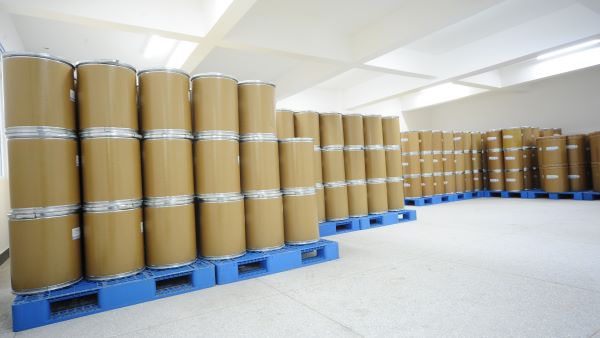
- Standard packaging: 1 kg aluminum foil bag with double-seal closure, or 25 kg cardboard drum with inner plastic lining.
- Custom packaging available upon request (e.g., 500 g bags, small-batch drums).
Shipping Terms
- Domestic: Shipping via express or freight within China.
- International: Ship via air or sea depending on order volume and destination. FOB Shanghai / FOB Shenzhen terms available.
- Sample shipments supported via express courier.
Shelf Life & Storage
- Store in a cool, dry place away from direct sunlight and heat.
- Keep container tightly sealed when not in use.
- Recommended storage temperature: ≤25°C.
- Protect from moisture and oxygen to preserve astaxanthin potency.