Product Description
Targeting metabolic health dietary supplements, lipid and blood sugar maintenance formulations, and adaptogenic herbal tea ingredients. We supply Gynostemma Pentaphyllum (Jiaogulan) Aerial Parts Extract in standardised ratios – 10:1 and 20:1 – as well as total gypenoside standardized grades, with 20%, 80% and 98% total gypenosides (quantified via validated HPLC method).
Basic Information
| Item | Content |
|---|---|
| Botanical Name | Gynostemma pentaphyllum (Thunb.) Makino (Cucurbitaceae) |
| Part Used | Aerial Parts (Herb) |
| Plant Origin | Native to East Asia. Commercial cultivation is centred in Shaanxi (Ankang), Zhejiang (Changxing), Hubei, Guizhou, and Yunnan provinces in China. |
| Solvent | Water / food-grade aqueous ethanol |
| Standardisation | Total gypenosides (saponins, UV/HPLC); Total flavonoids (UV); Total polyphenols (UV) |
| Specifications | Standardised extract ratios: 10:1, 20:1. Single-compound grades: 20%, 80%, and 98% total gypenosides. |
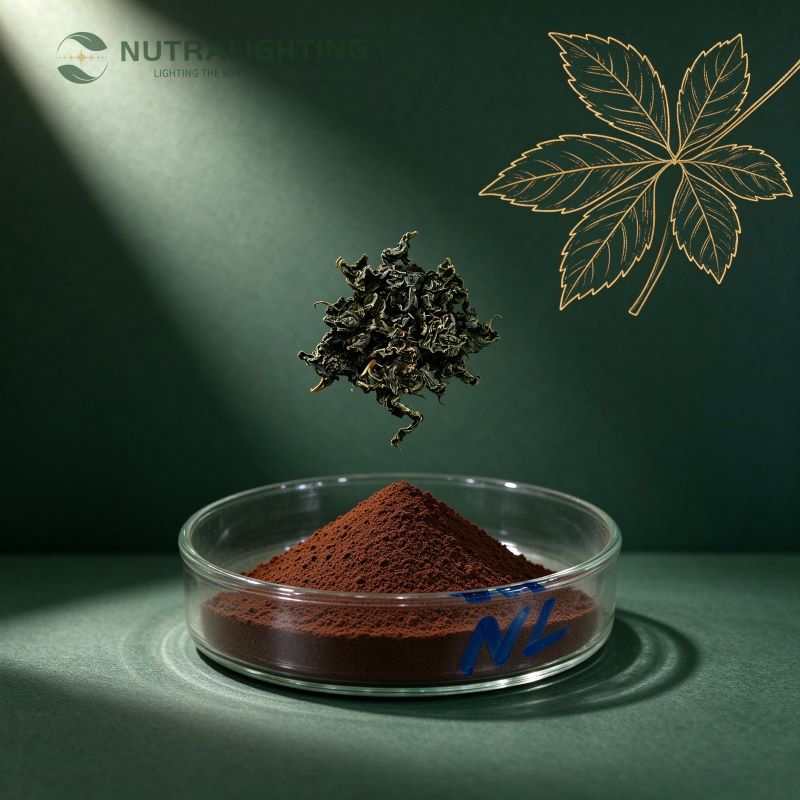
| Appearance | Brown to dark brown fine powder (20% grades); light yellow powder (80% / 98% gypenosides) |
| Odour | Slight, characteristic herbal odour |
| Taste | Sweet after bitter |
| Moisture | ≤ 6.0% (LoD) |
| Ash | ≤ 5.0% (Total ash) |
| Heavy Metals | Pb ≤ 2 ppm; As ≤ 1 ppm; Hg ≤ 0.1 ppm; Cd ≤ 0.3 ppm |
| Residual Solvents | Ethanol ≤ 2,000 ppm (Ph. Eur. 2.4.24) |
| Microbiological | Total aerobic count ≤ 10^3/g; Yeast & mould ≤ 10^2/g; E. coli negative; Salmonella negative |
| Particle Size | 95% pass 80 mesh (180 μm) |
| Shelf Life | 24 months (store below 25°C, protected from light and moisture) |
| Certifications | ISO 22000 / HACCP / Kosher / Halal / NON-GMO / Vegan |
| Target Market | Dietary supplements, functional foods and beverages, herbal teas, traditional herbal formulations (China, EU, USA, Japan, Southeast Asia) |
| Core Application Areas | Metabolic health support; lipid and blood-sugar management; antioxidant support; adaptogenic and calming formulas; liver health support |
Product Description
Gynostemma Pentaphyllum Extract is obtained from the aerial parts of Gynostemma pentaphyllum (Thunb.) Makino.
The plant is a climbing herb of the Cucurbitaceae family, native to East Asia.
It is often called “Southern Ginseng”. However, it is NOT a Panax species.
Its dammarane-type saponins (gypenosides) partly overlap with ginseng saponins, which explains the nickname.
The herb is listed in the Chinese Pharmacopoeia (2020 edition) and in China’s medicine-food homology catalogue.
Traditional Chinese practice uses it to “supplement qi, calm the spirit, and clear heat”.
Active Constituents
The bioactive profile is defined by its gypenosides (triterpene saponins), plus flavonoids and polyphenols.
Primary Markers
| Compound | CAS | Molecular Formula | Molecular Weight | Notes |
|---|---|---|---|---|
| Total gypenosides | – (saponin mixture) | – | – | 80+ dammarane-type saponins; several identical to ginseng saponins |
| Total flavonoids | – | – | – | Quercetin and kaempferol glycosides (UV verification) |
| Total polyphenols | – | – | – | Verification indicator (Folin-Ciocalteu) |
COA Standard Specifications
| Item | Specification | Method | Result Range |
|---|---|---|---|
| Total gypenosides | Varies by grade (20% / 80% / 98%) | UV / HPLC | Per specification |
| Total flavonoids (10:1 / 20:1) | ≥ 2.0% (typical) | UV (NaNO2-AlCl3) | Per batch COA |
| Total polyphenols (10:1 / 20:1) | ≥ 10.0% (typical) | Folin-Ciocalteu | Per batch COA |
| Loss on drying | ≤ 6.0% | LoD 105°C | – |
| Total ash | ≤ 5.0% | Char at 600°C | – |
| Lead (Pb) | ≤ 2 ppm | ICP-MS | – |
| Arsenic (As) | ≤ 1 ppm | ICP-MS | – |
| Mercury (Hg) | ≤ 0.1 ppm | ICP-MS | – |
| Cadmium (Cd) | ≤ 0.3 ppm | ICP-MS | – |
| Total aerobic count | ≤ 10^3/g | Ph. Eur. 2.6.12 | – |
| Yeast and mould | ≤ 10^2/g | Ph. Eur. 2.6.12 | – |
| E. coli | Negative | Ph. Eur. 2.6.12 | – |
| Salmonella | Negative | Ph. Eur. 2.6.12 | – |
Mechanism of Action
AMPK Activation
Gypenosides activate AMPK, a master switch of cellular energy metabolism (shown in laboratory studies).
AMPK activity influences how the body handles lipids and glucose.
Lipid and Glucose Metabolism
Animal and cell studies show gypenosides support healthy cholesterol handling and insulin sensitivity.
Human trials on Gynostemma tea report improved lipid profiles in hypercholesterolaemic subjects.
Antioxidant Support
Flavonoids and saponins scavenge free radicals in vitro.
The herb’s polyphenols contribute to its overall antioxidant capacity.
Adaptogenic and Calming Effects
Traditional use describes the herb as calming.
Laboratory studies report effects on stress-response pathways.
Traditional and Modern Use
Historical Use
The herb has been used in southern China as a cooling tea for centuries.
Folk tradition valued it for vitality, longevity, and cough relief.
The Chinese Pharmacopoeia (2020) records its functions as supplementing qi, calming the spirit, resolving phlegm, and clearing heat.
Modern Clinical Evidence
A randomised dietary study in hypercholesterolaemic subjects showed metabolic responses to Gynostemma tea linked to ApoE/CETP genotypes.
Gypenoside preparations are used in approved medicines in China for lipid support.
Clinical evidence remains supportive rather than definitive. Structure/function wording is recommended for export labels.
Regulatory Status
| Region | Status | Notes |
|---|---|---|
| China | Medicine-food homology item; Pharmacopoeia-listed | Gynostemma is listed in the Chinese Pharmacopoeia (2020 edition, Part 1) and in the medicine-food homology catalogue (MOH Announcement 2002 No. 51). Total gypenoside tablets/capsules are approved medicines in China. |
| European Union | Not a conventional food | Gynostemma is not widely consumed as food in the EU. Check the EU Novel Food Catalogue (Regulation (EU) 2015/2283) before marketing as food. Sold as a supplement ingredient in several member states. |
| United Kingdom | Supplement ingredient | Marketed in food supplements. No authorised UK health claim exists. |
| United States (FDA) | DSHEA-compliant supplement ingredient | Marketed as a dietary supplement ingredient under DSHEA. No FDA GRAS notice exists for the herb. The FDA has not evaluated specific health claims. |
| Japan / Korea | Traditional and supplement use | Consumed as herbal tea and used in supplements under local regulations. |
Recommended Usage
Dosage guidance is based on traditional use and commercial practice. For general reference only.
Formulation Guidance by Grade
Traditional tea form: 3-9 g per day of dried herb as infusion.
10:1 / 20:1 extract: 400-800 mg per day in capsule or tablet formulations.
Total gypenosides 80% grade: 150-450 mg per day for metabolic blends.
98% gypenosides grades are intended for research and pharmaceutical use.
Split doses with meals improve tolerance.
Precautions for Gynostemma Extract
IMPORTANT SAFETY NOTE: Isolated case reports have linked high-dose Gynostemma supplements to liver injury. Use recommended doses and stop if liver symptoms appear.
Intake and Usage Duration Guidelines
The recommended daily intake for the general population is limited to 300-1000 mg of standardized extract, and excessive consumption is not allowed. Continuous use is not suggested to exceed 8 weeks, as long-term high-dose intake will impose extra metabolic burden on the liver and kidney. New users are advised to start with a small dose, and gradually adjust to the regular dose after no discomfort is observed within 24 hours.
Groups for Strict Prohibition or Cautious Use
People allergic to gypenosides and plant proteins are prohibited from using this product, as it may cause rash, itching or even dyspnea. People with spleen-stomach deficiency cold who often experience abdominal pain and loose stools should use it with caution, otherwise it will easily aggravate discomforts such as diarrhea and chills after consumption. Pregnant women, lactating women and children are not recommended to take it without professional guidance, since there is insufficient long-term safety data covering these special groups. People with hypotension, anemia, impaired liver or kidney function, and autoimmune diseases must consult a doctor for evaluation before use.
Core Contraindications for Drug Combination
People taking antihypertensive drugs and diuretics must not take this product on their own. The mild vasodilatory and diuretic effect of the extract will superimpose the drug efficacy, and trigger hypotension reactions such as dizziness and muscle weakness. People taking hypoglycemic drugs and lipid-lowering drugs need to consult a doctor in advance, to avoid drug efficacy superposition that causes abnormal fluctuations in blood glucose and blood lipid indicators. People taking sedative-hypnotic drugs and anticoagulants must get confirmation from a doctor before concurrent use, to prevent intensified drowsiness side effects or elevated bleeding risk. Discontinue Gynostemma Pentaphyllum extract 2 weeks before surgery, to avoid increasing the risk of intraoperative bleeding.
Emergency Handling for Abnormal Reactions
If persistent nausea, abdominal distension and diarrhea occur after consumption, stop using the product immediately, drink warm water in small portions multiple times after meals, and seek medical attention in time if symptoms do not subside. If discomforts such as rash, skin itching, unsteady dizziness and palpitation appear, stop using the product at once, and visit a doctor as soon as possible to check for allergy or electrolyte disorder.
Why Choose Nutralighting
Need gypenoside content you can verify?
Every batch is UV/HPLC-tested at 20%, 80%, or 98% levels. Method details ship with the COA.
Require clean herbal tea-grade material?
Our Gynostemma herb raw material comes from standard bases in Shaanxi and Zhejiang. Pesticide screening covers every batch.
Want dual-track supply in one order?
We provide both 10:1-20:1 ratios and gypenoside-standardised grades. One purchase order is enough.
Looking for export documentation support?
Our team prepares Pharmacopoeia-compliant dossiers for China-market and export filings. Registration becomes simpler for your team.
Seeking samples before production?
We ship Gynostemma extract samples with batch COA for your pilot testing. Evaluation results guide the final specification together.
References
Chinese Pharmacopoeia Commission. Pharmacopoeia of the People’s Republic of China, 2020 edition, Part 1: monograph (Gynostemmae Herba).
Ministry of Health, PRC. Announcement No. 51 of 2002: catalogue of items that are both food and traditional medicine , including Gynostemmae Herba.
“ApoE and CETP TaqIB polymorphisms influence metabolic responses to Hibiscus sabdariffa L. and Gynostemma pentaphyllum Makino tea consumption in hypercholesterolemic subjects.” Asia Pac J Clin Nutr. 2017;26(2):368-378.
Frequently Asked Questions
We standardize Gynostemma Extract to 2%, 5%, 10%, and 40% gypenosides by HPLC. Custom levels are available for large-volume orders.
Yes. Our Gynostemma Extract is plant-based and suitable for vegan formulations. Organic-certified material is available upon request.
Yes. Every batch comes with a Certificate of Analysis (COA). We can arrange third-party testing through accredited laboratories if required.
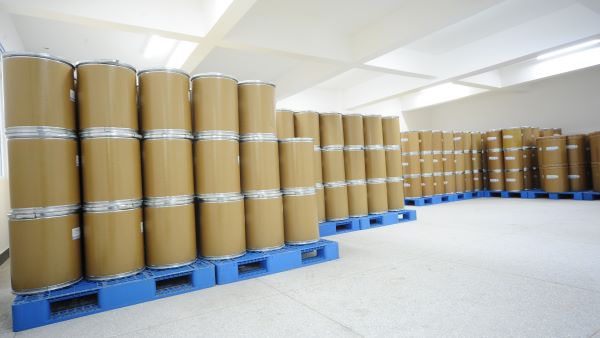
Standard packaging is 25 kg per drum (2x10 kg inside kraft bags with aluminum liner). Custom packaging and smaller quantities are negotiable. Samples in sealed pouches are available.
Yes. We work with private-label clients and contract manufacturers. Please contact our sales team with your specifications for a customized quotation.
Packaging & Shipping
Standard Packaging
- Standard: 25 kg fiber drums, inner double-lined with food-grade polyethylene bags and aluminum foil barrier.
- Custom packaging: 1 kg aluminum pouches, 5 kg bags, or client-specific requirements.
- Labeling: Neutral or branded as requested.
Shipping Terms
- Sample shipments: 3–7 business days via express courier (DHL, FedEx, UPS).
- Bulk shipments: 15–25 business days by sea freight; 5–7 business days by air freight.
- Incoterms: FOB, CIF, CFR available. Export documentation and phytosanitary certificates provided.
Shelf Life & Storage
- Store in a cool, dry place away from direct sunlight and moisture. Keep containers tightly sealed.
- Recommended storage temperature: 2–8°C for long-term stability.
- Shelf life: 24 months from date of manufacture when stored properly.