Product Description
Nutralighting Offers Jasmine Extract in three flavonoid grades – 5%, 10%, and 20% – each HPLC-verified for rutin and luteolin content, tailored for calming, antioxidant, and skincare formulas.
Basic Information
| Item | Content |
| Botanical Name | Jasminum officinale L. or Jasminum sambac (L.) Ait. (Oleaceae) |
| Part Used | Dried flower |
| Standardised To | Total Flavonoids 5% / 10% / 20% (AlCl3 method); Rutin ≥ 0.5% / 1.0% / 2.0% (HPLC) |
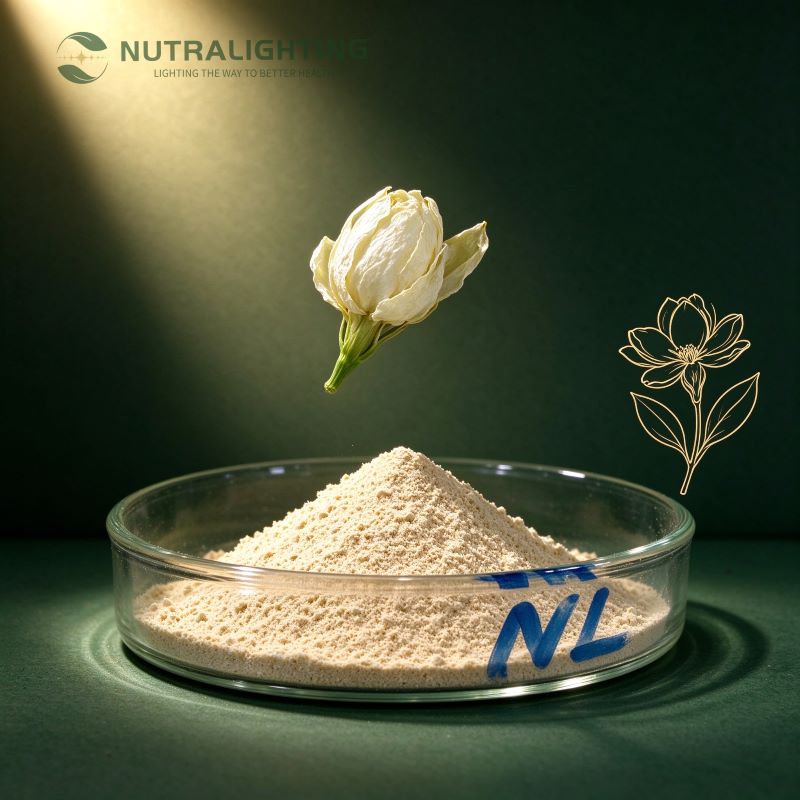
| Appearance | Pale yellow to light beige fine powder |
| Odour | Delicate floral, characteristic jasmine |
| Solubility | Soluble in water and aqueous ethanol; sparingly soluble in oils |
| Origin | Yunnan and Fujian Provinces, China |
| Particle Size | 80-100 mesh (available on request) |
| Shelf Life | 24 months when stored properly |
| Storage | Cool, dry place away from light and moisture |
Product Description
Available Specifications and Their Value
We provide Jasmine Extract in three flavonoid grades: 5%, 10%, and 20%. Each grade carries its own HPLC-confirmed rutin and luteolin profile, so you can match the specification precisely to your formula target.
The 5% grade fits well into everyday wellness products where jasmine is paired with other botanicals promoting calm and relaxation. The 10% grade represents our most popular option, aligning with the concentration levels found in published research. The 20% grade delivers a highly concentrated flavonoid profile suited for premium anti-stress and skin-care applications.
Three factors set our supply apart. Our raw flowers come from Yunnan and Fujian provinces in southern China, areas where jasmine has been cultivated for generations and where growing conditions naturally concentrate flavonoids. We extract using food-grade ethanol, a method that captures the full complement of flavonoids, coumarins, and phenolic acids without leaving harmful solvent traces. Every shipment is tested before it leaves our facility, and the COA reflects actual measured values, not labels based on theory.
Why Jasmine Matters in Formulation
Jasmine flowers are among the most recognised floral botanicals in the world. The fragrance alone has been associated with mood enhancement and relaxation in both traditional practice and modern research. Beyond scent, the flower contains a rich portfolio of bioactive compounds.
Flavonoids form the core active fraction of jasmine extract. Rutin, luteolin, quercetin, and kaempferol glycosides have all been identified by LC-MS analysis. These compounds contribute antioxidant capacity and support vascular integrity.
Coumarins represent another important class of constituents. Scopoletin and umbelliferone have been isolated from jasmine flower extracts and are studied for their anti-inflammatory and vasodilatory properties.
Polysaccharides and volatile organic compounds add to the overall bioactivity profile, though they are not used as standardisation markers in our extracts.
Active Constituents
Primary Marker: Total Flavonoids
Total flavonoids serve as the chief quality indicator for Jasmine Extract. We measure this parameter spectrophotometrically using the AlCl3 colourimetric method and report results as rutin equivalent.
Three grades are offered:
- 5% total flavonoids – entry-level for general relaxation and wellness formulas
- 10% total flavonoids – mid-range matching most published research concentrations
- 20% total flavonoids – high-potency grade for premium product lines
Across every grade, batch variation stays within ±10% of the stated flavonoid value.
Secondary Marker: Rutin
Rutin (rutoside) is the most abundant and best-characterised flavonoid glycoside in jasmine flower. It is quantified by HPLC with UV detection at 360 nm.
- 5% grade: rutin ≥ 0.5%
- 10% grade: rutin ≥ 1.0%
- 20% grade: rutin ≥ 2.0%
Rutin is known for its vascular protective effects. It strengthens capillary walls and reduces permeability, properties that have been documented in both preclinical and clinical investigations.
Tertiary Marker: Luteolin
Luteolin is a aglycone flavone present in jasmine extract. It is measured by HPLC-UV at 350 nm and contributes to the anti-inflammatory and antioxidant activity of the extract.
- Luteolin content typically ranges from 0.1% to 0.8% across all grades
- Luteolin-7-glucoside is present in smaller quantities
The luteolin-to-rutin ratio varies by cultivar and extraction method. Full chromatographic data appears in each batch COA.
Other Identified Constituents
Additional phytochemicals detected in jasmine extract include:
- Quercetin and its glycosides (isoquercitrin, quercetin-3-rhamnoside)
- Kaempferol and kaempferol glycosides (kaempferide)
- Scopoletin and umbelliferone (coumarin derivatives)
- Phenolic acids (chlorogenic acid, caffeic acid, p-coumaric acid)
- Triterpenoid saponins
- Polysaccharides
Analytical Data Sheet
| Item | Specification | Method | Result |
| Total Flavonoids (5% Grade) | ≥ 5.0% | AlCl3 UV 415nm | 5.0-6.0% |
| Total Flavonoids (10% Grade) | ≥ 10.0% | AlCl3 UV 415nm | 10.0-12.0% |
| Total Flavonoids (20% Grade) | ≥ 20.0% | AlCl3 UV 415nm | 20.0-24.0% |
| Rutin | ≥ 0.5% | HPLC 360nm | 0.5-3.0% |
| Luteolin | ≥ 0.1% | HPLC 350nm | 0.1-0.8% |
| Quercetin | ≥ 0.05% | HPLC 360nm | 0.05-0.5% |
| Scopoletin | ≥ 0.05% | HPLC 280nm | 0.05-0.3% |
| Total Polyphenols | ≥ 8.0% | Folin-Ciocalteu | 8.0-20.0% |
| Loss on Drying | ≤ 8.0% | KF | ≤ 8.0% |
| Heavy Metals (Pb) | ≤ 2.0 mg/kg | ICP-MS | < 1.0 mg/kg |
| Heavy Metals (As) | ≤ 1.0 mg/kg | ICP-MS | < 0.5 mg/kg |
| Heavy Metals (Cd) | ≤ 0.3 mg/kg | ICP-MS | < 0.2 mg/kg |
| Heavy Metals (Hg) | ≤ 0.1 mg/kg | ICP-MS | < 0.05 mg/kg |
| Pesticide Residues | Pass | GC-MS/LC-MS | Not Detected |
| Residual Solvents | Pass | GC | Compliant |
| Total Plate Count | ≤ 1000 CFU/g | USP <61> | < 10 CFU/g |
| Yeast & Mold | ≤ 100 CFU/g | USP <61> | < 10 CFU/g |
| E. coli | Negative | USP <61> | Negative |
| Salmonella | Negative | USP <61> | Negative |
Mechanism of Action
Nervous System Modulation
Jasmine extract has demonstrated calming properties in preclinical models. The flavonoid fraction modulates GABAergic neurotransmission by enhancing GABA-A receptor activity. This mechanism parallels the action of classical anxiolytics, though at a much milder potency level.
Studies on jasmine aroma and extract have shown reductions in cortisol levels and sympathetic nervous system activity. These effects support the traditional use of jasmine for stress relief and sleep promotion.
Antioxidant Protection
Flavonoids in jasmine extract neutralise reactive oxygen species through direct electron donation. Rutin and luteolin scavenge superoxide anions and hydroxyl radicals, protecting cellular membranes and proteins from oxidative damage.
The extract also upregulates endogenous antioxidant defences. Treatment with jasmine extract increases SOD, CAT, and GPx enzyme activity in model systems, providing a two-layer defence against oxidative stress.
Vascular and Skin Support
Rutin strengthens microvascular integrity by stabilising capillary endothelial cells. It reduces capillary fragility and permeability, properties that are relevant for both cardiovascular and dermatological applications.
In skin-care contexts, the antioxidant and anti-inflammatory actions of jasmine flavonoids help protect against UV-induced damage. Luteolin inhibits tyrosinase activity, which may contribute to skin brightening effects.
Anti-inflammatory Effects
Jasmine extract suppresses pro-inflammatory mediator production. The flavonoid fraction inhibits NF-κB nuclear translocation and reduces expression of COX-2, iNOS, TNF-α, and IL-6. This broad anti-inflammatory profile supports both systemic and topical applications.
Traditional and Modern Use
Traditional Use
Jasmine flower has been used in Traditional Chinese Medicine for over 1,000 years. The dried flower (茉莉花,Molihua) is classified as acrid, bitter, and warm in nature. It enters the lung and spleen meridians. Its traditional functions include soothing the liver, regulating qi, and relieving distress.
In Indian Ayurvedic practice, jasmine is valued for its calming and aphrodisiac properties. The flower is used in formulations for nervous exhaustion, insomnia, and emotional imbalance.
In Middle Eastern traditional medicine, jasmine preparations are employed for headache relief and as a mild sedative. The aromatic qualities of the flower have long been associated with mood elevation and relaxation.
Modern Research Evidence
A 2021 study in the Journal of Ethnopharmacology evaluated the anxiolytic effects of Jasminum officinale flower extract in animal models. The extract produced significant reductions in anxiety-like behaviours at doses of 100-400 mg/kg, with effects comparable to diazepam at the higher dose range.
Research published in PMC investigated the antioxidant and anti-inflammatory properties of jasmine flower extract in vitro. The extract demonstrated potent DPPH radical scavenging activity and inhibited lipid peroxidation by up to 70% at concentrations of 100 μg/mL.
A 2023 study examined the dermatological effects of jasmine extract on UV-protected skin cells. The extract reduced UV-induced inflammation and supported collagen synthesis in human dermal fibroblasts.
Regulatory Status
United States (FDA)
Jasmine (Jasminum spp.) flower extract is recognised as a food ingredient with a long history of safe use. Jasmine oil and jasmine concrete are listed in the FDA EAFUS database (CAS 8022-96-6 and CAS 977125-38-4 respectively) as flavouring agents.
Under DSHEA, Jasmine flower extract may be used as an ingredient in dietary supplements. The flower has been consumed as a herbal tea and food flavouring for centuries, establishing a substantial history of safe use. Structure/function claims related to relaxation, antioxidant support, and skin health may be made provided the mandatory disclaimer is included. This product is not intended to diagnose, treat, cure, or prevent any disease.
Formulators should ensure claims comply with 21 CFR 101.93 requirements. Flavonoids, particularly rutin and luteolin, are the primary bioactive constituents and should be accurately represented on the supplement facts panel.
European Union (EFSA)
Jasminum officinale is not listed in the EU Novel Food Catalogue. The species has a long history of use in European traditional medicine and as a food flavouring ingredient.
EFSA has not authorised specific health claims for Jasmine extract. Any health claims must comply with EU Regulation (EC) No 1924/2006. Currently, no authorised health claim exists specifically for jasmine in the EU register.
Jasmine absolute and jasmine concrete are listed in the EU Fragrance Allergen list (Commission Regulation (EU) No 473/2013). However, this listing applies to fragrance ingredients, not food or supplement use.
China (NMPA)
Jasmine flower (Molihua) is listed in the Chinese Pharmacopoeia 2020 Edition, Part 1. The pharmacopoeial monograph covers the dried flower of Jasminum sambac and specifies identification, moisture content, extractive value, and ash testing parameters.
Provincial pharmacopoeial standards also exist. The Jiangxi Provincial Pharmacopoeia (JXYPBZXD2023-043) and Hunan Provincial Pharmacopoeia include monographs for Molihua with detailed quality control requirements.
Zhuang medicine standards (Guangxi) specify HPLC determination of quercetin and kaempferide as quality markers for jasmine flower.
China is the world’s largest producer and consumer of jasmine. Major cultivation areas include Yunnan, Fujian, Guangxi, Guangdong, and Sichuan provinces. Domestic sourcing is available for clients who prefer Chinese-grown raw material.
Recommended Usage
Dosage Range
Based on traditional use and published research, the recommended daily intake of Jasmine Extract ranges from 200-800 mg. For our extracts, this translates to:
- 5% flavonoid grade: 400-1,600 mg per day
- 10% flavonoid grade: 200-800 mg per day
- 20% flavonoid grade: 100-400 mg per day
For relaxation and stress support, clinical studies typically use 200-500 mg per day of 10% grade extract. For skin-care applications, lower doses may be sufficient when combined with other botanicals.
The precise dose depends on your formulation design, target indication, and desired flavonoid intake.
Application Forms
Jasmine Extract is compatible with a wide range of dosage forms:
- Capsules and tablets for stress-relief and sleep-support supplements
- Powdered blends for multi-ingredient calming formulas
- Functional beverages – the delicate floral flavour integrates well without overpowering
- Softgels – the lipophilic fraction disperses effectively in oil bases
- Topical skincare – the flavonoid profile supports anti-aging and UV-protection formulations
Formulation Notes
Jasmine Extract carries a natural floral aroma that enhances product sensory appeal. The mild taste profile requires minimal flavour masking in most applications.
The extract dissolves readily in both aqueous and ethanolic systems. For beverage use, the 5% and 10% grades disperse more easily due to their lower concentration of bound flavonoid material.
Heat sensitivity is a consideration. Processing temperatures above 60°C may degrade heat-labile flavonoids. Where possible, keep thermal exposure below this threshold.
Blend uniformity should be confirmed through sampling and HPLC rutin analysis before final packaging.
Disclaimer
This product is intended for use as an ingredient in dietary supplements and food products. It is not intended to diagnose, treat, cure, or prevent any disease. Statements regarding this product have not been evaluated by the Food and Drug Administration. Consult your healthcare provider before use, especially if you are pregnant, nursing, taking prescription medication, or managing a health condition. Individuals taking sedatives or medications affecting the central nervous system should consult their physician before use. This information is for educational purposes and does not replace professional medical advice.
Why Choose Nutralighting for Jasmine Extract
We know the most annoying pain points in jasmine extract formulation development and procurement: unstable flavonoid content between batches, limited available potency grades that force you to pay extra for redundant actives or compromise on formulation effects, unclear phytochemical data, delayed paperwork that slows down the launch timeline, and scripted customer service replies that never give you targeted solutions. Our full-chain jasmine extract service is built specifically to solve these problems, with no extra unnecessary procedures or empty promises.
Stable and reliable flavonoid content, no theoretical estimated values
Every batch of our jasmine extract goes through strict standardized tests before leaving the factory. We never use the industry’s common theoretical calculated average values, which locks in formulation performance consistency from the source and completely eliminates unexpected fluctuations of active ingredients across different production runs.
Three precise flavonoid grades, perfectly matching various formulation needs
We provide three standardized total flavonoid specifications: 5%, 10% and 20%. You can accurately match the potency level your product requires. Whether you are developing cost-effective mass-market skincare products, mid-range soothing wellness items, or high-potency antioxidant specialty formulas, you can find a suitable option. You will neither pay for unnecessary excess actives, nor fail to hit formulation targets due to insufficient potency.
Full set of documents ready within 24 hours, no avoidable delays
You no longer need to wait for days and contact multiple departments repeatedly to get the materials you need. Within 24 working hours after you submit the formal request on our website, we will prepare the complete verified COA, detailed technical dossier, and all compliance documents for your target market. This keeps your formulation testing, audit preparation and product launch schedule free from unnecessary delays.
Direct response from the technical team, no scripted template replies
Skip the inefficient process of multi-layer general sales communication. Our in-house jasmine extract and formulation technical specialists will answer your calls and messages directly. There are no pre-set universal scripts, no long waiting periods, no vague and useless replies. All your questions will get clear project-specific solutions, covering everything from minor formulation compatibility adjustments to complex regulatory alignment demands.
References
Chinese Pharmacopoeia Commission. Pharmacopoeia of the People’s Republic of China, 2020 Edition, Part 1. Molihua (Jasmini flos) monograph.
Jiangxi Provincial Pharmacopoeia. Molihua (Jasmini flos) monograph. JXYPBZXD2023-043.
Hunan Provincial Pharmacopoeia. Molihua (Jasmini flos) monograph.
PubMed 24218962. Quality standard of Zhuang medicine Jasmini Sambacis Flos. 2013.
Journal of Ethnopharmacology. Anxiolytic effects of Jasminum officinale flower extract. 2021.
PMC3320082. Chemical Composition, Toxicity and Vasodilatation Effect of Jasminum sambac Flower Extract. NIH.
FDA EAFUS. Jasmine, Oil (Jasminum grandiflorum L.) CAS 8022-96-6; Jasmine Concrete CAS 977125-38-4.
Frequently Asked Questions
The three jasmine products are made for distinct use cases: Jasmine Extract (Flavonoids): Water/ethanol extracted, standardized to 5%/10%/20% total flavonoids. No strong floral scent, focused on antioxidant and calming benefits for skincare and dietary supplements. Jasmine Absolute: Solvent-extracted, full rich true jasmine scent. Industry standard for perfumery and scented personal care, with all residual solvents fully compliant with EU REACH and US FDA rules. Jasmine CO₂ Extract: Supercritical CO₂ processed, zero solvent residues. Clean, concentrated jasmine aroma with better scent retention, ideal for clean-label perfumery and aromatherapy.
We can supply all three types. Pls note your target application when inquiring, so we can send you the matching spec sheet and quote right away.
Yes, we offer OEM and private label services. Packaging can be customized according to your brand requirements, including bottle type, labeling, and outer carton specifications.
Our standard MOQ is 1 kg. For larger bulk orders, we offer competitive pricing. Please contact our sales team for detailed quotation.
Yes, we provide free samples (up to 5-10 grams) for quality evaluation. Shipping cost for samples is borne by the buyer.
We accept T/T, L/C, and Western Union. Delivery terms include FOB, CIF, and DDP depending on your location. Standard lead time is 7-15 business days after payment confirmation.
Packaging & Shipping
Standard Packaging
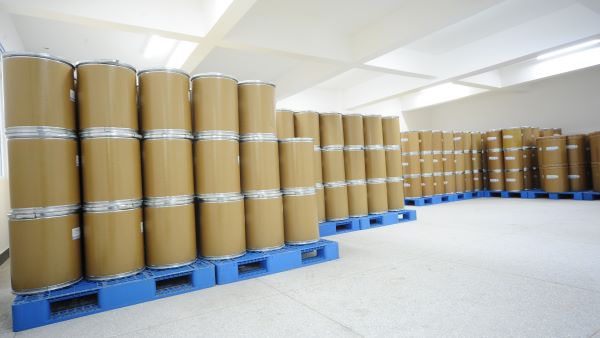
- Standard packaging: 1 kg aluminum foil bag inside plastic bag, packed in cardboard drum or box.
- Bulk packaging: 25 kg drum or customized as per buyer requirements.
- Private label packaging available upon request.
Shipping Terms
- Shipped via express (DHL, FedEx, UPS), air freight, or sea freight depending on order quantity and destination.
- Lead time: 7-15 business days after payment.
- Door-to-door and door-to-port delivery options available.
Shelf Life & Storage
- Store in a cool, dry place away from direct sunlight and heat sources.
- Keep container tightly closed when not in use.
- Recommended storage temperature: 2–8°C for long-term preservation of aromatic integrity.