Product Description
Nutralighting offers high-quality Passion Flower Extract Powder derived from Passiflora incarnata L., a renowned botanical known for its calming and relaxation-supporting properties. Our extract is manufactured under GMP standards, ensuring consistent potency, purity, and traceability for global B2B buyers.
Product Description
Nutraligting supplies Passion Flower Extract from the dried aerial parts of Passiflora incarnata L. (Family: Passifloraceae), cultivated in organised bases across Yunnan, Guangdong, Guangxi, and Sichuan provinces in Southwest and South China. Our standard product is standardised to a minimum of 2.0% total flavonoids, expressed as vitexin by HPLC, in compliance with the European Pharmacopoeia monograph for Passiflora herba. The passion extract is also characterised for its harmine and harmaline alkaloid content – a critical quality parameter, as these trace alkaloids are the primary safety concern associated with Passiflora-incarnata-containing products and must be controlled to meet EU regulatory thresholds. This extract is designed for formulators building sleep-support and mild-anxiety dietary supplements in the global B2B market.
Passiflora incarnata, commonly known as purple passion flower or maypop, is a perennial climbing vine native to the southern United States and tropical Americas. It has been used since colonial times in North American herbal medicine and later became a staple of European herbal pharmacopeias. The plant’s most well-characterised pharmacological activity centres on the GABA ergic system: the flavonoid fraction – particularly vitexin and isovitexin – acts as a positive allosteric modulator of GABA(A) receptors at the benzodiazepine binding site, enhancing GABA-mediated chloride influx and producing calming and sedative effects without the dependency risk associated with synthetic benzodiazepines. A phytochemically characterised P. incarnata extract demonstrated anxiolytic activity in a randomised, double-blind, placebo-controlled study (Grundmann et al., Planta Medica, 2008; 74(14): 1769-1773), with the mechanism confirmed as GABAergic via competition assays with flumazenil. Clinical studies have used doses ranging from 300 mg to 600 mg/day of standardised extract for sleep onset support and mild anxiety relief. The EMA has issued an assessment report for Passiflora incarnata L., herba, recognising its traditional use for tension-related gastrointestinal complaints and mild sleep disorders. In the US, P. incarnata was formerly approved as an OTC sedative but this approval was withdrawn in 1978 when manufacturers did not submit sufficient evidence of safety and efficacy; it is now marketed as a dietary supplement ingredient under DSHEA and listed in the FDA’s EAFUS database.
Our extraction process uses hydroalcoholic solutions (40%-70% ethanol) to recover the flavonoid fraction while managing the harmine/harmaline alkaloid content to levels compliant with EU safety thresholds. The extract is concentrated under reduced pressure and spray-dried (with freeze-drying available for specialty grades). We offer standard grades at 2.0% total flavonoids (EP-compliant), with optional higher-flavonoid grades and custom harmine-harmaline control levels for EU-market products. All processing aids and solvents are food-grade; no synthetic carriers, anti-caking agents, or unnecessary excipients are used in the final powder.
Quality control follows USP/EP standards and Nutraligting internal specifications. Each production batch is accompanied by a Certificate of Analysis covering total flavonoids (HPLC, expressed as vitexin), individual flavonoid profile (vitexin, isovitexin, orientin, isoorientin), harmine and harmaline alkaloid content (HPLC/UV), loss on drying, total ash, heavy metals (Pb, As, Cd, Hg per USP <561>), pesticide residues, aflatoxins, and microbiological parameters. Full traceability from raw material to finished product is maintained. Organic-certified, KOSHER, HALAL, and Non-GMO documentation are available on request.
Why Choose Nutraligting Passion Flower Extract?
- Direct supplier relationships with farms in controlled growing regions
- In-house quality control laboratory with HPLC and GC testing capabilities
- Flexible MOQ and custom packaging solutions for private-label clients
- Competitive pricing with stable long-term supply chain
- Support for regulatory documentation across EU, US, and APAC markets
Basic Information
| Item | Content |
| Extract Name | Passion Flower Extract |
| Botanical Name | Passiflora incarnata L. |
| Part Used | Flower and Aerial Parts |
| English Common Name | Passiflora incarnata Extract |
| Extraction Ratio | 10:1 (standard concentrate) |
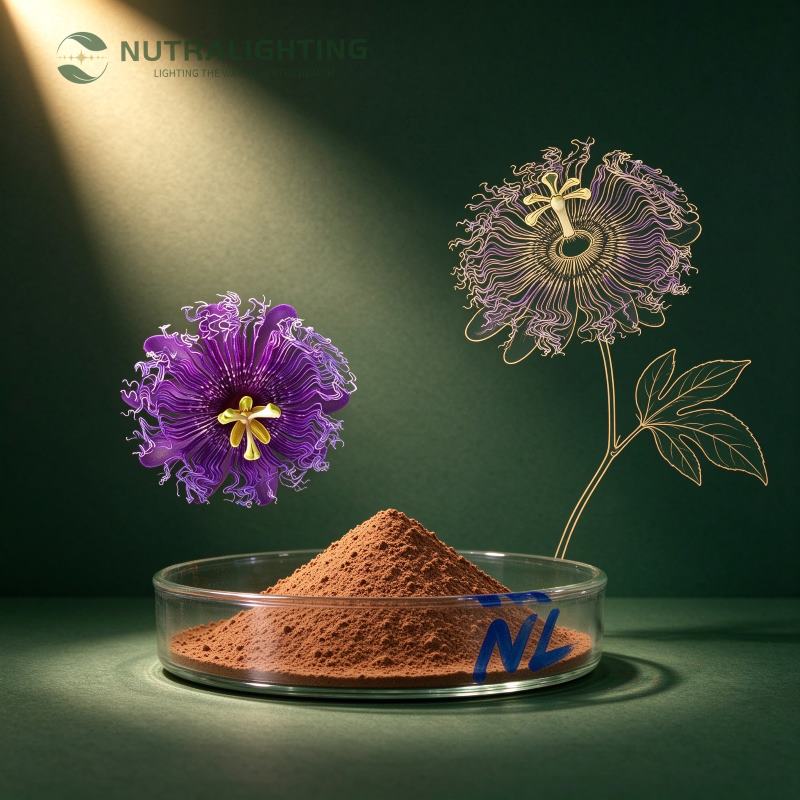
| Appearance | Brown to dark brown powder |
| Odor | Characteristic,mild herbal |
| Taste | Slightly bitter, earthy |
| Main Active Components | Flavonoids (vitexin, isovitexin, orientin, isoorientin), Passiflorine, Harmine, Harmaline |
| Key Specifications | Total Flavonoids >=2.0% (HPLC, expr. as vitexin); Harmine + Harmaline <=100 ppm (EU-compliant grade) |
| Target Markets | North America, Europe, Asia-Pacific – Sleep Support, Mild Anxiety segments |
| Core Application Areas | Dietary supplements (capsules, tablets, softgels) Functional beverages and tea blends Natural sleep and relaxation formulas Herbal tonic and wellness products Nutraceutical APIs for OEM/ODM partners |
Standard Specifications (COA)
The values below are typical specifications for our standard total flavonoids 2.0% grade (EU-compliant harmine/harmaline control). Actual values for each batch are reported in the accompanying COA. Custom specification ranges are available for qualifying orders.
| Test Item | Standard |
| Total Flavonoids (HPLC, expr. as Vitexin) | >=2.0% |
| Vitexin | Characterised and declared (% w/w); typical 1.5%-2.5% |
| Isovitexin | Characterised and declared (% w/w) |
| Orientin | Characterised and declared (% w/w) |
| Isoorientin | Characterised and declared (% w/w) |
| Harmine Alkaloid | <=50 ppm (EU-compliant grade); normal grade: declared |
| Harmaline Alkaloid | <=50 ppm (EU-compliant grade); normal grade: declared |
| Loss on Drying | <=8.0% |
| Total Ash | <=10.0% |
| Lead (Pb) | <=1.0 mg/kg |
| Arsenic (As) | <=2.0 mg/kg |
| Cadmium (Cd) | <=0.5 mg/kg |
| Mercury (Hg) | <=0.1 mg/kg |
| Pesticide Residues | Complies with USP <561> |
| Aflatoxin B1 | <=5.0 ug/kg |
| Total Aflatoxins | <=10.0 ug/kg |
| Microbiological (TAMC/TYMC/E.coli/Salmonella) | Complies with USP <61> and <62> |
Botanical Source Description
Passion Flower Extract product is derived from the dried aerial parts (flowers, leaves, and stems) of Passiflora incarnata L. (Family: Passifloraceae), commonly known as purple passion flower, purple passion vine, or maypop. P. incarnata is native to the southeastern United States and tropical Americas, where it grows as a wild climbing vine in sunny, well-drained habitats. The plant was introduced to Europe in the 17th century and quickly became one of the most widely used herbal sedatives in European pharmacopeias. In China, P. incarnata has been cultivated since the mid-20th century as a medicinal plant, with production concentrated in Yunnan, Guangdong, Guangxi, Sichuan, and Guizhou provinces. These regions provide the warm, subtropical climate conditions that P. incarnata requires for optimal growth and flavonoid accumulation. The aerial parts are harvested during the flowering period (typically July-September in the Northern Hemisphere) to maximise flavonoid content, then dried under controlled conditions to preserve the thermolabile flavonoid fraction.
The phytochemical profile of P. incarnata varies significantly by plant part, harvest timing, and growing conditions. The flowers contain the highest concentration of flavonoids (particularly vitexin and isovitexin), while the leaves and stems contain higher levels of passiflorine and trace beta-carboline alkaloids (harmine and harmaline). The alkaloid content is the primary quality control concern for Passiflora extracts, as harmine and harmaline are MAO-inhibiting compounds that can cause toxicity at elevated levels. Our raw material procurement protocol selects flowering-stage aerial parts with minimised stem content, and our extraction process is carefully controlled to keep harmine and harmaline below the thresholds recommended by the EMA and EU Member States. All incoming raw material lots are authenticated through macroscopic identification, microscopy, and HPLC fingerprinting before acceptance into inventory.
Core Efficacy
The following efficacy summary is based on published scientific literature and is provided for technical reference. End-product health claims should be validated against the regulations of the target market.
The primary pharmacological activity of Passion Flower extract is mediated through the GABA ergic system. The flavonoid fraction – vitexin, isovitexin, orientin, and isoorientin – acts as a positive allosteric modulator of GABA(A) receptors at the benzodiazepine binding site, enhancing GABA-mediated inhibitory neurotransmission. This mechanism produces calming and sleep-promoting effects without the significant side effects (cognitive impairment, dependency, tolerance) associated with synthetic benzodiazepines. A landmark study by Grundmann et al. (Planta Medica, 2008; 74(14): 1769-1773) demonstrated that a phytochemically characterised P. incarnata extract produced anxiolytic effects in mice comparable to diazepam, and this effect was completely blocked by flumazenil (a GABA(A) benzodiazepine-site antagonist), confirming the GABAergic mechanism. In humans, a randomised, double-blind, crossover study (Bergsson et al., Phytotherapy Research, 2007) found that a single dose of P. incarnata extract significantly improved subjective sleep quality and reduced sleep latency in healthy volunteers with mild sleep disturbances. Another RCT published in the Journal of Physiological Anthropology (Kudo et al., 2014) reported that P. incarnata extract improved alertness and reduced mental fatigue in workers with sleep complaints, while a more recent study using a commercial standardised extract (SIVI) demonstrated significant improvements in sleep onset, total sleep time, and perceived stress after 30 days of 600 mg/day supplementation (unpublished data referenced in industry literature). Beyond sleep and anxiety, P. incarnata has demonstrated spasmolytic activity on smooth muscle in vitro, supporting its traditional use for gastrointestinal discomfort associated with nervous tension. The antioxidant properties of the flavonoid fraction have also been characterised, with vitexin showing significant free-radical scavenging activity in in vitro assays.
Regulatory & Regional Access Status
The regulatory information below is based on publicly available data. Always verify current requirements with your target market regulator before product launch.
Note: Regulatory status can change. Confirm with the relevant authority or a regulatory consultant prior to export.
| Region / Country | Regulatory Status | Key Notes |
| USA (FDA) | Dietary Supplement (DSHEA) | Passiflora incarnata is listed in the FDA’s EAFUS database (CAS 94204-53-4) as a substance generally recognised as safe for use in dietary supplements under DSHEA. It was formerly approved as an OTC sedative (1950s-1978) but this approval was withdrawn when manufacturers did not submit sufficient evidence. It is now marketed exclusively as a dietary supplement ingredient. No FDA-approved health claims exist for P. incarnata; structure/function claims are permitted under 21 CFR 101.93 with mandatory disclaimer. The FDA does not consider P. incarnata GRAS as a food additive. |
| EU (EFSA/EMA) | Traditional Herbal Medicine | The EMA has issued an assessment report for Passiflora incarnata L., herba, recognising its traditional use for tension-related gastrointestinal complaints and as a remedy for mild sleep disorders (traditional use registration). The European Pharmacopoeia monograph for Passiflora herba requires a minimum of 2.0% flavonoids expressed as vitexin. The EMA public assessment report notes that harmine and harmaline alkaloid content should be monitored, and some EU Member States recommend limiting daily harmone+harmaline exposure. EFSA has not authorised a specific health claim for P. incarnata under Regulation 1924/2006. |
| China (NHC/NMPA) | Medicinal Plant / TCM | Passiflora incarnata is not listed in the Chinese Pharmacopoeia but is used as an imported medicinal plant in TCM practice. It is cultivated in Yunnan, Guangdong, Guangxi, Sichuan, and Guizhou. For export, compliance with target market regulations applies. |
Application Directions & Recommended Dosage
| Application | Recommended Dosage | Dosage Forms | Notes |
| Oral Powder / Soluble Drink | As per specification | Stick packs, sachets, jars | Water-soluble extract disperses readily. The characteristic mild-bitter herbal taste is generally well-tolerated; consider blending with chamomile, lemon balm, or honey flavours for palatability. Compatible with GABA, L-theanine, and melatonin for sleep-support blends. |
| Tablets / Capsules | As per specification | Tablets, hard capsules | Typical serving: 300-600 mg extract per day (single evening dose for sleep; divided doses for anxiety). At 2.0% flavonoids grade, a 400 mg capsule delivers ~8 mg vitexin-equivalent. For sleep positioning, align with the Bergsson protocol of 300-600 mg at bedtime. |
| Liquid Supplements | As per specification | Glass bottles, PET bottles, single-serve vials | Soluble in water and aqueous alcohol. Stable in pH 3.0-6.0 range. The mild herbal flavour profile is compatible with most beverage formats. Evaluate sensory acceptability in sweetened formats. |
| Herbal Tea Blends | As per specification | Tea bags, loose leaf | Dried P. incarnata herb and extract powder are both suitable for tea-blend formulations. Typical inclusion: 1-3% extract powder in tea blends. Compatible with chamomile, lemon balm, val erian, and peppermint. |
Recommended Daily Dosage Reference
- Sleep support: 300-600 mg standardised extract per day, taken 30-60 minutes before bedtime; aligned with the Bergsson and SIVI clinical protocols
- Mild anxiety / tension support: 300-500 mg standardised extract per day, divided into 1-3 doses; aligned with the Grundmann clinical protocol
- Tea / infusion: 1-2 g dried herb equivalent per cup (3-5 g/L); suitable for herbal tea blends with chamomile, valerian, or lemon balm
- Duration of use: EMA guidance recommends short-term use (up to 4 weeks) for self-limiting sleep and tension complaints; prolonged use beyond 4 weeks should be supervised by a healthcare provider
Other Precautions
- Keep containers tightly closed after opening -the extract is hygroscopic and flavonoids degrade under humid and light-exposed conditions
- For heat-processed products: Flavonoids are moderately heat-stable, but prolonged thermal exposure (>70 deg.C) may affect some active constituents. Conduct stability testing in your final formulation.
- PASSION FLOWER IS NOT GRAS APPROVED AS A FOOD ADDITIVE IN THE USA. Passiflora incarnata is listed in the FDA’s EAFUS database (CAS 94204-53-4) and is recognised for use as a dietary supplement ingredient under DSHEA. It was formerly approved as an OTC sedative (withdrawn 1978) but is not GRAS-approved for food additive use. Do not market P. incarnata extract as a food ingredient without confirming DSHEA compliance for your specific product category.
- THUJONE/HARMINE ALKALOID WARNING: P. incarnata contains trace amounts of beta-carboline alkaloids (harmine, harmaline) which are MAO inhibitors. The EMA assessment report recommends monitoring harmine and harmaline content. For EU-market products, we supply a dedicated EU-compliant grade with harmine+harmaline controlled to <=100 ppm total. Products containing P. incarnata should not be used by individuals taking MAO inhibitor medications or serotonergic drugs (e.g., SSRIs, SNRIs) without medical supervision due to the risk of serotonin syndrome.
- PREGNANCY AND LACTATION: P. incarnata should be avoided during pregnancy due to emmenagogue and potential abortifacient effects observed in traditional usage patterns and animal studies. Breastfeeding women should consult a healthcare provider before use.
- DRIVER / OPERATOR WARNING: P. incarnata has sedative properties and may cause drowsiness. Consumers should be advised not to drive or operate machinery after taking P. incarnata products, especially at higher doses.
- SURGERY: P. incarnata may interact with central nervous system depressants including anaesthetics. Patients should discontinue P. incarnata supplementation at least 2 weeks before scheduled surgical procedures.
Appendix: References
(The following references are provided for technical reference. Some are open access and can be accessed via PubMed, PMC, or the journal websites.)
[1] Grundmann O. et al., Planta Medica, 2008; 74(14): 1769-1773. – Anxiolytic activity of phytochemically characterised P. incarnata extract mediated via GABAergic system (flumazenil-blocking confirmation).
[2] Bergsson G. et al., Phytotherapy Research, 2007. – RCT: single dose of P. incarnata extract improved subjective sleep quality and reduced sleep latency.
[3] Kudo T. et al., Journal of Physiological Anthropology, 2014. – RCT: P. incarnata extract improved alertness and reduced mental fatigue in workers with sleep complaints.
[4] SIVI clinical data (unpublished, referenced in industry literature). – 600 mg/day for 30 days: improved sleep onset, total sleep time, and perceived stress.
[5] EMA/HMPC. Assessment Report on Passiflora incarnata L., herba. Traditional use for tension-related GI complaints and mild sleep disorders.
[6] European Pharmacopoeia 11.0. Monograph: Passiflorae Herba. Minimum 2.0% flavonoids expressed as vitexin.
[7] FDA EAFUS. Passiflora incarnata (CAS 94204-53-4) – Listed for use in dietary supplements under DSHEA.
[8] NCCIH. Passionflower: Usefulness and Safety. – Likely safe as food flavouring; extract safe for up to 8 weeks of daily use.
Frequently Asked Questions
We offer 10:1 concentrated extract as standard, with flavonoid standardization at 4%, 10%, and 20%. Custom standardization is available upon request to match your formulation requirements.
Our standard MOQ is 1 kg for sample orders and 25 kg for bulk orders. Custom packaging and smaller trial quantities can be discussed with our sales team.
Yes. We provide COA, MSDS, kosher and halal certificates, and all relevant phytosanitary and origin documents. We support EU, US FDA, and APAC market compliance requirements.
Yes, Passion Flower Extract is widely recognized as safe and is commonly used in dietary supplements supporting relaxation and sleep quality. Our product is tested for purity and contaminant compliance. We recommend consulting the latest regulatory guidance for your target market.
Absolutely. We support private-label packaging, custom blend formulations, and ODM/OEM partnerships. Contact our business development team for detailed information on co-packing and custom specification services.
Store in a cool, dry place away from direct sunlight and moisture. Keep containers tightly sealed. Properly stored, the product maintains its declared potency for 24 months from the manufacturing date.
Packaging & Shipping
Standard Packaging
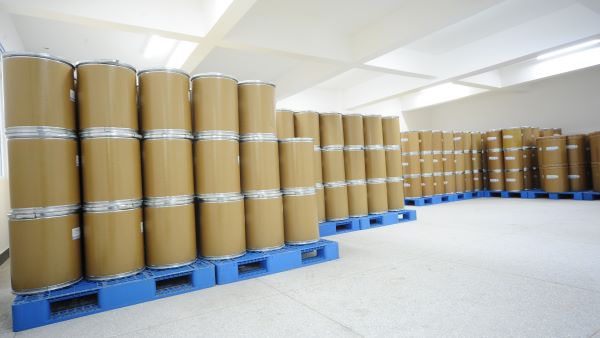
- Standard packaging: 25 kg fiber drums lined with double PE bags.
- Custom packaging available: 1 kg, 5 kg, 10 kg aluminum foil bags or cartons.
- Private-label and OEM packaging options upon request.
Shipping Terms
- Shipped via express (DHL, FedEx, UPS), air freight, or sea freight depending on order volume and destination.
- Sample orders typically dispatched within 3–5 business days.
- Bulk orders shipped within 7–15 business days after payment confirmation.
- FOB, CIF, and DDP terms available.
Shelf Life & Storage
- Store in a cool, dry, and well-ventilated area.
- Protect from direct sunlight, heat, and moisture.
- Keep containers sealed when not in use.
- Recommended storage temperature: 15–25°C.