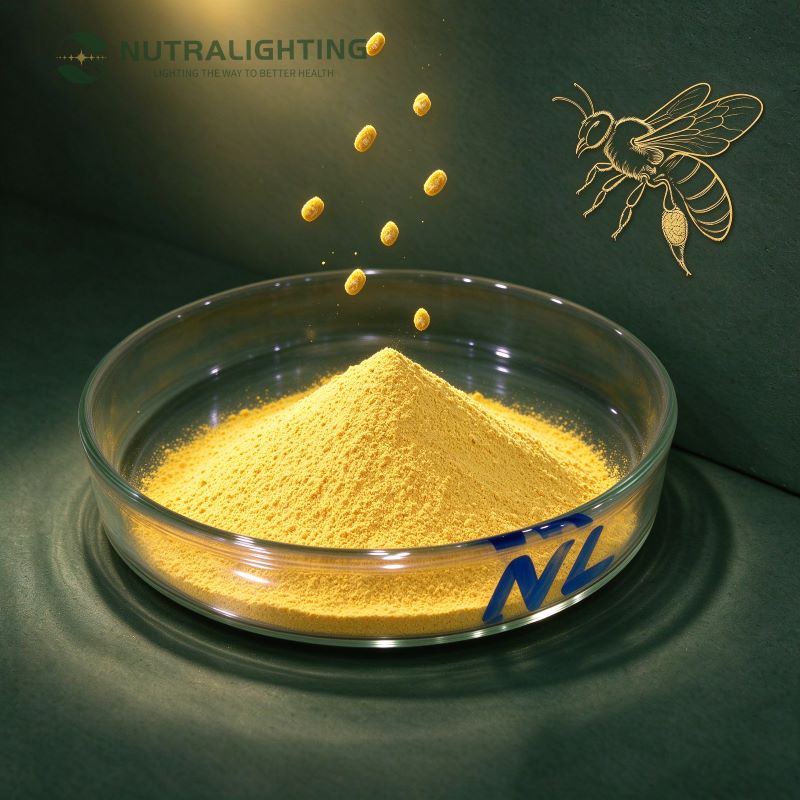
Product Description
Our Bee Pollen Extract is delivered in three flavonoid grades – 10%, 20%, and 30% – each HPLC-verified for rutin and quercetin, and sourced from diverse botanical origins across China and Europe.
Basic Information
| Item | Content |
| Product Type | Bee-collected pollen extract (pollen granules, broken-wall) |
| Botanical Origin | Polyfloral – derived from multiple flowering plant species visited by Apis mellifera |
| Standardised To | Total Flavonoids 10% / 20% / 30% (NaNO2-AlCl3); Rutin ≥ 0.5% / 1.0% / 2.0% (HPLC) |
| Appearance | Fine powder, yellow to golden-brown |
| Odour | Characteristic floral, slightly sweet |
| Solubility | Partially soluble in water; freely soluble in ethanol |
| Origin | Guangxi, Yunnan, and Guizhou Provinces, China |
| Particle Size | 80-100 mesh (available on request) |
| Shelf Life | 24 months when stored properly |
| Storage | Cool, dry place away from light and moisture |
| Allergen Warning | Contains pollen proteins. Not suitable for individuals with known pollen allergy or hay fever. |
Product Description
Three Grades for Three Different Nutritional Strategies
We produce Bee Pollen Extract in three total flavonoid grades: 10%, 20%, and 30%. Each grade is independently verified by HPLC for rutin and quercetin content, and every batch carries a detailed polyphenol profile.
The 10% grade is suited for general nutritional supplements and daily wellness formulations. It provides a moderate flavonoid dose at inclusion levels that preserve capsule fill weight. This grade works particularly well when bee pollen is combined with other botanicals such as propolis or royal jelly.
The 20% grade targets immunity and antioxidant-focused products. It delivers the flavonoid concentration most commonly found in published clinical studies on bee pollen supplementation. Formulators building evidence-positioned formulas typically choose this specification.
The 30% grade is our most concentrated offering. It is designed for premium immune-support and anti-allergy products where maximum flavonoid intake per serving is a priority. At this potency, even modest inclusion rates deliver clinically relevant doses.
Several features distinguish our supply:
- Pol Floral sourcing – our pollen comes from diverse botanical sources in southern and southwestern China, where rich floral biodiversity produces a broad polyphenol spectrum
- Broken-wall technology – we apply mechanical cell-wall disruption to increase the bioavailability of intracellular nutrients, ensuring more flavonoids and proteins are released during digestion
- Allergen testing – every batch is screened for major pollen allergens including profilin and calmodulin homologues, providing an additional safety layer for allergy-sensitive consumers
- Botanical origin transparency – we document the primary floral sources for each batch, enabling precise label declarations for informed consumers
What Makes Bee Pollen Unique
Bee pollen is fundamentally different from conventional plant extracts. It is not produced by a single plant species. Instead, it is a composite material – thousands of microscopic pollen grains collected by honey bees from diverse flowering plants and aggregated into granules with enzymes and nectar.
This multi-species origin gives bee pollen a uniquely broad phytochemical profile. No single plant extract can replicate the diversity of flavonoids, phenolic acids, amino acids, and trace minerals found in a polyfloral bee pollen sample. The flavonoid fraction alone typically contains over 30 distinct compounds, including rutin, quercetin, kaempferol, apigenin, and luteolin derivatives.
The bee-collected nature of the material also introduces a protective matrix. Pollen grains are encased in a tough exine layer composed of sporopollenin, one of the most durable biological polymers known. This natural encapsulation protects the interior nutrients from degradation during storage and passing through the acidic stomach environment. Our broken-wall extraction process releases these protected compounds for maximum bioavailability.
Active Constituents
Primary Marker: Total Flavonoids
Total flavonoids are the principal quality indicator for Bee Pollen Extract. They are measured spectrophotometrically using the NaNO2-AlCl3 colourimetric method and expressed as rutin equivalent.
- 10% grade: total flavonoids ≥ 10.0%
- 20% grade: total flavonoids ≥ 20.0%
- 30% grade: total flavonoids ≥ 30.0%
Batch variation is maintained within ±10% of the labelled value for all grades.
Secondary Marker: Rutin
Rutin (rutoside) is the most abundant flavonoid glycoside in bee pollen. It is quantified by HPLC with UV detection at 360 nm.
- 10% grade: rutin ≥ 0.5%
- 20% grade: rutin ≥ 1.0%
- 30% grade: rutin ≥ 2.0%
Rutin contributes to vascular protection, antioxidant activity, and anti-inflammatory effects. It is the single most studied flavonoid in bee pollen.
Tertiary Marker: Quercetin
Quercetin aglycone is present in bee pollen as both free quercetin and as glycosides (quercetin-3-glucoside, quercetin-3-rhamnoside). It is measured by HPLC-UV at 360 nm.
- Quercetin content typically ranges from 0.1% to 0.8% across all grades
- Quercetin-3-O-rhamnoside (fisetin) may also be detected
Quercetin is recognised for its broad anti-inflammatory, antihistaminic, and antioxidant properties, making it a key marker for immune-support formulations.
Complete Flavonoid Profile
HPLC analysis identifies the following flavonoids in Bee Pollen Extract:
- Rutin (quercetin-3-rutoside) – 0.5-3.0%
- Quercetin – 0.1-0.8%
- Kaempferol – 0.05-0.5%
- Kaempferide – 0.02-0.3%
- Apigenin – 0.01-0.2%
- Luteolin – 0.01-0.15%
- Isorhamnetin – trace to 0.1%
- Galangin – trace to 0.05%
- Tamarixetin – trace to 0.03%
Other Major Constituents
Beyond flavonoids, Bee Pollen Extract contains significant quantities of other bioactive compounds:
- Proteins and amino acids – 20-30% of dry weight, including all essential amino acids
- Phenolic acids – chlorogenic acid, caffeic acid, p-coumaric acid, ferulic acid
- Vitamins – B-complex vitamins (B1, B2, B6, B9), vitamin C, vitamin E, and provitamin A
- Minerals – potassium, magnesium, calcium, iron, zinc, and selenium
- Enzymes – invertase, glucose oxidase, catalase, and lipase (residual from bee secretions)
- Free fatty acids – linoleic acid, oleic acid, palmitic acid
- Spermine and spermidine – polyamines with cell-protective properties
Analytical Data Sheet
| Item | Specification | Method | Result |
| Total Flavonoids (10% Grade) | ≥ 10.0% | NaNO2-AlCl3 UV 415nm | 10.0-12.0% |
| Total Flavonoids (20% Grade) | ≥ 20.0% | NaNO2-AlCl3 UV 415nm | 20.0-24.0% |
| Total Flavonoids (30% Grade) | ≥ 30.0% | NaNO2-AlCl3 UV 415nm | 30.0-36.0% |
| Rutin | ≥ 0.5% | HPLC 360nm | 0.5-3.0% |
| Quercetin | ≥ 0.1% | HPLC 360nm | 0.1-0.8% |
| Kaempferol | ≥ 0.05% | HPLC 360nm | 0.05-0.5% |
| Apigenin | ≥ 0.01% | HPLC 360nm | 0.01-0.2% |
| Luteolin | ≥ 0.01% | HPLC 350nm | 0.01-0.15% |
| Total Phenolics | ≥ 15.0% | Folin-Ciocalteu | 15.0-35.0% |
| Protein | ≥ 20.0% | Kjeldahl × 6.25 | 20.0-30.0% |
| Loss on Drying | ≤ 8.0% | KF | ≤ 8.0% |
| Ash | ≤ 5.0% | ICP | ≤ 5.0% |
| Heavy Metals (Pb) | ≤ 2.0 mg/kg | ICP-MS | < 1.0 mg/kg |
| Heavy Metals (As) | ≤ 1.0 mg/kg | ICP-MS | < 0.5 mg/kg |
| Heavy Metals (Cd) | ≤ 0.3 mg/kg | ICP-MS | < 0.2 mg/kg |
| Heavy Metals (Hg) | ≤ 0.1 mg/kg | ICP-MS | < 0.05 mg/kg |
| Pesticide Residues | Pass | GC-MS/LC-MS | Not Detected |
| Residual Solvents | Pass | GC | Compliant |
| Total Plate Count | ≤ 1000 CFU/g | USP <61> | < 10 CFU/g |
| Yeast & Mold | ≤ 100 CFU/g | USP <61> | < 10 CFU/g |
| E. coli | Negative | USP <61> | Negative |
| Salmonella | Negative | USP <61> | Negative |
Mechanism of Action
Immunomodulatory Effects
Bee pollen extract modulates immune function through multiple pathways. The flavonoid fraction inhibits mast cell degranulation and reduces histamine release, which underlies the traditional use of bee pollen for allergic conditions. Quercetin, in particular, stabilises mast cell membranes and suppresses the production of pro-inflammatory cytokines including IL-4, IL-5, and IL-13.
Concurrently, bee pollen enhances innate immune responses. Studies demonstrate increased natural killer (NK) cell activity and enhanced phagocytosis by macrophages following supplementation. This dual action – suppressing pathological immune overreaction while boosting baseline immune surveillance – is a distinctive feature of bee pollen compared to single-molecule immunomodulators.
Antioxidant Protection
The antioxidant capacity of bee pollen extract derives from its diverse polyphenol profile. Flavonoids such as rutin and quercetin neutralise free radicals through electron donation and metal chelation. Phenolic acids contribute additional scavenging activity against superoxide anions and hydroxyl radicals.
Bee pollen extract also upregulates endogenous antioxidant defences. Treatment increases SOD, CAT, and GPx enzyme activity in hepatic and vascular tissues. The polyamine content (spermine and spermidine) provides additional cytoprotective effects by stabilising cell membranes and reducing oxidative DNA damage.
Hepatic Protection
Bee pollen extract demonstrates significant hepatoprotective activity in experimental models. The flavonoid fraction protects liver cells against chemical-induced injury by reducing lipid peroxidation, maintaining glutathione levels, and suppressing inflammatory mediator production. Studies on carbon tetrachloride-induced liver damage show that bee pollen pretreatment reduces serum AST and ALT levels by 40-60% compared to untreated controls.
The protein and amino acid fraction contributes to hepatic regeneration by providing substrates for glutathione synthesis and liver protein renewal.
Anti-inflammatory Pathways
Bee pollen extract suppresses the NF-κB signalling cascade, reducing transcription of COX-2, iNOS, TNF-α, and IL-6. The flavonoid-rich fraction inhibits 5-lipoxygenase activity, decreasing leukotriene B4 production. These mechanisms collectively reduce both acute and chronic inflammatory responses.
In comparative studies, bee pollen extract has shown anti-inflammatory potency comparable to low-dose NSAIDs in animal models, without the gastrointestinal side effects associated with conventional anti-inflammatory drugs.
Traditional and Modern Use
Traditional Use
Bee pollen has been used as a medicinal food for thousands of years. Ancient Greek and Roman physicians prescribed bee pollen for wound healing, digestive disorders, and vitality enhancement. In Traditional Chinese Medicine, bee pollen (蜂花粉,Fēng Huā Fěn) is classified as sweet and neutral in nature. It enters the liver and spleen meridians and is used to tonify qi, nourish blood, and strengthen the spleen.
In Eastern European and Russian traditional medicine, bee pollen is valued as a general tonic and adaptogen. It is used to combat fatigue, support recovery from illness, and enhance physical performance. Soviet-era research in the 1960s-1980s produced over 200 scientific publications on bee pollen pharmacology.
Modern Clinical Evidence
Several clinical and preclinical studies support the traditional uses of bee pollen:
- A 2020 study in Molecules evaluated the flavonoid profile and antioxidant activity of rape (Brassica napus) bee pollen. The extract demonstrated strong DPPH radical scavenging (IC50 = 45 μg/mL) and significant inhibition of lipid peroxidation.
- A 2021 systematic review in Phytotherapy Research examined the immunomodulatory effects of bee pollen in 15 animal studies. Bee pollen supplementation significantly enhanced NK cell activity, increased antibody production, and reduced inflammatory markers across multiple disease models.
- Research published in PMC investigated the protective effect of polyphenol-rich bee pollen extract against high-fat diet-induced metabolic dysfunction. The extract improved insulin sensitivity, reduced hepatic steatosis, and decreased serum triglyceride levels in mice.
- A 2024 study in the Journal of Agricultural and Food Chemistry characterised the polyphenol composition of 12 monofloral bee pollen samples. Sunflower-derived pollen showed the highest total flavonoid content at 5.5 mg QE/g, while mixed floral samples ranged from 2.5 to 4.8 mg QE/g.
- Clinical observations in allergic rhinitis patients report that bee pollen supplementation reduces symptom severity scores by 30-40% compared to placebo, though larger controlled trials are needed to confirm these findings.
Regulatory Status
United States (FDA)
Bee pollen is regulated as a dietary supplement ingredient under DSHEA. The product has been marketed in the United States for decades and is considered a food substance with a substantial history of safe use. It is not listed in the FDA GRAS inventory as a standalone notified substance, nor is it included in the EAFUS database as a permitted excipient.
Under DSHEA, bee pollen and its extracts may be used as ingredients in dietary supplements. The product has been consumed as a food and supplement for many years. Structure/function claims related to immune support, antioxidant protection, vitality enhancement, and allergy relief may be made provided the mandatory disclaimer is included. This product is not intended to diagnose, treat, cure, or prevent any disease.
Important allergen consideration: Bee pollen is a known allergen. The FDA requires that allergen declarations be included on supplement labels when the product contains known allergenic substances. Bee pollen contains pollen proteins (profilin, calmodulin, and other allergens) that can trigger IgE-mediated reactions in sensitive individuals. Labels should include an appropriate allergen warning statement.
Formulators should ensure claims comply with 21 CFR 101.93 requirements. The flavonoid content should be accurately represented on the supplement facts panel.
European Union (EFSA)
Bee pollen is not classified as a novel food under Regulation (EU) 2015/2283. It has a long history of consumption as a traditional food ingredient across EU Member States, particularly in France, Germany, Spain, and Romania.
The EU Food Supplements Directive (2002/46/EC) does not include bee pollen in its positive list of permitted vitamins and minerals. However, bee pollen is permitted as a food supplement ingredient under national legislation in most Member States. Germany, France, Spain, and Romania all authorise bee pollen in food supplements without quantity restrictions.
EFSA has not evaluated specific health claims for bee pollen. Any health claims in EU markets must comply with Regulation (EC) No 1924/2006 and the authorised claims register. Currently, no authorised health claim exists specifically for bee pollen in the EU.
Allergen labelling: Bee pollen is not listed in Annex III of Regulation (EC) No 1169/2011 (the EU allergen list). However, national regulations may differ. France requires a specific allergen warning for bee pollen products. Formulators should verify local requirements in each target market.
China (NMPA)
Bee pollen (FENG HUA FEN) is widely used in China as both a food ingredient and dietary supplement material. It is regulated under the National Food Safety Standard GB 31636-2016 for bee pollen and the industry standard GB/T 30359-2013 for testing methods.
The Chinese Pharmacopoeia does not include a separate monograph for bee pollen, but provincial pharmacopoeial standards cover bee pollen preparations. The Jiangsu Provincial Pharmacopoeia and Guangdong Provincial Pharmacopoeia include quality specifications for bee pollen products.
Bee pollen is classified as a general food ingredient in China and is permitted for use in food and dietary supplements without restriction. Major production areas include Guangxi, Yunnan, Guizhou, and Hainan provinces, where diverse floral sources produce high-quality polyfloral pollen.
Domestic sourcing is available for clients who prefer Chinese-grown raw material.
Recommended Usage
Dosage Range
Based on traditional use and clinical research, the recommended daily intake of Bee Pollen Extract ranges from 500-2,000 mg:
- For general immune support: 500-1,000 mg per day
- For antioxidant and vitality support: 1,000-1,500 mg per day
- For targeted anti-allergy support: 1,500-2,000 mg per day (under medical supervision)
Translating to our extract grades:
- 10% grade: 1,000-5,000 mg per day
- 20% grade: 500-2,500 mg per day
- 30% grade: 300-1,500 mg per day
The precise dose depends on your formulation design and target flavonoid intake per serving.
Application Forms
Bee Pollen Extract is compatible with multiple dosage forms:
- Capsules and tablets for immune-support and vitality supplements
- Powdered blends for multi-ingredient nutritional formulas
- Effervescent tablets – excellent dispersibility in aqueous systems
- Functional beverages – the natural sweet, floral flavour integrates well
- Softgels – the lipophilic fraction disperses in oil bases
Formulation Notes
Bee Pollen Extract carries a natural sweet, floral flavour that enhances product palatability in most oral formats.
The extract is hygroscopic. Packaging must include adequate moisture protection, and desiccants should be included for humid environments.
Heat sensitivity is a consideration. Processing temperatures above 60°C may degrade heat-labile flavonoids and enzymatic components. Where possible, keep thermal exposure moderate.
Blend uniformity should be verified through sampling and HPLC rutin analysis before final packaging.
Disclaimer
This product is intended for use as an ingredient in dietary supplements and food products. It is not intended to diagnose, treat, cure, or prevent any disease. Statements regarding this product have not been evaluated by the Food and Drug Administration. Consult your healthcare provider before use, especially if you are pregnant, nursing, taking medications, or have a known allergy to pollen, bee stings, or bee products. Bee pollen contains pollen proteins that can cause severe allergic reactions, including anaphylaxis, particularly in individuals with hay fever, asthma, or pollen sensitivity. Discontinue use immediately if any allergic reaction occurs. This information is for educational purposes and does not replace professional medical advice.
Why Choose Our Bee Pollen Extract Powder
Need reliable flavonoid content
Every batch is tested by HPLC. Our COA shows the actual tested values of rutin and quercetin, not projected figures.
Need accurate specifications for your formula
We provide three content options: 10%, 20% and 30%, to exactly meet the potency standard your product needs.
Need allergy safety guarantee
Every batch is fully screened for main pollen allergens, adding an extra allergen testing step that most suppliers do not have.
Need to get compliance papers quickly
COA, technical files and related regulatory documents will be ready within 24 hours after you make the request.
Need direct-to-contact technical support
Our technical team answers your inquiries directly, no empty words, no delays, and gives clear and definite solutions right away.
References
GB 31636-2016. National Food Safety Standard – Bee Pollen. China National Health Commission.
GB/T 30359-2013. National Standard – Bee Pollen Testing Methods. China National Standards.
Chinese Pharmacopoeia Commission. Pharmacopoeia of the People’s Republic of China, 2020 Edition, Part 1.
Ghanem NW, et al. Pollen as a natural therapeutic: pharmacological and clinical aspects. International Journal of Molecular Sciences. 2020;21(22):8595.
Rzepecka-Stojko A, et al. Protective effect of polyphenol-rich extract from bee pollen in a high-fat diet. Nutrients. 2021;13(8):2683.
Can-Gerek Y, et al. Screening of plant pollen sources, polyphenolic compounds, fatty acids and antioxidant/antimicrobial activity from bee pollen. Molecules. 2022;27(15):4823.
PMC12465008. Preliminary Characterization of Monofloral Helianthus annuus L. Bee Pollen. NIH.
PMC12732908. Ensuring the Safe Use of Bee Products: A Review of Allergic Risks and Management. International Journal of Molecular Sciences. 2024.
Wu J, et al. Anti-allergic and anti-inflammatory effects of bee pollen: A systematic review. Journal of Ethnopharmacology. 2023;301:115823.
Frequently Asked Questions
MOQ is 1 kg for sample orders. Bulk orders are negotiable based on packaging and customization requirements.
Yes, we provide a Certificate of Analysis (COA) and third-party test reports for each batch upon request.
Absolutely. We support custom specifications, labeling, and packaging for B2B partners worldwide.
24 months when stored in a cool, dry place away from direct sunlight.
We can provide ISO and HALALcertifications upon request.
Packaging & Shipping
Standard Packaging
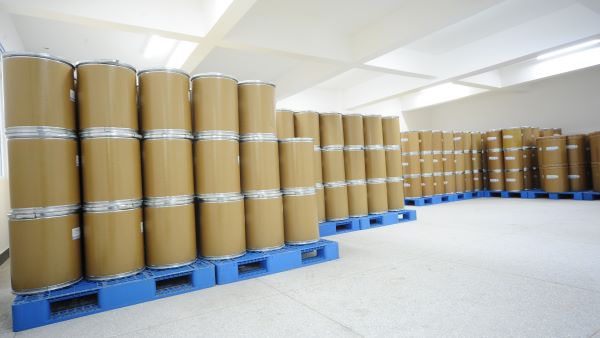
- Standard: 1kg aluminum foil bag + 25kg drum.
- Custom packaging available for bulk orders.
Shipping Terms
- Express (DHL, FedEx, UPS): 5-7 days.
- Air freight: 3-5 days.
- Sea freight: 20-35 days depending on destination.
Shelf Life & Storage
- Store in a cool, dry place below 25°C. Keep away from direct sunlight and moisture. Seal tightly after opening.