
Product Description
Nutraligting supplies a premium standardized hawthorn fruit extract from the ripe berries of Crataegus pinnatifida, cultivated in organized planting bases across Shandong, Hebei, and Henan provinces, China. Our product is standardized to a minimum of 2.0% total flavonoids (expressed as hyperoside) and 12%-18% oligomeric procyanidins (OPC) by HPLC, delivering a consistent profile of bioactive compounds associated with the cardiovascular and antioxidant benefits long attributed to hawthorn in both traditional medicine and contemporary research. This extract is designed for formulators developing dietary supplements, functional foods, and cardiovascular-support formulations for the global B2B market.
Product Description
Hawthorn (Crataegus spp.) belongs to the Rosaceae family and has been used for centuries in both European and Chinese traditional medicine. In China, the dried fruit of Crataegus pinnatifida – known as Shan Zha – is one of the most widely consumed medicinal herbs, featured in the Chinese Pharmacopoeia and listed among the substances that can be used as both food and medicine. The fruit is traditionally used to support digestion and circulation, and modern research has identified its cardioprotective effects through multiple mechanisms including antioxidant activity, endothelial protection, and positive inotropic support. Our standard raw material is selected from mature berries harvested in autumn at peak ripeness, ensuring maximum accumulation of flavonoids and OPCs – the compounds most extensively studied for cardiovascular benefit.
Our extraction process uses food-grade hydroalcoholic solvents to selectively recover the flavonoid and procyanidin fractions. The extract is concentrated under reduced pressure at controlled temperatures to preserve thermolabile constituents, then spray-dried into a free-flowing powder. We also offer a water-soluble variant for beverage and liquid supplement applications. Standard grades include 2.0% flavonoids (Hyperoside HPLC) with 12%-18% OPC, and a high-potency grade with 4.0%+ total flavonoids and 20%+ OPC. All processes comply with GMP standards, quality control follows USP/EP standards and Nutraligting internal specifications.
Basic Information
| Item | Content |
| Extract Name | Hawthorn Fruit Extract |
| Botanical Name | Crataegus monogyna / Crataegus oxyacantl |
| Part Used | Fruit |
| English Common Name | Hawthorn Berry Extract, Crataegus Fruit Extract, Shan Zha Extract |
| Extraction Solvent | Ethanol/Water |
| Particle Size | 80-100 mesh |
| Appearance | Brown to dark brown powder |
| Main Active Components | Total Flavonoids (hyperoside, vitexin, rutin), Oligomeric Procyanidins (OPC), Triterpenic Acids (ursolic acid, oleanolic acid) |
| Key Specifications | Total Flavonoids ≥2.0% (Hyperoside HPLC); OPC 12%-18% (vanillin-HCl assay) |
| Target Markets | North America, Europe, Asia-Pacific – Cardiovascular & Antioxidant segment |
| Core Application Areas | Dietary supplement capsules and tablets Functional beverages and health drinks Herbal formulation blends Nutraceutical powders and mixtures |
Standard Specifications (COA)
The values below are typical specifications for our standard flavonoid 2.0% / OPC 12%-18% grade. Actual values for each batch are reported in the accompanying COA. Custom specification ranges are available for qualifying orders.
| Test Item | Standard |
| Total Flavonoids (HPLC, expressed as Hyperoside) | ≥2.0% (grades available: 2.0%, 4.0%+) |
| Oligomeric Procyanidins (OPC, vanillin-HCl assay) | 12%-18% |
| Loss on Drying | ≤6.0% |
| Total Ash | ≤7.0% |
| Lead (Pb) | ≤1.0 mg/kg |
| Arsenic (As) | ≤2.0 mg/kg |
| Cadmium (Cd) | ≤0.5 mg/kg |
| Mercury (Hg) | ≤0.1 mg/kg |
| Pesticide Residues (Organochlorine/Organophosphorus) | Complies with USP <561> |
| Aflatoxin B1 | ≤5.0 μg/kg |
| Total Aflatoxins | ≤10.0 μg/kg |
| Total Microbial Count (TAMC) | ≤1×10⁴ CFU/g |
| Yeasts and Molds (TYMC) | ≤1×10² CFU/g |
| E. coli / Salmonella | Negative in 1g |
Botanical Source Description
This product is derived from the ripe fruits of Crataegus pinnatifida Bge. var. major N. E. Br. (Family: Rosaceae), commonly known as Chinese hawthorn or Shan Zha. Crataegus pinnatifida is native to northern and northeastern China and is widely cultivated in Shandong, Hebei, Henan, and Liaoning provinces, where it thrives in well-drained soils at elevations of 100-1,500 meters. China is the world’s largest producer and consumer of Crataegus pinnatifida fruit, with an annual harvest exceeding 200,000 metric tons – making it one of the most accessible and cost-effective botanical sources for hawthorn extract globally. The fruit is harvested in autumn at full ripeness, when flavonoid and OPC content reaches its peak. In traditional Chinese medicine, Shan Zha is classified as a “food-medicine homology” substance, meaning it has a long history of safe use in both dietary and medicinal contexts. The European Medicines Agency (EMA) maintains a Union herbal monograph for Crataegus spp., folium cum flore, recognizing its traditional use for mild cardiac complaints. It is important to note that the EMA monograph covers leaf and flower preparations; our product is derived exclusively from the fruit, which is the traditional medicinal part in Chinese pharmacopeial practice.
Core Efficacy
The following efficacy summary is based on published scientific literature and is provided for technical reference. End-product health claims should be validated against the regulations of the target market.
The cardiovascular benefits of hawthorn fruit extract are primarily attributed to its flavonoid and oligomeric procyanidin (OPC) content. Multiple mechanisms have been elucidated in peer-reviewed research. Flavonoids such as hyperoside, vitexin, and rutin exert potent antioxidant effects by scavenging reactive oxygen species and upregulating endogenous antioxidant enzymes including superoxide dismutase (SOD) and glutathione peroxidase (GSH-Px) in cardiac tissue (Wang et al., Evidence-Based Complementary and Alternative Medicine, 2013; 2013: 149363). OPCs, particularly proanthocyanidin dimers and trimers composed of epicatechin units, strengthen capillary integrity and improve microcirculation through endothelial nitric oxide (NO) mediation. The WS 1442 extract (a standardized 45% ethanol extract of Crataegus oxyacantha containing 18.75% OPC) has been extensively studied in clinical trials for chronic heart failure. In the HERB CHF randomized, placebo-controlled trial (Lindley et al., Journal of Alternative and Complementary Medicine, 2002; 8: 31-40), patients receiving WS 1442 450 mg twice daily for 6 months showed significant improvements in NYHA functional class and exercise capacity compared to placebo, with favorable effects on left ventricular ejection fraction. A Cochrane systematic review (Littler et al., Cochrane Database of Systematic Reviews, 2011; CD005312) confirmed that hawthorn extract, when used as an adjunct to standard heart failure therapy, produced significant improvements in symptoms, exercise tolerance, and cardiac function. Additional research has demonstrated vasodilatory effects via eNOS phosphorylation and NO-mediated relaxation of vascular smooth muscle (Wang et al., 2013), anti-inflammatory effects through downregulation of COX-2, TNF-α, and IL-6 in LPS-stimulated macrophage models (Wang et al., 2013), and antiplatelet aggregation activity at doses of 100-500 mg/kg in preclinical models. Chinese clinical studies have also shown that hawthorn fruit extract can support healthy blood pressure and lipid profiles in patients with mild hypertension and hyperlipidemia (PMC11583496).
Regulatory & Regional Access Status
The regulatory information below is based on publicly available data. Always verify current requirements with your target market regulator before product launch.
Note: Regulatory status can change. Confirm with the relevant authority or a regulatory consultant prior to export.
| Region / Country | Regulatory Status | Key Notes |
| USA (FDA) | Dietary Supplement Ingredient | Crataegus fruit is generally recognized as safe (GRAS) through its long history of food use (dried fruit, teas, jams). Hawthorn fruit extract is commonly marketed as a dietary supplement ingredient under DSHEA. No specific GRAS notice has been filed for hawthorn fruit extract, but the parent food (hawthorn berry) has established safe use. Structure/function claims are permitted under 21 CFR 101.93 with the mandatory disclaimer. The FDA issued a warning in January 2024 regarding products mislabeled as “tejocote root” (C. mexicana) that may contain toxic yellow oleander – this underscores the importance of sourcing hawthorn material with verified botanical identity and supply chain traceability. |
| EU (EFSA/EMA) | Traditional Herbal Medicine / Food Supplement | The EMA has adopted a Union herbal monograph for Crataegus spp., folium cum flore (EMA/HMPC/159075/2014), recognizing traditional use for relief of mild symptoms of nervous heart complaints. However, this monograph covers leaf and flower preparations, not fruit extracts. Hawthorn fruit is permitted as a food ingredient and food supplement across EU member states. EFSA has not authorized a specific health claim for hawthorn fruit or its constituents. Products must comply with Directive 2002/46/EC (food supplements) and Regulation 1924/2006 (nutrition and health claims). Botanical authenticity and absence of adulteration are essential for EU market access. |
| China (NHC/NMPA) | Medicinal Food Homology / Health Food Raw Material | Crataegus pinnatifida fruit (Shan Zha) is listed in China’s “Substances That Are Both Food and Medicine” catalog (卫健委公告). It is approved for use in health foods with functions related to aiding digestion and supporting cardiovascular health. The Chinese Pharmacopoeia (2020 Edition) provides quality standards for Crataegus fruit. Export compliance should follow target market regulations. |
Application Directions & Recommended Dosage
Recommended Daily Dosage Reference
- Cardiovascular support: 200-500 mg standardized hawthorn fruit extract per day (delivering approximately 4-10 mg total flavonoids at our 2.0% grade), taken with or between meals
- Antioxidant support: 250-400 mg per day, aligning with clinical study dosages using WS 1442-type extracts
- Functional food / beverage: 0.5-2.0% (w/w) in powdered or liquid formulations; evaluate solubility and taste masking in final product
- Formulation note: The extract is soluble in water and aqueous alcohol. For hot-filled or thermally processed products, limit exposure temperature to ≤70°C to preserve flavonoid integrity.
| Application | Recommended Dosage | Dosage Forms | Notes |
| Oral Powder / Soluble Drink | As per specification | Stick packs, sachets, jars | Water-soluble extract disperses readily. Compatible with vitamin C, coenzyme Q10, or omega-3 blends for cardiovascular-support formulas. Taste may be tart – flavor masking recommended for direct-consumption formats. |
| Tablets / Capsules | As per specification | Tablets, hard capsules | Typical serving: 250-500 mg extract per capsule. At 2.0% flavonoid grade, one 400 mg capsule delivers ~8 mg hyperoside-equivalent flavonoids. Standardized to OPC content ensures consistent bioactive delivery. |
| Liquid Supplements / Functional Beverages | As per specification | Glass bottles, PET bottles | Excellent solubility in water and dilute alcohol. Stable in pH 3.0-6.5 range. For cloudy/appearance-sensitive applications, consider our water-soluble graded variant. |
| Cardiovascular-Support Complex Formulations | As per specification | Multi-ingredient capsules, tablets | Synergistic pairing with CoQ10, garlic extract, bergamot, or L-arginine is common in cardiovascular-support blends. Our extract provides a well-characterized flavonoid and OPC profile that complements these ingredients. |
Other Precautions
- Keep containers tightly closed after opening -the extract is hygroscopic and flavonoid potency degrades in humid conditions
- Avoid prolonged exposure to light and elevated temperatures during transit and storage
- For oral powders and capsules: The extract disperses freely in water and is compatible with common tablet and capsule fill excipients
- For complex cardiovascular blends: Our extract is compatible with CoQ10, garlic extract, bergamot extract, L-arginine, and other common cardiovascular-support ingredients. Conduct compatibility testing in your final formulation before scale-up
- Hawthorn fruit has a long history of safe use as both a food and medicinal ingredient. The parent fruit (dried hawthorn berry) is generally recognized as safe through its established food use.
- Hawthorn extract may have mild hypotensive and negative chronotropic effects. Individuals taking prescription cardiovascular medications (including ACE inhibitors, beta-blockers, digoxin, or nitrates) should consult a healthcare provider before using concentrated hawthorn extract supplements.
- Pregnant or breastfeeding individuals should consult a healthcare provider before using hawthorn extract supplements -safety data in these populations is limited.
Why Choose Nutraligting Hawthorn Fruit Extract?
- Nutraligting aims to become a trusted global partner for hawthorn fruit extract in the cardiovascular-support ingredient segment. Below are the reasons our B2B customers choose us:
- You need consistent batch-to-batch quality, but hawthorn is highly variable depending on species, plant part, and harvest timing -some suppliers blend leaf and flower material with fruit, which changes the phytochemical profile entirely. The EMA monograph covers leaf and flower, but your customers and your Chinese Pharmacopoeia references point to fruit. We source exclusively from Crataegus pinnatifida fruit, harvested at peak ripeness in autumn, and certify the extract to match the fruit-based phytochemical profile – not the leaf-and-flower profile used in European medicinal products.
- You need a supplier that can guarantee botanical identity and prevent adulteration, especially given the FDA warning about tejocote/hawthorn products contaminated with toxic yellow oleander. We provide full botanical authentication documentation with every shipment -DNA barcoding and/or HPTLC fingerprinting – so your quality team can verify species identity and ensure no adulterants are present. This is not something every supplier can provide, and it is essential for regulatory compliance and consumer safety.
- You need flexible customization for your specific formulation, but many suppliers offer only fixed specifications with no room for adjustment. Whether you need a higher flavonoid concentration (4.0%+ grade), a custom extraction ratio, water-soluble processing for beverage applications, or private-label packaging with your branding, we accommodate the changes -with clear communication on lead times and minimum order quantities before you commit.
- You want a partner who understands the technical challenges of hawthorn extract -the variability in raw material quality across different harvest seasons, the solubility characteristics in different pH ranges, the heat sensitivity of flavonoids during processing, and the importance of OPC content for capillary-strengthening claims. Our technical team provides application support beyond just shipping product: formulation guidance for capsules, powders, beverages, and complex cardiovascular blends, plus practical advice on how to handle the material during your manufacturing process.
Appendix: References
(The following references are provided for technical reference. Some are open access and can be accessed via PubMed, PMC, or the journal websites.)
[1] Wang J. et al., Evidence-Based Complementary and Alternative Medicine, 2013; 2013: 149363. – Comprehensive review of Crataegus pharmacology: antioxidant, positive inotropic, anti-inflammatory, antiplatelet, vasodilatory, and endothelial-protective effects.
[2] Littler A. et al., Cochrane Database of Systematic Reviews, 2011; CD005312. – Cochrane review: hawthorn extract as adjunctive therapy for chronic heart failure – significant improvements in symptoms, exercise tolerance, and cardiac function.
[3] Lindley C.M. et al., Journal of Alternative and Complementary Medicine, 2002; 8(1): 31-40. – HERB CHF randomized, placebo-controlled trial: WS 1442 extract 450 mg BID for 6 months in NYHA II-III heart failure patients.
[4] Schmidt U. et al., Planta Medica, 1994. – Double-blind, placebo-controlled trial: LI 132 extract 600 mg/day in NYHA stage II heart failure patients.
[5] PMC11583496. – Randomized, double-blind, placebo-controlled, crossover study: hawthorn fruit extract drink in Chinese patients with mild hypertension and/or hyperlipidemia.
[6] EMA/HMPC/159075/2014. – European Union herbal monograph on Crataegus spp., folium cum flore. Traditional use for relief of mild symptoms of nervous heart complaints.
[7] FDA Warning Letter, January 2024. – Products labeled “tejocote root” found to contain toxic yellow oleander (Thevetia neriifolia); underscores importance of botanical identity verification.
[8] 21 CFR 101.93. Structure/function claims on dietary supplement labels – requirements and mandatory disclaimer.
[9] Chinese Pharmacopoeia Commission. Pharmacopoeia of the People’s Republic of China (Volume I). Beijing: China Medical Science Press, 2020: 32-34.
[10] Zhang Y, Li G, Wang H, et al. Study on quality standard improvement of Crataegus pinnatifida fruit extract. Chinese Journal of Modern Applied Pharmacy, 2021, 38(12): 1452-1457.
[11] Wang J, Liu J G, Chen L, et al. Formulation framework of group standard for hawthorn fruit extract used in health food. China Food Additives, 2022, 33(8): 210-216.
Frequently Asked Questions
Our Hawthorn Fruit Extract is typically standardized to 20-30% total flavonoids and 5-10% oligomeric proanthocyanidins (OPCs). Custom standardization is also available to meet specific formulation requirements.
The standard MOQ is 1 kg for sample orders and 25 kg for bulk orders. Smaller quantities may be discussed on a case-by-case basis.
Yes, a Certificate of Analysis (COA) and Material Safety Data Sheet (MSDS) are provided with every shipment. These documents are also available for download upon request.
Yes, our Hawthorn Fruit Extract is available with both HALAL and KOSHER certifications. Please confirm your requirement at the time of order.
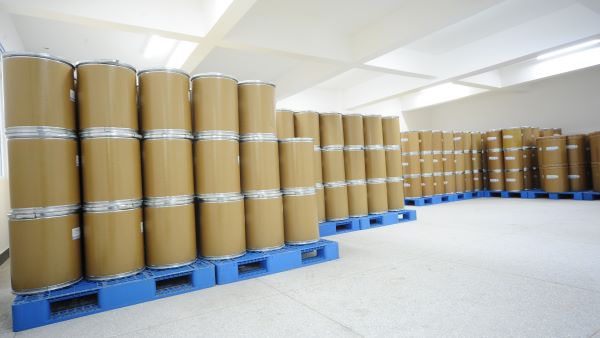
We offer standard packaging in 25 kg fiber drums lined with double PE bags. Custom packaging such as 1 kg aluminum bags or 5 kg cartons is also available upon request.
For standard stock items, lead time is typically 7-15 working days after receipt of payment. For custom or large-volume orders, please contact our sales team for an estimated delivery schedule.
Yes, our Hawthorn Fruit Extract is 100% plant-derived, vegan-friendly, and Non-GMO verified. No animal-derived processing aids are used.
Packaging & Shipping
Standard Packaging
- Standard: 25 kg fiber drums, double PE bag lining.
- Custom: 1 kg aluminum foil bags, 5 kg cartons, or as per buyer requirements.
- All packaging is moisture-proof and sealed for export-quality shipment.
Shipping Terms
- Samples: Express delivery (DHL, FedEx, UPS) within 3–5 business days.
- Bulk orders: By sea freight or air freight depending on order volume and destination.
- FOB ports: Shanghai / Ningbo / Qingdao, China.
- Incoterms: FOB, CIF, CFR available.
Shelf Life & Storage
- Store in a cool, dry place away from direct sunlight and moisture.
- Keep containers tightly closed when not in use.
- Recommended storage temperature: 2–8°C for extended shelf life.
- Protect from strong odors and humidity.