Product Description
Targeting antioxidant skincare, cardiovascular support, and anti-aging formulations. We supply Lychee Extract in standardised extract ratios – 10:1, 20:1, and 50:1 – each verified for total polyphenol and total proanthocyanidin content. Custom polyphenol-grade specifications (40%, 60%, 75%) are also available.
Basic Information
| Item | Content |
| Botanical Name | Litchi chinensis Sonn. (Sapindaceae) |
| Part Used | Fruit pericarp (peel) and/or seed |
| Plant Origin | Native to southern China; cultivated in Guangdong, Guangxi, Fujian, Sichuan, Hainan, and Taiwan provinces. Guangdong is the largest producer, accounting for over 50% of China’s total lychee output. Also grown in Vietnam, Thailand, and other Southeast Asian countries |
| Solvent | Food-grade ethanol / water (Ph. Eur. grade) |
| Standardisation | Total polyphenols (UV spectrophotometry); Total proanthocyanidins (HPLC/DAD); Procyanidin A2 (HPLC-DAD) |
| Specifications | 10:1 / 20:1 / 50:1 extract ratio; Custom polyphenol grades: 40% / 60% / 75% total polyphenols (UV); Proanthocyanidin content varies by grade |
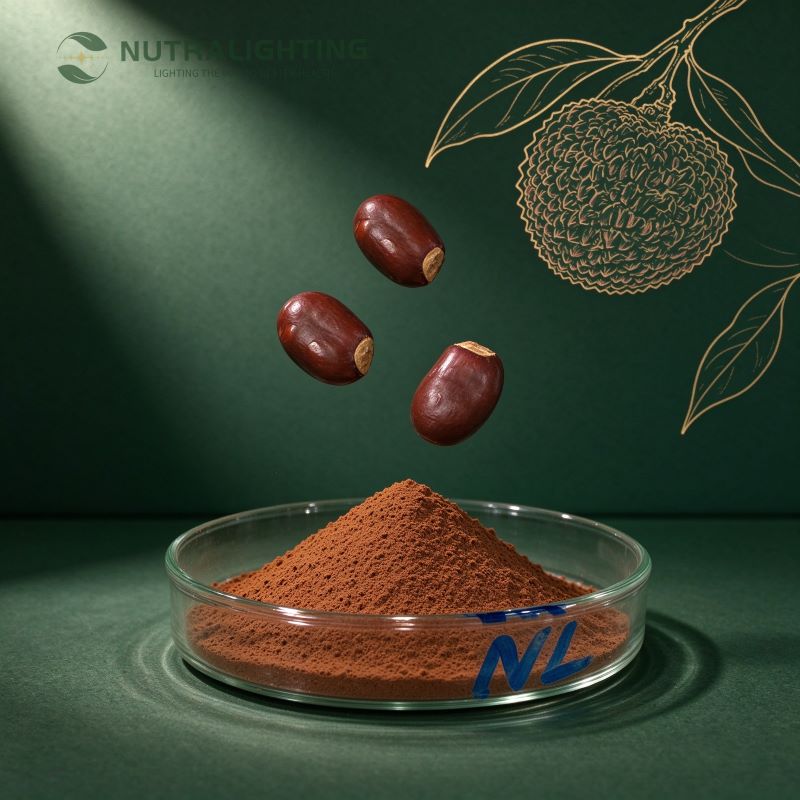
| Appearance | Fine powder, light brown to reddish-brown |
| Odour | Mild, characteristic fruity-herbal |
| Taste | Bitter, slightly astringent |
| Moisture | ≤ 8.0% (LoD) |
| Ash | ≤ 8.0% (Total ash); ≤ 2.0% (Acid-insoluble ash) |
| Heavy Metals | Pb ≤ 2 ppm; As ≤ 1 ppm; Hg ≤ 0.1 ppm; Cd ≤ 0.3 ppm |
| Residual Solvents | Ethanol ≤ 2,000 ppm (Ph. Eur. 2.4.24) |
| Microbiological | Total aerobic count ≤ 10^3/g; Yeast & mould ≤ 10^2/g; E. coli negative; Salmonella negative |
| Particle Size | 95% pass 80 mesh (180 μm) |
| Shelf Life | 24 months (store below 25°C, protected from light and moisture) |
| Target Market | China, USA, EU, Southeast Asia, Japan, South Korea |
| Core Application Areas | Skin care supplements; Anti-aging cosmetics; Antioxidant blends; Cardiovascular support; Functional beverages |
Product Description
Lychee Extract is obtained from the fruit pericarp and/or seed of Litchi chinensis Sonn. It belongs to the Sapindaceae family and is native to southern China.
Three standard extract ratio grades are available – 10:1, 20:1, and 50:1. Each grade is independently verified for total polyphenol content using UV spectrophotometry. Additionally, custom polyphenol-grade specifications – 40%, 60%, and 75% total polyphenols – are available for high-potency applications.
The key bioactive constituents are polyphenolic compounds, particularly proanthocyanidins (condensed tannins). Litchi pericarp is exceptionally rich in these compounds. Research has identified that dried litchi pericarp contains up to 75% total polyphenols, 28% total proanthocyanidins, and 14% total flavonoids by weight.
Litchi chinensis is a subtropical evergreen tree native to southern China, with over 2,000 years of cultivation history. Guangdong province is the largest production region in China, contributing more than 50% of national output. Major varieties include Nuomici, Guiwei, Feizixiao, and Bai Tang Ying.
Active Constituents
The bioactive profile of Lychee Extract is dominated by polyphenolic compounds, with procyanidins as the most pharmacologically significant fraction.
Primary Marker: Total Polyphenols
Total polyphenol content is determined by UV spectrophotometry using the Folin-Ciocalteu method. Litchi pericarp is one of the richest botanical sources of polyphenols globally. The content ranges from 40% to 75% of dry extract weight, depending on the raw material part and extraction method. Polyphenols contribute to the antioxidant, anti-inflammatory, and anti-aging activities of Lychee Extract.
Secondary Marker: Total Proanthocyanidins
Total proanthocyanidins (condensed tannins) are quantified by HPLC-DAD or spectrophotometric methods. Litchi seed and pericarp contain significant amounts of oligomeric and polymeric proanthocyanidins, including procyanidin A2 and procyanidin C1. These A-type and B-type proanthocyanidins exhibit potent antioxidant, anti-glycation, and anti-tyrosinase activities.
Characteristic Compound: Procyanidin A2
Procyanidin A2 (CAS 41743-41-3, C30H24O12, MW 576.50) is an A-type proanthocyanidin dimer uniquely present in litchi pericarp and seed. It is quantified by HPLC-DAD at 280 nm. Procyanidin A2 exhibits strong antioxidant activity and has been studied for its hepatoprotective, anti-diabetic, and anti-cancer properties. This compound is considered a characteristic marker for litchi polyphenol extracts.
COA Standard Specifications
| Item | Specification | Method | Result Range |
| Total polyphenols | ≥ 40% / 60% / 75% | UV spectrophotometry (Folin-Ciocalteu) | Varies by grade |
| Total proanthocyanidins | ≥ 10% | HPLC-DAD 280 nm | Varies by grade |
| Procyanidin A2 | Identified and quantified | HPLC-DAD 280 nm | – |
| Loss on drying | ≤ 8.0% | LoD 105°C | – |
| Total ash | ≤ 8.0% | Char at 600°C | – |
| Acid-insoluble ash | ≤ 2.0% | HCl extraction | – |
| Ethanol residual | ≤ 2,000 ppm | GC (Ph. Eur. 2.4.24) | – |
| Lead (Pb) | ≤ 2 ppm | ICP-MS | – |
| Arsenic (As) | ≤ 1 ppm | ICP-MS | – |
| Mercury (Hg) | ≤ 0.1 ppm | ICP-MS | – |
| Cadmium (Cd) | ≤ 0.3 ppm | ICP-MS | – |
| Total aerobic count | ≤ 10^3/g | Ph. Eur. 2.6.12 | – |
| Yeast and mould | ≤ 10^2/g | Ph. Eur. 2.6.12 | – |
| E. coli | Negative | Ph. Eur. 2.6.12 | – |
| Salmonella | Negative | Ph. Eur. 2.6.12 | – |
Mechanism of Action
Antioxidant Activity
Lychee Extract demonstrates potent free-radical scavenging activity through its polyphenol and proanthocyanidin content. The A-type proanthocyanidins in particular exhibit superior antioxidant capacity compared to B-type analogues due to their additional ether linkage, which provides greater stability and reactivity.
Anti-Glycation Effects
Procyanidin A2 and related proanthocyanidins inhibit advanced glycation end-product (AGE) formation. They intercept reactive carbonyl species and prevent protein cross-linking, which contributes to their anti-aging and vascular protective effects.
Collagen Protection
Lychee Extract inhibits collagenase and elastase enzymes that degrade skin structural proteins. It also suppresses UVB-induced COX-2 inflammatory signaling in skin cells. These actions help maintain skin elasticity and reduce wrinkle formation.
Hepatoprotection
Procyanidin A2 has demonstrated hepatoprotective effects in animal models of carbon tetrachloride-induced liver injury. It reduces oxidative stress markers and inflammatory cytokines in liver tissue, supporting liver health and detoxification function.
Traditional and Modern Use
Litchi pericarp has been used in traditional Chinese medicine for centuries. It is recorded in Chinese pharmacopoeias as having heat-clearing, detoxifying, and anti-inflammatory properties.
In contemporary practice, Lychee Extract is incorporated into dietary supplements and cosmetic ingredients targeting skin health and antioxidant support. The polyphenol-rich extract is valued for its skin-protective and anti-aging properties.
A human clinical study evaluated lychee-derived polyphenol supplementation at 100 mg twice daily for 12 weeks. The study reported a decrease in fine lines in 72.7% of participants, reduced skin age, and improved skin roughness. C-reactive protein decreased in 54.5% of subjects, indicating systemic anti-inflammatory effects.
Regulatory Status
Litchi chinensis has a clear regulatory status in major markets.
In the United States, polyphenols from the fruit of Litchi chinensis Sonn. were granted GRAS status under GRAS Notice No. 497. The FDA issued its “no questions” letter on June 12, 2014. The permitted intended use is as an ingredient in certain food categories at levels ranging from 12 to 192 milligrams per serving. Some uses may require a color additive listing.
In the European Union, Litchi chinensis fruit polyphenols were evaluated under the Novel Food Catalogue. The extract is generally permitted in food supplements where national law allows. Specific authorization should be confirmed for each member state.
In China, Litchi chinensis fruit is a common food and traditional herbal material. The pericarp is listed in the Chinese Pharmacopoeia. Lychee is widely cultivated across southern China and is recognized as both a food and medicinal ingredient under national regulations.
Recommended Usage
Typical daily intake ranges from 200 to 1,000 mg of standardised Lychee Extract, depending on the target application and polyphenol content.
Formulation guidance by grade:
10:1 grade: Suitable for general antioxidant blends at 500-1,000 mg per day
20:1 grade: Optimal for skin care formulations at 200-500 mg per day
50:1 grade: Best for high-potency clinical formulations at 100-300 mg per day
Polyphenol-grade (60-75%): Premium skin care applications at 100-200 mg per day
Clinical studies have used lychee polyphenol extracts at doses of 100-200 mg per day for periods of 8-12 weeks. For general antioxidant support, doses up to 1,500 mg per day of lychee fruit extract have been used in traditional practice.
Precautions
Lychee Extract is generally recognised as safe (GRAS) by the FDA when used within specified limits. However, certain precautions apply.
General Precautions
Do not exceed the recommended daily dosage. Store out of reach of children. Keep in a cool, dry place away from direct sunlight. Discontinue use if any allergic reaction occurs.
Drug Interactions
Consult a healthcare professional before use if taking blood glucose-lowering medications, as lychee may have hypoglycaemic effects. It may also interact with anticoagulant medications due to its polyphenol content.
Contraindications
Not recommended for individuals with known hypersensitivity to Sapindaceae family plants. Use with caution in children under 12 years of age. Pregnant or breastfeeding women should consult a healthcare provider before use.
When to Discontinue
Discontinue use and consult a healthcare provider if you experience gastrointestinal discomfort, headache, or any allergic reaction such as skin rash or swelling.
Disclaimer
This product is not intended to diagnose, treat, cure, or prevent any disease. Statements regarding this product have not been evaluated by the Food and Drug Administration.
Polyphenols from Litchi chinensis fruit have GRAS status (GRAS Notice No. 497) for use as a food ingredient at specified levels. Final claim substantiation and label review are the responsibility of the brand owner. Consumers should consult a healthcare professional before use, particularly if pregnant, nursing, taking medication, or managing a chronic health condition.
Litchi chinensis is distinct from Lychee fruit juice powder, which is a different product category. This document covers standardised polyphenol extracts from the pericarp and seed, not fruit juice or whole fruit powders.
Why Choose Nutralighting
Verified total polyphenol content: Every batch is UV-tested for total polyphenol content using the Folin-Ciocalteu method. A batch-specific COA is provided with each shipment.
Custom polyphenol grades: Our R&D team develops custom specifications tailored to your formulation requirements. Contact us for details.
China-sourced material: Sourced from Guangdong and Guangxi provinces, China – among the world’s largest lychee-producing regions. Full traceability from orchard to extract.
References
FDA. “GRAS Notice GRN No. 497: Polyphenols from the fruit of Litchi chinensis Sonn. and from leaves of Camellia sinensis (L.) Sinensis.” FDA Letter dated June 12, 2014. No questions letter issued.
Li, Y., et al. (2022). “Evaluation of Chemical Constituents of Litchi Pericarp Extracts and Its Antioxidant Activity in Mice.” PMC9740626. LPE contains 75.06% total polyphenol, 28.53% total proanthocyanidin, and 13.98% total flavonoid.
Chen, X., et al. (2016). “Hepatoprotective effects of litchi (Litchi chinensis) procyanidin A2 on carbon tetrachloride-induced liver injury in ICR mice.” PMC5450617. Procyanidin A2: C30H24O12, MW 576.50, CAS 41743-41-3.
Zhang, L., et al. (2020). “Proanthocyanidin polymers from lychee seeds exhibit antioxidant, anticancer, anti-α-amylase, and anti-tyrosinase activities.” PubMed PMID: 40169045.
MacKenzie, A.R. (2007). “Open-label controlled clinical study of lychee polyphenol supplementation on skin parameters.” Unpublished data cited in Vitabase Lychee ingredient monograph.
Alibaba supplier listings. “Litchi Seed Extract Powder 10:1 20:1 30:1 50:1” and “Lychee Skin Extract Polyphenol 50% 60%” – commercial COA data, verified CAS 41743-41-3, C30H24O12, MW 576.50.
China National Health Commission (NHC). “Functions and Scope of Health Food Raw Materials.” NHC Announcement No. 4, 2024.
Frequently Asked Questions
Under proper storage conditions, Lychee Extract has a shelf life of 24 months from the date of manufacture.
Yes. Every batch is accompanied by a Certificate of Analysis (COA), and we can arrange third-party testing upon request.
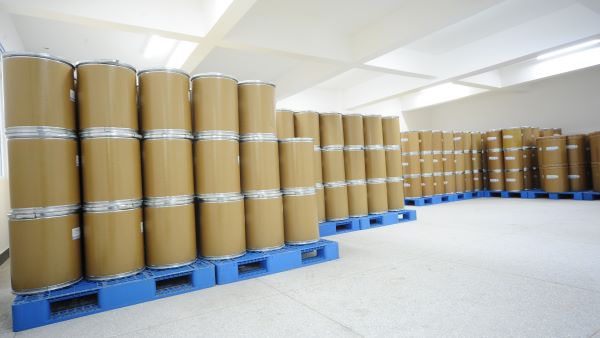
We offer standard 1 kg aluminum foil bags, 5 kg / 25 kg cardboard drums, and custom packaging solutions for bulk orders.
Yes. We support OEM and ODM services including custom standardization, private labeling, and tailored specifications for B2B clients.
For standard specifications, lead time is typically 7-15 business days after order confirmation. Custom specifications may require additional time.
Our standard Lychee Extract is plant-based and suitable for vegan applications. Halal certification can be arranged upon request.
Packaging & Shipping
Standard Packaging
- Standard packaging: 1 kg aluminum foil bag with double seal.
- Bulk packaging: 5 kg / 25 kg cardboard drum with inner PE lining.
- Custom packaging available for large orders.
Shipping Terms
- Domestic shipping via express or freight forwarder.
- International shipping available by air (DHL, FedEx, UPS) or sea freight.
- Samples shipped within 3–5 business days; bulk orders within 7–15 business days.
Shelf Life & Storage
- Store in a cool, dry place away from direct sunlight and moisture.
- Keep container tightly closed when not in use.
- Recommended storage temperature: 2–8°C for maximum freshness.