Product Description
Classic Mediterranean Cardiovascular and Immune Plant Ingredient – Olive Polyphenol (Oleuropein) 20%-40% Standardized Olive Leaf Extract
Product Description
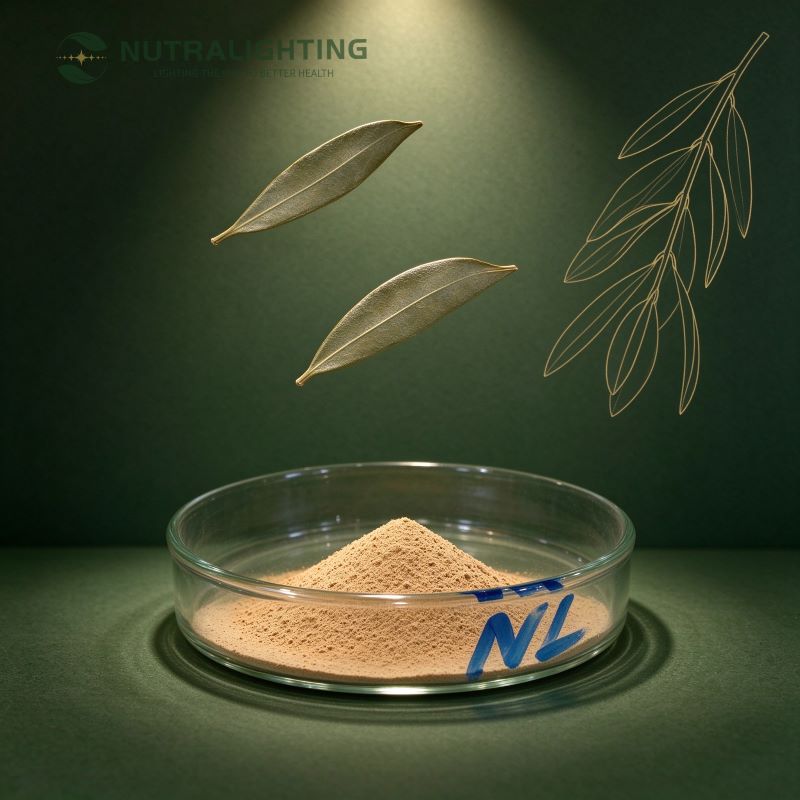
Olive Leaf Extract, with oleuropein as the core active ingredient, is derived from dried leaves of the Oleaceae olive tree (Olea europaea L.). It is obtained through water-alcohol extraction and standardized refinement to produce a stable oleuropein concentrated powder, with oleuropein content reaching 20%-40% (HPLC). As a classic plant ingredient of the Mediterranean diet, it has a research foundation for cardiovascular health, antioxidant, and immune support, and is widely used in dietary supplements, functional foods, and personal care formulations. This product selects high-quality oleaceae olive leaves and standardizes oleuropein content, making it an ideal choice for cardiovascular and natural antibacterial products.
Olive leaf extract is growing rapidly in the European and North American markets, mainly used for cardiovascular health and natural antibacterial products. The promotion of the Mediterranean diet culture has driven the global demand for olive leaf products.
Why Choose Nutralighting
- Standardized active ingredient: Oleuropein 20%-40% (HPLC), batch stable, customizable specifications.
- Every Olive Leaf Extract batch is tested for identity, potency, heavy metals, pesticides, microbial counts, and solvents in accordance with FDA, EU, and USP standards. Certificates of Analysis are provided with each shipment.
- Custom specifications and OEM/ODM support are available upon request.
Basic Information
| Project | Content |
| Chinese Name | Olive Leaf Extract |
| Botanical Name | Olea europaea L. |
| Part Used | Leaf |
| Recommended English Name | Olive Leaf Extract (Standardized Natural Extract) |
| Main Ingredients | Oleuropein |
| Main Specification | Oleuropein 20%-40% (HPLC) (customizable) |
| Appearance | Light brown to tan powder |
| Solubility | Soluble in water and ethanol |
| Particle Size | 80-100 mesh |
| Target Market | Europe, Middle East, North America |
| Core Application Areas |
|
Standard Specifications (COA)
The following specifications are general reference values; the specific COA report for each batch shall prevail.
| Test Items | Standards |
| Oleuropein | Oleuropein 20%-40% (HPLC) |
| Loss on Drying | ≤5.0% |
| Total Ash | ≤6.0% |
| Lead (Pb) | ≤1.0 mg/kg |
| Arsenic (As) | ≤2.0 mg/kg |
| Cadmium (Cd) | ≤0.5 mg/kg |
| Mercury (Hg) | ≤0.1 mg/kg |
| Pesticide Residues (Organochlorine/Organophosphate) | Complies with USP <561> |
| Aflatoxin B1 | ≤5.0 μg/kg |
| Total Aflatoxins | ≤10.0 μg/kg |
| Total Microbial Count (TAMC) | ≤1×10⁴ CFU/g |
| Yeasts and Molds (TYMC) | ≤1×10² CFU/g |
| Escherichia coli | Not Detected (1g) |
| Salmonella | Not detected (1g) |
Plant Material Introduction
The raw material is dried leaves of the olive tree Olea europaea L., belonging to the Oleaceae family. Mainly produced in Mediterranean countries (Greece, Spain, Italy, Tunisia), and also planted in Ningxia, Gansu, Sichuan, and other regions in China. Olive leaves are included in the European Pharmacopoeia. Olive leaves have a long history of use in Mediterranean traditional medicine, commonly applied for heat clearing and detoxification in traditional use. Its main active component, oleuropein, has antioxidant and antiviral activities.
Core Benefits
Olive leaf extract has a substantial research foundation in cardiovascular health. Related studies show that it helps support healthy blood pressure and endothelial function. Oleuropein possesses antiviral activity and has in vitro inhibitory effects on influenza virus, herpes simplex virus, and others. Multiple studies suggest it has antibacterial, anti-inflammatory, and immune-modulating effects. In terms of metabolic health, related research indicates it helps support insulin sensitivity and healthy blood lipid levels.
Regulatory and Regional Market Access Status
The following information is compiled from publicly available regulations. Actual market access should be based on the latest regulations of the target country.
| Region/Country | Regulatory Status | Key Notes |
| USA (FDA) | Dietary Supplement / GRAS | Generally regulated as a dietary supplement if it is a plant extract; some ingredients have been recognized as GRAS (specific confirmation required on a case-by-case basis). USP has included monographs for many extracts. |
| EU (EFSA) | Traditional Herbal Medicine / Food Supplement | EU Directive 2004/24/EC regulates traditional herbal medicines; extracts as components of food supplements must comply with EU Novel Food Regulation (EU) 2015/2283 (some traditional herbs enjoy simplified procedures). |
| China (NHC/NMPA) | Health Food Ingredients / New Resource Foods | According to the 2020 edition of the Chinese Pharmacopoeia and standards such as GB 16740; some varieties have been included in the health food ingredient catalog or can be used in general food catalogs, and the latest regulatory status of each variety needs to be specifically verified. |
Application Directions and Recommended Dosage
| Application Direction | Recommended Addition Amount | Applicable Dosage Form | Remarks |
| Oral Solid Beverage / Instant Powder | Determined according to specifications | Stick-pack, Bagged, Canned | Can be compounded with other functional ingredients, recommended to control the amount using standardized extracts |
| Compressed candy / Capsules | According to specifications | Tablets, hard capsules | Each unit is recommended to contain 250~500 mg of extract, 2~3 times daily |
| Oral liquid / Functional beverages | According to specifications | Glass bottles, PET bottles | It is recommended to disperse in warm water first before adding to the system, pay attention to pH stability |
| Personal care and skincare products | 0.1~2.0%(w/w) | Lotion, serum, mask | Need to evaluate solubility and stability according to the formulation system |
Recommended Daily Dosage Reference
- General Health Use: Use according to product specifications and the formula expert’s recommended dosage.
- Personal Care & Skincare: The amount added in formulations depends on the specific product, recommended 0.1~2.0%.
Appendix: References
(The following references are for technical reference; some are open access and can be found via PubMed/PMC or official journal websites)
[1] European Pharmacopoeia 11.0, Olivae Folium
[2] Cimato A. et al., Journal of Ethnopharmacology, 2020: Cardiovascular protective effects of olive leaf extract
[3] Saeed S. et al., Phytomedicine, 2020: Review of the antiviral activity of oleuropein
[4] EMA HMPC, Olea europaea L., folium, 2015
Frequently Asked Questions
Our standard MOQ is 1 kg for sample orders and 25 kg for bulk orders. Smaller quantities may be arranged for new customers upon request.
Yes. A full COA is provided with every batch, detailing oleuropein content, heavy metals, microbial parameters, and other specifications.
Absolutely. We can customize oleuropein concentration (10%, 15%, 20%, or higher) and particle size according to your formulation requirements.
We hold ISO 22000, HACCP, HALAL, and KOSHER certifications. Additional third-party certifications can be arranged upon request.
We ship worldwide via DHL, FedEx, UPS, and sea freight. Express delivery typically takes 5–7 business days; sea freight takes 25–35 days depending on destination.
Yes. Our olive leaf extract is 100% plant-derived and suitable for vegan and vegetarian formulations.
Packaging & Shipping
Standard Packaging
- Standard packaging: 1 kg/aluminum foil bag with double plastic bags inside.
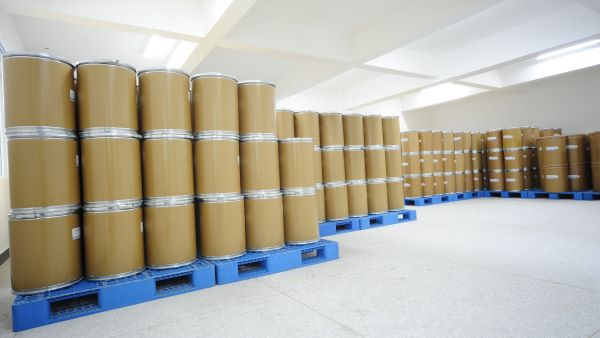
- Bulk packaging: 25 kg cardboard drum with two inner PE bags.
- Custom packaging is available per buyer requirements.
Shipping Terms
- Express (DHL/FedEx/UPS): 5–7 business days
- Air freight: 7–12 business days
- Sea freight: 25–35 business days (depending on port)
- Samples usually ship within 2–3 business days after payment confirmation.
Shelf Life & Storage
- Store in a cool, dry place away from direct light and moisture.
- Keep containers tightly sealed when not in use.
- Properly stored, shelf life is 24 months from manufacture date.