Product Description
A Long-Established Natural Analgesic Plant Ingredient – Standardized Willow Bark Extract with Salicin
Product Description
In the categories of joint health and natural anti-inflammatory products, formulators require plant ingredients with clear composition, quantifiable content (Salicin 15%-25% HPLC), and stable supply. Willow bark extract, as a precursor source of salicylic acid, is a classic choice for joint and anti-inflammatory formulations.
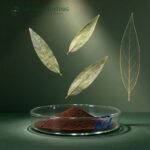
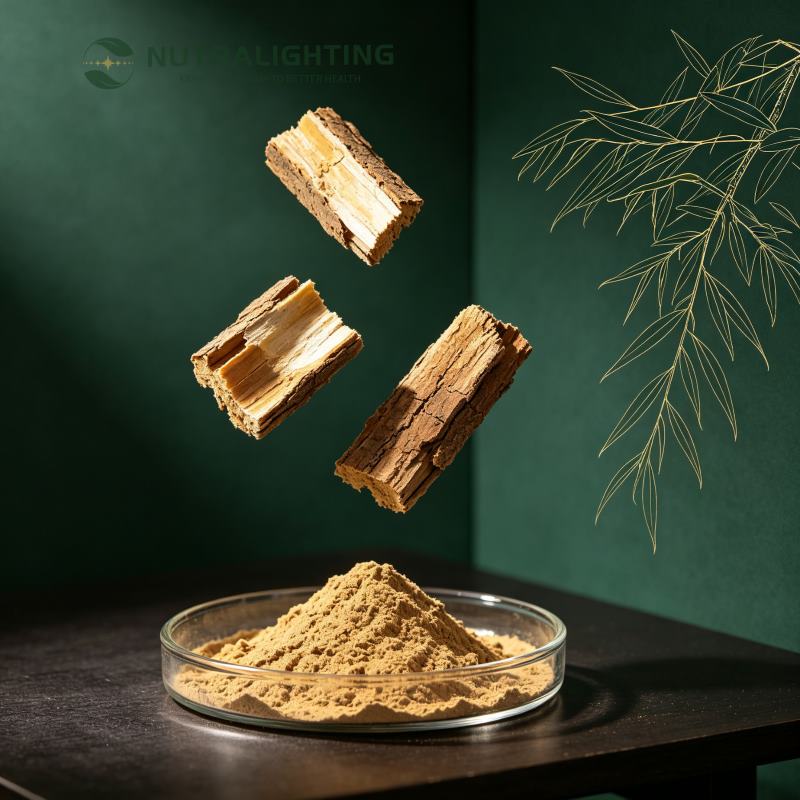
Willow Bark Extract, with salicin as the core active component, is derived from the dried bark of Salix alba of the Salicaceae family. It is refined into a standardized concentrated powder through low-temperature extraction and spray drying, with a salicin content of 15%-25% (HPLC). As a long-established natural analgesic plant ingredient, its salicin can convert into salicylic acid in the body, making it a classic choice for joint and anti-inflammatory formulations.
Willow bark extract is well-established in the European natural pain relief market, with Germany being the main producer and consumer. It is regarded as a classic natural analgesic plant ingredient.
Why Choose Nutralighting
- Marker Component: Salicin 15%-25% (HPLC), sourced from White willow bark, with stable batch quality.
- Classic Applications: Traditional plant materials for joint health and inflammation management, with well-researched mechanisms.
- Application Suitability: Suitable for joint health solid beverages, compressed candies, capsules, and functional foods.
Basic Information
| Project | Content |
| Extract Name | Willow Extract |
| Alias | Willow Bark |
| English Common Name | Willow Bark Extract, White Willow Extract, White Willow Bark Extract |
| Main Component | Salicin |
| Main Specifications | Salicin 15%-25% (HPLC) |
| Target Market | Europe, North America |
| Core Application Areas | Joint Health; Inflammation Management; Pain Relief |
Standard Specifications (COA)
The following specifications are conventional reference values, and the actual values are subject to the COA report for each batch.
| Test Items | Standard |
| Salicin | Salicin 15%-25% (HPLC) |
| Loss on drying | ≤5.0% |
| Total ash | ≤6.0% |
| Lead (Pb) | ≤1.0 mg/kg |
| Arsenic (As) | ≤2.0 mg/kg |
| Cadmium (Cd) | ≤0.5 mg/kg |
| Mercury (Hg) | ≤0.1 mg/kg |
| Pesticide residues (Organochlorine/Organophosphorus) | Complies with USP <561> |
| Aflatoxin B1 | ≤5.0 μg/kg |
| Total Aflatoxins | ≤10.0 μg/kg |
| Total Microbial Count (TAMC) | ≤1×10⁴ CFU/g |
| Yeasts and Molds (TYMC) | ≤1×10² CFU/g |
| Escherichia coli | Not detected (1g) |
| Salmonella | Not detected (1g) |
Introduction to Plant Material
The raw material is the dried bark of Salix alba L. from the willow family. White willow is a traditional European herbal medicine and one of the earliest natural pain-relief herbs used by humans. Aspirin is derived from the salicin found in white willow bark. The main active components are salicin and flavonoid compounds.
Core Efficacy
The following efficacy overview is based on published scientific research and traditional applications. Specific effects should be evaluated in combination with the product form and dosage used.
[Overview of Main Efficacy]White willow (Salix alba) extract has a well-established research foundation in anti-inflammatory and discomfort-relief applications. Its core component salicin can be hydrolyzed and converted into salicylic acid in the body. Related studies show that its mechanism is associated with inhibiting COX enzymes and reducing the production of inflammatory mediators, with relatively good gastrointestinal tolerance. Flavonoid components (quercetin, kaempferol) exert anti-inflammatory effects by inhibiting COX-1/COX-2 activity; animal studies indicate that salicin has a dose-dependent inhibitory effect on inflammatory edema. The above results are mainly based on in vitro, animal, and clinical literature, and practical application requires comprehensive evaluation considering the dosage form and dose.
Regulations and Regional Market Access Status
The following information is compiled from publicly available regulatory materials, and actual market access should comply with the latest regulations in the target country.
| Region/Country | Regulatory Status | Key Notes |
| United States (FDA) | Dietary Supplements / GRAS | Plant extracts are generally regulated as dietary supplements; some ingredients have been recognized as GRAS (specific confirmation is required on a case-by-case basis). USP has included monographs for various extracts. |
| European Union (EFSA) | Traditional Herbal Medicines / Food Supplements | EU Directive 2004/24/EC regulates traditional herbal medicines; extracts as components of food supplements must comply with EU Novel Food Regulation (EU) 2015/2283 requirements (some traditional herbs benefit from simplified procedures). |
| China (NHC/NMPA) | Health Food Ingredients / New Resource Foods | According to the 2020 edition of the Chinese Pharmacopoeia and standards such as GB 16740; some varieties have been included in the catalog of raw materials for health foods or can be used in general food, and the latest regulatory status of each variety needs to be specifically verified. |
Application Directions and Recommended Dosage
| Application Direction | Recommended Addition Amount | Applicable Dosage Form | Remarks |
| Oral solid beverages / instant powders | Determined according to specifications | Strip, bag, can | Can be compounded with other functional ingredients, recommended to control the amount using standardized extracts |
| Compressed candy / capsules | According to specifications | Tablets, hard capsules | Each capsule recommended to contain 250~500 mg of extract, 2~3 times daily |
| Oral liquid / functional beverages | According to specifications | Glass bottles, PET bottles | It is recommended to disperse in warm water before adding to the system, paying attention to pH stability |
| Personal care skincare products | 0.1~2.0%(w/w) | Lotion, serum, mask | Solubility and stability need to be evaluated according to the formulation system |
Recommended daily dosage reference
- General health use: Use according to product specifications and formulator’s recommended dosage
- Personal care and skincare: The addition amount in formulations depends on the specific product, recommended 0.1~2.0%
Other Precautions
Storage and Transportation: After opening, use as soon as possible; prolonged storage may lead to moisture absorption and caking.
Appendix: References
(The following references are for technical reference purposes; some are open access and can be accessed via PubMed/PMC or the journal’s official website.)
[1] Winter J.U. et al., Annals of the Rheumatic Diseases, 1997; 56: 178-182.
[2] Baser K.H.C. et al., Phytotherapy Research, 1998; 12: 539-541.
[3] Schulte E. et al., Planta Medica, 1994; 60: 419-421.
Frequently Asked Questions
We offer Willow Bark Extract with salicin content ranging from 3% to 10%, with 5% and 10% being the most commonly ordered. Custom standardization is available upon request.
Our standard MOQ is 1 kg for sample orders and 25 kg for bulk orders. We also support larger wholesale quantities and long-term supply agreements.
Yes, we offer free samples up to 500g for quality evaluation. Shipping costs are borne by the buyer. Samples are dispatched within 3-5 business days.
Absolutely. We provide OEM/ODM services including custom powder fillings, private-label bag packaging, and customized labelling to meet your brand requirements.
We supply COA (Certificate of Analysis), MSDS, Phytosanitary Certificate, and Certificate of Origin. Additional documents such as KOSHER, HALAL, and GMO-free certificates are available upon request.
We accept T/T (bank transfer), L/C at sight, and Western Union for sample orders. Payment terms can be discussed and tailored for established B2B partners.
Packaging & Shipping
Standard Packaging
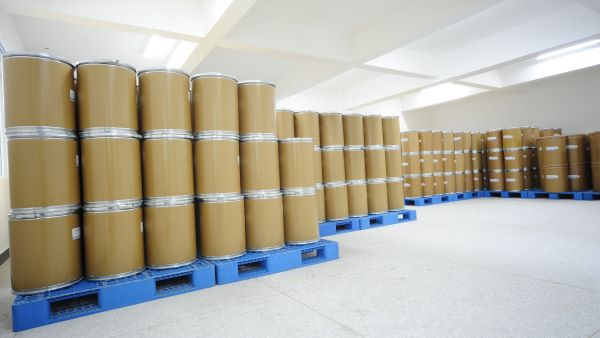
- Standard packaging: 1 kg/aluminum foil bag with two plastic bags inside, 25 kg/drum.
- Custom packaging available for private-label buyers (e.g., 100g, 500g, 1 kg resealable pouches).
- Bulk shipments: 25 kg cartons or as per buyer specification.
Shipping Terms
- Domestic shipping: Available across China via express or freight forwarder.
- International shipping: By air (FedEx, DHL, UPS) or by sea freight depending on order volume.
- Lead time: 3-7 business days for sample orders; 15–25 days for bulk orders after payment confirmation.
Shelf Life & Storage
- Store in a cool, dry place away from direct sunlight and moisture.
- Keep tightly sealed when not in use.
- Optimal storage temperature: 2-8°C for extended shelf life.
- Store sealed in a cool, dry, and dark place. Recommended storage temperature ≤25°C, relative humidity ≤60%.
- • During transportation, avoid rain exposure, direct sunlight, and severe impact.