Product Description
Targeting immune health supplements, cold-season dietary formulations, and antioxidant functional foods. We supply Elderberry (Sambucus nigra L.) Fruit Extract in standardised ratios – 10:1 and 20:1 – as well as anthocyanin-standardized grades, with 10% and 25% total anthocyanins
Basic Information
| Item | Content |
|---|---|
| Botanical Name | Sambucus nigra L. (Adoxaceae) |
| Part Used | Ripe Berry (Fruit) |
| Plant Origin | Sambucus nigra is cultivated mainly in Austria, Germany, France, Hungary, and Poland. The related species S. williamsii grows wild in northern China. Both imported and domestic raw material are available. |
| Solvent | Water / food-grade aqueous ethanol |
| Standardisation | Total anthocyanins (HPLC-DAD 520 nm, cyanidin-3-glucoside equivalent); Total polyphenols (UV) |
| Specifications | Standardised extract ratios: 10:1, 20:1. Single-compound grades: 10% and 25% total anthocyanins (HPLC). |
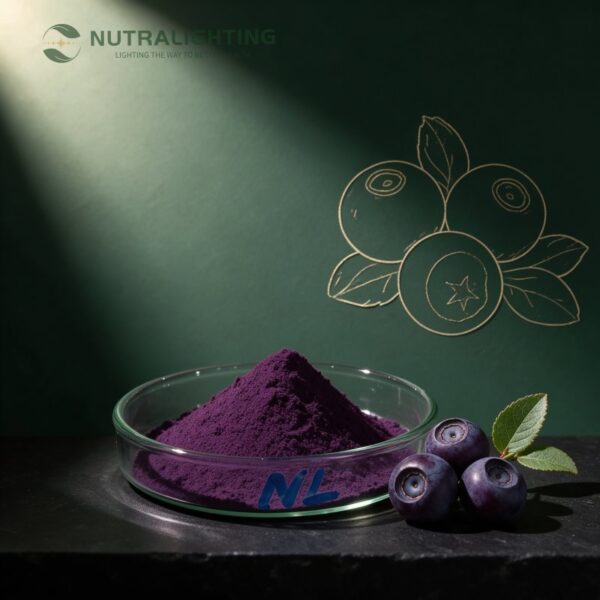
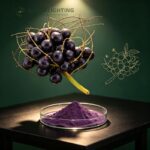
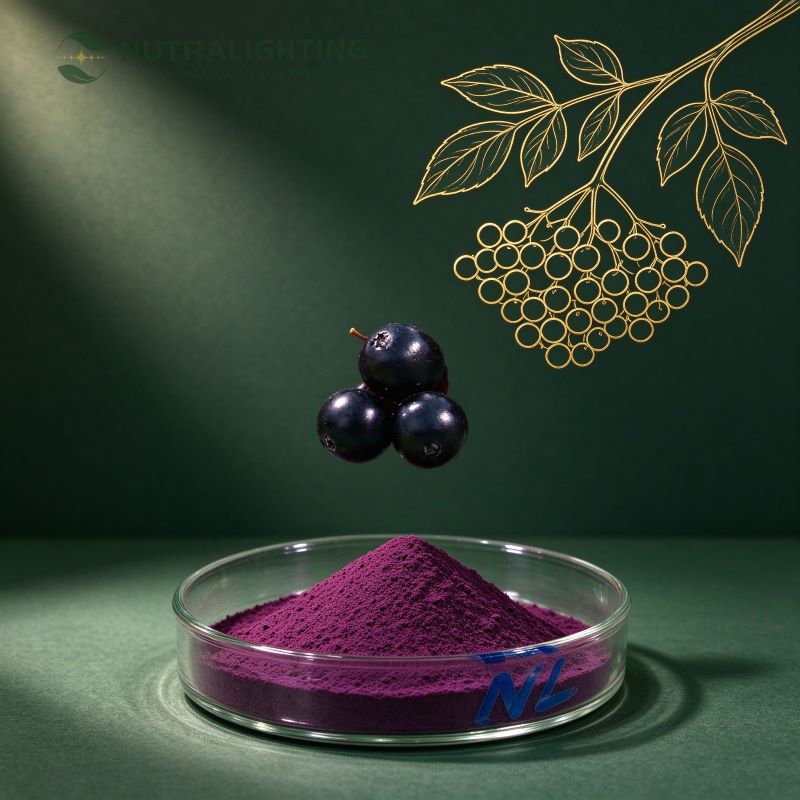
| Appearance | Deep purple-red to dark red fine powder |
| Odour | Slight, characteristic berry odour |
| Taste | Sweet-sour, fruity |
| Moisture | ≤ 6.0% (LoD) |
| Ash | ≤ 5.0% (Total ash) |
| Heavy Metals | Pb ≤ 2 ppm; As ≤ 1 ppm; Hg ≤ 0.1 ppm; Cd ≤ 0.3 ppm |
| Residual Solvents | Ethanol ≤ 2,000 ppm (Ph. Eur. 2.4.24) |
| Microbiological | Total aerobic count ≤ 10^3/g; Yeast & mould ≤ 10^2/g; E. coli negative; Salmonella negative |
| Particle Size | 95% pass 80 mesh (180 μm) |
| Shelf Life | 24 months (store below 25°C, protected from light and moisture) |
| Target Market | Dietary supplements, functional foods and beverages, syrups and gummies, traditional herbal formulations (China, EU, USA, Japan, Southeast Asia) |
| Core Application Areas | Immune health support; cold and flu season formulations; antioxidant support; upper respiratory comfort; fruit-flavoured functional foods |
Product Description
Elderberry Extract is obtained from the ripe berries of Sambucus nigra L., a shrub of the Adoxaceae family.
The plant is native to Europe and widely grown across Central and Eastern Europe.
IMPORTANT SAFETY NOTE: Raw or unripe elderberries, and the leaves, bark, and seeds, contain cyanogenic glycosides.
Only properly ripened fruit that has undergone heat processing is safe for consumption.
Our extract is produced from ripe fruit under controlled processing that removes these compounds.
The berries are rich in anthocyanins, especially cyanidin-3-glucoside and cyanidin-3-sambubioside.
These pigments give the extract its deep purple-red colour and its antioxidant capacity.
Active Constituents
The bioactive profile of Elderberry Extract is defined by its anthocyanin and polyphenol content.
Primary Markers
| Compound | CAS | Molecular Formula | Molecular Weight | Notes |
|---|---|---|---|---|
| Cyanidin-3-glucoside | – | C21H21O11 | 449.4 | Major anthocyanin; standardisation reference (sambucinin) |
| Cyanidin-3-sambubioside | – | – | – | Second major anthocyanin of elderberry |
| Total anthocyanins | – | – | – | Measured as cyanidin-3-glucoside equivalent (HPLC-DAD 520 nm) |
| Total polyphenols | – | – | – | Verification indicator (UV / Folin-Ciocalteu) |
COA Standard Specifications
| Item | Specification | Method | Result Range |
|---|---|---|---|
| Total anthocyanins | Varies by grade (10% / 25%) | HPLC-DAD 520 nm (C3G equiv.) | Per specification |
| Total polyphenols (10:1 / 20:1) | ≥ 10.0% (typical) | UV / Folin-Ciocalteu | Per batch COA |
| Loss on drying | ≤ 6.0% | LoD 105°C | – |
| Total ash | ≤ 5.0% | Char at 600°C | – |
| Lead (Pb) | ≤ 2 ppm | ICP-MS | – |
| Arsenic (As) | ≤ 1 ppm | ICP-MS | – |
| Mercury (Hg) | ≤ 0.1 ppm | ICP-MS | – |
| Cadmium (Cd) | ≤ 0.3 ppm | ICP-MS | – |
| Total aerobic count | ≤ 10^3/g | Ph. Eur. 2.6.12 | – |
| Yeast and mould | ≤ 10^2/g | Ph. Eur. 2.6.12 | – |
| E. coli | Negative | Ph. Eur. 2.6.12 | – |
| Salmonella | Negative | Ph. Eur. 2.6.12 | – |
Mechanism of Action
Antioxidant Activity
Elderberry anthocyanins scavenge free radicals and reduce oxidative stress markers.
Their antioxidant capacity is among the highest of common berry pigments.
Viral Interaction (In Vitro)
In laboratory studies, elderberry anthocyanins bind to influenza surface proteins.
This may reduce viral entry into host cells. Clinical evidence in humans is still limited.
Immune Modulation
Elderberry extracts have been reported to influence cytokine release in cell studies.
The effect is described as immune modulation, not immune stimulation.
Upper Respiratory Comfort
Traditional and modern use links elderberry syrup to comfort during colds.
One randomised trial in air travellers reported reduced cold duration and severity.
Traditional and Modern Use
Historical Use
Elderberry has been used in European folk medicine for centuries.
Berries were made into wines, syrups, and preserves for winter use.
Traditional herbalists used elderberry preparations for colds and flu symptoms.
Modern Clinical Evidence
A 2016 randomised, double-blind trial reported shorter and milder cold symptoms with elderberry supplementation.
The trial used 300 mg of elderberry extract three times per day.
Elderberry anthocyanin is now a widely marketed immune-support ingredient in Europe and North America.
Regulatory Status
| Region | Status | Notes |
|---|---|---|
| China | New food raw material (anthocyanin grade) | Elderberry anthocyanin was approved as a new food raw material by NHC Announcement No. 7 of 2025. Elderberry is not listed in the Chinese Pharmacopoeia. The traditional TCM herb S. williamsii, twig is a different species and part. |
| European Union | Conventional food (fruit) | Dried elderberry fruit is a conventional food ingredient. No authorised EU health claim exists for elderberry. Standardised extracts should be checked against the EU Novel Food Catalogue (Regulation (EU) 2015/2283) before marketing. |
| United Kingdom | Conventional food | Elderberry fruit and syrups are widely sold as foods and supplements. No authorised UK health claim exists. |
| United States (FDA) | DSHEA-compliant supplement ingredient | Elderberry fruit and juice are conventional foods. Extracts are marketed as dietary supplement ingredients under DSHEA. The FDA has not evaluated specific health claims. |
| Japan / Australia & NZ | Approved for use | Elderberry is used in foods and supplements under local regulations. |
Recommended Usage
Dosage guidance is based on clinical studies and common commercial use.
Formulation Guidance by Grade
10:1 / 20:1 extract: 500-1,000 mg per day in capsule or tablet formulations.
Anthocyanin 10% / 25% grades: 150-500 mg per day for antioxidant and immune blends.
The 2016 clinical trial used 300 mg of extract three times per day.
For China-market products using elderberry anthocyanin, follow the limits stated in NHC Announcement No. 7 of 2025.
Precautions for Elderberry Extract
IMPORTANT SAFETY NOTE: Raw or unripe elderberries and the leaves, bark, and seeds contain cyanogenic glycosides. They may cause nausea, vomiting, and diarrhoea. Only use properly processed ripe-fruit extracts.
Red Line for Raw Material Selection Safety
It is strictly forbidden to process raw, unripe elderberries and branches and leaves by yourself. Such raw materials contain cyanogenic glycosides, which may cause cyanide poisoning after intake.
You must choose standardized extracts from regular manufacturers that have undergone curing and detoxification treatment, with complete batch COA, and avoid wild products of unknown origin.
Prioritize products with clearly labeled active ingredients such as anthocyanins, and avoid crude extracts with unknown components to reduce the risk of gastrointestinal irritation.
Safe Boundary of Daily Intake
The recommended daily intake for ordinary people is controlled in the range of 300-1000mg standardized extract, and do not take a large amount at one time.
Excessive intake will easily irritate the gastrointestinal mucosa, causing nausea, dull abdominal pain, loose stools and diarrhea. People with weak digestive functions will have more obvious reactions.
It is not recommended to take it in large quantities continuously for several months. Long-term intake may additionally increase the metabolic burden on the liver and kidney.
Groups That Must Be Strictly Banned or Used With Caution
People who are allergic to Caprifoliaceae plants and elderberry pollen are forbidden to use it. The plant protein in the extract may induce red rashes, itching and even laryngeal edema.
Pregnant women, lactating women and infants are not recommended to supplement it on their own. There is not enough long-term safety data covering these special groups at present.
People with deficient cold of spleen and stomach and frequent loose stools and abdominal pain should use it with caution. Elderberry extract is slightly cool in nature, and long-term consumption will aggravate the deficiency-cold discomfort.
People with hypoglycemia and insufficient liver and kidney function need to consult a doctor first and decide whether to use it after evaluation.
Risk Tips for Drug Combination
People taking hypoglycemic drugs should not take it without authorization. Elderberry extract may enhance the drug effect and cause hypoglycemia reactions such as dizziness and cold sweats.
People taking immunosuppressants, anticoagulants and diuretics must consult a doctor before use to avoid interfering with drug metabolism and affecting the stability of drug efficacy.
People who are taking other long-term prescription drugs should inform their doctors of their dietary supplement situation before supplementation.
Key Points for Emergency Treatment
If you experience persistent gastrointestinal discomfort, skin rash and itching, dizziness and unsteadiness after consumption, stop using it immediately. Seek medical attention in time if the symptoms do not subside.
If you accidentally take raw elderberries and experience headache, persistent vomiting and stuffy breathing, go to the emergency department immediately instead of observing at home by yourself.
Why Choose Nutralighting
Concerned about inflated anthocyanin test data that will ruin your formulation stability?
All finished batches are uniformly tested for anthocyanin content via High Performance Liquid Chromatography at 520 nm. Full operational details of the testing method are delivered alongside the batch COA. All data is fully replicable and verifiable, and fully meets EU and US food safety testing standards.
Need full documentation for smooth customs clearance and compliance with your local market regulatory requirements?
Our team continuously updates the latest regulatory dynamics of elderberry extract in major markets including the EU, the US and Southeast Asia. We have pre-organized a complete set of compliance documents, including EU Novel Food declaration materials and US GRAS supporting files, to assist you with local customs clearance and product registration.
Your formulation requires a special anthocyanin concentration that the common 10% and 25% standard grades on the market cannot meet?
Our in-house R&D laboratory supports customized anthocyanin content development, completely free from the constraints of general standard specifications. You only need to present your clear formulation target, and we will match you with an exclusive customized finished powder grade.
Want to conduct pilot tests before placing bulk orders to reduce trial-and-error costs during mass production?
We ship powder samples with full batch COA for your small-scale formulation testing. Your actual measurement and evaluation results will act as the core reference for final specification confirmation, completely eliminating the mismatch between mass production powder specifications and your formulation requirements.
References
Tiralongo E, Wee SS, Lea A, et al. (2016). “Elderberry Supplementation Reduces Cold Duration and Severity in Air Travellers: A Randomized, Double-Blind Controlled Trial.” Nutrients. 8(4):202. PMID 27022113.
PubChem. “Cyanidin-3-O-glucoside.” Molecular formula C21H21O11, MW 449.4. NIH, Bethesda, MD.
National Health Commission of the PRC. Announcement No. 7 of 2025: approval of elderberry anthocyanin as a new food raw material. nhc.gov.cn.
European Commission. Regulation (EU) 2015/2283 on novel foods, and the EU Novel Food Catalogue. EUR-Lex.
Ağalar H. G. Elderberry (Sambucus nigra L.). Nonvitamin and Nonmineral Nutritional Supplements, 2022, 211-215. DOI: 10.1016/B978-0-12-821838-1.00034-7.
Wang Q F, et al. Ethnobotany, phytochemistry, pharmacology, and toxicology of the genus Sambucus L. (Viburnaceae). Journal of Ethnopharmacology, 2022, 292: 115102. DOI: 10.1016/j.jep.2022.115102.
Dominguez-Valencia R, Lorenzo J M, et al. Elderberry (Sambucus nigra L.) extracts as functional ingredients: An updated review of processing, bioactivity, and food applications. Food Chemistry, 2023, 417: 135872. DOI: 10.1016/j.foodchem.2023.135872.
Frequently Asked Questions
Standard orders ship within 15–25 working days after payment confirmation, depending on quantity and certification requirements. Express production is available for urgent orders.
MOQ starts at 1 kg for sample orders and 25 kg for commercial batches. Custom packaging MOQs are negotiable.
Yes. We provide in-house COA with every shipment and can arrange additional third-party testing (SGS, Eurofins, etc.) at the buyer's request.
Organic-certified Elderberry Extract is available. Please confirm your target market so we can provide the appropriate documentation (USDA NOP, EU Organic, etc.).
Absolutely. We support custom standardization, private-label packaging, and blend formulation consulting. Contact our technical team for details.
Store in a cool, dry place below 25 °C, protected from light and moisture. Sealed containers can remain stable for 24 months under proper conditions.
Packaging & Shipping
Standard Packaging
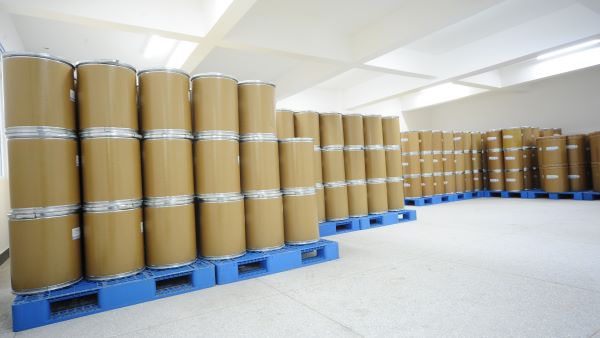
- Standard: 25 kg dual-layer paper drum (inner PE liner + outer fiber drum)
- Alternative: 1 kg / 5 kg aluminum foil bags with zip closure
- Custom packaging available per buyer requirements
Shipping Terms
- FOB Shanghai / Ningbo / Qingdao
- CIF and DDP terms available on request
- Samples shipped via DHL, FedEx, or UPS (buyer account or prepaid)
Shelf Life & Storage
- Store in a cool, dry place below 25 °C.
- Keep container tightly closed and protected from light and humidity.
- Shelf life: 24 months from date of manufacture under proper storage conditions.