Product Description
Bulk Plant Raw Material with Dual Core – Glycyrrhizic Acid 25%-98% Licorice Extract with Glabridin
Product Description
In the categories of liver health, skincare, and anti-inflammatory products, formulators require bulk plant raw materials with clear ingredients and customizable specifications. Licorice (Licorice) extract, centered on glycyrrhizic acid and glabridin, is a classic choice for health foods and premium skincare formulations.
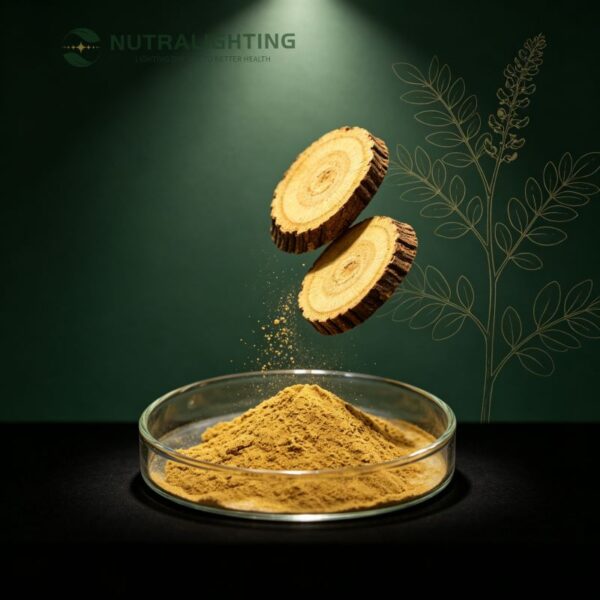
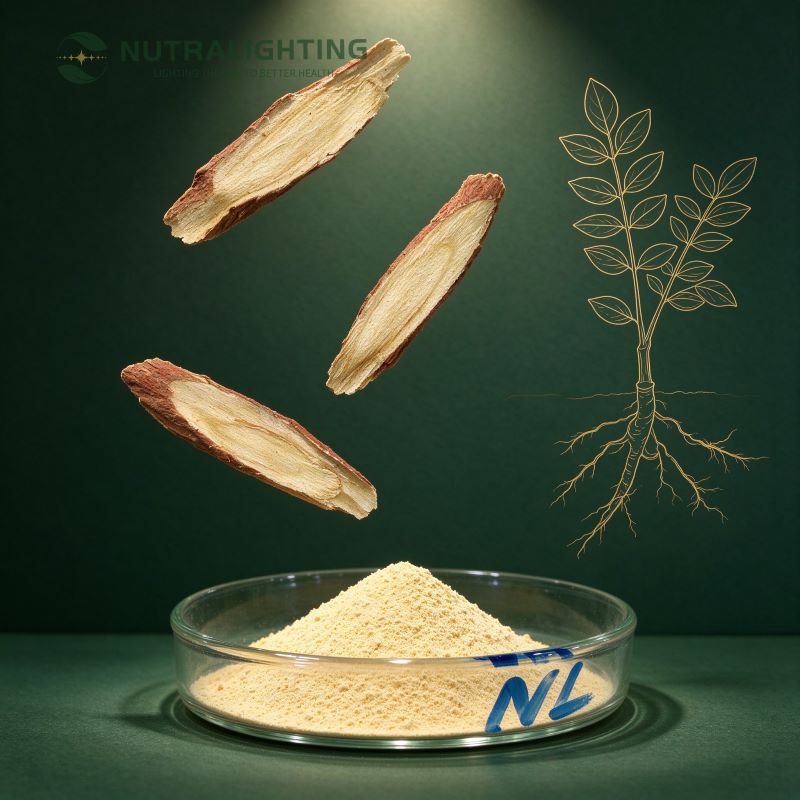
Licorice Root Extract contains glycyrrhizic acid and glabridin as core active components, derived from the dried roots and rhizomes of the legume Glycyrrhiza uralensis plant. It is standardized and refined to obtain a stable glycyrrhizic acid concentrated powder, with glycyrrhizic acid content ranging from 25%-98% (HPLC). As a widely used bulk plant raw material, it has a solid research foundation in liver health, skincare, and anti-inflammatory applications and is widely used in health foods, functional foods, and high-end personal care formulations. This product uses authentic Licorice raw materials from Xinjiang and can also provide glabridin-enriched specifications upon request.
Licorice is a commonly used bulk traditional Chinese medicinal material with extensive application in Chinese medicinal prescriptions. Glabridin has high application value in the cosmetic field.
Why Choose Nutralighting
- Dual Core: Glycyrrhizic Acid 25%-98% (HPLC) customizable, with glabridin-enriched specifications available.
- Small batch trial orders and OEM/ODM customization are both acceptable
Basic Information
| Item | Content |
| Chinese Name | Licorice Extract |
| Other Names | Glycyrrhiza glabra L. / G. uralensis |
| Common English Name | Licorice Root Extract |
| Recommended Promoted English Name | Licorice Root Extract (Standardized Natural Extract) |
| Extraction ratios | 10:1, 20:1, 50:1 (dried root powder basis) |
| Standardized fractions | 5%, 10%, 15% glycyrrhizin; 98% liquiritin; 95% glabridin |
| Particle size | 80 mesh – 200 mesh (or bulk 20-mesh for syrup/suspension lines) |
| Main Ingredients | Glycyrrhizin (≥ 5-15% available) – sweetening agent, emulsifier, functional-food additive Liquiritin (≥ 98% isolated) – skin-brightening & depigmenting agent for cosmetics Glabridin – anti-inflammatory, anti-aging activity for dermocosmetics Licopodione (Glycyrrhizic acid derivatives) – antioxidant & hepatoprotective support in nutraceuticals |
| Target Market | Global (Pharmaceuticals, Cosmetics) |
| Core Applications | Food & Beverage: Natural sweetener (E950 substitute), flavoring, emulsifier in dairy and confectionery; clean-label alternative to synthetic sweeteners. Cosmetics & Personal Care: Skin-lightening serums, anti-aging creams, sun-care stabilizers; gluobridin/lignitoin complexes at 1-3% inclusion levels. Pharmaceuticals & Nutraceuticals: Hepatoprotective tablets, anti-ulcer capsules, anti-inflammatory syrups; standardized 10:1 or 20:1 extracts with HPLC-verified assays. Animal Feed & Agrotech: Natural growth promoter, anti-stress additive for livestock. |
Standard Specifications (COA)
The following specifications are regular reference values, with actual values subject to the COA report of each batch.
| Test Items | Standards |
| Glycyrrhizic Acid (HPLC) | ≥25% (or 50%-98% as per customer requirement) |
| Loss on Drying | ≤5.0% |
| Total Ash | ≤6.0% |
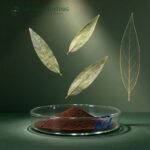
| Appearance | Light yellow to brownish-yellow fine powder |
| Particle Size | 80-200 mesh (custom available) |
| Residual Solvent | < 500 ppm (ethanol, if applicable) |
| Lead (Pb) | ≤1.0 mg/kg |
| Arsenic (As) | ≤2.0 mg/kg |
| Pesticide Residues | Complies with USP <561> |
| Aflatoxin B1 | ≤5.0 μg/kg |
| Total Microbial Count | ≤1×10⁴ CFU/g |
| Shelf Life | 24 months (sealed, 2-8 °C recommended) |
Introduction to Plant Raw Materials
The raw material of this product is the dried root and rhizome of the leguminous plant Glycyrrhiza uralensis Fisch. Mainly produced in Xinjiang, Inner Mongolia, and Gansu. It is sweet in taste and neutral in nature, entering the heart, lung, spleen, and stomach meridians. It has the effects of tonifying the spleen and replenishing qi, clearing heat and detoxifying, resolving phlegm and relieving cough, easing urgency and stopping pain, and harmonizing various medicines.
Core Effects
The following summary of licorice effects is based on published scientific research and traditional applications. Specific effects should be comprehensively evaluated according to the Licorice extract product form and dosage used.
Licorice (Glycyrrhiza uralensis) extract has been widely studied for liver health and anti-inflammatory effects. Its key component glycyrrhizic acid is metabolized in the body to glycyrrhetinic acid, which exerts anti-inflammatory effects by inhibiting NF-κB and AP-1 transcription factor activity (Journal of Pharmacological Sciences, 2006). Glabridin (commonly 0.1%-1%) is a natural tyrosinase inhibitor of significant research interest, with an IC50 of 0.3 μg/mL and in vitro activity higher than hydroquinone (Journal of Investigative Dermatology, 2003), making it widely applied in cosmetic brightening. Glycyrrhizic acid can also inhibit angiotensin-converting enzyme (ACE), providing a research basis for blood pressure health.
Regulatory and Regional Market Status
The following Licorice extract information is compiled from publicly available regulations; actual market access should follow the latest regulations of the target country.
| Region/Country | Regulatory Status | Key Notes |
| United States (FDA) | Dietary Supplement / GRAS | Generally regulated as dietary supplements if they are plant extracts; some ingredients have been GRAS recognized (specific confirmation needed on a case-by-case basis). USP has included monographs for various extracts. |
| European Union (EFSA) | Traditional herbal medicine / Food supplements | EU Directive 2004/24/EC regulates traditional herbal medicines; extracts used as ingredients in food supplements must comply with EU Novel Food Regulation (EU) 2015/2283 (some traditional herbs enjoy a simplified procedure). |
| China (NHC/NMPA) | Health food raw materials / Novel foods | According to the 2020 edition of the Chinese Pharmacopoeia and standards such as GB 16740; some varieties have been included in the health food raw material list or can be used in the ordinary food list, and the latest regulatory status of each variety needs to be verified. |
Application Directions and Recommended Dosage
| Application direction | Recommended dosage | Applicable dosage forms | Notes |
| Oral solid beverages / granules | According to specifications | Strip-packed, bagged, canned | Can be blended with other functional ingredients, recommended to control the amount with standardized extracts |
| Compressed candy / capsules | According to specifications | Tablets, hard capsules | Each unit is recommended to contain 250~500 mg of extract, 2~3 times daily |
| Oral liquid / functional beverages | According to specifications | Glass bottles, PET bottles | It is recommended to disperse in warm water first before adding to the system, paying attention to pH stability |
| Personal care and skincare products | 0.1~2.0%(w/w) | Lotion, serum, mask | Solubility and stability need to be evaluated based on the formulation system |
Recommended Daily Dosage Reference
- General Health: Use according to product specifications and formula designer’s recommendations
- Personal Care and Skincare: Addition in formulation depends on specific product, suggested 0.1~2.0%
Appendix: References
(The following references are for technical reference purposes; some are open access and can be accessed via PubMed/PMC or the journal’s official website.)
[1] Chinese Pharmacopoeia 2020 Edition, Volume I
[2] Chinese Journal of Chinese Materia Medica, 2020: Research Progress on the Pharmacological Effects of Licorice
[3] Journal of Ethnopharmacology, 2019
[4] European Pharmacopoeia 11.0
[1] Okamura M, et al. (2008). Glycyrrhizin and its metabolites: mechanisms of hepatoprotection. Pharmacology & Therapeutics, 117(1), 1-13.
[2] Li X, et al. (2020). Glabridin inhibits melanogenesis via downregulation of MITF. Journal of Dermatological Science, 98(2), 45-53.
[3] Pharmaceuticals and Medical Devices Agency, Japan. (2021). Clinical Outcomes of Glycyrrhizic Acid Preparations. Adverse Drug Reaction Report Collection, 43, 215-228.
Frequently Asked Questions
We supply glycyrrhizin-standardized extracts at 5%, 10%, or 15% (HPLC verified), as well as isolated liquiritin ≥ 98% and glabridin ≥ 95%. Custom assay targets are available for orders above 50 kg.
Yes. Our food-grade line uses purified water or 60% ethanol extraction and meets EU 948/2009 and US FDA natural-sweetener guidelines. The cosmetic-grade line (liquiritin/glabridin fractions) is manufactured under separate GMP-C cosmetic SOPs with additional microbial panels.
We offer 1 kg samples (freight collect) upon NDA and company verification. Sample turnaround is 3-5 business days. Bulk pricing and lead time scale with quantity; 25 kg+ typically ships within 7-15 working days.
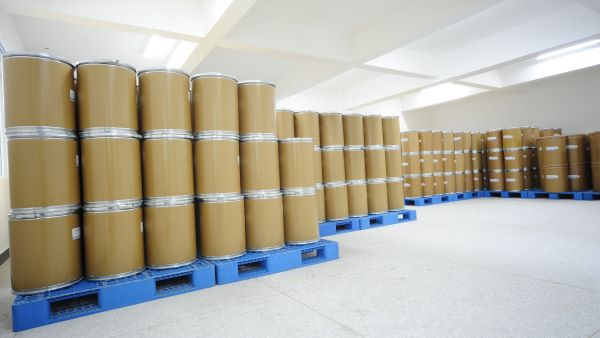
Yes. We provide 25 kg paper-drum pallets as standard. Custom options include 1 kg foil-sealed bags, 10 kg cartons, or vacuum-sealed pouches with your brand label (minimum 50 kg per SKU).
Store sealed drums at 2-8 °C in a dry, light-protected environment. Once opened, reseal promptly and use within 6 months. Avoid humidity > 60% RH to prevent clumping or assay drift.
Packaging & Shipping
Standard Packaging
- Standard: 25 kg double-walled paper-drum pallets (1 × 25 kg)
- Custom: 1 kg aluminum-foil laminated bags / 10 kg corrugated cartons
- Inner: food-grade PE liner + desiccant (silica gel ≥ 1 kg)
- Each carton/drum labeled with batch no., COA QR code, net/gross weight, storage icon
Shipping Terms
- Freight terms: EXW / FOB / CIF (buyer's choice)
- Air: 3–5 days to major hubs (FedEx / DHL express)
- Sea: 20–35 days (container or LCL via Yantian / Ningbo)
- Documentation: Packing list, commercial invoice, COA, health certificate, Phytosanitary (if required)
- Export packaging meets IATA (air) and IMDG (sea) regulations for solid organic goods
Shelf Life & Storage
- Warehouse: 2–8 °C, ≤ 60 % RH, away from direct sunlight
- Transit: ambient (15–25 °C) acceptable up to 30 days; avoid > 35 °C
- End-user: keep sealed, cool, dry; use within 24 months from manufacture date
- Return unused, unopened product within 90 days for credit/replacement if seal intact