Product Description
Extract from Oregon Grape (Mahonia aquifolium) root – Berberine 80-98% standardized, a natural ingredient for skin health and liver protection.
Product Description
Conduct evidence-based research and formula adaptation focusing on skin health and liver protection,
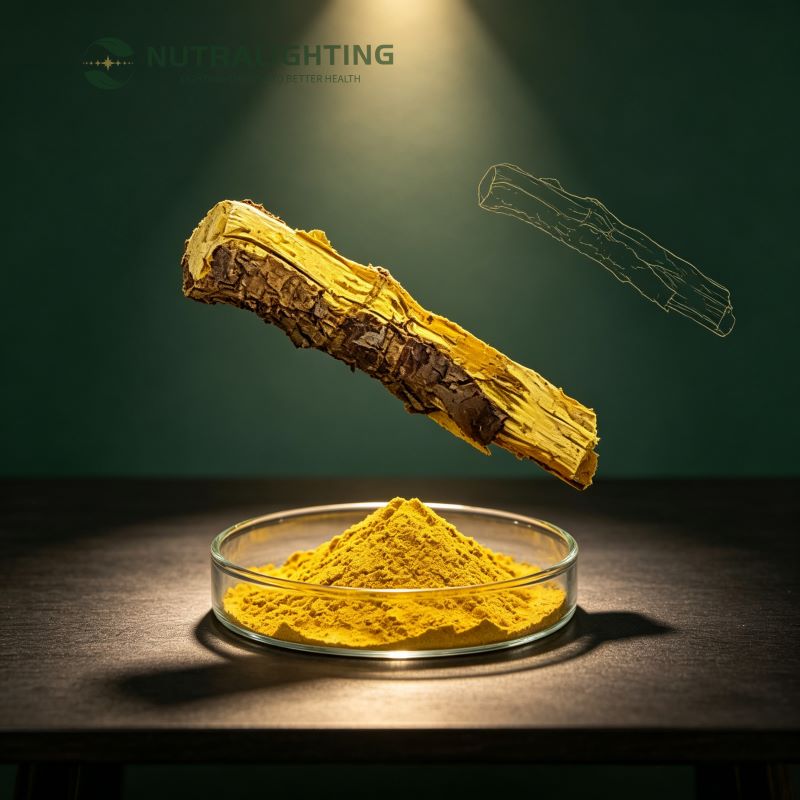
Oregon Grape Extract is refined from plant materials using a standardized process, with berberine content of 80%-98% to ensure stable berberine levels, supporting skin health, liver protection, and metabolic regulation, suitable for the development of health supplements, functional foods, and personal care products. Oregon Grape Extract is made from carefully selected authentic roots and rhizomes from the United States, prepared using ethanol extraction and standardized processing, with high berberine content, making it a high-quality raw material for skin health and metabolic regulation products.
Oregon grapes are a traditional North American herbal medicine. The Pacific Northwest of the United States and Canada are the main producing areas, and they are mainly used in the skincare and metabolic health product markets.
Basic Information
| Project | Content |
| Extract name | Oregon Grape |
| Alias | Mahonia aquifolium |
| Common English Name | Oregon Grape Extract |
| Main Component | Berberine |
| Main Specification | Berberine 80%-98% |
| Target Market | North America, Europe |
| Core Application Areas | Skin health support; liver protection; metabolism regulation (Berberine) |
Why Choose Nutralighting
Skin evidence-based: Topical formulation studies show potential to improve mild to moderate skin discomfort (improvement in both erythema and scaling), suitable for skincare formulations.
Liver metabolism: Berberine has antibacterial and anti-inflammatory effects, regulates metabolism, and has been studied for liver protection.
Standard Specifications (COA)
The following specifications are for general reference only; the actual values shall be based on the COA report of each batch.
| Test items | Standards |
| Berberine | Berberine 80%-98% |
| Loss on drying | ≤5.0% |
| Total ash | ≤6.0% |
| Lead (Pb) | ≤1.0 mg/kg |
| Arsenic (As) | ≤2.0 mg/kg |
| Cadmium (Cd) | ≤0.5 mg/kg |
| Mercury (Hg) | ≤0.1 mg/kg |
| Pesticide Residues (Organochlorine/Organophosphate) | Complies with USP <561> |
| Aflatoxin B1 | ≤5.0 μg/kg |
| Total Aflatoxins | ≤10.0 μg/kg |
| Total Microbial Count (TAMC) | ≤1×10⁴ CFU/g |
| Yeasts and Molds (TYMC) | ≤1×10² CFU/g |
| Escherichia coli | Not detected (1g) |
| Salmonella | Not detected (1g) |
Introduction to Plant Materials
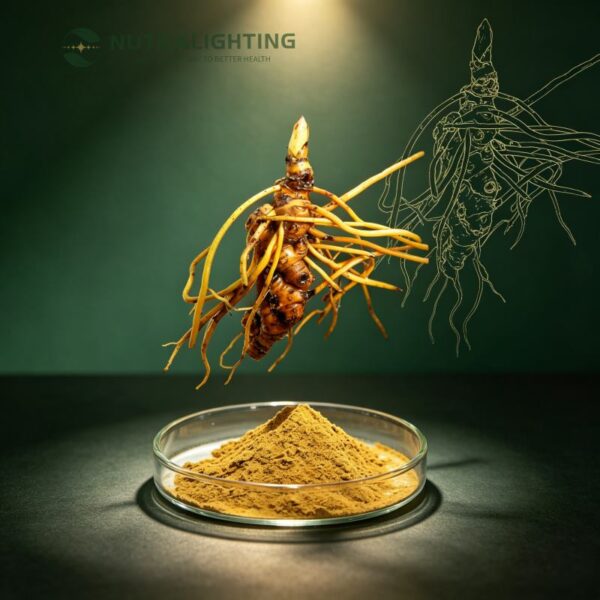
The raw material of this product is the dried root or rhizome of Mahonia aquifolium (Pursh) Nutt., a plant of the Berberidaceae family. It is mainly produced in the northwestern United States and British Columbia, Canada. Oregon grape is a traditional medicinal plant of Native Americans and is known as the ‘American barberry.’ Its main active ingredient is also berberine.
Core Benefits
The following summary of effects is based on published scientific research and traditional applications, and the specific effects need to be comprehensively evaluated in combination with the product form and dosage used.
In North American traditional medicine, Oregon grape is often used for skin and liver health. Research on topical preparations shows potential for improving mild to moderate skin discomfort (simultaneous improvement of erythema and scaling). Mechanism studies indicate that berberine downregulates Ki-67 and cyclin D1 expression by inhibiting the NF-κB and STAT3 pathways, reducing excessive proliferation of keratinocytes. In terms of liver protection, studies on Oregon grape extracts suggest its potential for liver protection.
Regulations and Regional Access Status
The following information is compiled based on publicly available regulatory data; for actual market access, please refer to the latest regulations of the target country.
| Region/Country | Regulatory Status | Key Notes |
| USA (FDA) | Dietary Supplement / GRAS | Generally regulated as a dietary supplement if it is a plant extract; some ingredients have been recognized as GRAS (case-specific confirmation required). USP has included monographs for various extracts. |
| European Union (EFSA) | Traditional herbal medicine / Food supplements | EU Directive 2004/24/EC regulates traditional herbal medicine; extracts used as ingredients in food supplements must comply with the EU Novel Food Regulation (EU) 2015/2283 requirements (some traditional herbs enjoy a simplified procedure). |
Application Directions and Recommended Dosage
| Application direction | Recommended addition amount | Applicable dosage form | Notes |
| Oral solid beverages / Instant powder | According to specifications | Strips, bags, cans | Can be compounded with other functional ingredients, recommended to control the amount using standardized extracts |
| Compressed candy / Capsules | According to specifications | Tablets, hard capsules | Each unit is recommended to contain 250~500 mg of extract, 2~3 times daily |
| Oral liquid / Functional beverages | According to specifications | Glass bottles, PET bottles | It is recommended to disperse in warm water first before adding to the system, pay attention to pH stability |
| Personal care and skincare products | 0.1~2.0%(w/w) | Lotion, serum, mask | Need to evaluate solubility and stability according to the formulation system |
Recommended Daily Dosage Reference
- General Health Use: Use according to product specifications and the dosage recommended by the formulator
- Personal Care and Skincare: The amount added in formulations depends on the specific product, recommended 0.1~2.0%
Appendix: References
(The following references are for technical reference purposes; some are open access and can be accessed via PubMed/PMC or the journal’s official website.)
[1] Ernst E. et al., Journal of the American Academy of Dermatology, 2000; 43: 907-909.
[2] Furr H.K. et al., Journal of Ethnopharmacology, 1994; 42: 9-15.
[3] National Center for Complementary and Integrative Health, NCCIH, 2021.
Frequently Asked Questions
Oregon Grape Extract is standardized to 80%-98% berberine, with custom ranges available upon request to meet your formulation specifications.
Yes. Evidence-based studies on topical preparations demonstrate potential improvement in mild to moderate skin discomfort, including reduction of erythema and scaling. Recommended inclusion level is 0.1%-2.0% (w/w).
We can provide COA compliant with USP/EP standards,
Typical supplemental dosage ranges from 100-500 mg per capsule or tablet, depending on the targeted berberine delivery. We recommend working with our technical team for optimal formulation guidance.
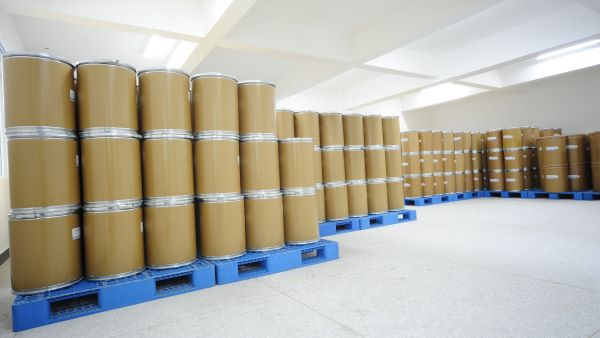
Standard packaging is 1 kg aluminum foil bags or 25 kg drums. Custom packaging is available. Please contact our sales team for current MOQ and lead time details.
The shelf life is 24 months when stored in a cool, dry place away from direct sunlight and moisture. Keep containers tightly sealed after opening.
Yes, sample quantities are available for quality evaluation. Please contact our sales team to arrange sample requests and associated logistics.
Packaging & Shipping
Standard Packaging
- Standard: 1 kg/aluminum foil bag + 25 kg/drums; 5 kg/aluminum foil bag.
- Custom packaging available per client requirement.
- Each package clearly labeled with product name, batch number, production date, and expiry date.
Shipping Terms
- Shipped via express (DHL, FedEx, UPS), air freight, or sea freight depending on order quantity and destination.
- Lead time: 7–15 working days after order confirmation and payment.
- Documentation includes Commercial Invoice, Packing List, Certificate of Analysis, and Origin Certificate.
Shelf Life & Storage
- Store in a cool, dry place below 25°C.
- Protect from light and moisture.
- Keep containers tightly sealed after opening.
- Shelf life: 24 months from date of manufacture under recommended storage conditions.