Product Description
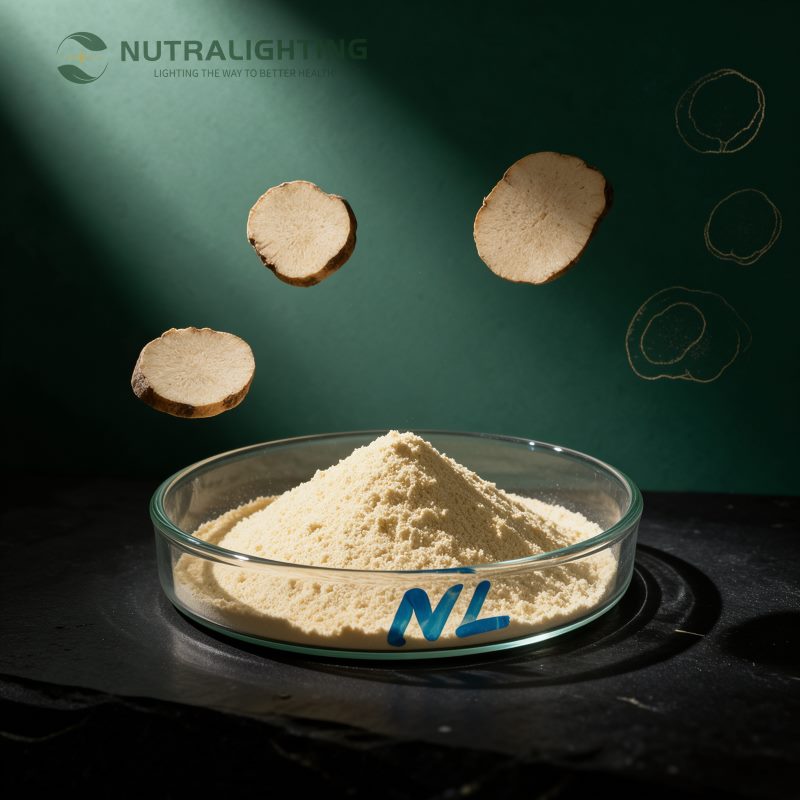
Nutralighting Alisma Extract – Extract is valued for its rich content of oligosaccharides, triterpenes, and polysaccharides, making it a sought-after raw material in dietary supplements, functional foods, and cosmetic formulations worldwide.
Product Description
Alisma Extract (Ze Xie Extract) is a concentrated powder of characteristic active ingredients refined from specific plant raw materials, mainly containing alisol and polysaccharides. It meets the quality standard of alisol B C 0.1%-0.5% and serves multiple purposes, including water metabolism, diuretic and edema reduction, and lipid health. It is widely used in health foods, functional foods, and personal care products. The extract is prepared from carefully selected Alisma tubers from Jianning, Fujian, using ethanol extraction and membrane separation technology. The alisol content meets standards, making it a high-quality raw material for products supporting diuresis, edema reduction, and lipid health.
Alisma is a classic Chinese medicine for promoting water excretion to remove dampness, with Jianning, Fujian being the authentic production area.
Why Choose Nutralighting
- 100% natural, plant-derived sourcing
- State-of-the-art extraction technology preserving bioactive integrity
- Full traceability from raw material to finished product
- Flexible MOQ for global B2B buyers
- Competitive factory-direct pricing with stable supply chain
- Professional technical support and custom formulation assistance
Basic Information
| Project | Content |
| Extract Name | Alisma Extract |
| Botanical Name | Alisma orientalis (Sam.) Dong |
| Aliases | Shui Xie, Mang Yu |
| Part Used | Rhizome |
| Common English Name | Ze Xie Extract |
| Extraction Ratio | 10:1 |
| Main Components | Alisma Triterpenes, Polysaccharides |
| Main Specifications | Alismatol B C 0.1%-0.5% |
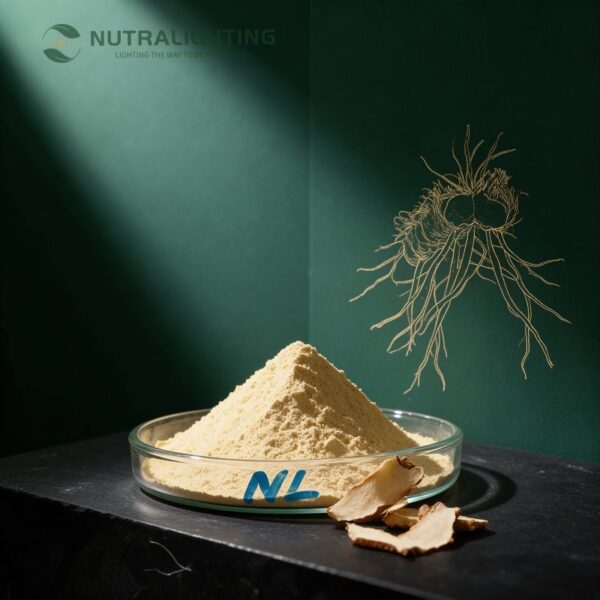
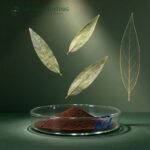
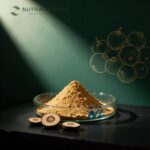
| Appearance | Fine powder, beige to light brown |
| Solubility | Water soluble |
| Target Market | China, Asia |
| Core Application Areas | Water metabolism; Diuretic and edema reduction; Blood lipid health; Liver health |
Standard Specifications (COA)
The following specifications are regular reference values; the actual values are subject to the COA report for each batch.
| Testing Items | Standard |
| Alismol | Alismol B C 0.1%-0.5% |
| Loss on drying | ≤5.0% |
| Total ash | ≤6.0% |
| Lead (Pb) | ≤1.0 mg/kg |
| Arsenic (As) | ≤2.0 mg/kg |
| Cadmium (Cd) | ≤0.5 mg/kg |
| Mercury (Hg) | ≤0.1 mg/kg |
| Pesticide residues (organochlorine/organo-phosphorus) | Complies with USP <561> |
| Aflatoxin B1 | ≤5.0 μg/kg |
| Total Aflatoxins | ≤10.0 μg/kg |
| Total Microbial Count (TAMC) | ≤1×10⁴ CFU/g |
| Yeasts and Molds (TYMC) | ≤1×10² CFU/g |
| Escherichia coli | Not detected (1g) |
| Salmonella | Not detected (1g) |
Introduction of Plant Raw Material
The raw material of this product is the dried tuber of Alisma orientale, a plant of the Alismataceae family. The main producing areas are Fujian, Sichuan, Hubei, Jiangsu, and other regions. Alisma is an important herb in traditional Chinese medicine for promoting urination and removing dampness. It is recorded in Volume I of the 2020 edition of the Chinese Pharmacopoeia.
Core Efficacies
Alisma (Alisma orientale) extract has traditional value in the directions of water metabolism and lipid metabolism. Its core active ingredients, Alisol and polysaccharides, have been traditionally used to support diuresis, dampness elimination, and blood lipid management. Relevant modern studies suggest that its components may be involved in regulating lipid metabolism, but the sample sizes and conclusions of population studies are limited. Specific efficacy should be comprehensively evaluated in combination with product formulation and dosage, and end-product claims should comply with the regulations of the market of sale.
Regulations and Regional Access Status
The following information is compiled based on publicly available regulatory data; actual market access should refer to the latest regulations of the target country.
| Region/Country | Regulatory Status | Key Notes |
| European Union (EFSA) | Traditional herbal medicine / Food supplements | EU Directive 2004/24/EC regulates traditional herbal medicines; extracts used as ingredients in food supplements must comply with EU Novel Food Regulation (EU) 2015/2283 requirements (some traditional herbs benefit from a simplified procedure). |
| China (NHC/NMPA) | Health food ingredients / New resource foods | Based on the 2020 edition of the Chinese Pharmacopoeia and standards such as GB 16740; some varieties are included in the health food ingredient catalog or can be used in ordinary food catalogs, and the latest regulatory status of each variety must be verified specifically. |
| Japan (MHLW) | Food additives / Health food ingredients | Extracts are used as food additives or health food ingredients; some varieties need to be declared under the functional food labeling system. |
Application Directions and Recommended Dosage
| Application Direction | Recommended Dosage | Suitable Dosage Form | Remarks |
| Water Metabolism Support Formula | 200~400 mg/day | Capsules, Tablets | Please consult healthcare professionals before use by special populations |
| Oral Solid Drinks / Instant Powders | According to specifications | Strip pack, bag pack, canister | Can be blended with other functional ingredients, recommended to control the amount with standardized extracts |
| Compressed candy / capsule | According to specifications | Tablet, hard capsule | Each capsule is recommended to contain 250~500 mg of extract, 2~3 times daily |
| Oral liquid / functional beverage | According to specifications | Glass bottle, PET bottle | It is recommended to first disperse in warm water before adding to the system, paying attention to pH stability |
| Personal care and skincare products | 0.1~2.0%(w/w) | Lotion, serum, mask | Solubility and stability need to be evaluated based on the formulation system |
Recommended Daily Dosage Reference
- For regular adults, the daily dosage corresponds to 5-10 g of raw Alisma orientale; for the extract, the dosage should be converted according to the content of triterpenoid active ingredients, and it must not be increased arbitrarily.
- For the general population, continuous use is recommended not to exceed 2 weeks; healthy people without symptoms of damp-heat edema should not take it long-term on their own.
- It must not be decocted or stored in contact with iron utensils; avoid taking it in large amounts together with high-iron foods such as laver, spinach and egg yolk, as this may affect the dissolution of active ingredients.
Other Precautions
- It is prohibited for pregnant women and breastfeeding women. Its slippery and draining nature may stimulate the uterus and induce contractions, and its safety during breastfeeding has not been clearly verified.
- It is prohibited for people with kidney deficiency and seminal loss, nocturnal emission without damp-heat manifestations, and frequent urination at night; otherwise, it will aggravate the symptoms of kidney qi deficiency.
- It is prohibited for people with liver and kidney dysfunction, hypotension, or hypokalemia, so as to avoid increasing the metabolic burden or inducing severe discomfort.
- It must not be combined with potassium-sparing diuretics such as spironolactone, which may easily cause hyperkalemia and increase the risk of arrhythmia.
- When used together with antihypertensive drugs or cardiac glycoside western medicines such as digoxin, a doctor must be consulted in advance to avoid superimposed drug effects inducing hypotension or cardiotoxicity.
- In terms of traditional herbal compatibility, it should not be used together with herbs such as seaweed (Hai Zao), Beijing euphorbia (Da Ji), kansui (Gan Sui) and genkwa flower (Yuan Hua); it is also not recommended to combine it on your own with strongly warming herbs such as aconite (Fu Zi) and cinnamon bark (Rou Gui).
Appendix: References
[1] Zhang Y. et al., Journal of Ethnopharmacology, 2014; 153: 543-550.
[2] Zhou L. et al., Journal of Ethnopharmacology, 2016; 184: 218-225.
[3] Chinese Pharmacopoeia Commission, Chinese Pharmacopoeia 2020, Part I: 128.
[4] LI Y, ZHANG K, FENG Y, et al. Alisma Orientalis Extract Ameliorates Hepatic Iron Deregulation in MAFLD Mice via FXR-Mediated Gene Repression[J]. Nutrients, 2024, 16(14): 2272.
[5] ZHANG X, LIU H, WANG Y, et al. Alisma genus: Phytochemical constituents, biosynthesis, and biological activities[J]. Phytochemistry Reviews, 2022, 21(3): 789-821.
Frequently Asked Questions
Standard orders ship within 7-15 business days after payment confirmation. Sample orders can be dispatched within 3-5 business days. Expedited shipping is available for urgent requirements.
Yes. Every batch is accompanied by a Certificate of Analysis (COA) from our in-house QC lab, and we can arrange additional third-party testing through SGS, Eurofins, or other accredited laboratories upon request.
Absolutely. Our Alisma Extract is 100% plant-derived and contains no animal-sourced additives, making it fully suitable for vegan and vegetarian product lines.
Yes, we offer flexible private-label and custom packaging solutions, including different bag sizes, drum configurations, and branded outer cartons to meet your market requirements.
The shelf life is 24 months from the date of manufacture. Store in a cool, dry place away from direct sunlight and moisture. Keep container tightly sealed when not in use.
Packaging & Shipping
Standard Packaging
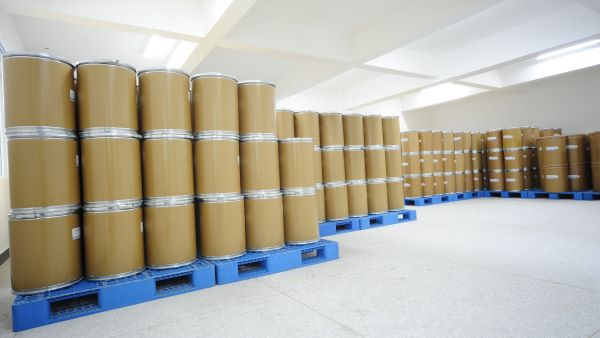
- Standard: 1 kg/aluminum foil bag with two inner PE bags;
- 25 kg/drum with double PE liner or paper-drums.
- Custom packaging and labeling available upon request.
Shipping Terms
- Express (DHL, FedEx, UPS): 3–7 business days for samples and small quantities.
- Air freight: 5–10 business days for medium orders.
- Sea freight: 25–40 business days depending on destination port.
- DDP shipping options available for select countries.
Shelf Life & Storage
- Store in a cool, dry environment below 25°C.
- Protect from light, heat, and moisture.
- Keep containers sealed when not in use.
- Do not store near strong odors or chemical substances.