Product Description
Refined from authentic Xinjiang asafoetida resin, standardized with 50%-98% ferulic acid – a traditional specialty ingredient for digestive health, anti-inflammatory, and antioxidant purposes.
Product Description
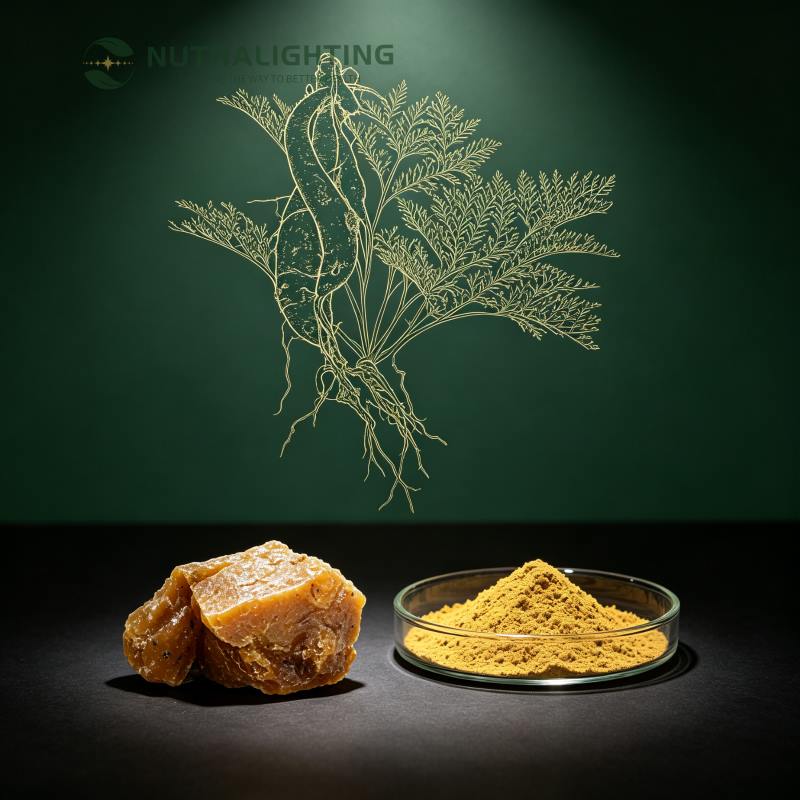
Asafoetida Extract is derived from authentic Xinjiang asafoetida (Ferula sinkiangensis) resin, extracted and purified with ethanol, concentrating and standardizing ferulic acid, providing brands with traceable raw materials for digestive and anti-inflammatory applications. Ferulic acid is standardized from 50%-98%, widely used in digestive health, anti-inflammatory, and antioxidant products, making it a specialty ingredient for digestive system health and traditional medicinal use.
Asafoetida is a characteristic medicinal material from Xinjiang, China, mainly produced in the Junggar Basin, with stable cultivation and supply domestically and internationally.
This product uses low-temperature extraction-vacuum concentration-spray drying (or freeze drying) processes, ensuring stable content and high activity of characteristic components in the extract. Different extraction ratios and standardized specifications can be customized according to customer requirements. The product is quality-controlled according to USP / EP pharmacopeia standards. Each batch comes with a certificate of analysis (COA), covering key indicators including characteristic component content, loss on drying, ash, heavy metals (Pb, As, Cd, Hg), pesticide residues, aflatoxins, and microorganisms; organic, KOSHER, HALAL, and non-GMO certification documents are available.
Basic Information
| Item | Content |
| Chinese Name | Asafoetida Extract |
| Alias | Ferula assa-foetida, Hasknee |
| Common English Name | Ferula Extract / Ferula Asafoetida Root Extract / Ferulic Acid Extract |
| Main Components | Ferulic Acid, Volatile Oil |
| Main Specifications | Ferulic Acid 50%-98% |
| Target Market | Middle East, India, Europe |
| Core Application Areas | Digestive Health; Anti-inflammatory; Antioxidant |
Standard Specifications (COA)
The following specifications are for general reference; the actual values should be based on the COA report of each batch.
| Test Items | Standards |
| Ferulic Acid | Ferulic Acid 50%-98% |
| Loss on Drying | ≤5.0% |
| Total Ash | ≤6.0% |
| Lead (Pb) | ≤1.0 mg/kg |
| Arsenic (As) | ≤2.0 mg/kg |
| Cadmium (Cd) | ≤0.5 mg/kg |
| Mercury (Hg) | ≤0.1 mg/kg |
| Pesticide Residues (Organochlorine/Organophosphate) | Complies with USP <561> |
| Aflatoxin B1 | ≤5.0 μg/kg |
| Total Aflatoxins | ≤10.0 μg/kg |
| Total Microbial Count (TAMC) | ≤1×10⁴ CFU/g |
| Yeast and Mold (TYMC) | ≤1×10² CFU/g |
| Escherichia coli | Not detected (1g) |
| Salmonella | Not detected (1g) |
Introduction of Plant Raw Material
The raw material of this product is the dried resin of Ferula sinkiangensis, a plant of the Apiaceae family. It is mainly produced around the Junggar Basin in Xinjiang. Ferula is an essential herb in traditional Chinese medicine for alleviating food stagnation, dispersing abdominal distension, and treating parasitic and ulcer conditions. It is recorded in Volume 1 of the 2020 edition of the Chinese Pharmacopoeia.
Core Effects
Digestive Health Support: Asafoetida has been traditionally used for centuries in Ayurvedic and Unani medicine to relieve flatulence, indigestion, and abdominal discomfort.
Ferulic acid and volatile oils demonstrate spasmolytic effects on smooth muscle, helping to ease digestive tract tension and promote normal peristalsis.
Anti-inflammatory Properties: Ferulic acid, a potent phenolic compound, exhibits significant anti-inflammatory activity by inhibiting pro-inflammatory mediators such as COX-2, LOX, and NF-κB signaling pathways. Clinical and preclinical studies support its role in reducing inflammatory markers. Antioxidant Activity: As a strong free-radical scavenger, ferulic acid neutralizes reactive oxygen species (ROS) and enhances endogenous antioxidant enzyme activity, including SOD and GSH-Px. This protects cellular structures from oxidative damage.
Gastrointestinal Mucosal Protection: Research indicates that asafoetida extract can help maintain intestinal barrier integrity and reduce gastrointestinal mucosal inflammation, making it relevant for functional digestive disorder formulations.
Note: The above effects are based on published scientific studies and traditional use. Specific formulation recommendations should be validated through your own R&D testing.
Application Areas
- Digestive Health Supplements: Capsules, tablets, and powder blends targeting bloating, indigestion, and gut comfort.
- Anti-inflammatory Formulations: Joint health, arthritis-support, and inflammatory condition dietary supplements.
- Antioxidant Products: Cell-protection and anti-aging supplement lines.
- Traditional Herbal Preparations: Ayurvedic, Unani, and Traditional Chinese Medicine (TCM) product manufacturers.
- Functional Foods & Beverages: Digestive-health-focused drinks and food formulations.
Regulatory and Regional Access Status
The following information is compiled based on publicly available regulatory data. Actual market access should comply with the latest regulations of the target country.
| Region/Country | Regulatory Status | Key Notes |
| European Union (EFSA) | Traditional Herbal Medicine / Food Supplement | EU Directive 2004/24/EC regulates traditional herbal medicines; extracts used as ingredients in food supplements must comply with EU Novel Food Regulation (EU) 2015/2283 requirements (some traditional herbs enjoy a simplified procedure). |
| China (NHC/NMPA) | Health Food Ingredients / New Resource Foods | According to the 2020 edition of the Chinese Pharmacopoeia and standards such as GB 16740; some varieties have been included in the health food ingredient catalog or can be used in general food catalogs, and the latest regulatory status of each variety needs to be specifically verified. |
Note: Regulatory information is time-sensitive. Before export, it is recommended to confirm the latest compliance requirements with the regulatory authorities of the target market or professional consultants.
Application Directions and Recommended Dosage
| Application Direction | Recommended Addition Amount | Applicable Dosage Form | Remarks |
| Oral Solid Beverage / Instant Powder | Determined according to specifications | Stick-pack, Bagged, Canned | Can be compounded with other functional ingredients, recommended to control the amount using standardized extracts |
| Compressed candy / Capsules | According to specifications | Tablets, hard capsules | Each unit is recommended to contain 250~500 mg of extract, 2~3 times daily |
| Oral liquid / Functional beverages | According to specifications | Glass bottles, PET bottles | It is recommended to disperse in warm water first before adding to the system, pay attention to pH stability |
| Personal care and skincare products | 0.1~2.0%(w/w) | Lotion, serum, mask | Need to evaluate solubility and stability according to the formulation system |
Recommended Daily Dosage Reference
- General Health Use: Use according to product specifications and the dosage recommended by the formulator
- Personal Care and Skin Care: The amount added in formulations depends on the specific product, recommended 0.1~2.0%
Other Notes
Asafoetida Extract is a plant-derived product, and some individuals may have allergic reactions. It is recommended to start with a small dose during the first use.
Act Now
Regardless of the type of product you are developing, Nutralighting can provide Asafoetida Extract solutions ranging from standard specifications to OEM/ODM customization, along with complete technical data packages (TDS / COA / MSDS) and regulatory consultation.
Contact us now to get Asafoetida Extract samples and quotations, and start upgrading your formulations.
(Note: End product claims must comply with the regulations of the sales location, and it is recommended to confirm the latest compliance requirements with the regulatory authority of the target market before export.)
Appendix: References
(The following references are for technical reference; some are open access and can be accessed via PubMed/PMC or journal official websites)
[1] Saleem M. et al., Journal of Ethnopharmacology, 2003; 85: 1-8.
[2] Ahmad S. et al., Journal of Ethnopharmacology, 2005; 98: 133-137.
[3] Srinivasan K. et al., Journal of Food Science and Technology, 2014; 51: 2097-2106.
Frequently Asked Questions
The MOQ starts at 1 kg for sample orders. Bulk orders typically begin at 25 kg. We also accept custom quantities upon negotiation.
Yes. We offer customizable extraction ratios and ferulic acid standardization levels (50%-98%) to meet your specific formulation requirements.
Sample orders ship within 3-5 working days. Bulk orders typically take 7-15 working days after order confirmation and payment receipt.
Yes. We offer OEM packaging and private-label solutions. Please contact our sales team with your requirements for details.
Our primary markets include the Middle East, India, and Europe, where asafoetida (hing) is widely used in traditional medicine and food applications.
Yes. Asafoetida (Hing) is a well-established ingredient in Ayurvedic medicine. Our extract meets pharmacopeia-grade standards suitable for Ayurvedic product manufacturing.
Packaging & Shipping
Standard Packaging
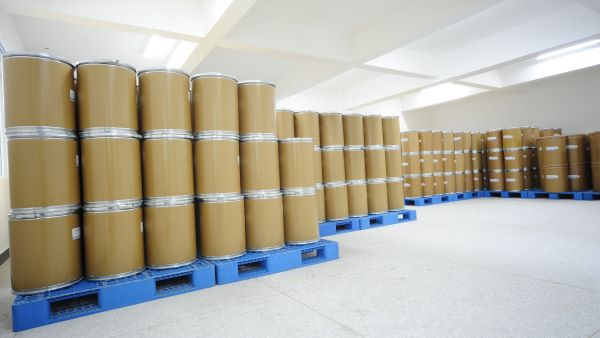
- Standard: 1 kg/aluminum foil bag + 25 kg/cardboard drum; inner double-layer polybag with desiccant.
- Custom: OEM packaging and private-label solutions available upon request.
Shipping Terms
- Express shipping available for sample orders (DHL, FedEx, UPS).
- Sea freight and air freight for bulk orders.
- Lead time: 7–15 working days after order confirmation.
- FOB Shanghai / CIF / DDP terms available.
Shelf Life & Storage
- Store in a cool, dry place below 25°C.
- Protect from direct sunlight and moisture.
- Keep container tightly sealed after opening.
- Shelf life: 24 months under proper storage conditions.