Product Description
Beet Root Extract is a premium natural ingredient widely used in the food, beverage, dietary supplement, and cosmetics industries as a clean-label colorant and functional botanical extract.
Product Description
Nutraligting supplies Beet Root Extract from the roots of Beta vulgaris L. (Family: Amaranthaceae), cultivated in organised GAP-compliant bases across Inner Mongolia (Hulunbuir, Bayannur), and Heilongjiang provinces in Northern China. Our standard product lines are distinguished by their primary active marker – one focused on dietary inorganic nitrate for cardiovascular and exercise-performance applications, and another focused on betalain pigments for natural colour and antioxidant applications. Both product lines are derived from sugar beet (Beta vulgaris var. altissima), a crop for which China is already the world’s largest producer, giving us direct access to competitively priced, consistently available raw material. The beet root extract is designed for formulators building cardiovascular-support, exercise-performance, and natural-colour dietary supplements and functional foods in the global B2B market.
Beta vulgaris, commonly known as beetroot or garden beet, is a biennial herb native to the coastal regions of Southern and Western Europe. The cultivation of sugar beet for industrial sucrose extraction dates back to the 18th century, and China has become the world’s largest sugar beet producer, with an estimated 800,000 hectares under cultivation as of 2025. The inner Mongolia region alone accounts for approximately 40% of China’s sugar beet output, followed by Heilongjiang (approximately 15%). The cool continental climate, abundant sunshine (2,800-3,200 hours annually), and large diurnal temperature variation of these northern growing regions produce beet roots with high nitrate and betalain content – conditions that are superior to those found in warmer, more humid climates. The pharmacologically active constituents of beet root include dietary inorganic nitrate (NO3-), which is reduced to nitrite (NO2-) and then to nitric oxide (NO) in the human body via the nitrate-nitrite-NO pathway; betalain pigments (primarily betanin and vulgaxanthin), which provide the characteristic deep red colour and exhibit antioxidant and anti-inflammatory activity in vitro; and betaine (trimethylglycine), which supports hepatic lipid metabolism and osmotic regulation. From a regulatory perspective, beet root and beet juice are recognised as GRAS food ingredients in the United States, and beetroot red (E162) is a permanently listed colour additive exempt from certification under 21 CFR 73.260. In the EU, EFSA authorised a health claim for beetroot extract in 2011 (EFSA Journal 2011; 9(7): 2236), making it the first botanical ingredient to receive an authorised structure/function claim under Regulation 1924/2006 – the claim being that “increased availability of nitric oxide in blood contributes to healthy blood pressure already within the normal range.” This authorisation remains valid and is the strongest regulatory endorsement available for any beet-root-derived ingredient.
For the dietary-nitrate-standardised extract, aqueous extraction is performed under controlled pH and temperature conditions to maximise nitrate recovery while minimising degradation of the nitrate ion. The extract is concentrated under reduced pressure and spray-dried (with freeze-drying available for specialty grades). For the betalain-standardised extract, extraction is performed under slightly acidic conditions (pH 3.0-4.0) to preserve the betalain chromophore, which is sensitive to alkaline pH and prolonged heat exposure. The betalain extract is either spray-dried or crystallised depending on the target application. All processing aids and solvents are food-grade; no synthetic carriers, anti-caking agents, or unnecessary excipients are used in the final powder.
Quality control follows USP/EP standards and Nutraligting internal specifications. Each production batch is accompanied by a Certificate of Analysis covering nitrate content (spectrophotometric/HPLC), betalain content (HPLC/DAD, expressed as betanin), individual betalain profile (betanin, isobetanin, vulgaxanthin I and II), betaine content (HPLC), loss on drying, total ash, heavy metals (Pb, As, Cd, Hg per USP <561>), pesticide residues, heavy metal residues (uranium-238 monitoring where applicable for EU-bound products), and microbiological parameters.
Basic Information
| Item | Content |
| Extract Name | Beet Root Extract |
| Botanical Name | Beta vulgaris L. |
| Part Used | Root |
| English Common Name | Beta vulgaris Extract, Beetroot Extract, Red Beet Extract |
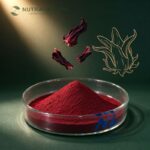
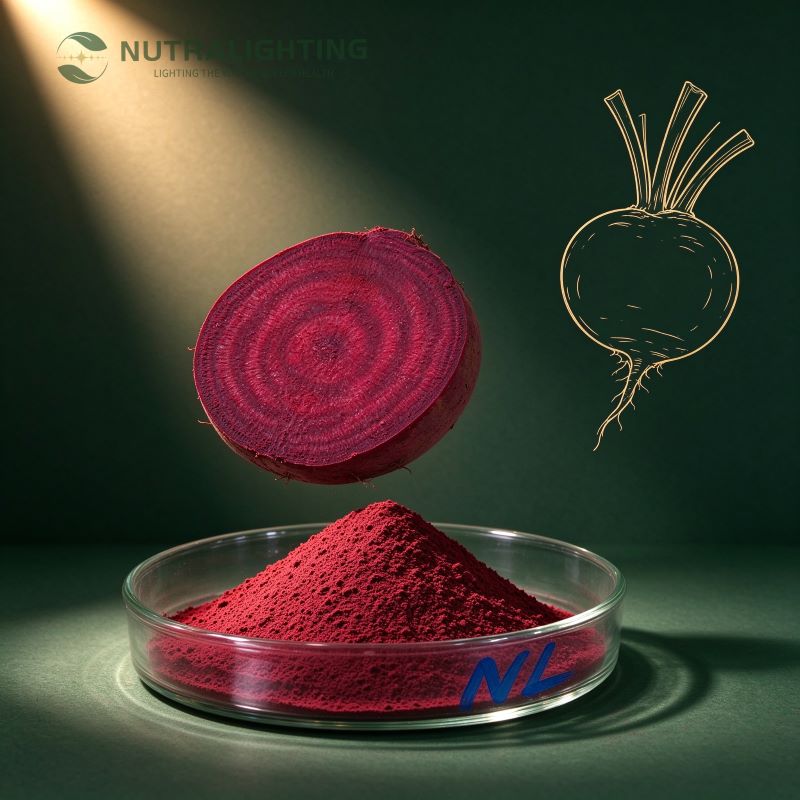
| Appearance | Reddish-purple fine powder |
| Solubility | Soluble in water |
| Main Active Components | Dietary inorganic nitrate (NO3-), Betalains (betanin, vulgaxanthin), Betaine (trimethylglycine) |
| Key Specifications | Product Line A: Nitrate >= 2.0%; Product Line B: Betalains (as Betanin) >= 5.0%; Betaine >= 1.0% (both lines) |
| Target Markets | North America, Europe, Asia-Pacific – Cardiovascular Support, Exercise Performance, Natural Colour segments |
| Core Application Areas | Dietary supplements; Functional beverages; Sports nutrition; Natural colourants; Functional foods |
Standard Specifications (COA)
The values below are typical specifications for our two product lines. Actual values for each batch are reported in the accompanying COA. Custom specification ranges are available for qualifying orders.
| Test Item | Product Line A (Nitrate-Standardized) |
| Dietary Inorganic Nitrate (NO3-) | >=2.0% (spectrophotometric) |
| Betanin (HPLC-DAD) | >=3.0% |
| Total Betalains (as Betanin) | >=5.0% |
| Betaine (Trimethylglycine) | >=1.0% |
| Product Line B (Betalain-Standardized) | – |
| Betanin (HPLC-DAD) | >=5.0% |
| Total Betalains (as Betanin) | >=8.0% |
| Dietary Inorganic Nitrate (NO3-) | Declared (typical 0.5%-1.5%) |
| Betaine (Trimethylglycine) | >=1.0% |
| Loss on Drying | <=7.0% |
| Total Ash | <=10.0% |
| Lead (Pb) | <=1.0 mg/kg |
| Arsenic (As) | <=2.0 mg/kg |
| Cadmium (Cd) | <=0.5 mg/kg |
| Mercury (Hg) | <=0.1 mg/kg |
| Uranium-238 (EU-bound products only) | <=0.2 ug/kg (per EU Regulation 2023/923) |
| Pesticide Residues | Complies with USP <561> |
| Aflatoxin B1 | <=5.0 ug/kg |
| Total Aflatoxins | <=10.0 ug/kg |
| Microbiological (TAMC/TYMC/E.coli/Salmonella) | Complies with USP <61> and <62> |
Botanical Source Description
This product is derived from the roots of Beta vulgaris L. (Family: Amaranthaceae), commonly known as sugar beet or garden beet. B. vulgaris is a biennial herb native to the coastal regions of Southern and Western Europe, and has been cultivated for over 2,000 years for its sucrose-rich taproot. The modern sugar beet industry traces its origins to 18th-century Prussia, where it was selectively bred for high sucrose content. China is now the world’s largest sugar beet producer, with approximately 800,000 hectares under cultivation as of 2025. The primary growing regions are Inner Mongolia (approximately 40% of national output, centred in Hulunbuir and Bayannur), and Heilongjiang (approximately 15%, centred in the Sanjiang Plain). These northern growing regions share a common climate profile – cold winters, warm summers with abundant sunshine (2,800-3,200 hours annually), and significant diurnal temperature variation (often 15-20 deg.C between day and night) – that promotes the accumulation of dietary nitrate, betalains, and sucrose in the beet root. Our raw material supply chain sources exclusively from GAP-compliant cultivation cooperatives in these recognised sugar-beet-growing regions, with seasonal harvest typically occurring in September-October after the first light frosts, which concentrate nitrate and sugar content in the root tissue.
The phytochemical profile of beet root is strongly influenced by cultivar, growing conditions, and post-harvest processing. Sugar beet cultivars (B. vulgaris var. altissima) are selected specifically for high nitrate and sucrose content, and these same cultivars also accumulate significant levels of betalain pigments – making them ideal dual-purpose raw material for both nitrate-standardised and betalain-standardised extracts. The nitrate content of beet root typically ranges from 500-2,500 mg/kg dry weight depending on cultivar and growing conditions, while betalain content (expressed as betanin) typically ranges from 50-500 mg/kg dry weight. Our procurement protocol selects for raw material with nitrate content >=5,000 mg/kg and betalain content >=200 mg/kg (dry basis) to ensure that the final extract meets the target standardisation levels with acceptable extraction yields. All incoming raw material lots are authenticated through macroscopic identification, microscopy, and HPLC fingerprinting before acceptance into inventory.
Core Efficacy
The following efficacy summary is based on published scientific literature and is provided for technical reference. End-product health claims should be validated against the regulations of the target market.
The primary pharmacological activities of Beet Root Extract are mediated through two distinct but complementary mechanisms. The dietary inorganic nitrate fraction is reduced to nitrite (NO2-) by oral bacteria and then to nitric oxide (NO) in the acidic environment of the stomach and in hypoxic vascular tissue. This nitrate-nitrite-NO pathway is independent of the L-arginine-NO synthase pathway and remains functional even when endothelial NO synthase (eNOS) activity is impaired – making it particularly valuable for cardiovascular applications in populations with endothelial dysfunction. Clinical trials have consistently demonstrated that beet root supplementation reduces systolic blood pressure by 4-10 mmHg in hypertensive and pre-hypertensive individuals (Lundberg et al., Hypertension, 2008; 52(4): 734-740; Webb et al., Journal of Nutrition, 2010; 140(5): 858-864). The same pathway also improves exercise economy and capacity: de Souza et al. (Applied Physiology, Nutrition and Metabolism, 2016) demonstrated that 250 ml of beet root juice daily for 9 weeks significantly reduced systolic blood pressure and improved exercise tolerance in healthy adults, while Jones et al. (Journal of Applied Physiology, 2014) characterised the dose-response relationship, showing that 70-140 ml of concentrated beet root juice (providing ~400-800 mg inorganic nitrate) produced significant improvements in time-to-exhaustion and exercise economy in trained cyclists. The EFSA-authorised health claim – “increased availability of nitric oxide in blood contributes to healthy blood pressure already within the normal range” – is directly supported by this body of evidence. Beyond cardiovascular effects, the betalain fraction (betanin and vulgaxanthin) exhibits potent antioxidant and anti-inflammatory activity in vitro, with betanin demonstrating IC50 values in the low micromolar range for DPPH and ABTS radical scavenging. Betaine (trimethylglycine), the third major active constituent, supports hepatic lipid metabolism and homocysteine reduction through its role as a methyl donor in the one-carbon metabolism pathway. Clinical evidence for betaine supplementation includes improvements in athletic performance (Power et al., Journal of the International Society of Sports Nutrition, 2010) and reductions in plasma homocysteine (Morton et al., Journal of Nutrition, 2013).
Regulatory & Regional Access Status
The regulatory information below is based on publicly available data. Always verify current requirements with your target market regulator before product launch.
Note: Regulatory status can change. Confirm with the relevant authority or a regulatory consultant prior to export.
| Region / Country | Regulatory Status | Key Notes |
| USA (FDA) | GRAS as Food Ingredient; Color Additive Exempt (21 CFR 73.260) | Beet root and beet juice are recognised as GRAS food ingredients. Beetroot Red (E162) is a permanently listed colour additive exempt from certification under 21 CFR 73.260, applicable to foods generally (except USDA-jurisdiction meats/poultry, infant formula, and products with standards of identity). Dietary supplements containing beet root extract are marketed under DSHEA. No FDA-approved drug indications exist for beet root extract. Structure/function claims are permitted under 21 CFR 101.93 with mandatory disclaimer. Inorganic nitrate from beet root is not considered a drug substance – it is a naturally occurring dietary component of the whole root. |
| EU (EFSA/European Commission) | Authorised Health Claim (Regulation 432/2012) | EFSA authorised a health claim for beetroot extract in 2011 (EFSA Journal 2011; 9(7): 2236) under Regulation 1924/2006 – the first botanical ingredient to receive an authorised structure/function claim in the EU. The authorised claim is: “Increased availability of nitric oxide in blood contributes to healthy blood pressure already within the normal range.” The claim applies to beetroot extract as a source of dietary nitrate. Beetroot Red (E162) is also authorised as a food colour additive under Regulation (EC) No 1333/2008. EU-bound products must comply with Regulation 2023/923 (uranium-238 limits in certain foods), which applies to beet root-derived products. |
| China (NHC/NMPA) | Food Ingredient / Functional Food Raw Material | Beet root is approved as a food ingredient in China (GB 2760). Red beet (红甜菜) is listed in some provincial health food raw material catalogs. China is the world’s largest sugar beet producer, and domestic beet root extract faces no import restrictions for export-oriented production. For domestic health food registration, beet root extract may qualify as a raw material for functional foods claiming blood pressure support. |
Application Directions & Recommended Dosage
| Application | Recommended Dosage | Dosage Forms | Notes |
| Oral Powder / Soluble Drink | As per specification | Stick packs, sachets, jars | Nitrate-standardised extract disperses readily in water. The natural beet flavour may require masking in sweetened formats. Betalain-standardised extract provides natural red colour – ideal for clean-label positioning. Compatible with citric acid, malic acid, and fruit flavours. |
| Tablets / Capsules | As per specification | Tablets, hard capsules | Typical serving: 300-600 mg extract per day (nitrate-standardised) or 500-1,000 mg (betalain-standardised). At 2.0% nitrate grade, a 500 mg capsule delivers ~10 mg inorganic nitrate. For blood-pressure positioning, align with the EFSA claim protocol of 300-600 mg daily. Compatible with hawthorn, garlic, and coenzyme Q10 for cardiovascular blends. |
| Functional Beverages | As per specification | Bottled beverages, juice concentrates, ready-to-mix powders | Nitrate-standardised extract: 250-500 mg/L provides clinically relevant nitrate levels. Betalain-standardised extract: 50-200 ppm provides natural red colour. pH stability critical – betalains degrade above pH 5.0. Consider acidified beverage formats (pH 3.0-4.0) for colour stability. Compatible with L-theanine, GABA, and taurine for calming-focus blends. |
| Sports Nutrition | As per specification | Pre-workout powders, gels, capsules | Single acute dose of 400-800 mg inorganic nitrate (~300-600 mg extract) taken 2-3 hours pre-exercise. Compatible with creatine, beta-alanine, and citrulline. For chronic-use positioning, recommend daily supplementation (3-15 days) for cumulative exercise-economy benefits. |
Recommended Daily Dosage Reference
- Cardiovascular / blood pressure support: 300-600 mg standardised beet root extract per day (providing ~400-800 mg inorganic nitrate), taken once daily or divided into two doses; aligned with the EFSA-authorised health claim protocol
- Exercise performance: 400-800 mg inorganic nitrate equivalent (approx. 300-600 mg extract), taken 2-3 hours before exercise; single acute dose is effective, but chronic daily supplementation (3-15 days) produces greater and more sustained effects
- Natural colour application: 50-200 ppm betalain-standardised extract in beverage or confectionery formats; colour intensity is pH-dependent (deep red at pH 3.0-4.0, fading to orange-brown at pH >5.0)
- Formulation note: For nitrate-standardised products, the dose should be calculated based on actual inorganic nitrate content (not total extract weight) to ensure consistency with clinical protocols
Other Precautions
- Keep containers tightly closed after opening -the extract is hygroscopic and betalains degrade under humid, light-exposed, and alkaline conditions
- Avoid prolonged exposure to light, elevated temperatures, and alkaline environments during transit and storage
- For nitrate-standardised products: Inorganic nitrate is stable in acidic to neutral pH (3.0-7.0). Avoid high-temperature processing (>80 deg.C for extended periods) to minimise nitrate-to-nitrite conversion during manufacturing.
- For betalain-standardised products: Betalains are pH-sensitive -deep red at pH 3.0-4.0, fading to orange-brown above pH 5.0. Formulate in acidic environments (pH 3.0-4.0) for optimal colour retention. Consider ascorbic acid or citric acid as colour stabilisers.
- For capsules and tablets: The extract is compatible with common excipients. Evaluate flowability and compressibility at your target inclusion level. Nitrate-standardised grades may require lubrication adjustment due to hygroscopicity.
- For beverage formulations: Pre-disperse in a small volume of warm water or acidified base before incorporating into the main batch. For nitrate-standardised products, calculate the final nitrate content to ensure it aligns with clinical dosing (400-800 mg inorganic nitrate per serving).
- BEET ROOT IS RECOGNISED AS GRAS AS A FOOD INGREDIENT IN THE USA. Beetroot Red (E162) is a permanently listed colour additive exempt from certification under 21 CFR 73.260. Dietary supplements containing beet root extract are marketed under DSHEA. No FDA-approved drug indications exist for beet root extract. The dietary inorganic nitrate in beet root is a naturally occurring food constituent and is not classified as a drug substance by the FDA.
- EFSA AUTHORISED HEALTH CLAIM (EU): The claim “increased availability of nitric oxide in blood contributes to healthy blood pressure already within the normal range” is authorised under Regulation 432/2012. This claim may be used on EU-market products containing beetroot extract as a source of dietary nitrate. Claims outside the authorised wording require separate EFSA authorisation.
- EU URANIUM-238 COMPLIANCE: Regulation 2023/923 establishes maximum levels for uranium-238 in certain foods, including beet root and beet root-derived products. We supply EU-bound products with uranium-238 analytical data (typically well below the 0.2 ug/kg limit). Verify the applicable limit for your specific product category before marketing in the EU.
- KIDNEY STONES: Beet root is high in oxalate. Individuals with a history of calcium-oxalate kidney stones should limit beet root intake and consult a healthcare provider before using concentrated beet root extract supplements.
- DRUG INTERACTIONS: Dietary nitrate from beet root may potentiate the effects of prescription antihypertensive medications, including phosphodiesterase-5 inhibitors (e.g., sildenafil). Individuals taking blood-pressure medications or nitrates should consult a healthcare provider before using concentrated beet root extract supplements.
Why Choose Nutraligting Beet Root Extract?
You want to position your product with the EFSA-authorised health claim “increased availability of nitric oxide in blood contributes to healthy blood pressure already within the normal range,” but most beet root suppliers ship extracts with undeclared or inconsistent nitrate content -making it impossible to guarantee your product delivers the clinically effective dose. We supply two distinct product lines (nitrate-standardised and betalain-standardised), each with batch-specific nitrate content declared on the COA, so your regulatory team can confidently make the EFSA-authorised claim in the EU and the DSHEA-compliant structure/function claim in the US.
You need a natural-red colour ingredient that won’t fade during shelf life, but most betalain-standardised extracts degrade rapidly when exposed to light, heat, or alkaline pH -and many suppliers simply ship the powder without stability data. Our betalain-standardised extract is produced under controlled acidic conditions (pH 3.0-4.0) and packaged in UV-protective, nitrogen-flushed aluminum bags, with full stability data included in every technical dossier. We also provide pH-stability guidance for your specific formulation format, so your product colour stays vibrant from manufacture to consumer.
You face the EU uranium-238 compliance requirement (Regulation 2023/923), but most suppliers don’t test for it -leaving your compliance team unable to verify market access before launch. We proactively test and declare uranium-238 content on every EU-bound batch (typically well below the 0.2 ug/kg limit), and we include EU-specific compliance documentation with every order, so your regulatory team can launch in the EU without last-minute testing delays.
You need competitive pricing rooted in stable domestic supply, but most beet root extract suppliers source from European or North American sugar beet with seasonal availability constraints and pricing volatility driven by currency fluctuations and transport costs. China is the world’s largest sugar beet producer (approximately 800,000 hectares, with Inner Mongolia as the dominant regions), giving us direct access to a stable, domestically-controlled supply at structurally lower cost -a long-term competitive advantage that is difficult for competitors relying on imported raw material to replicate.
You need flexible specification options for different product positioning, but most suppliers offer only a single fixed grade with no room for adjustment. Whether you need a nitrate-standardised grade for cardiovascular or sports-nutrition positioning, a betalain-standardised grade for natural-colour applications, a dual-standardised grade, or a custom extraction ratio for your specific formulation, we accommodate the changes -with clear communication on lead times and minimum order quantities before you commit.
You need a partner who understands the full regulatory landscape for beet root across multiple markets -from the EFSA-authorised health claim and EU Regulation 2023/923 uranium-238 limits to the 21 CFR 73.260 colour-additive exemption and DSHEA compliance in the US. We provide a complete technical dossier with every order – TDS, COA, EFSA health-claim authorisation reference, 21 CFR 73.260 colour-additive documentation, EU uranium-238 compliance data, and stability data – so your regulatory and QA teams have everything needed for multi-market product launches in one package.
You want formulation guidance beyond the raw material transaction, but most beet root suppliers simply ship the powder and leave you to solve colour stability and taste challenges on your own. Our technical team provides practical guidance on pH management for betalain colour stability (optimal pH 3.0-4.0), flavour masking strategies for the characteristic earthy-beet taste, capsule and tablet compatibility, and synergistic ingredient pairing -beet root nitrate with citrulline for enhanced NO production, betalain extract with vitamin C for synergistic antioxidant positioning, or beet root with hawthorn and garlic for comprehensive cardiovascular blends. We help you think through the full product development journey, not just the ingredient supply.
Appendix: References
(The following references are provided for technical reference. Some are open access and can be accessed via PubMed, PMC, or the journal websites.)
[1] EFSA Panel on Dietetic Products, Nutrition and Allergies (NDA). Scientific Opinion on the substantiation of health claims related to beetroot and beetroot juice and blood pressure. EFSA Journal, 2011; 9(7): 2236. – Authorised health claim: “increased availability of nitric oxide in blood contributes to healthy blood pressure already within the normal range.”
[2] Lundberg JO. et al., Hypertension, 2008; 52(4): 734-740. – Dietary nitrate from beetroot juice acutely lowers blood pressure in humans.
[3] Webb AJ. et al., Journal of Nutrition, 2010; 140(5): 858-864. – dose-response of dietary nitrate from beetroot juice on blood pressure in healthy volunteers.
[4] de Souza RJ. et al., Applied Physiology, Nutrition and Metabolism, 2016. – 250 ml beetroot juice/day for 9 weeks reduces systolic BP and improves exercise tolerance.
[5] Jones AM. et al., Journal of Applied Physiology, 2014. – Dose-response relationships between beetroot juice volume and physiological effects on exercise.
[6] Power KM. et al., Journal of the International Society of Sports Nutrition, 2010. – Betaine supplementation improves anaerobic performance.
[7] Morton JP. et al., Journal of Nutrition, 2013. – Betaine supplementation reduces plasma homocysteine.
[8] FDA 21 CFR 73.260. Colour additive exempt from certification: beetroot red (food generally); beet juice (vegetable juice).
[9] EU Regulation 2023/923. Maximum levels for uranium-238 in certain foodstuffs, including beet root-derived products.
[10] Chinese Pharmacopoeia Commission. Pharmacopoeia of the People’s Republic of China, 2020 Edition. – Beta vulgaris (Beet Root) monograph.
Frequently Asked Questions
The shelf life is 24 months from the production date when stored in a cool, dry place away from direct sunlight and moisture.
Yes. Our Beet Root Extract is 100% plant-derived, gluten-free, and vegan compliant, making it suitable for all clean-label applications.
Typical inclusion levels range from 0.1% to 2% depending on the intended color intensity and application. For supplement use, doses of 300-600 mg per serving are common. Please consult your formulation specialist for specific guidance.
Yes. Sample quantities of 1 kg are available for quality evaluation. Sample fees are refundable upon placement of a bulk order.
Packaging & Shipping
Standard Packaging
- 1 kg / 5 kg / 25 kg aluminum foil bags with double inner liner.
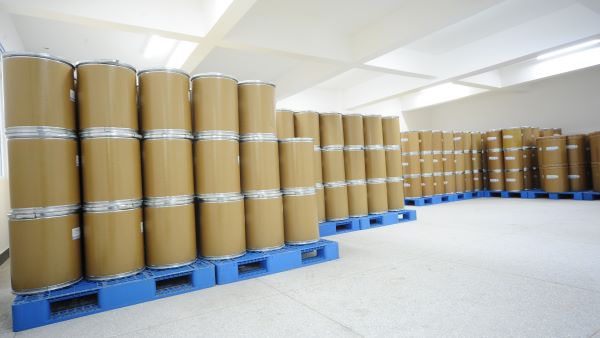
- 25 kg fiber drums with poly-lined interior.
- Custom packaging available per buyer requirement.
Shipping Terms
- Air freight (express or charter) for urgent and sample orders.
- Sea freight (FCL/LCL) for bulk shipments.
- Ships from Shanghai/Ningbo, China to worldwide destinations.
- Lead time: 7–15 working days after order confirmation.
Shelf Life & Storage
- Store in a cool, dry place below 25°C.
- Keep container tightly sealed when not in use.
- Protect from direct sunlight and high humidity.
- Avoid storage near strong odors or chemically active substances.