Product Description
Nutraligting supplies a premium glucoraphanin-rich broccoli extract from domestically cultivated Brassica oleracea var. italica seedlings, sourced from organized planting bases in Shandong, Hebei, and Inner Mongolia, China. Our standard product delivers 10%-13% glucoraphanin by HPLC and is designed for formulators building antioxidant, cellular health, and detoxification-support products in the dietary supplement and functional food segments.
Product Description
Glucoraphanin is the stable precursor to sulforaphane – a bioactive isothiocyanate formed when glucoraphanin encounters the enzyme myrosinase. This conversion happens naturally in the gastrointestinal tract. Broccoli as a food ingredient holds GRAS status in the United States (21 CFR 184.1631), and glucoraphanin-rich extracts derived from it are commonly marketed as dietary supplement ingredients under DSHEA.
Our manufacturing process uses a low-temperature aqueous/ethanol extraction followed by reduced-pressure concentration and spray drying (with freeze-drying available for specialty grades). The process is designed to preserve glucoraphanin integrity and, where specified, retain myrosinase activity. We offer standard glucoraphanin grades at 10%, 12%, and 13%, with custom specification ranges available for high-volume contracts.
Quality control follows USP/EP standards and Nutraligting internal specifications. Every production batch receives a Certificate of Analysis covering glucoraphanin content, myrosinase activity (sulforaphane-inducing capacity), loss on drying, total ash, heavy metals (Pb, As, Cd, Hg), pesticide residues per USP <561>, aflatoxins, and microbiological parameters. Organic-certified material, KOSHER, HALAL, and Non-GMO certifications are available on request. We maintain year-round raw material inventory from our contracted domestic growers to ensure consistent supply regardless of seasonal harvest cycles.
Basic Information
| Item | Content |
| Extract Name | Broccoli Extract |
| Botanical Name | Brassica oleracea var. italica |
| Part Used | Sprouts/Greens |
| English Common Name | Broccoli Extract, Brassica oleracea Extract |
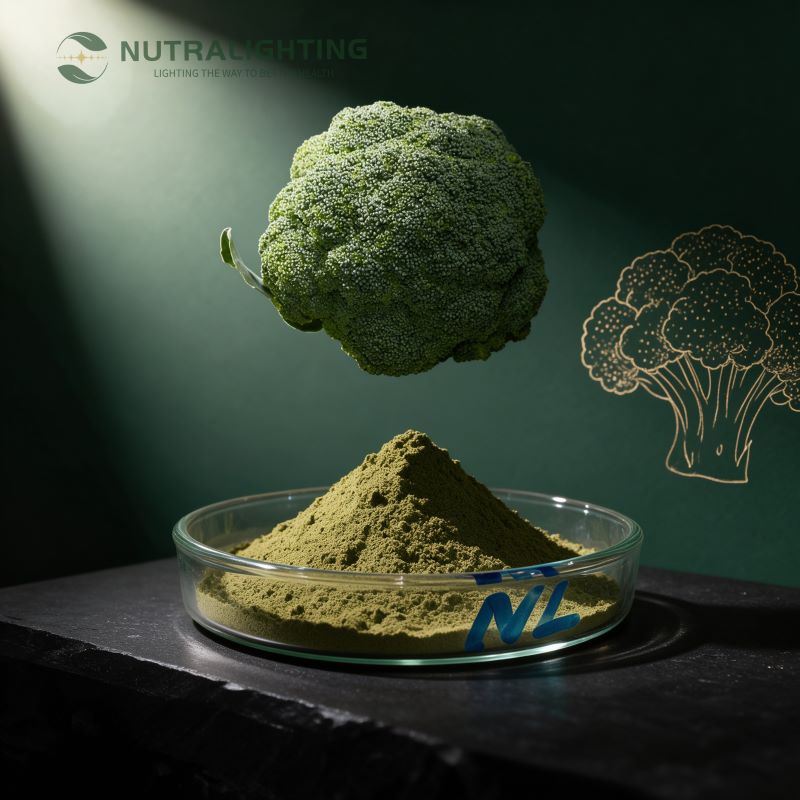
| Appearance | Fine powder, green to olive-green |
| Odor | Characteristic, mild |
| Mesh Size | 80-100 mesh |
| Solubility | Soluble in water and ethanol |
| Main Active Components | Glucoraphanin, Sulforaphane (precursor-dependent) |
| Key Specifications | Glucoraphanin 10%-13% (HPLC); Myrosinase activity retained (standard grade) |
| Target Markets | North America, Europe – Antioxidant & Cellular Health segment |
| Core Application Areas | Dietary supplement capsules and tablets Functional beverages and powdered drinks Herbal and nutraceutical formulations Wellness and immune-support products Health food and organic product lines |
Standard Specifications (COA)
The values below are typical specifications for our standard glucoraphanin 10%-13% grade. Actual values for each batch are reported in the accompanying COA. Custom specification ranges are available for qualifying orders.
| Test Item | Standard |
| Glucoraphanin (HPLC) | 10%-13% (grades available: 10%, 12%, 13%) |
| Sulforaphane-Inducing Capacity | ≥80% (measured by myrosinase activity assay) |
| Loss on Drying | ≤5.0% |
| Total Ash | ≤6.0% |
| Lead (Pb) | ≤1.0 mg/kg |
| Arsenic (As) | ≤2.0 mg/kg |
| Cadmium (Cd) | ≤0.5 mg/kg |
| Mercury (Hg) | ≤0.1 mg/kg |
| Pesticide Residues (Organochlorine/Organophosphorus) | Complies with USP <561> |
| Aflatoxin B1 | ≤5.0 μg/kg |
| Total Aflatoxins | ≤10.0 μg/kg |
| Total Microbial Count (TAMC) | ≤1×10⁴ CFU/g |
| Yeasts and Molds (TYMC) | ≤1×10² CFU/g |
| E. coli / Salmonella | Negative in 1g |
| Physical Appearance | Fine green-yellow powder, free-flowing |
Botanical Source Description
Broccoli Extract product is derived from the young seedlings (3-5 days post-germination) of Brassica oleracea var. italica (Family: Brassicaceae), cultivated in China’s primary broccoli growing regions – Shandong, Hebei, and Inner Mongolia. Our raw material comes from organized planting bases that follow Good Agricultural Practices (GAP) standards to ensure consistent quality and safety. Broccoli sprouts are chosen over mature broccoli heads because they concentrate glucoraphanin at levels 10 to 100 times higher – making them the most efficient botanical source for high-potency extracts. Glucoraphanin is a sulfur-containing glucosinolate that serves as the direct precursor to sulforaphane, a bioactive isothiocyanate produced when glucoraphanin is hydrolyzed by the enzyme myrosinase. Myrosinase is either co-extracted and retained in our standard product, or supplied separately as a microencapsulated addition. Cruciferous vegetables including broccoli have been recognized by the World Health Organization as among the top vegetable groups with documented cancer-risk-reduction associations.
Core Efficacy
The following efficacy summary is based on published scientific literature and is provided for technical reference. End-product health claims should be validated against the regulations of the target market.
The primary bioactive pathway associated with broccoli sprout extract is the Keap1-Nrf2-ARE signaling cascade. Glucoraphanin is converted to sulforaphane by myrosinase, and sulforaphane activates Nrf2 – a master transcription factor that upregulates a battery of phase II detoxification enzymes including glutathione S-transferase (GST), NAD(P)H quinone oxidoreductase 1 (NQO1), and gamma-glutamylcysteine ligase (GCLC). In a 12-week randomized controlled trial published in Clinical Cancer Research (Xu et al., 2014; 20: 5192-5202), adults consuming 40 μmol/day of sulforaphane from broccoli sprout extract showed a 61% increase in elimination of the airborne carcinogen benzene and a 23% increase in acrolein elimination compared to placebo. A separate Phase II study (Mens Health, 2014; n=20) found that men with recurrent prostate cancer who supplemented with sulforaphane-rich broccoli sprout extract experienced a significant prolongation of PSA doubling time versus baseline. In vitro, sulforaphane has been shown to induce apoptosis in colon cancer cell lines (HCT116) at an IC50 of 8.5 μM through ROS-mediated mitochondrial pathways (Zhang et al., Cancer Research, 2006; 66: 4281-4291). Preclinical skin care studies (Hensel et al., Planta Medica, 2007) demonstrate that topical and systemic broccoli extract provides protection against UV-induced DNA damage, supporting its use in both oral and topical formulations.
Regulatory & Regional Access Status
The regulatory information below is based on publicly available data. Always verify current requirements with your target market regulator before product launch.
Note: Regulatory status can change. Confirm with the relevant authority or a regulatory consultant prior to export.
| Region / Country | Regulatory Status | Key Notes |
| USA (FDA) | Dietary Supplement / GRAS | Broccoli (Brassica oleracea var. italica) is GRAS as a food ingredient (21 CFR 184.1631). Broccoli sprout extracts containing glucoraphanin are commonly marketed as dietary supplement ingredients under DSHEA. Blue California received GRAS confirmation for its broccoli seed water extract (GRAS Notice No. GRN 001028, 2023). Sulforaphane is a naturally occurring compound in broccoli but is not itself a GRAS-approved substance or an FDA-approved drug. Structure/function claims on supplement labels are permitted under 21 CFR 101.93, provided the mandatory disclaimer is included: “This statement has not been evaluated by the Food and Drug Administration. This product is not intended to diagnose, treat, cure, or prevent any disease.” It is the brand owner’s responsibility to ensure compliant labeling. |
| EU (EFSA) | Food Supplement / Traditional Food | Broccoli is a traditional food in the EU and does not require Novel Food authorization under Regulation (EU) 2015/2283. Glucoraphanin-rich broccoli sprout extract is permitted as a food supplement ingredient across member states. EFSA has not authorized a specific health claim for glucoraphanin or sulforaphane. Products must comply with Directive 2002/46/EC (food supplements) and Regulation 1924/2006 (nutrition and health claims). |
| China (NHC/NMPA) | Health Food Raw Material | Broccoli is listed in China’s Health Food Raw Material Directory. Broccoli sprout extract is approved for use in health foods with antioxidant and immunity-support functions. Export compliance should follow target market regulations. |
Application Directions & Recommended Dosage
Recommended Daily Dosage Reference
- General antioxidant support: 100-300 mg standardized broccoli sprout extract per day (delivering approximately 10-39 mg glucoraphanin at our 10%-13% grade), taken with meals
- Cellular health / detoxification support: Align with clinical protocols -the Xu et al. (2014) RCT used the equivalent of 40 μmol sulforaphane/day; our extract provides this range at the 12%-13% glucoraphanin grade when dosed at approximately 250-350 mg/day with myrosinase co-formulation
- Personal care / topical: 0.1-2.0% (w/w) in emulsion systems; evaluate photostability in final formulation
- Formulation note: Glucoraphanin is water-soluble and stable at pH 3.5-6.0. Myrosinase activity is heat-sensitive above 60°C -for hot-filled or thermally processed products, recommend microencapsulated myrosinase added post-processing to preserve sulforaphane-generating capacity
| Application | Recommended Dosage | Dosage Forms | Notes |
| Oral Powder / Soluble Drink | As per specification | Stick packs, sachets, jars | Excellent solubility in warm water. Can be combined with green tea extract, turmeric, or vitamin C for synergistic antioxidant blends. Specify myrosinase inclusion for sulforaphane-release products. |
| Tablets / Capsules | As per specification | Tablets, hard capsules | Typical serving: 200-400 mg extract per capsule. At 10% glucoraphanin grade this delivers ~20 mg glucoraphanin per serving. Recommend myrosinase co-formulation for products making sulforaphane-related structure/function claims. |
| Liquid Supplements / Functional Beverages | As per specification | Glass bottles, PET bottles | Water-soluble extract disperses readily. Stable in acidic to neutral pH range (3.5-6.0). For hot-fill processes, add myrosinase after cooling or use heat-stable microencapsulated form. |
| Skin Care / Cosmetics | 0.1-2.0% (w/w) | Creams, serums, masks, lotions | Preclinical data supports UV-protective and anti-glycation benefits. Compatible with oil-in-water and water-in-oil emulsion systems. Conduct photostability testing in final formulation. |
Other Precautions
- Keep containers tightly closed after opening -glucoraphanin absorbs moisture from humid air, which can reduce potency and cause caking
- Use within the shelf life stated on the COA; proper storage conditions are essential to maintain glucoraphanin and myrosinase activity
- For liquid formulations: Pre-disperse in a small volume of warm water before incorporating into the main batch; stable at pH 3.5-6.0
- For heat-processed products (>60°C): Myrosinase is thermolabile -use microencapsulated myrosinase added post-processing, or formulate as a two-part system (extract + myrosinase capsule) to preserve sulforaphane-generating capacity
- For topical products: Evaluate compatibility and photostability in your final emulsion system before scale-up
- Broccoli is GRAS as a food ingredient in the US (21 CFR 184.1631). Our extract is manufactured from GRAS-listed raw material
- Occasional mild GI discomfort (gas, bloating) has been reported at high doses; recommend starting at the lower end of the dosage range
- Pregnant or breastfeeding individuals should consult a healthcare provider before using concentrated broccoli sprout extract supplements -although broccoli is a common food, safety data for high-dose extracts in these populations is limited
- Individuals with thyroid conditions should be aware that cruciferous vegetables contain goitrogens; however, typical supplement doses are unlikely to affect thyroid function in individuals with adequate iodine intake
Why Choose Nutraligting Broccoli Extract?
Nutraligting aims to become a trusted global partner for broccoli sprout extract in the antioxidant and cellular health segment. Below are the reasons our B2B customers choose us:
You want clinically credible antioxidant and cellular health claims -but most glucoraphanin extracts on the market don’t include myrosinase, meaning your product can’t reliably convert the precursor to bioactive sulforaphane. Our standard product includes entrapped myrosinase, so your formula actually delivers sulforaphane the way the clinical trials did. That means you can make structure/function claims with real scientific backing, not just hope the conversion happens in the gut.
You need consistent batch-to-batch quality, but many suppliers only test glucoraphanin content on their COA -leaving you guessing whether each shipment will perform the same way in your finished product. We certify both glucoraphanin content AND myrosinase activity (sulforaphane-inducing capacity ≥80%) on every COA, so you know exactly what bioactive potential each batch delivers.
You want clean-label positioning for your brand, but most broccoli extract suppliers use synthetic anti-caking agents or carrier powders that complicate your label. Our extract is produced with only food-grade water and ethanol -no silicon dioxide, magnesium stearate, or unnecessary excipients. The powder is 100% broccoli sprout extract, which meets the growing clean-label demand in both US and EU markets.
You need a reliable supplier who can handle volume orders without quality compromise, but many plant extract companies are trading houses with no control over their supply chain. Nutraligting works directly with domestic broccoli sprout growers in Shandong, Hebei, and Inner Mongolia, and operates our own extraction facility -giving us full visibility into raw material quality, consistent supply throughout the year, and competitive pricing without middlemen markups.
You face regulatory complexity when launching a new product in multiple markets, and your legal team shouldn’t have to hunt for GRAS documentation or decipher DSHEA compliance requirements. We provide a complete regulatory dossier with every order -TDS, COA, GRAS compliance notes, stability data, and myrosinase activity reports – so your regulatory team has everything needed for US DSHEA compliance and EU food supplement registration in one package.
You need flexible customization for your specific formulation, but many suppliers offer only fixed specifications with no room for adjustment. Whether you need a different glucoraphanin concentration, a custom extraction ratio, microencapsulated myrosinase for heat-processed products, or private-label packaging with your branding, we accommodate the changes -with clear communication on lead times and minimum order quantities before you commit.
You want a partner who understands the technical challenges of broccoli extract -the moisture sensitivity, the myrosinase heat instability, the glucoraphanin solubility in different pH ranges – and can help you avoid costly formulation mistakes. Our technical team provides application support beyond just shipping product: formulation guidance for powders, capsules, beverages, and topical systems, plus practical advice on how to handle the material during your manufacturing process.
Appendix: References
(The following references are provided for technical reference. Some are open access and can be accessed via PubMed, PMC, or the journal websites.)
[1] Xu X. et al., Clinical Cancer Research, 2014; 20: 5192-5202. – 12-week RCT: broccoli sprout extract enhanced elimination of airborne carcinogens (benzene, acrolein) in 291 adults.
[2] Zhang Y. et al., Cancer Research, 2006; 66: 4281-4291. – Sulforaphane induces apoptosis in colon cancer cells (HCT116) via ROS-mediated mitochondrial pathway.
[3] Singh S.P. et al., Carcinogenesis, 2016; 37: 1025-1034. – Sulforaphane chemoprevention: Nrf2 pathway activation and phase II enzyme induction.
[4] Hensel A. et al., Planta Medica, 2007; 73: 1141-1145. – Broccoli extract protection against UVA-induced skin damage in human dermal fibroblasts.
[5] FDA 21 CFR 184.1631. Broccoli (Brassica oleracea var. italica) – GRAS notice.
[6] FDA 21 CFR 101.93. Structure/function claims on dietary supplement labels – requirements and mandatory disclaimer.
[7] GRAS Notice No. GRN 001028. Blue California broccoli seed water extract – GRAS confirmation (2023).
Frequently Asked Questions
The primary bioactive compound is glucoraphanin, a precursor to sulforaphane. When the enzyme myrosinase is present, glucoraphanin converts to sulforaphane, which is responsible for many of the extract's health-promoting properties.
Yes. We offer Broccoli Extract that are fully suitable for vegan and vegetarian formulations.
Absolutely. A Certificate of Analysis (COA) and third-party testing reports are available for every batch upon request.
Standard lead time is 15-25 working days after order confirmation and payment receipt, depending on order quantity and packaging requirements.
Yes. We provide OEM/ODM services including custom standardization levels, private labeling, and blending support to meet your specific product requirements.
Packaging & Shipping
Standard Packaging
- Standard packaging: 1 kg/aluminum foil bag + 2 bags per carton;
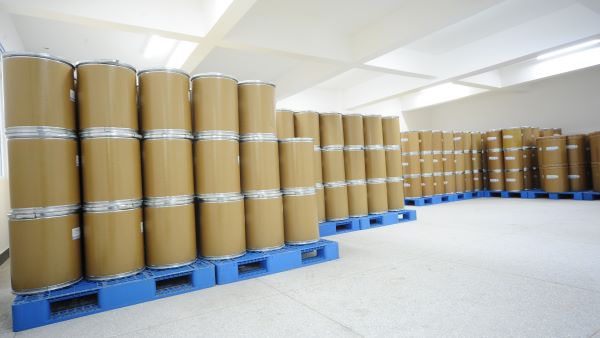
- 25 kg/drum (paper drum with two inner plastic bags);
- Custom packaging available upon request.
Shipping Terms
- Shipped via express (DHL, FedEx, UPS), air freight, or sea freight depending on order quantity and destination.
- FOB Shanghai/Ningbo ports.
- Sample orders shipped within 3–5 business days.
Shelf Life & Storage
- Store in a cool, dry place away from direct sunlight and moisture.
- Keep containers tightly sealed when not in use.
- Protect from strong odors and humidity to maintain product integrity.