Product Description
Our Celery Seed Extract product is available in two phthalide standardisation levels – 40% and 85% – covering both general wellness and targeted cardiovascular support formulations.
Basic Information
| Item | Content |
| Botanical Name | Apium graveolens L. (Apiaceae) |
| Part Used | Dried seed |
| Standardised To | Total Phthalides 40% / 85% (HPLC) |
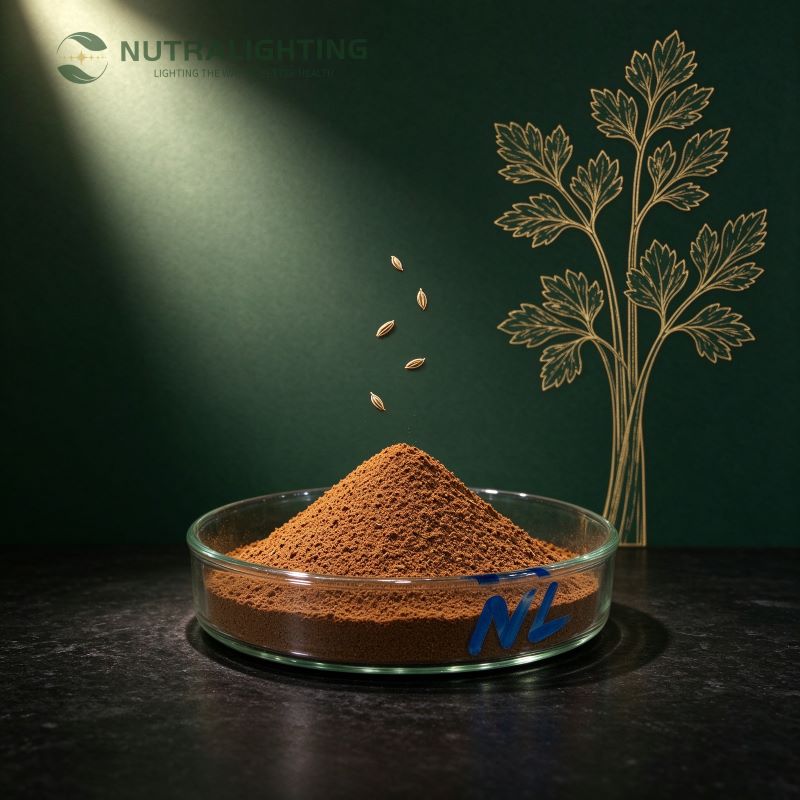
| Appearance | Light beige to tan powder |
| Odour | Characteristic, herbaceous |
| Solubility | Insoluble in water; soluble in ethanol and oils |
| Origin | India and Egypt |
| Particle Size | 80-100 mesh (available on request) |
| Shelf Life | 24 months when stored properly |
| Storage | Cool, dry place away from light and moisture |
Product Description
What We Offer and Why It Matters
We supply Celery Seed Extract in two phthalide grades: 40% and 85%. The 40% grade suits everyday wellness products that combine celery seed with other botanicals. The 85% grade is our clinical-strength option. It matches the standardisation level used in human blood pressure studies.
The choice between these two grades affects your fill weight and capsule count. The 85% grade delivers more active phthalides per milligram. This means smaller capsules or fewer daily servings for the same potency. The 40% grade provides a milder profile for broader consumer appeal.
Key Features
Our raw material comes from mature celery seeds grown in India and Egypt. These regions produce seeds with naturally higher phthalide concentrations. We use supercritical CO2 extraction to isolate the phthalide fraction. This method avoids residual solvents and preserves the full spectrum of phthalide compounds.
The 85% grade contains approximately 85% total phthalides. 3-n-butylphthalide (3nB) is the dominant compound, typically making up 60-70% of the total phthalide fraction. The remaining phthalides include sedanenolide and its precursor sedanonic anhydride. All three contribute to the biological activity of the extract.
Active Constituents
Primary Marker: Total Phthalides
Phthalides are the signature compounds of celery seed. They are lipophilic terpenes responsible for the plant’s characteristic aroma and most of its pharmacological activity.
Three grades of phthalide content are available:
40% total phthalides -entry-level standardisation for general wellness formulas
85% total phthalides -clinical-grade standardisation for targeted cardiovascular and uric acid support
Batch-to-batch variation is kept within ±10% of the labelled phthalide value for all grades.
Key Phthalide Compounds
3-n-Butylphthalide (3nB) is the primary bioactive phthalide. It accounts for 60-70% of the total phthalide fraction in our 85% grade. 3nB is the compound most extensively studied for cardiovascular and anti-inflammatory effects.
Sedanenolide is a secondary phthalide with smooth muscle relaxant properties. It contributes to the vasodilatory effect of celery seed extract. Sedanonic anhydride is the open-chain precursor of sedanenolide. It interconverts in solution and adds to the total phthalide content.
Other Constituents
Flavonoids such as apigenin and luteolin are present in the seed. These compounds provide antioxidant activity that complements the phthalide fraction. Essential oil components include terpenes that contribute to the flavour profile. The seeds also contain trace amounts of furanocoumarins, which are monitored during quality control.
Analytical Data Sheet
| Item | Specification | Method | Result |
| Total Phthalides (40% Grade) | ≥ 40.0% | HPLC | 40.0-45.0% |
| Total Phthalides (85% Grade) | ≥ 85.0% | HPLC | 85.0-90.0% |
| 3nB Content (85% Grade) | ≥ 55.0% | HPLC | 55.0-65.0% |
| Sedanenolide Content | ≥ 10.0% | HPLC | 10.0-15.0% |
| Loss on Drying | ≤ 5.0% | KF | ≤ 5.0% |
| Heavy Metals (Pb) | ≤ 2.0 mg/kg | ICP-MS | < 1.0 mg/kg |
| Heavy Metals (As) | ≤ 1.0 mg/kg | ICP-MS | < 0.5 mg/kg |
| Heavy Metals (Cd) | ≤ 0.3 mg/kg | ICP-MS | < 0.2 mg/kg |
| Heavy Metals (Hg) | ≤ 0.1 mg/kg | ICP-MS | < 0.05 mg/kg |
| Pesticide Residues | Pass | GC-MS/LC-MS | Not Detected |
| Residual Solvents | Pass | GC | Compliant |
| Total Plate Count | ≤ 1000 CFU/g | USP <61> | < 10 CFU/g |
| Yeast & Mold | ≤ 100 CFU/g | USP <61> | < 10 CFU/g |
| E. coli | Negative | USP <61> | Negative |
| Salmonella | Negative | USP <61> | Negative |
Mechanism of Action
Vasodilation and Blood Pressure Support
3nB relaxes vascular smooth muscle through calcium channel antagonism. It blocks voltage-operated calcium channels in arterial wall cells. This reduces calcium influx and promotes vasodilation. Lowered vascular resistance translates to reduced blood pressure.
Celery seed extract also stimulates prostacyclin (PGI2) production. PGI2 is a potent vasodilator and inhibitor of platelet aggregation. The combination of calcium channel modulation and enhanced PGI2 creates a dual mechanism for blood pressure support. Animal studies show dose-dependent blood pressure reduction with celery seed phthalide fractions.
Uric Acid Metabolism
Celery seed extract has traditional use for gout and uric acid management. The phthalide fraction may promote uric acid excretion through mild diuretic action. In vitro studies suggest inhibition of xanthine oxidase, the enzyme responsible for uric acid production. However, human clinical evidence for uric acid lowering is limited. Most claims are based on traditional use rather than robust clinical trials.
Anti-inflammatory Effects
Phthalides from celery seed inhibit NF-κB activation in activated macrophage models. This reduces the downstream expression of inflammatory mediators including COX-2 and iNOS. The anti-inflammatory pathway is distinct from COX inhibition by NSAIDs. This may offer inflammatory support with a different safety profile.
Lipid Metabolism
Some animal studies report that celery seed extract lowers total cholesterol and LDL cholesterol. The mechanism may involve modulation of HMG-CoA reductase activity. Clinical evidence for lipid-lowering effects in humans remains limited. More research is needed to establish definitive conclusions.
Traditional and Modern Use
Traditional Use
Celery seed has been used for centuries in traditional medicine systems worldwide. Ayurvedic practitioners employed it for joint discomfort and fluid balance. Middle Eastern folk medicine used it for digestive complaints and urinary tract health. European herbalists recommended it for rheumatic conditions and hypertension.
In modern herbal practice, celery seed is most commonly associated with gout support and cardiovascular wellness. The seed is sold as a tea, tincture, and encapsulated extract in many markets.
Modern Research Directions
Clinical research on celery seed extract has focused primarily on blood pressure. A randomized, triple-blind, placebo-controlled crossover study in hypertensive patients found that 1.34 g per day of celery seed extract significantly reduced systolic and diastolic blood pressure over 4 weeks. Fasting blood sugar and lipid parameters also improved in the extract group.
Research on uric acid and gout remains largely preclinical. Animal studies show promising results for phthalide-mediated uricosuric effects. Human clinical data is sparse. Formulators should be cautious about making strong uric acid claims without additional clinical substantiation.
Regulatory Status
United States (FDA)
Celery seed extract is listed in the FDA EAFUS database (CAS 89997-35-3) as a flavoring agent or adjuvant under 21 CFR 182.20. It is also recognized as GRAS by FEMA (GRAS Notice 2270) for use as a flavoring ingredient in various food categories.
Under DSHEA, celery seed extract may be used as an ingredient in dietary supplements. Structure/function claims related to cardiovascular support and healthy uric acid levels already in range may be made provided the mandatory disclaimer is included. This product is not intended to diagnose, treat, cure, or prevent any disease. Formulators should ensure claims comply with 21 CFR 101.93 requirements.
European Union (EFSA)
Celery seed extract is not listed in the EU Novel Food Catalogue. Apium graveolens seed is a traditional culinary herb in Europe. It is widely consumed as a food ingredient and spice. No novel food authorization is required for its use in food supplements or conventional foods. Member state-level regulations may vary for herbal medicinal products.
China (NMPA)
Celery seed is not listed in the Chinese Pharmacopoeia as a medicinal material. However, Apium graveolens (celery) is recognized as a food ingredient in China. The seed is commonly used in food processing and traditional dietary therapy. No special regulatory restrictions apply to its use in domestic food or supplement products.
Recommended Usage
Dosage Range
Based on published clinical studies, the recommended daily intake of 85% phthalide-standardised extract is 75-150 mg taken twice daily. This delivers approximately 127-255 mg of total phthalides per day, with roughly 85-170 mg of 3nB. For the 40% grade, a daily dose of 300-600 mg may be appropriate to achieve comparable phthalide intake.
The blood pressure study used 1.34 g per day of non-standardised celery seed extract. Our standardised extracts deliver a more consistent phthalide dose at lower total powder weights.
Application Forms
Celery Seed Extract is suitable for multiple dosage forms:
Capsules and tablets for cardiovascular and joint support supplements
Softgels -the lipophilic phthalides disperse well in oil bases
Powdered blends for multi-ingredient formulas
Functional beverages (requires emulsification for the 85% grade)
Formulation Notes
The 85% phthalide grade is highly lipophilic. It disperses readily in oil-based softgel fills. For aqueous formulations, a dispersible powder grade or emulsification technology is recommended. The 40% grade has better dispersibility in mixed matrix systems due to its lower phthalide concentration.
Blend uniformity should be verified through sampling and HPLC phthalide analysis before compression or encapsulation. The extract has a strong characteristic odour that may affect sensory profiles in low-masked formulations.
Quality Assurance
Every production batch is accompanied by a Certificate of Analysis. Our facility operates under GMP guidelines. Raw material sourcing follows strict agricultural practice standards. We do not claim organic certification unless specific documentation is available for a given batch.
| Certificate | Status |
| COA (Certificate of Analysis) | Provided with each batch |
| ISO Compliance | Manufactured under ISO guidelines |
| Halal | Available upon request |
| Non-GMO | Apium graveolens is a traditional crop; GMO status not applicable |
| Allergen Declaration | Free from major allergens |
Disclaimer
This product is intended for use as an ingredient in dietary supplements and food products. It is not intended to diagnose, treat, cure, or prevent any disease. Statements regarding this product have not been evaluated by the Food and Drug Administration. Consult your healthcare provider before use, especially if you are pregnant, nursing, taking medication, or have a medical condition. Individuals taking blood pressure medication should consult their physician before using celery seed products, as the extract may enhance the effect of antihypertensive drugs. This information is provided for educational purposes and does not constitute medical advice.
Why Choose Nutralighting
| What You Need | How We Help |
| Need clinically relevant phthalide levels | Our 85% grade matches the standardisation used in human blood pressure studies. Your formulation is backed by real evidence. |
| Need flexible specification options | Two grades – 40% and 85% – let you choose between general wellness positioning and clinical-strength product lines. |
| Need batch consistency | HPLC testing on every batch. You receive the labelled phthalide content, not an average estimate. |
| Need documentation fast | COA, technical dossier, and regulatory support are ready within 24 hours of request. |
| Need transparent communication | Direct access to our technical team. Your questions get answers, not generic responses. |
References
FEMA. GRAS Notice 2270 – Celery Seed Extract Solid (Apium graveolens L.). FEMA GRAS database.
FDA. 21 CFR 182.20 – Substances recognized as generally recognized as safe: Oleoresins (simple ether extractives, phenylated ether extractives, and hydrodistilled essential oils).
FDA. EAFUS Database – Celery Seed, Extract (APIUM GRAVEOLENS L.), CAS 89997-35-3.
Hegde SS, et al. Safety evaluation and biochemical efficacy of celery seed extract (Apium Graveolens) capsules in hypertensive patients: a randomized, triple-blind, placebo-controlled, cross-over, clinical trial. Pharmacognosy Research. 2024.
Gupta YK, et al. Celery seed extract attenuates experimental arthritis: role of oxidative stress and inflammation. Journal of Ethnopharmacology. 2005;98(3):319-324.
Sachdev A, Tilak JL. The antihypertensive effect of celery seed extract in hypertensive patients. Pharmacognosy Research. 2014.
Pan X, et al. Phthalides from celery seed: isolation, structural characterization and biological activities. Molecules. 2020;25(18):4156.
Frequently Asked Questions
Phthalides are lipophilic terpenes that serve as the primary bioactive compounds in celery seed. The three key phthalides are 3-n-butylphthalide (3nB), sedanenolide, and sedanonic anhydride. They are responsible for cardiovascular support, anti-inflammatory, and smooth muscle relaxant properties.
The 40% grade contains 40% total phthalides and is suitable for general wellness formulations. The 85% grade contains 85% total phthalides with 3nB at 55-65%, matching clinical study standards. The 85% grade delivers higher potency per milligram, allowing smaller capsule sizes.
3nB content is determined by HPLC analysis. Each batch is tested and documented in the Certificate of Analysis. Variation is kept within ±10% of the labelled value, ensuring consistency across shipments.
Yes. Our Celery Seed Extract is produced using supercritical CO2 extraction, which leaves no residual solvents. Residual solvent testing confirms compliance with pharmaceutical standards.
We provide ISO certification, full batch traceability, Certificates of Analysis with HPLC phthalide profiles, heavy metal testing (ICP-MS), pesticide residue screening (GC-MS/LC-MS), and microbial testing per USP standards.
Packaging & Shipping
Standard Packaging
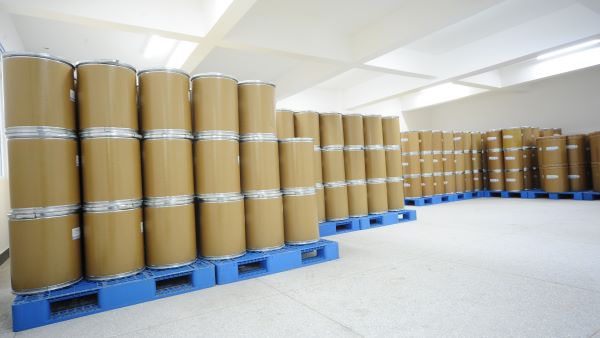
- 25 kg fibre drums with dual polyethylene liners.
- Custom packaging available upon request.
- Each drum includes Certificate of Analysis and traceability documentation.
Shipping Terms
- Ships within 7-14 business days after order confirmation.
- FOB ports: Mumbai, India / Alexandria, Egypt.
- Express and air freight options available for urgent orders.
Shelf Life & Storage
- Store in a cool, dry place at 15-25°C.
- Keep containers tightly sealed and protected from light and moisture.
- Avoid exposure to high humidity and direct sunlight.