Product Description
Our Cocoa Extract powder is formulated for use in mood support supplements, cardiovascular health-focused products, and antioxidant dietary supplement formulations. We supply this botanical raw material in two standardized extract ratios: 10:1 and 20:1. We also offer Theobromine-enriched Cocoa Extract specifications ranging from 5% to 98% theobromine content, optimized for capsule and tablet manufacturing.
Basic Information
| Item | Content |
|---|---|
| Botanical Name | Theobroma cacao L. (Malvaceae) |
| Part Used | Seeds (cocoa beans) |
| Plant Origin | Native to the Amazon rainforest basin of South America. Now cultivated extensively in West Africa (Ghana, Côte d’Ivoire), Latin America (Brazil, Ecuador), and Southeast Asia (Indonesia, Malaysia, Philippines). In China, limited cultivation exists in Hainan, southern Yunnan, and Taiwan. Both imported and domestic raw material are available. |
| Solvent | Food-grade ethanol / aqueous ethanol |
| Standardisation | Theobromine (HPLC 254 nm); Polyphenol content (UV 280 nm) |
| Specifications | Standardised extract ratios: 10:1, 20:1. Optional single-compound grades: 5% theobromine, 10% theobromine, 20% theobromine, 50% theobromine, 98% theobromine. Polyphenol grades: 10%, 20%, 40%. |
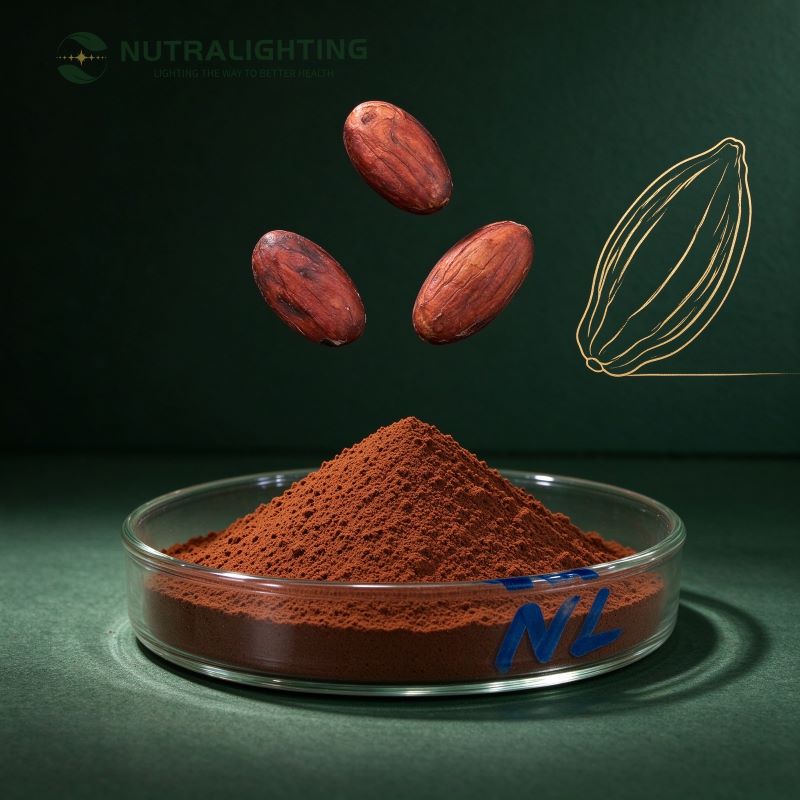
| Appearance | Light brown to dark brown fine powder |
| Odour | Characteristic cocoa odour |
| Taste | Bitter, characteristic chocolate-like taste |
| Moisture | ≤ 6.0% (LoD) |
| Ash | ≤ 4.0% (Total ash) |
| Heavy Metals | Pb ≤ 2 ppm; As ≤ 1 ppm; Hg ≤ 0.1 ppm; Cd ≤ 0.3 ppm |
| Residual Solvents | Ethanol ≤ 2,000 ppm (Ph. Eur. 2.4.24) |
| Microbiological | Total aerobic count ≤ 10^3/g; Yeast & mould ≤ 10^2/g; E. coli negative; Salmonella negative |
| Particle Size | 95% pass 80 mesh (180 μm) |
| Shelf Life | 24 months (store below 25°C, protected from light and moisture) |
| Target Market | Mood support supplements, cardiovascular health products, antioxidant formulations, energy and focus blends, functional beverages (China, EU, USA, Japan, Southeast Asia) |
| Core Application Areas | Mood and cognitive support supplements; Cardiovascular health formulations; Antioxidant and anti-inflammatory blends; Energy and focus products; Functional beverage ingredients; Chocolate-flavoured supplement bases |
Product Description
Cocoa Extract is obtained from the seeds (cocoa beans) of Theobroma cacao L., a tropical evergreen tree belonging to the Malvaceae family.
The plant is native to the Amazon rainforest basin of South America. The name Theobroma means “food of the gods” in Greek.
The primary bioactive constituents are theobromine and cocoa polyphenols. Theobromine is a methylxanthine alkaloid responsible for the mild stimulant and vasodilatory effects of cocoa.
Cocoa Extract also contains epicatechin, catechin, small amounts of caffeine, and various flavonoids that contribute to its antioxidant activity.
Our supplied cocoa extract is extracted and refined from fermented and dried cocoa beans. The finished product has excellent fluidity, appears as a natural brown-yellow powder, and carries the pure natural aroma of cocoa. We regularly stock two full-spectrum ratio specifications, 10:1 and 20:1. Meanwhile, we can provide standardized custom-grade products with theobromine content ranging from 5% to 98% verified by HPLC. These products are perfectly suitable for the production of mood-support dietary supplements, cardiovascular health formulas, antioxidant product lines, hard capsules and tablet preparations.
Active Constituents
The bioactive profile of Cocoa Extract is defined by its theobromine and polyphenol content.
Primary Marker: Theobromine
| Compound | CAS | Molecular Formula | Molecular Weight | Notes |
|---|---|---|---|---|
| Theobromine | 83-67-0 | C7H8N4O2 | 180.16 | Principal methylxanthine; vasodilator, mood support |
| Caffeine | 58-08-2 | C8H10N4O2 | 194.19 | Minor component (~0.1-0.5% in extract) |
| Epicatechin | 480-18-2 | C15H14O6 | 290.27 | Major flavonoid; antioxidant |
| Catechin | 480-18-2 | C15H14O6 | 290.27 | Flavan-3-ol; antioxidant |
COA Standard Specifications
| Item | Specification | Method | Result Range |
|---|---|---|---|
| Theobromine | Varies by grade (5% / 10% / 20% / 50% / 98%) | HPLC 254 nm | Per specification |
| Polyphenols | Varies by grade (10% / 20% / 40%) | UV 280 nm | Per specification |
| Loss on drying | ≤ 6.0% | LoD 105°C | – |
| Total ash | ≤ 4.0% | Char at 600°C | – |
| Lead (Pb) | ≤ 2 ppm | ICP-MS | – |
| Arsenic (As) | ≤ 1 ppm | ICP-MS | – |
| Mercury (Hg) | ≤ 0.1 ppm | ICP-MS | – |
| Cadmium (Cd) | ≤ 0.3 ppm | ICP-MS | – |
| Total aerobic count | ≤ 10^3/g | Ph. Eur. 2.6.12 | – |
| Yeast and mould | ≤ 10^2/g | Ph. Eur. 2.6.12 | – |
| E. coli | Negative | Ph. Eur. 2.6.12 | – |
| Salmonella | Negative | Ph. Eur. 2.6.12 | – |
Mechanism of Action
Vasodilation and Cardiovascular Support
Theobromine promotes nitric oxide release from endothelial cells, leading to vasodilation and improved blood flow.
This mechanism supports healthy blood pressure levels and cardiovascular function.
Mood and Cognitive Effects
Theobromine modulates serotonin and dopamine pathways in the brain, contributing to mood elevation and cognitive clarity.
Unlike caffeine, theobromine provides a smoother, longer-lasting stimulant effect with less jitteriness.
Antioxidant Activity
Cocoa polyphenols, particularly epicatechin and catechin, scavenge free radicals and reduce oxidative stress.
These compounds also inhibit lipid peroxidation, supporting cellular protection against oxidative damage.
Anti-inflammatory Effects
Cocoa flavonoids suppress NF-κB signalling and reduce pro-inflammatory cytokine production.
This contributes to the anti-inflammatory properties associated with regular cocoa consumption.
Traditional and Modern Use
Historical Use
Cocoa has been used for thousands of years by Mesoamerican civilizations, including the Maya and Aztec peoples.
It was consumed as a bitter beverage and valued for its energising and medicinal properties.
Modern Clinical Evidence
Clinical studies have shown that cocoa polyphenol supplementation can improve endothelial function and reduce blood pressure in hypertensive individuals.
A randomised controlled trial found that 500-900 mg per day of cocoa extract significantly improved mood and cognitive performance in healthy adults.
Studies have also demonstrated that cocoa extract reduces markers of oxidative stress and inflammation.
Regulatory Status
| Region | Status | Notes |
|---|---|---|
| China | Approved | Recognised as a food ingredient and herbal extract. Widely used in functional foods and dietary supplements. |
| European Union | Approved for use | Not listed as a Novel Food under Regulation (EU) 2015/2283. May be marketed as a food ingredient and dietary supplement ingredient across EU member states. Noted as a basic substance under Commission Implementing Regulation (EU) No 540/2011 for plant protection use in some member states. |
| United Kingdom | Approved for use | Not listed on the UK Novel Food catalogue. Post-Brexit, cocoa extract is permitted as a food and supplement ingredient. The FSA maintains general food safety standards. |
| United States (FDA) | GRAS / DSHEA-compliant | Cocoa powder and cocoa extract are Generally Recognised as Safe (GRAS) for use in food. Cocoa extract may be marketed as a dietary supplement ingredient under DSHEA provisions. The FDA has not evaluated specific health claims for cocoa extract. |
| Japan | Approved | Cocoa extract is used in Japanese functional foods and dietary supplements. The Ministry of Health, Labour and Welfare permits its use as a food ingredient. |
| Australia / New Zealand | Approved | Permitted as a food ingredient under Australia New Zealand Food Standards Code. Standard 1.3.1 allows use in dietary supplements. |
Recommended Usage
Dosage guidance for Cocoa Extract is based on clinical studies and traditional use.
Formulation Guidance by Grade
10:1 grade: Suitable for general mood support at 500-1,000 mg per serving
20:1 grade: Standardised capsule formulations at 250-500 mg per serving
10% theobromine grade: Moderate-potency formulations at 500-1,000 mg per serving
20%-50% theobromine grade: High-potency formulations at 200-500 mg per serving
98% theobromine grade: Pharmaceutical-grade isolate at 100-300 mg per serving
Clinical studies have used 500-900 mg per day of standardised cocoa extract.
NOTE: Theobromine has mild stimulant properties. Products should include appropriate dosing guidance.
Precautions for Cocoa Extract
IMPORTANT SAFETY NOTE: Cocoa Extract contains theobromine, a mild stimulant. Use within recommended dosage ranges.
Notes on Production and Storage
- Seal the extract product tightly and store it in a cool, dry and well-ventilated place. Keep it strictly away from direct strong light, high temperature and high humidity, to prevent the powder from absorbing moisture and caking, and avoid the oxidation and inactivation of active components.
- It is recommended to use up the product within one month after opening the package. Do not leave it exposed for a long time, otherwise the natural flavor will fade away and the microbiological indicators may exceed the safety limit.
- Store products with different theobromine contents in separate zones, and attach clear labels to avoid material mixing, which may damage the precision of your final formulation.
Notes on Formulation and Compliance
- Strictly control the total content of theobromine and natural caffeine in your final product, and make sure it meets the food and dietary supplement addition limits of your target market, so as not to exceed the legal compliance threshold.
- When designing the formulation, clearly mark that the product contains cocoa-derived caffeine and theobromine. Add a warning message on the prominent position of the package, reminding special groups to control their intake.
- Do not combine this ingredient with MAOI antidepressants, antihypertensive drugs and similar components in the same formulation, to prevent component interaction that may affect the expected drug effect.
Notes on End Consumption
- The total daily intake is recommended to be controlled within 20 grams. Excessive intake may cause over-stimulation of the central nervous system, leading to discomfort such as palpitations, insomnia and anxiety.
- People sensitive to caffeine, pregnant women, children and those with weak gastrointestinal function should strictly limit their intake, or choose decaffeinated cocoa extract products instead.
- People with a history of gastroesophageal reflux, arrhythmia, kidney stones and migraine should use this product with caution, to avoid aggravating their original discomfort symptoms.
- A very small number of people may be allergic to cocoa components. Observe your physical condition carefully when consuming it for the first time. If allergic reactions such as skin itching and rashes occur, stop using it immediately and seek medical advice.
Why Choose Nutralighting
Full-range custom theobromine specifications
Our in-house R&D team can produce standardized cocoa extracts with theobromine concentrations ranging from 5% to 98%. All products are verified via HPLC, and we can adjust extract ratios and active component proportions fully according to your specific formulation requirements.
Complete EU and UK regulatory compliance support
All our cocoa extract products meet the latest regulatory requirements for food and dietary supplement ingredients in the EU and UK. We provide full sets of qualification documents that can be directly used for your local regulatory filing and customs clearance procedures.
High-purity reference-grade theobromine supply
We offer 98% theobromine isolate that meets pharmaceutical reference-grade standards. This specification is specially designed for academic research, pharmaceutical development and high-precision formulation scenarios.
Stable batch quality and flexible shipment options
All production processes are strictly implemented in full compliance with GMP standards. Every batch of our cocoa extract is accompanied by a complete independent third-party test report and official Certificate of Analysis. We support both small-batch trial orders and large-volume long-term stable supply, with multiple mature global logistics solutions to fully meet different delivery cycle requirements for overseas B-end clients.
References
Graber M, et al. (2022). “Theobromine: A Comprehensive Review of Its Pharmacological Properties and Therapeutic Potential.” Nutrients. PMC9141803.
Heiss C, et al. (2003). “Blood pressure is reduced and endothelial function improved by flavonol-rich cocoa in patients with coronary heart disease.” Circulation. DOI: 10.1161/01.CIR.0000074303.13115.8C.
Schubert S, et al. (2016). “Effects of cocoa flavanol supplementation on psychological well-being and cognitive performance in healthy adults: a randomised controlled trial.” Journal of Psychopharmacology.
NIST WebBook. “Theobromine.” CAS 83-67-0. Molecular formula C7H8N4O2, MW 180.16. National Institute of Standards and Technology, Gaithersburg, MD.
PubChem. “Theobromine.” CID 2367. Molecular formula C7H8N4O2, MW 180.16 g/mol. NIH, Bethesda, MD.
FDA. “GRAS Notice for Cocoa Extract.” Generally Recognised as Safe determination for cocoa-derived ingredients used as food components.
European Commission. “EU Novel Food Catalogue.” Regulation (EU) 2015/2283. Cocoa/Theobroma cacao not listed – confirmed non-novel status.
Sesso, H. D., et al. (2025). Effects of 2-year cocoa extract supplementation on inflammaging biomarkers in older US adults: findings from the COcoa Supplement and Multivitamin Outcomes Study randomised clinical trial. Age and Ageing, 54(9), afaf269.
Gomez, P., Reyes, C., & Figueroa, J. G. (2025). Microwave-Assisted Extraction of Phenolic Compounds from Cocoa Pod Husk: Process Optimization and Impact of Drying Temperature on Bioactive Recovery. Molecules, 30(17), 3497.
Rojas-García, C., et al. (2023). Biological Properties and Antimicrobial Potential of Cocoa and Its Effects on Systemic and Oral Health. Nutrients, 15(19), 4127.
Frequently Asked Questions
The 10:1 and 20:1 ratios represent whole-herb extract concentration, retaining the natural profile of theobromine, polyphenols, and minor alkaloids. The single-compound grades (5%-98% theobromine) are further purified and standardized to deliver a precise theobromine content, suitable for high-dose capsule and tablet manufacturing.
Yes. Cocoa Extract is plant-derived and contains no animal-sourced excipients or processing aids. It is suitable for vegan and vegetarian product lines.
Our standard cocoa extracts contain trace amounts of caffeine (~0.1-0.5%). For applications requiring minimal caffeine, please contact our technical team to discuss custom processing options.
Standard lead time is 15-25 days after order confirmation and payment. Sample orders are typically dispatched within 5-7 business days. Expedited shipping is available upon request.
Yes. Private labeling, custom drum sizes, and smaller retail packaging are available for qualified buyers. Minimum order quantities may apply.
Packaging & Shipping
Standard Packaging
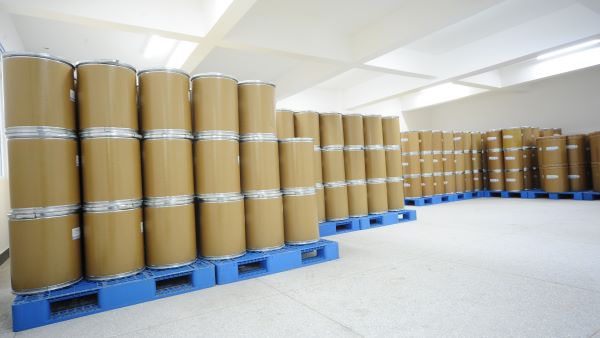
- Standard: 25 kg double-wall paper drums with dual polyethylene bag lining.
- Custom packaging available in 5 kg, 10 kg, and bulk skip-container configurations.
- Private label and retail packaging negotiable for long-term contracts.
Shipping Terms
- Shipping methods: Express (DHL, FedEx, UPS), air freight, and sea freight.
- Sample orders (≤1 kg) are shipped via express courier within 5–7 business days.
- Bulk orders (≥25 kg) ship by air or sea depending on destination and volume.
- Incoterms: FOB, CFR, CIF available; exact terms confirmed at quotation stage.
Shelf Life & Storage
- Store in a cool, dry place below 25°C.
- Protect from direct sunlight, moisture, and strong odours.
- Keep container tightly sealed when not in use.
- Shelf life: 24 months from manufacture date under recommended storage conditions.