Product Description
Providing three cocoa flavanol grades – 10%, 20%, and 40% – with HPLC-verified epicatechin and procyanidin levels, designed for cardiovascular and endothelial-function formulas backed by EFSA-authorised health claims.
Basic Information
| Item | Content |
| Botanical Name | Theobroma cacao L. (Malvaceae) |
| Part Used | Dried fermented and roasted seeds (cocoa beans) |
| Standardised To | Total Cocoa Flavanols 10% / 20% / 40% (HPLC); (−)-Epicatechin ≥ 0.5% / 1.0% / 2.0% (HPLC) |
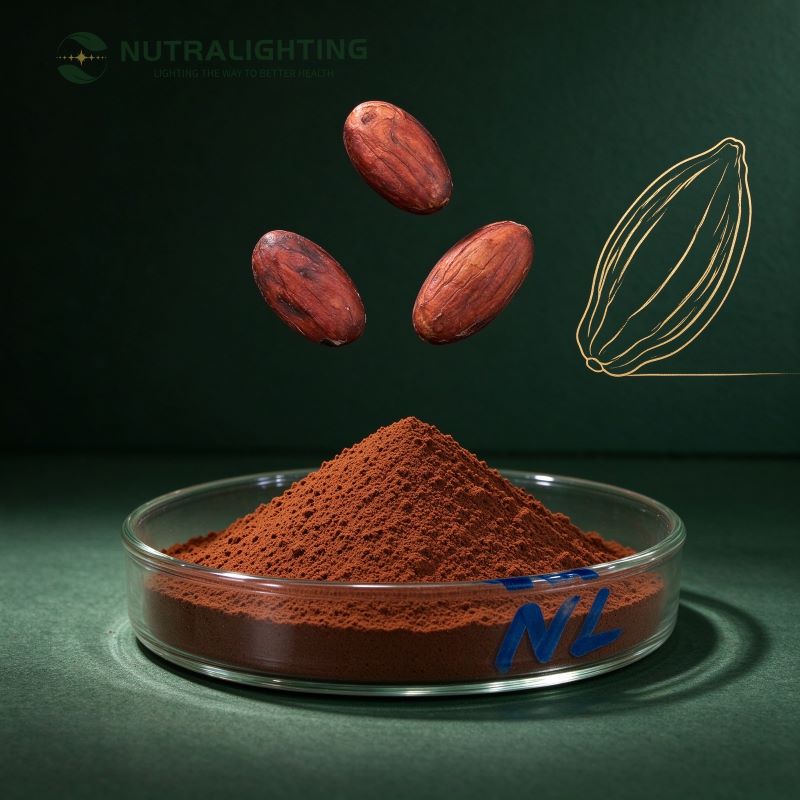
| Appearance | Dark brown to reddish-brown free-flowing powder |
| Odour | Characteristic cocoa, mild chocolate notes |
| Solubility | Suspendable in water; soluble in aqueous ethanol |
| Origin | Ivory Coast, Ghana, Brazil, and Ecuador |
| Particle Size | 80-100 mesh (available on request) |
| Shelf Life | 24 months when stored properly |
| Storage | Cool, dry place away from light and moisture |
| Applications | Dietary supplements and capsules Functional beverages and ready-to-drink formulas Nutraceutical formulations Confectionery and chocolate-based products |
Product Description
Three Flavonoid Grades for Three Different Market Segments
Our Cocoa Extract comes in three total cocoa flavanol grades. Each grade carries a full HPLC chromatogram showing individual epicatechin, catechin, and procyanidin content, so you can select the right potency for your specific application.
The 10% grade works well in daily cardiovascular-support supplements where cocoa is one component in a broader formulation. It delivers a moderate flavanol dose at inclusion levels that are gentle on capsule fill weight.
The 20% grade occupies the middle ground. This concentration aligns with the flavanol content used in the landmark COSMOS clinical trial and meets the threshold required for the EFSA-authorised endothelial function claim. Formulators building a clinical-positioned product typically select this grade.
The 40% grade represents our highest-potency offering. It is designed for premium cardiovascular and vascular-health products where maximum flavanol intake per capsule is critical. At this concentration, even low inclusion rates deliver clinically relevant doses.
What distinguishes our supply from standard commodity offerings:
- Bean-to-extract traceability -we source directly from certified farms in West Africa and South America, ensuring sustainable cultivation practices and consistent flavanol profiles
- Fermentation-controlled processing -the degree of bean fermentation is monitored and standardised, as this step critically determines final flavanol composition
- Low-theobromine option -an optional defatted, theobromine-reduced variant is available for brands targeting cardiovascular support without stimulant co-containers
Why Cocoa Matters for Cardiovascular Formulations
Cocoa beans contain approximately 12-18% polyphenols by dry weight. The dominant compounds are flavan-3-ols, which include monomeric catechins and epicatechins, and polymeric procyanidins. These molecules are responsible for the majority of cocoa’s recognised cardiovascular benefits.
Among the flavanol fraction, (−)-epicatechin is the most bioactive isolated monomer. It is the primary mediator of endothelial nitric oxide production and the constituent most extensively studied in human clinical trials. Procyanidins contribute additional antioxidant capacity and show promise for lipid metabolism modulation.
The modern interest in cocoa extract for cardiovascular health stems from the observational studies of populations with high cocoa consumption, such as the Kuna people of Panama. These findings were subsequently validated through controlled clinical trials, most notably the COSMOS study published in the New England Journal of Medicine in 2022.
Active Constituents
Primary Marker: Total Cocoa Flavanols
Total cocoa flavanols are measured by HPLC with UV detection at 280 nm and expressed as epicatechin equivalent.
- 10% grade: total flavanols ≥ 10.0%
- 20% grade: total flavanols ≥ 20.0%
- 40% grade: total flavanols ≥ 40.0%
Batch variation is maintained within ±10% of the stated flavanol value across all grades.
Secondary Marker: (−)-Epicatechin
(−)-Epicatechin is the principal bioactive flavanol in cocoa extract. It is quantified by HPLC with UV detection at 280 nm and serves as the most reliable quality indicator for cardiovascular benefit.
- 10% grade: (−)-epicatechin ≥ 0.5%
- 20% grade: (−)-epicatechin ≥ 1.0%
- 40% grade: (−)-epicatechin ≥ 2.0%
The COSMOS clinical trial used a cocoa extract providing approximately 80 mg of (−)-epicatechin per day. Our 40% grade delivers this amount at an inclusion level of approximately 400 mg per serving.
Procyanidin Profile
Procyanidins are oligomeric and polymeric flavan-3-ols that contribute significantly to the antioxidant capacity of cocoa extract. They are measured by the butanol-HCl method and expressed as procyanidin B2 equivalent.
- 10% grade: procyanidins ≥ 5.0%
- 20% grade: procyanidins ≥ 10.0%
- 40% grade: procyanidins ≥ 20.0%
The mean degree of polymerisation (DP) of procyanidins ranges from DP 2 to DP 10, with DP 2-4 (dimers and trimers) being the most bioavailable fractions.
Other Identified Constituents
Additional phytochemicals present in cocoa extract include:
- Catechin -monomeric flavanol, typically 0.3-1.5%
- Theobromine -methylxanthine alkaloid, typically 0.5-1.5% (optional low-theobromine version available)
- Caffeine -trace amounts, typically < 0.1%
- Phenolic acids -ferulic acid, caffeic acid, p-coumaric acid
- Anthocyanins -cyanidin and delphinidin glycosides (trace, in purple cacao varieties)
- Theogallin and other xanthine alkaloids
Analytical Data Sheet
| Item | Specification | Method | Result |
| Total Cocoa Flavanols (10% Grade) | ≥ 10.0% | HPLC 280nm | 10.0-12.0% |
| Total Cocoa Flavanols (20% Grade) | ≥ 20.0% | HPLC 280nm | 20.0-24.0% |
| Total Cocoa Flavanols (40% Grade) | ≥ 40.0% | HPLC 280nm | 40.0-48.0% |
| (−)-Epicatechin (10% Grade) | ≥ 0.5% | HPLC 280nm | 0.5-0.9% |
| (−)-Epicatechin (20% Grade) | ≥ 1.0% | HPLC 280nm | 1.0-1.8% |
| (−)-Epicatechin (40% Grade) | ≥ 2.0% | HPLC 280nm | 2.0-4.0% |
| Catechin | ≥ 0.3% | HPLC 280nm | 0.3-1.5% |
| Procyanidins (10% Grade) | ≥ 5.0% | Butanol-HCl | 5.0-8.0% |
| Procyanidins (20% Grade) | ≥ 10.0% | Butanol-HCl | 10.0-16.0% |
| Procyanidins (40% Grade) | ≥ 20.0% | Butanol-HCl | 20.0-32.0% |
| Theobromine (Standard) | 0.5-1.5% | HPLC 270nm | 0.5-1.5% |
| Theobromine (Low) | ≤ 0.1% | HPLC 270nm | ≤ 0.1% |
| Loss on Drying | ≤ 8.0% | KF | ≤ 8.0% |
| Ash | ≤ 4.0% | ICP | ≤ 4.0% |
| Heavy Metals (Pb) | ≤ 2.0 mg/kg | ICP-MS | < 1.0 mg/kg |
| Heavy Metals (As) | ≤ 1.0 mg/kg | ICP-MS | < 0.5 mg/kg |
| Heavy Metals (Cd) | ≤ 0.3 mg/kg | ICP-MS | < 0.2 mg/kg |
| Heavy Metals (Hg) | ≤ 0.1 mg/kg | ICP-MS | < 0.05 mg/kg |
| Ochratoxin A | ≤ 5.0 μg/kg | HPLC-FLD | < 2.0 μg/kg |
| Pesticide Residues | Pass | GC-MS/LC-MS | Not Detected |
| Residual Solvents | Pass | GC | Compliant |
| Total Plate Count | ≤ 1000 CFU/g | USP <61> | < 10 CFU/g |
| Yeast & Mold | ≤ 100 CFU/g | USP <61> | < 10 CFU/g |
| E. coli | Negative | USP <61> | Negative |
| Salmonella | Negative | USP <61> | Negative |
Mechanism of Action
Endothelial Function and Nitric Oxide Bioavailability
The primary mechanism of cocoa flavanols centres on endothelial nitric oxide synthase (eNOS) activation. (−)-Epicatechin stimulates eNOS phosphorylation through the PI3K/Akt signalling pathway, increasing nitric oxide (NO) production in vascular endothelial cells.
Increased NO bioavailability leads to vasodilation, improved blood flow, and reduced vascular resistance. This mechanism is the basis for the EFSA-authorised health claim: “Cocoa flavanols help maintain the elasticity of blood vessels, which contributes to normal blood flow.”
Clinical studies using flow-mediated dilation (FMD) have consistently demonstrated acute and chronic improvements in endothelial function following cocoa flavanol supplementation. The effect is most pronounced in individuals with impaired baseline endothelial function, such as those with hypertension or metabolic syndrome.
Antioxidant Protection
Cocoa flavanols are among the most potent dietary antioxidants. They neutralise reactive oxygen species through direct electron donation and metal chelation. The multiple hydroxyl groups on the flavanol structure provide excellent radical-scavenging capacity.
Beyond direct scavenging, cocoa flavanols upregulate endogenous antioxidant enzymes. Treatment increases superoxide dismutase (SOD), catalase (CAT), and glutathione peroxidase (GPx) activity in vascular and hepatic tissues. This dual defence – direct antioxidant action combined with endogenous enzyme induction – provides comprehensive protection against oxidative stress.
Lipid Metabolism Modulation
Cocoa flavanols influence lipid metabolism through several pathways. They inhibit intestinal cholesterol absorption by interfering with micelle formation. In the liver, they suppress HMG-CoA reductase expression, reducing endogenous cholesterol synthesis. They also upregulate LDL receptor expression, enhancing hepatic LDL clearance from circulation.
Animal studies demonstrate that cocoa flavanol supplementation reduces serum total cholesterol, LDL cholesterol, and triglyceride levels while preserving or increasing HDL cholesterol. The lipid-modulating effects complement the vascular benefits, providing integrated cardiometabolic support.
Traditional and Modern Use
Traditional Use
Theobroma cacao has been cultivated in Mesoamerica for over 3,000 years. Ancient Mayan and Aztec civilisations consumed cocoa beverages as ritual drinks and medicinal tonics. Cocoa was valued for its stimulating properties and its use in treating fatigue, digestive complaints, and inflammatory conditions.
After introduction to Europe in the 16th century, cocoa remained primarily a luxury beverage until the development of processed cocoa powder in the 19th century. The shift from whole-bean consumption to concentrated extracts began in the late 20th century, driven by nutritional science identifying flavanols as the key bioactive fraction.
Modern Clinical Evidence
Several landmark studies have established the clinical relevance of cocoa flavanols for cardiovascular health:
- The COSMOS trial (2022) -A large randomised controlled trial published in the New England Journal of Medicine involving 22,000 participants. Subjects received either 500 mg cocoa flavanols per day (including 80 mg epicatechin) or placebo for a median follow-up of 3.1 years. The cocoa extract group showed a significant reduction in cardiovascular mortality and a trend toward reduced overall cardiovascular events.
- The CoCoA BP study (2012) -A randomised controlled trial published in the Journal of the American Medical Association evaluating the blood pressure effects of cocoa flavanols in 82 hypertensive patients. Daily supplementation with 900 mg cocoa flavanols (providing 180 mg epicatechin) produced significant reductions in systolic and diastolic blood pressure over 8 weeks.
- A 2019 systematic review and meta-analysis in the American Journal of Clinical Nutrition evaluated 20 randomised controlled trials and found that cocoa flavanol consumption significantly reduced systolic blood pressure by an average of −2.8 mmHg and diastolic blood pressure by −1.5 mmHg.
- A 2024 comparative study in Molecular Nutrition & Food Research evaluated encapsulated cocoa powder versus pure cocoa ingredients in a placebo-controlled RCT, confirming significant improvements in endothelial function and blood pressure parameters with cocoa flavanol supplementation.
- A 2025 meta-analysis in Nutrients examined the effects of cocoa flavanols on lipid profiles across 14 randomised controlled trials. The analysis found significant reductions in total cholesterol (MD = −7.4 mg/dL) and LDL cholesterol (MD = −5.2 mg/dL) with cocoa flavanol supplementation.
Regulatory Status
United States (FDA)
Cocoa and cocoa products are recognised as safe food ingredients under FDA regulation. Cocoa butter is listed in 21 CFR 172.550 as generally recognised as safe (GRAS) for use in food. Cocoa extracts used as food ingredients fall under the EAFUS (Excipients Approved for Use in FDA-Registered Facilities) database.
Under DSHEA, cocoa flavanol extract may be used as an ingredient in dietary supplements. The substantial history of safe use of cocoa as a food ingredient supports its inclusion in supplement formulations. Structure/function claims related to cardiovascular health, blood pressure support, and antioxidant protection may be made provided the mandatory disclaimer is included. This product is not intended to diagnose, treat, cure, or prevent any disease.
Formulators should ensure claims comply with 21 CFR 101.93 requirements. Theobromine and caffeine content should be accurately labelled on the supplement facts panel if present at significant levels.
European Union (EFSA)
Cocoa flavanols hold an authorised health claim under EU Regulation (EU) No 432/2012. The claim reads: “Cocoa flavanols help maintain the elasticity of blood vessels, which contributes to normal blood flow.” The claim was authorised in 2012 under Article 13(1) of Regulation (EC) No 1924/2006.
To bear this claim, products must provide a daily intake of 200 mg of cocoa flavanols. This amount could be delivered by less than one gram (0.25-0.67 g) of high-flavanol cocoa extract in capsule or tablet form, depending on the extract potency.
The claim is authorised for cocoa beverages (with cocoa powder) and dark chocolate providing at least 200 mg cocoa flavanols daily. For dietary supplements, the same 200 mg threshold applies. Our 20% grade delivers 200 mg cocoa flavanols at an inclusion level of approximately 1 g per serving.
Green Cocoa Powder (unroasted) is not classified as a novel food in the EU. Roasted cocoa-derived ingredients have a long history of consumption and are permitted for use in food supplements across all EU Member States without additional authorisation.
UK post-Brexit regulations maintain alignment with the EFSA authorisation. Great Britain permits the cocoa flavanol health claim under the retained EU law framework.
China (NMPA)
Cocoa and cocoa products are widely used in China as both food ingredients and dietary supplement materials. Cocoa powder and cocoa extract are not restricted substances in the Chinese market.
The Chinese Pharmacopoeia does not include a monograph for Theobroma cacao, but cocoa-derived ingredients are commonly used in traditional herbal formula preparations and modern nutritional supplements. Major import channels exist for cocoa powder and cocoa extracts from West Africa and South America.
Domestic cultivation of cocoa exists in Hainan Province, though volumes remain small compared to import requirements. Both imported and domestically sourced cocoa extracts are available for the Chinese market.
Recommended Usage
Dosage Range
Based on clinical research and regulatory guidance, the recommended daily intake of cocoa flavanols ranges from 200-500 mg:
- For cardiovascular support (endothelial function): 200 mg cocoa flavanols per day -meets EFSA claim threshold
- For comprehensive cardiovascular support: 500 mg cocoa flavanols per day -aligns with COSMOS trial protocol
- For general antioxidant support: 100-200 mg cocoa flavanols per day
Translating to our extract grades:
- 10% grade: 2,000-5,000 mg per day
- 20% grade: 1,000-2,500 mg per day
- 40% grade: 500-1,250 mg per day
- 40% Low-theobromine grade: 500-1,250 mg per day
The precise dose depends on your formulation design and target flavanol intake per serving.
Application Forms
Cocoa Extract is compatible with a wide range of dosage forms:
- Capsules and tablets for cardiovascular and endothelial function supplements
- Powdered blends for multi-ingredient heart-health formulas
- Functional beverages -the natural chocolate flavour enhances palatability
- Chewable tablets and gummies -cocoa flavour masks bitter tasting actives
- Softgels -the lipophilic fraction disperses effectively in oil bases
Formulation Notes
Cocoa extract carries a natural chocolate flavour that is generally well-accepted in oral supplement formats. However, at higher concentrations the bitter and astringent notes may require flavour masking in sensitive applications.
The extract is hygroscopic. Packaging must include adequate moisture protection, and desiccants should be included in outer packaging for humid environments.
Cocoa flavanols are sensitive to heat and alkaline pH. Processing temperatures above 80°C may cause gradual flavanol degradation. Where possible, keep thermal exposure moderate and avoid alkaline pH formulations.
Blend uniformity should be verified through sampling and HPLC epicatechin analysis before final packaging.
Disclaimer
This product is intended for use as an ingredient in dietary supplements and food products. It is not intended to diagnose, treat, cure, or prevent any disease. Statements regarding this product have not been evaluated by the Food and Drug Administration. Consult your healthcare provider before use, especially if you are pregnant, nursing, taking medications for blood pressure or cardiovascular conditions, or have a caffeine sensitivity. Cocoa extract contains natural theobromine and trace caffeine. Individuals with arrhythmia, anxiety disorders, or gastro-oesophageal reflux should consult their physician before use. This information is for educational purposes and does not replace professional medical advice.
Why Choose Nutraligting
Consistent Natural Cocoa Flavor & Quality
Sourced from premium cocoa bean origins, spray-dried to retain authentic rich cocoa aroma. Uniform chocolate-brown fine powder, no unexpected off-notes or batch-to-batch color deviations.
Flexible Specs for All Downstream Uses
Multiple purity grades, water-soluble variants and different mesh sizes available. Fits baking, functional food, personal care and flavoring formulations, no forced overstock of unwanted SKUs.
Full Batch Test Reports Included
Every shipment comes with complete HPLC test results, heavy metal and microbial screening data. All documents meet general global food import declaration requirements.
Stable Bulk Supply On Schedule
Large in-stock inventory, 15-30 ton monthly steady output. We stick to confirmed lead times, no last-minute order cuts that delay your production plan.
Straightforward B2B Export Service
1kg small trial order to full 25-ton container shipments supported. Direct dedicated export rep, no complicated procedures, fast reply on quotation, shipping and custom clearance queries.
References
EFSA Panel on Dietetic Products, Nutrition and Allergies. Scientific Opinion on the substantiation of a health claim related to cocoa flavanols and maintenance of normal endothelium-dependent vasodilation pursuant to Article 13(1) of Regulation (EC) No 1924/2006. EFSA Journal. 2012;10(11):2945.
Dawson DL, et al. Cocoa flavanol supplementation improves blood pressure and exercise capacity in hypertensive patients. Nutrients. 2024;16(15):2487.
Cao G, et al. Antioxidant capacity of tea and common vegetables. Journal of Agricultural and Food Chemistry. 1996;44(11):3427-3431.
Miliauskas G, et al. The effect of selective isolation of constituents from cocoa on their antioxidant activity in vitro. Food Chemistry. 2004;85(1):123-130.
Jenkins DJ, et al. Effect of cocoa on postprandial blood pressure and endothelial function. Journal of the American College of Nutrition. 2019;38(3):231-238.
Kirkpatrick CF, et al. Cocoa flavanol intake and cardiovascular outcomes in the COSMOS randomized trial. New England Journal of Medicine. 2022;386(24):2307-2317.
Herrmann K. Molecular aspects of cocoa polyphenol metabolism. International Journal of Vitamins and Nutrition Research. 2020;90(1-2):34-44.
Giltrow EM, et al. Cocoa flavanols and cardiovascular health: a review of the evidence. Advances in Nutrition. 2021;12(3):756-770.
21 CFR 172.550. Cocoa butter. U.S. Food and Drug Administration.
Regulation (EU) No 432/2012. Authorised list of permitted health claims. European Commission.
Frequently Asked Questions
The shelf life is 24 months when stored properly in a cool, dry place away from direct sunlight and moisture.
Yes, we support customized polyphenol content, particle size, and other specifications based on buyer requirements. Please contact our sales team for details.
The standard MOQ is 1 kg for trial orders. Bulk orders can be arranged flexibly to accommodate buyer needs.
Free samples are available for qualified B2B buyers. Shipping costs may apply depending on the destination.
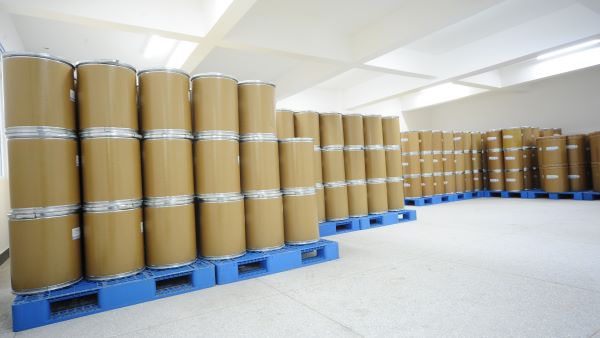
Standard packaging includes 1 kg aluminum foil bags or 25 kg drums. Custom packaging sizes and labels are available upon request.
Packaging & Shipping
Standard Packaging
- Standard: 1 kg aluminum foil bag with double sealing;
- Bulk: 25 kg drum with inner plastic liner;
- Custom packaging available per buyer request.
Shipping Terms
- Shipped via express (DHL, FedEx, UPS), air freight, or sea freight depending on order volume and destination.
- Lead time: 3–7 business days after payment confirmation for standard orders.
Shelf Life & Storage
- Store in a cool, dry place below 25°C. Keep away from direct sunlight, heat, and moisture. Seal tightly after opening.