Product Description
NutraLighting delivers three grades of Coleus Forskohlii Extract forskolin for metabolic and cardiovascular wellness formulations.
Basic Information
| Item | Content |
| Botanical Name | Coleus forskohlii (Willd.) Briq. (syn. Plectranthus forskohlii) |
| Plant Family | Lamiaceae |
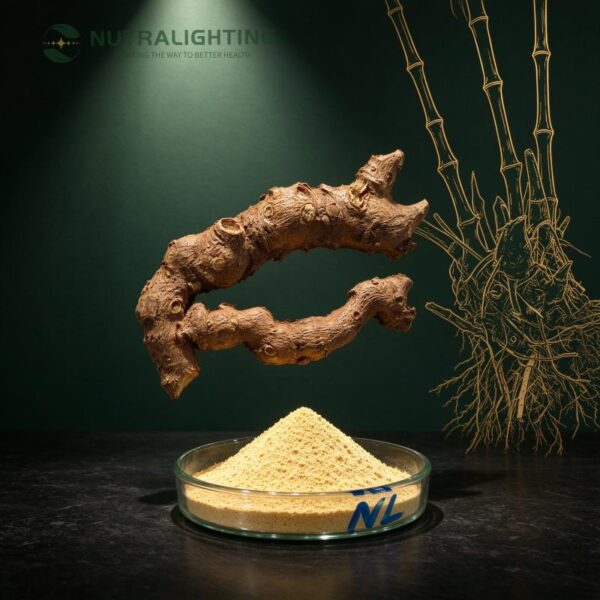
| Part Used | Dried underground roots (tuberous roots) |
| Extraction Solvent | Ethanol-water (food-grade) |
| Extraction Ratio | 10:1 standard concentrate |
| Available Grades | 10% / 20% / 50% Forskolin (HPLC verified, CAS 66575-28-2) |
| EINECS No. | 619-448-0 |
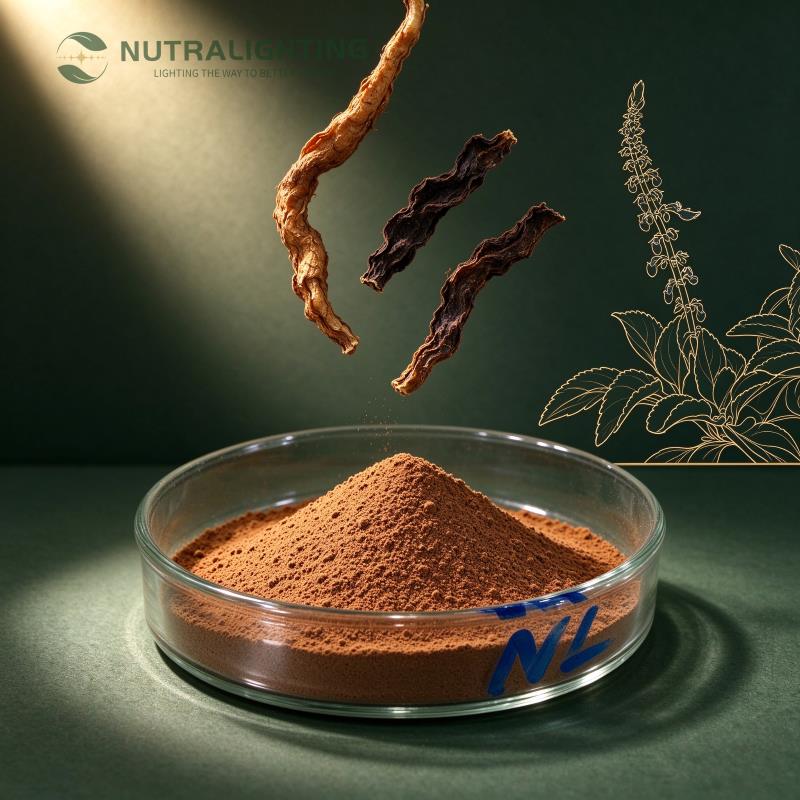
| Appearance | Fine light-brown to tan powder |
| Odor | Characteristic botanical odor |
| Taste | Slightly bitter |
| Target Market | Dietary supplements, weight management products, cardiovascular support products, sports nutrition |
| Core Application Areas | Metabolic support, body composition management, cardiovascular health, respiratory wellness, immune modulation |
Product Description
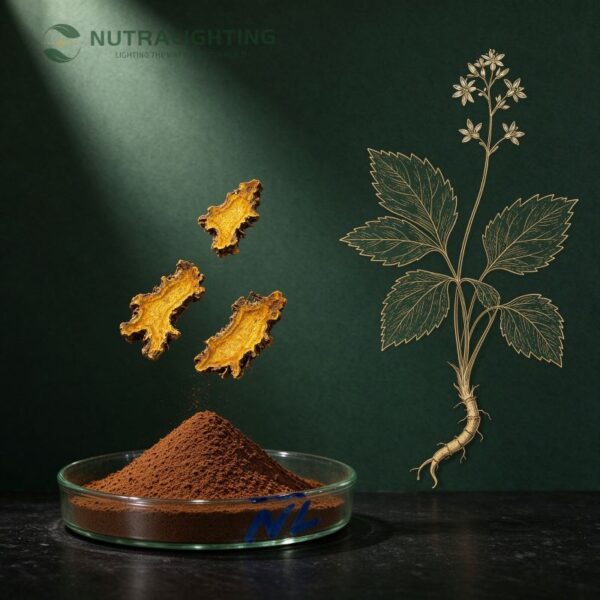
Coleus Forskohlii Extract is obtained from the dried tuberous roots of Coleus forskohlii, a perennial herb native to the subtropical regions of India and southern China. The plant has been used for centuries in Ayurvedic medicine, primarily for cardiovascular and respiratory conditions.
We deliver three forskolin grades – 10%, 20%, and 50% – each tailored to a different product development stage. The 10% grade serves as an entry-level option for broad-spectrum metabolic blends. The 20% grade targets single-ingredient weight management formulas. The 50% grade is our most concentrated offering, designed for high-potency cardiovascular and sports nutrition applications.
Forskolin is a unique diterpene that directly activates adenylate cyclase. This mechanism distinguishes it from most other botanicals on the market. While many supplements rely on indirect pathways, forskolin raises intracellular cAMP levels through a direct enzymatic target. This property has made it a favorite among formulators developing metabolic and cardiovascular support products.
Active Constituents
The principal bioactive compound in Coleus Forskohlii is forskolin (1-[6-O-β-D-pyranosyl-3,4-dihydroxy-2-cyclohex-2-enyl-4-hydroxybenzoyl]oxy-8,9-didehydro-1,7,11-trihydroxy-5H-labd-13-ene). Forskolin is a labdane diterpene that serves as the sole quality marker for our extract.
In addition to forskolin, the extract contains minor diterpenoids, triterpenes, and phenolic compounds. These constituents contribute to the overall bioactivity profile but are not used as primary standardization markers.
Primary Marker: Forskolin (CAS 66575-28-2)
Forskolin is the defining active constituent of Coleus Forskohlii. HPLC analysis quantifies forskolin content against a certified reference standard. Our three grades span a wide concentration range. This flexibility allows formulators to select the grade that best fits their dosage architecture and cost structure.
Wild-rooted Coleus Forskohlii typically contains 1%-5% forskolin on a dry weight basis. Cultivated root material can achieve higher concentrations depending on growing conditions and harvest timing. Our extraction process concentrates the active fraction to deliver consistent potency across batches.
Supporting Constituents
Minor forskolin-related diterpenoids include forskolein, dihydroforskolin, and coleonol. These compounds occur in trace quantities and are not standardized individually. The total diterpene fraction contributes to the extract’s overall biological activity.
Phenolic acids and flavonoids are also present in small amounts. These compounds provide supplementary antioxidant activity but are not the primary quality indicators for this botanical.
| Item | Specification | Method | Result Range |
| Forskolin (HPLC) | 10% / 20% / 50% | HPLC-UV 280nm | As specified |
| Total Diterpenoids | ≥ 12.0% (10% grade); ≥ 24.0% (20% grade); ≥ 55.0% (50% grade) | HPLC-UV 280nm | As specified |
| Moisture | ≤ 5.0% | LOD | ≤ 5.0% |
| Total Ash | ≤ 5.0% | IP | ≤ 5.0% |
| Lead (Pb) | ≤ 0.5 mg/kg | ICP-MS | ≤ 0.5 mg/kg |
| Arsenic (As) | ≤ 0.5 mg/kg | ICP-MS | ≤ 0.5 mg/kg |
| Mercury (Hg) | ≤ 0.1 mg/kg | ICP-MS | ≤ 0.1 mg/kg |
| Cadmium (Cd) | ≤ 0.3 mg/kg | ICP-MS | ≤ 0.3 mg/kg |
Mechanism of Action
Adenylate Cyclase Activation
Forskolin directly activates adenylate cyclase without requiring G-protein coupling. This is a unique mechanism among dietary supplement ingredients. Activation of adenylate cyclase increases intracellular cyclic AMP (cAMP) levels. Elevated cAMP triggers downstream signaling cascades that regulate metabolism, lipid mobilization, and smooth muscle relaxation.
Lipid Metabolism and Body Composition
The cAMP-mediated pathway stimulates hormone-sensitive lipase. This enzyme promotes lipolysis – the breakdown of stored triglycerides into free fatty acids. Research indicates that forskolin may support lean body mass preservation during caloric restriction. A 2005 clinical study published in the International Journal of Obesity demonstrated these effects in overweight men.
Cardiovascular Support
Elevated cAMP levels in vascular smooth muscle cells promote relaxation. This vasodilatory effect can support healthy blood pressure already within normal range. Forskolin also exhibits mild positive inotropic activity, meaning it supports cardiac contractility through cAMP-dependent calcium flux modulation.
Respiratory and Immune Modulation
The bronchodilatory properties of forskolin have been studied for decades. By raising cAMP in airway smooth muscle, forskolin promotes bronchial relaxation. This mechanism parallels the action of synthetic phosphodiesterase inhibitors used in asthma management. Traditional Ayurvedic practice employed coleus root extract for respiratory conditions, including asthma and cough.
Traditional and Modern Use
Coleus forskohlii holds a distinguished place in Ayurvedic medicine. The ancient texts refer to it as “highly beneficial for the heart.” Practitioners prepared decoctions from the dried roots to support cardiovascular function and respiratory comfort.
In modern supplementation, forskolin is most commonly associated with body composition management. Clinical research has explored its effects on fat loss, lean mass retention, and metabolic rate. The evidence base includes several randomized controlled trials examining weight management outcomes.
Beyond weight management, forskolin is used in cardiovascular support formulations. Its vasodilatory and inotropic properties make it relevant for heart health products. Some formulators also incorporate it into respiratory wellness blends, drawing on its historical use for bronchial comfort.
Regulatory Status
Coleus Forskohlii root extract is recognized in multiple regulatory frameworks worldwide.
In the United States, forskolin is marketed under DSHEA as a dietary supplement ingredient. It is not listed in the FDA EAFUS database. It has not received GRAS notification. The longstanding history of use in Ayurvedic medicine supports its inclusion in dietary supplement products. Formulators should note that the FDA issues warning letters when forskolin products make disease-treatment claims that exceed structure/function language.
In the European Union, Coleus Forskohlii is not listed as a Novel Food under Regulation (EU) 2015/2283. It may be placed on the market as a traditional herbal medicinal product or as a food supplement, depending on the member state. Some EU countries have specific authorization requirements for coleus-containing products.
In China, Coleus Forskohlii is recognized in regional pharmacopoeias. The plant grows naturally in Yunnan and Guangxi provinces. Commercial cultivation occurs in these regions as well as in Sichuan. Chinese pharmacopoeial standards specify identification tests and assay methods for the dried root.
Recommended Usage
Typical daily intake of forskolin ranges from 250 mg to 500 mg, depending on the grade and intended application. For weight management formulations, clinical studies have used doses corresponding to 100-250 mg of 10% forskolin extract per day.
Formulation guidance by grade:
- 10% grade: Suitable for multi-ingredient blends at 2,500-5,000 mg per day
- 20% grade: Optimal for single-ingredient capsules at 1,000-2,500 mg per day
- 50% grade: Best for high-potency formulas at 400-1,000 mg per day
The 20% grade has been the most extensively studied specification in clinical literature. Formulators seeking evidence-aligned dosing should consider this grade as a reference point.
Disclaimer
This product is not intended to diagnose, treat, cure, or prevent any disease. Statements regarding this product have not been evaluated by the Food and Drug Administration.
Coleus Forskohlii is not approved as a drug by the FDA. It is marketed as a dietary supplement ingredient. Consumers should consult a healthcare professional before use, particularly if pregnant, nursing, taking medication, or managing a chronic health condition.
Forskolin may interact with medications that affect blood pressure or heart rate. Discontinue use at least two weeks before scheduled surgery. Keep out of reach of children.
Why Choose Our Coleus Forskohlii Extract
Full Coverage of Forskolin Specifications
We regularly supply 10% and 20% grades, with customizable high-purity options at 90% and 98%. Orders ranging from 100g lab samples to ton-level bulk shipments are supported, eliminating the need to coordinate multiple suppliers for different purity grades.
Complete Documentation for Global Compliance
The entire production process adopts a strict low-temperature ethanol extraction technique. Heavy metal, pesticide residue and solvent residue indicators all meet USP/EP/CP standards. Bilingual COAs, full-chain traceability records and all required documents are available to support your dietary supplement regulatory filing in North America, the EU and other markets.
Transparent and Stable Pricing System
As a direct manufacturer with partnered raw material planting bases, we offer tiered pricing and price lock guarantees for long-term B2B clients, helping you control cost fluctuations in the fast-expanding global forskolin market.
References
Austin, H.G., et al. (2005). “Effects of forskolin on body composition and quality of life in overweight males.” Int J Obes Relat Metab Disord, 29(7), 798-803.
Baskaran, P., et al. (2009). “Forskolin: A promising natural therapeutic agent.” Indian J Pharmacol, 41(5), 223-226.
Chen, L., et al. (2020). “Phytochemical composition and pharmacological activities of Coleus forskohlii: A comprehensive review.” J Ethnopharmacol, 258, 112891.
Chinese Pharmacopoeia Commission. (2020). “Chinese Pharmacopoeia, Part I.” China Medical Science Press. (Regional pharmacopoeia reference for Coleus root).
Farmer, M.C., & Srinivasan, S. (1998). “Forskolin: A bioactive constituent of Coleus forskohlii with potential therapeutic applications.” Drugs Exp Clin Res, 24(5-6), 209-216.
Kaur, M., et al. (2019). “Coleus forskohlii: A review of its ethnobotanical, phytochemical, and pharmacological properties.” Phytother Res, 33(11), 2949-2967.
Frequently Asked Questions
We offer standard extractions at 10% and 20% Forskohliin content, verified by HPLC. Custom standardization levels can be arranged for bulk orders.
Yes. Our extract is 100% plant-derived with no animal-sourced processing aids or carriers, making it suitable for vegan and vegetarian formulations.
Our standard MOQ is 1 kg for sample orders and 25 kg for commercial bulk orders. Smaller or larger quantities can be discussed on a case-by-case basis.
Yes. Nutralighting offers full OEM/ODM support, including custom standardization, private labeling, and synergistic blend formulation for B2B clients worldwide.
Packaging & Shipping
Standard Packaging
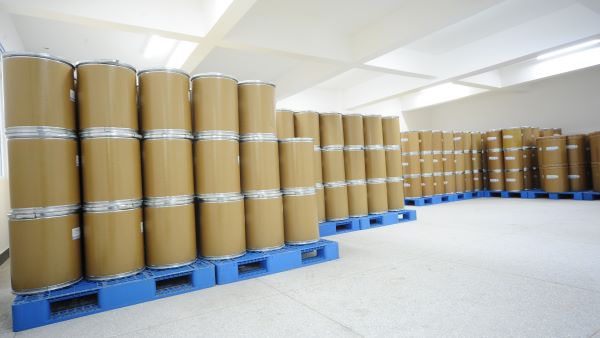
- Standard packaging: 1 kg/aluminum foil bag + 25 kg drum.
- Custom packaging available (e.g., 500 g bags, 10 kg cartons) upon request.
- All packaging is food-grade, moisture-proof, and clearly labeled with product name, batch number, and expiry date.
Shipping Terms
- Shipped via express (DHL, FedEx, UPS) for samples and small orders (3–7 working days).
- Air freight for medium bulk orders (7–14 working days).
- Sea freight available for large-volume orders (25–40 working days).
- Temperature-controlled and dry-cargo shipping options available.
Shelf Life & Storage
- Store in a cool, dry place below 25°C. Protect from light and moisture. Keep container tightly closed when not in use. Avoid exposure to high humidity and extreme temperatures.