Product Description
Our Dandelion Root Extract is available in two specification grades – 20% and 50% total phenolics – delivering reliable chlorogenic acid content for liver support and detoxification formulas.
Basic Information
| Item | Content |
| Botanical Name | Taraxacum officinale F.H. Wigg. (Asteraceae) |
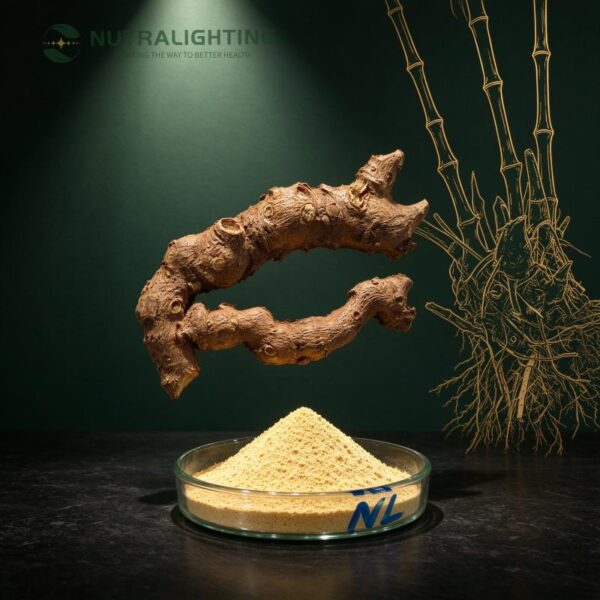
| Part Used | Dried root |
| Standardised To | Total Phenolics 20% / 50% (HPLC, as chlorogenic acid) |
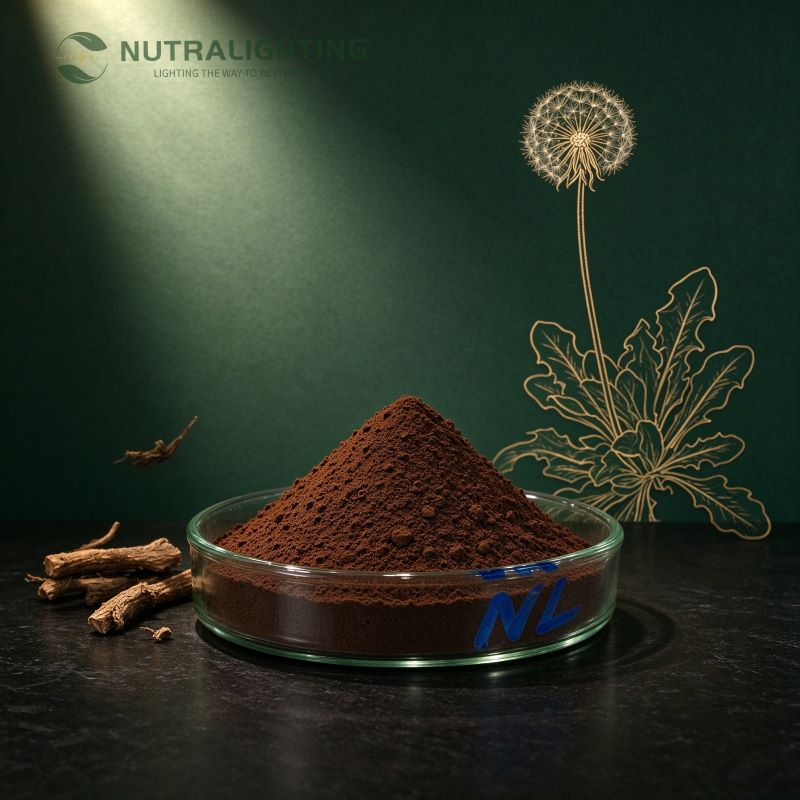
| Appearance | Light brown to dark brown powder |
| Odour | Characteristic, slightly bitter |
| Solubility | Partially soluble in water; soluble in ethanol |
| Origin | Inner Mongolia and Jilin Provinces, China |
| Particle Size | 80-100 mesh (available on request) |
| Shelf Life | 24 months when stored properly |
| Storage | Cool, dry place away from light and moisture |
Product Description
What We Offer and Why It Matters
We supply Dandelion Root Extract in two total phenolic grades: 20% and 50%. Each grade is independently produced and HPLC-verified. This gives formulators clear options for their liver support product positioning.
The 20% grade is suitable for general wellness products where dandelion root is combined with other hepatoprotective botanicals such as milk thistle and turmeric. The 50% grade is our clinical-strength option. It delivers a concentrated phenolic profile that matches the standardisation used in published research.
Our competitive edge comes from three sources. First, our raw material is sourced from high-altitude growing regions in Inner Mongolia and Jilin. These areas produce roots with naturally higher phenolic concentrations. Second, we use a sequential ethanol-water extraction process that captures both water-soluble phenolics and lipophilic triterpenes. Third, every batch is tested for chlorogenic acid and total phenolic content before release.
Key Features
Dandelion root (Taraxacum officinale) has been used for centuries as a bitter tonic and liver support herb. The root contains a complex mixture of phenolic compounds, triterpenes, and sesquiterpene lactones. Chlorogenic acid is the primary phenolic marker, typically accounting for 1-3% of the crude root weight.
Our extraction process preserves the full spectrum of dandelion root constituents. The 20% grade retains a balanced phenolic profile suitable for multi-ingredient formulas. The 50% grade concentrates the phenolic fraction for high-potency standalone products.
Unlike many other botanical extracts, dandelion root extract is available in both root and leaf forms. Our current product line focuses on root extract. Leaf extract is available separately under a different specification sheet.
Active Constituents
Primary Marker: Total Phenolics
Total phenolics, expressed as chlorogenic acid equivalents, is the primary quality marker for dandelion root extract. HPLC analysis with UV detection at 326 nm is the standard method for quantification.
Two grades are available:
20% total phenolics -entry-level standardisation for multi-ingredient liver formulas
50% total phenolics -high-potency standardisation for targeted hepatoprotection
Batch-to-batch variation is kept within ±10% of the labelled total phenolic value for all grades.
Key Phenolic Compounds
Chlorogenic acid (5-caffeoylquinic acid) is the most abundant and best-characterised phenolic compound in dandelion root. It contributes to antioxidant activity, hepatoprotective effects, and modulation of phase II detoxification enzymes.
Caffeic acid is the aglycone of chlorogenic acid. It is present in free form and contributes additional antioxidant activity. Cichoric acid (3,5-di-O-caffeoylquinic acid) and isochlorogenic acids are also significant constituents that add to the overall phenolic profile.
Caftaric acid, another hydroxycinnamic acid derivative, is present in smaller amounts but contributes to the extract’s total antioxidant capacity.
Triterpene Constituents
Taraxasterol is the characteristic triterpene of dandelion root. It contributes to anti-inflammatory and hepatoprotective effects. The 50% grade retains higher levels of taraxasterol due to our extraction process that captures both polar and non-polar constituents.
Other triterpenes such as taraxerol and β-sitosterol are present in trace amounts. These compounds may contribute to the extract’s overall biological activity through complementary mechanisms.
Analytical Data Sheet
| Item | Specification | Method | Result |
| Total Phenolics (20% Grade) | ≥ 20.0% | HPLC (as chlorogenic acid) | 20.0-24.0% |
| Total Phenolics (50% Grade) | ≥ 50.0% | HPLC (as chlorogenic acid) | 50.0-55.0% |
| Chlorogenic Acid Content | Varies by grade | HPLC | 1.0-3.0% (crude equiv.) |
| Caffeic Acid Content | ≥ 0.5% | HPLC | 0.5-1.5% |
| Cichoric Acid Content | ≥ 0.3% | HPLC | 0.3-0.8% |
| Taraxasterol Content | ≥ 0.5% | HPLC-ELSD | 0.5-1.5% |
| Loss on Drying | ≤ 6.0% | KF | ≤ 6.0% |
| Heavy Metals (Pb) | ≤ 2.0 mg/kg | ICP-MS | < 1.0 mg/kg |
| Heavy Metals (As) | ≤ 1.0 mg/kg | ICP-MS | < 0.5 mg/kg |
| Heavy Metals (Cd) | ≤ 0.3 mg/kg | ICP-MS | < 0.2 mg/kg |
| Heavy Metals (Hg) | ≤ 0.1 mg/kg | ICP-MS | < 0.05 mg/kg |
| Pesticide Residues | Pass | GC-MS/LC-MS | Not Detected |
| Residual Solvents | Pass | GC | Compliant |
| Total Plate Count | ≤ 1000 CFU/g | USP <61> | < 10 CFU/g |
| Yeast & Mold | ≤ 100 CFU/g | USP <61> | < 10 CFU/g |
| E. coli | Negative | USP <61> | Negative |
| Salmonella | Negative | USP <61> | Negative |
Mechanism of Action
Hepatoprotection and Bile Flow
Dandelion root is a traditional bitter tonic that stimulates bile production and flow. The triterpenes and phenolic compounds act on hepatocytes to promote bile secretion. Increased bile flow helps flush toxins from the liver and supports fat digestion in the small intestine.
In preclinical models, dandelion root extract protects against chemical-induced liver injury. It reduces serum levels of ALT, AST, and ALP – markers of hepatocyte damage. The protective effect is attributed to both antioxidant activity and anti-inflammatory mechanisms.
Phase II Detoxification Support
A recent clinical study published in Phytotherapy Research (2025) demonstrated that dandelion leaf and root extract (standardised to 1-5% taraxasterol) at 1,500 mg per day for 8 weeks significantly increased Phase II glutathione S-transferase (GST) activity by approximately 35% in NAFLD patients. This represents one of the first human clinical data points supporting dandelion’s role in detoxification enzyme induction.
Chlorogenic acid and related phenolics upregulate Nrf2 signalling, which activates the transcription of phase II detoxification enzymes including GST, quinone reductase, and UDP-glucuronosyltransferase. This mechanism enhances the liver’s capacity to conjugate and eliminate xenobiotics.
Anti-inflammatory Activity
Dandelion root extract inhibits NF-κB activation in hepatic stellate cells and Kupffer cells. This reduces the downstream expression of pro-inflammatory cytokines including TNF-α and IL-6. The anti-inflammatory effect is particularly relevant in chronic liver conditions where low-grade inflammation drives fibrosis progression.
Taraxasterol specifically modulates COX-2 and iNOS expression in activated inflammatory cells. This is distinct from NSAID mechanism, which directly inhibits COX enzymes. Dandelion root extract works upstream at the transcriptional level, potentially offering broader anti-inflammatory coverage with fewer side effects.
Antioxidant Protection
The phenolic compounds in dandelion root are potent antioxidants. Chlorogenic acid, caffeic acid, and cichoric acid directly scavenging free radicals. The phenolic hydroxyl groups donate electrons to neutralise reactive oxygen and nitrogen species.
Dandelion root extract also upregulates endogenous antioxidant defences. Nrf2 pathway activation leads to increased expression of superoxide dismutase, catalase, and glutathione peroxidase. This dual action – direct radical scavenging plus enzyme induction – provides comprehensive hepatic oxidative protection.
Traditional and Modern Use
Traditional Use
Dandelion (Taraxacum officinale) has been used in European and Asian traditional medicine systems for over a thousand years. The root was preparation as a decoction or roasted as a coffee substitute. Practitioners employed it for liver complaints, digestive disorders, and as a general tonic.
In modern herbal practice, dandelion root is most commonly associated with liver support and digestive health. It is sold as a dried root, tincture, capsule, and standardised extract in many markets worldwide.
Modern Research Directions
Clinical research on dandelion has expanded significantly in recent years. An 8-week RCT in 80 NAFLD patients (2025, Phytotherapy Research) found that dandelion leaf and root extract at 1,500 mg per day improved liver enzymes, increased Phase II GST activity by 35%, and promoted diuresis.
An earlier human study by Clare et al. (2009) demonstrated that dandelion leaf extract significantly increased urinary frequency and sodium excretion within 5 hours of dosing. While this study focused on leaf extract, it supports the traditional use of dandelion as a gentle diuretic.
Preclinical research on dandelion root focuses on hepatoprotection, anti-inflammatory effects, and potential anti-cancer activity. In vitro studies show that dandelion root extract induces apoptosis in hepatoma cell lines. Human clinical data for these specific applications remains limited.
Regulatory Status
United States (FDA)
Dandelion root extract is listed in the FDA EAFUS database (CAS 977038-72-4) as a flavoring agent or adjuvant under 21 CFR 184.1847. It is recognised as Generally Recognized As Safe (GRAS) for use as a food flavoring ingredient.
Under DSHEA, dandelion root extract may be used as an ingredient in dietary supplements. Structure/function claims related to liver support, detoxification, and healthy bile flow may be made provided the mandatory disclaimer is included. This product is not intended to diagnose, treat, cure, or prevent any disease. Formulators should ensure claims comply with 21 CFR 101.93 requirements.
European Union (EMA)
Taraxacum officinale L., radix (dandelion root) is registered as a traditional herbal medicinal product in the EU under the traditional use simplifed registration procedure. The EMA assessment report confirms traditional use for “loss of appetite” and “symptomatic relief of upset stomach”. The herb (leaf) is also registered for use as a mild diuretic.
Dandelion root extract is not listed in the EU Novel Food Catalogue. It is widely consumed as a traditional food and herbal ingredient across Europe. No novel food authorization is required for its use in food supplements or traditional herbal medicines.
China (NMPA)
Dandelion (Pugongying) is listed in the Chinese Pharmacopoeia 2020 Edition, Part 1. The pharmacopoeial monograph covers the dried whole herb of Taraxacum mongolicum, T. borealisinense, and related species. Dandelion root is commonly used in traditional Chinese medicine formulas for liver heat clearance and detoxification.
The herb is also recognised as a “medicine and food homology” ingredient in China. This means it can be used in both therapeutic and general food products without special regulatory approval. Dandelion root extract is widely used in dietary supplements and functional food products across China.
Recommended Usage
Dosage Range
Based on published research and traditional use, the recommended daily intake of dandelion root extract ranges from 500-1,500 mg. For the 20% grade, 1,000-2,000 mg per day may be appropriate. For the 50% grade, 500-1,000 mg per day may suffice.
The 2025 clinical study used 1,500 mg per day of a combined leaf and root extract standardised to 1-5% taraxasterol. Our 50% total phenolic grade delivers a comparable phenolic dose at lower total powder weight.
For best results, dandelion root extract is typically taken before meals. The bitter compounds stimulate digestive enzyme secretion and bile flow, enhancing the hepatoprotective effect.
Application Forms
Dandelion Root Extract is suitable for multiple dosage forms:
Capsules and tablets for liver support supplements
Liquid extracts and tinctures for sublingual or oral administration
Powdered blends for multi-ingredient liver detox formulas
Functional beverages -requires emulsification for aqueous compatibility
Formulation Notes
Dandelion root extract has a characteristic bitter taste. This should be considered when formulating for direct consumer acceptance. Masking agents or encapsulation are recommended for palatability in tablet and capsule formats.
The extract is hygroscopic. Packaging should include desiccants and moisture-barrier materials. Blend uniformity should be verified through sampling and HPLC phenolic analysis before compression or encapsulation.
Quality Assurance
Every production batch is accompanied by a Certificate of Analysis. Our facility operates under GMP guidelines. Raw material sourcing follows strict agricultural practice standards. We do not claim organic certification unless specific documentation is available for a given batch.
| Certificate | Status |
| COA (Certificate of Analysis) | Provided with each batch |
| GMP Compliance | Our manufacturing facility operates under GMP standards and holds both ISO and HALAL certifications |
| Halal / Kosher | Available upon request |
| Non-GMO | Taraxacum officinale is a traditional crop; GMO status not applicable |
| Allergen Declaration | Free from major allergens |
Disclaimer
This product is intended for use as an ingredient in dietary supplements and food products. It is not intended to diagnose, treat, cure, or prevent any disease. Statements regarding this product have not been evaluated by the Food and Drug Administration. Consult your healthcare provider before use, especially if you are pregnant, nursing, taking medication, or have a medical condition. Individuals with bile duct obstruction or gallstones should consult their physician before using dandelion products, as the extract stimulates bile flow. This information is provided for educational purposes and does not constitute medical advice.
Why Choose Nutraligting
| What You Need | How We Help |
| Need reliable phenolic content | We standardise every batch. HPLC testing confirms actual chlorogenic acid levels, not theoretical values. |
| Need flexible specification options | Two grades – 20% and 50% – let you choose between cost-effective and clinical-strength product lines. |
| Need full-spectrum extraction | Our process captures both polar phenolics and lipophilic triterpenes. You get the complete dandelion root profile. |
| Need documentation fast | COA, technical dossier, and regulatory support are ready within 24 hours of request. |
| Need a partner who responds | Direct communication with our technical team. Your questions get real answers, not auto-replies. |
References
Spring Natural. Dandelion Extract Lifts Phase II GST 35% in 8-Week Liver RCT. Phytotherapy Research. 2025.
Clare BA, et al. The diuretic effect in human subjects of an extract of Taraxacum officinale folium versus a popular commercial diuretic. Journal of Alternative and Complementary Medicine. 2009;15(1):71-76.
EMA. Assessment report on Taraxacum officinale F.H. Wigg., radix. European Medicines Agency. HMPC/CHMP/HMPC committee opinion.
Chinese Pharmacopoeia Commission. Pharmacopoeia of the People’s Republic of China, 2020 Edition, Part 1. Pugongying monograph.
FDA. 21 CFR 184.1847 – Dandelion root extract. Direct Food Substances Affirmed as GRAS.
Zhang Y, et al. Comparison of Bioactive Phenolic Compounds and Antioxidant Activities of Different Parts of Taraxacum mongolicum. Molecules. 2020;25(13):3078.
Li X, et al. Material Basis Elucidation and Quantification of Dandelion through Spectrum-Effect Relationship Study. PMC. 2022.
Frequently Asked Questions
Our standard MOQ is 1 kg for trial orders and 25 kg for bulk orders. Custom packaging options are also available upon request.
Yes. We offer customized active ingredient ratios including standard and high-concentration extracts tailored to your specific formulation needs.
Absolutely. Each batch comes with a COA (Certificate of Analysis). We also support SGS or other third-party inspections upon request.
We accept T/T, L/C at sight. Payment terms are negotiable depending on order volume and partnership history.
We maintain strict incoming material control, standardized extraction processes, and batch traceability from raw material to finished product to guarantee consistency.
Yes. We support private labeling, custom blending, and formulation development to meet your brand requirements.
Packaging & Shipping
Standard Packaging
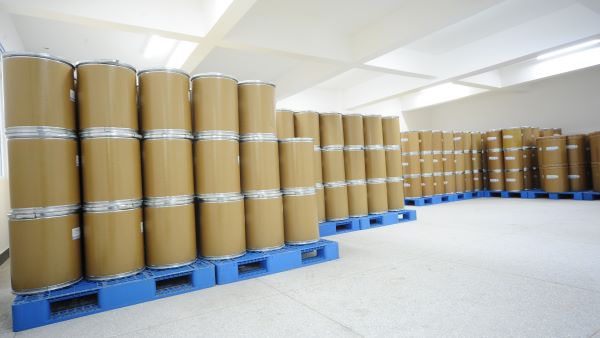
- Standard: 25 kg/drum (double-layer PE bag inside + aluminum foil bag). Custom packaging available (1 kg, 5 kg, 10 kg bags or bottles). All packaging is moisture-proof and sealed for integrity during transit.
Shipping Terms
- By express (DHL, FedEx, UPS): 3-7 working days. By air freight: 5-10 working days. By sea freight: 20-35 working days depending on destination. Free samples available for quality evaluation.
Shelf Life & Storage
- Store in a cool, dry place away from direct sunlight and heat. Keep container tightly closed when not in use. Protect from moisture to maintain product stability and potency.