Product Description
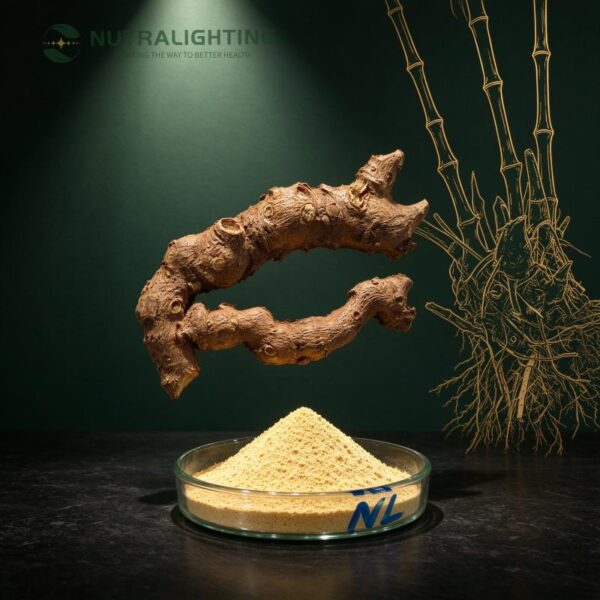
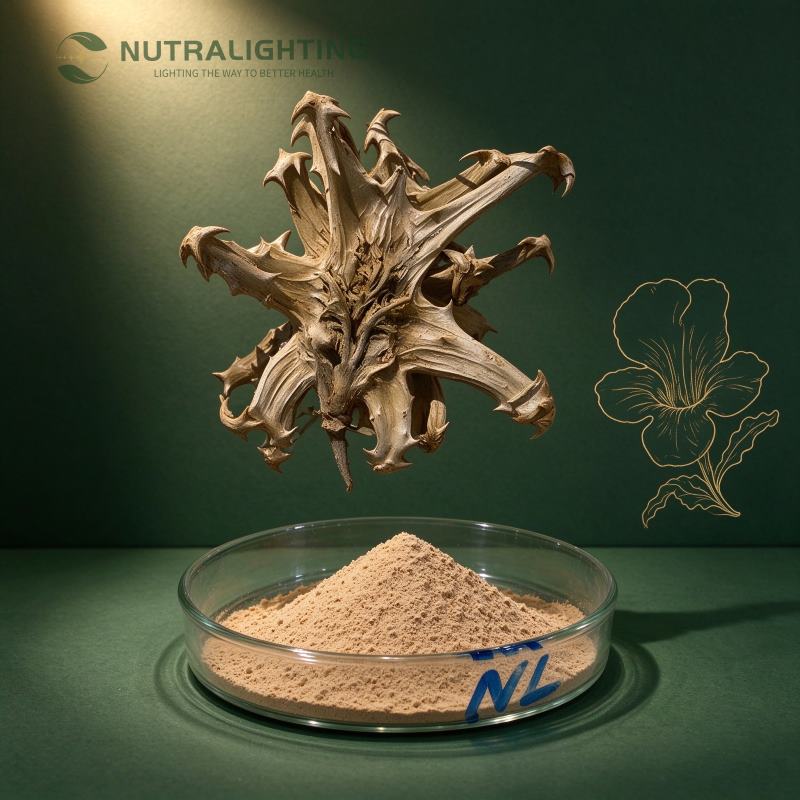
Our Devil’s Claw Extract powder is a premium botanical ingredient derived from the dried tuberous roots of Harpagophytum procumbens, offered in 3% and 5% HPLC-verified harpagoside grades. It is widely used in dietary supplements, herbal formulations and functional wellness products to traditionally support joint comfort, maintain healthy mobility, and assist in promoting a balanced inflammatory response.
Basic Information
| Item | Content |
| Botanical Name | Harpagophytum procumbens DC. and/or Harpagophytum zeyheri Decne. (Pedaliaceae) |
| Part Used | Dried tuberous secondary root |
| Standardised To | Harpagoside 3% / 5% (HPLC) |
| Appearance | Light brown to reddish-brown fine powder |
| Odour | Characteristic, slightly earthy |
| Solubility | Slightly soluble in water; freely soluble in ethanol |
| Origin | Botswana and South Africa |
| Particle Size | 80-100 mesh (available on request) |
| Shelf Life | 24 months when stored properly |
| Storage | Cool, dry place away from light and moisture |
Product Description
Specifications and What They Mean for Your Formula
We stock Devil’s Claw Extract in two harpagoside grades – 3% and 5% – each independently quantified by HPLC. This gives you flexibility across your product range.
The 3% grade is designed for cost-conscious formulations that still require reliable anti-inflammatory activity. It works well in daily joint-support capsules where devil’s claw is one of several botanicals in the blend.
The 5% grade targets formulations seeking higher potency. It aligns with the harpagoside concentrations used in the clinical studies that underpin most of the published evidence base.
Several factors set our supply apart from commodity offerings. First, we source from Botswana and South Africa – the native range of Harpagophytum procumbens – where wild-harvested and sustainably cultivated root material delivers consistent iridoid glycoside profiles. Second, our extraction uses ethanol in food-grade concentrations, then removes all residual solvent before final drying. Third, every batch carries full HPLC documentation of harpagoside content alongside harpagide and other iridoids when required.
Note: Some suppliers refer to this product as “Harpagophytum Extract.” We use the botanical name Harpagophytum in all technical documentation to maintain clarity and comply with international nomenclature standards.
Botanical Background
Harpagophytum procumbens is a perennial succulent herb native to the Kalahari Desert region of southern Africa. The plant produces tuberous secondary roots that store water and bioactive compounds. These roots have been used by indigenous San and Khoikhoi peoples for centuries as a remedy for pain, inflammation, and digestive complaints.
The plant is now cultivated commercially in Botswana, South Africa, Namibia, and Zimbabwe. Sustainable wild harvesting protocols and cultivated sourcing ensure steady supply without depleting natural populations.
Two species are recognised in the European Union herbal monograph: Harpagophytum procumbens (the primary source) and Harpagophytum zeyheri (used interchangeably in some preparations). Our extract is standardised to harpagoside content regardless of which species is used, ensuring consistent bioactivity across batches.
Active Constituents
Primary Marker: Harpagoside
Harpagoside is the principal iridoid glycoside in Harpagophytum root. It is the most extensively studied constituent and serves as the primary quality marker for devil’s claw extracts worldwide.
Two grades are available:
- 3% harpagoside – suitable for general wellness and joint-support blends
- 5% harpagoside – matches the concentration range used in clinical research
Harpagoside is measured by HPLC with UV detection at 205 nm. Results are expressed as a percentage of dried extract weight. Batch-to-batch variation is maintained within ±10% of the labelled value.
Secondary Iridoid Glycosides
Additional iridoid glycosides present in Devil’s Claw Extract include:
- Harpagide – the aglycone-related glycoside, typically 0.3-0%
- Procumbide – a minor iridoid glycoside, trace to 0.3%
- 8-p-coumaroylharpagoside – present in small quantities
The ratio of harpagoside to harpagide can serve as a species differentiation marker. H. procumbens typically contains higher harpagoside relative to harpagide compared to H. zeyheri.
Other Phytochemical Classes
Harpagophytum root contains several other compound classes that may contribute to overall bioactivity:
- Phenolic acids – caffeic acid, ferulic acid, and derivatives
- Phytosterols – beta-sitosterol, stigmasterol
- Triterpenes – harpagogenin, cycloartan derivatives
- Flavonoids – quercetin and kaempferol glycosides (trace)
- Fixed oils – approximately 5-10% in the raw root
Analytical Data Sheet
| Item | Specification | Method | Result |
| Harpagoside (3% Grade) | ≥ 3.0% | HPLC 205nm | 3.0-3.8% |
| Harpagoside (5% Grade) | ≥ 5.0% | HPLC 205nm | 5.0-6.5% |
| Harpagide | ≥ 0.3% | HPLC 205nm | 0.3-1.0% |
| Total Iridoid Glycosides | ≥ 4.0% | HPLC 205nm | 4.0-8.0% |
| Loss on Drying | ≤ 8.0% | KF | ≤ 8.0% |
| Ash | ≤ 8.0% | ICP | ≤ 8.0% |
| Heavy Metals (Pb) | ≤ 2.0 mg/kg | ICP-MS | < 1.0 mg/kg |
| Heavy Metals (As) | ≤ 1.0 mg/kg | ICP-MS | < 0.5 mg/kg |
| Heavy Metals (Cd) | ≤ 0.3 mg/kg | ICP-MS | < 0.2 mg/kg |
| Heavy Metals (Hg) | ≤ 0.1 mg/kg | ICP-MS | < 0.05 mg/kg |
| Pesticide Residues | Pass | GC-MS/LC-MS | Not Detected |
| Residual Solvents | Pass | GC | Compliant |
| Total Plate Count | ≤ 1000 CFU/g | USP <61> | < 10 CFU/g |
| Yeast & Mold | ≤ 100 CFU/g | USP <61> | < 10 CFU/g |
| E. coli | Negative | USP <61> | Negative |
| Salmonella | Negative | USP <61> | Negative |
Mechanism of Action
Anti-Inflammatory Pathways
Harpagoside inhibits cyclooxygenase-2 (COX-2) expression and activity. This reduces prostaglandin E2 (PGE2) synthesis in inflamed tissues. The mechanism is selective – COX-1 expression is largely unaffected at therapeutic concentrations.
The extract also suppresses nuclear factor-kappa B (NF-κB) signalling. By blocking NF-κB nuclear translocation, harpagoside reduces transcription of multiple pro-inflammatory genes, including TNF-α, IL-1β, and IL-6.
Additional pathways include inhibition of 5-lipoxygenase (5-LOX) and reduced leukotriene production. The multi-target anti-inflammatory action provides broader symptom relief than single-pathway inhibitors.
Analgesic Effects
The pain-relieving properties of Harpagophytum extend beyond anti-inflammatory mechanisms. Harpagoside modulates calcium channel activity in nociceptive neurons, reducing pain signal transmission.
Animal studies demonstrate that devil’s claw extract produces analgesic effects comparable to low-dose NSAIDs without the associated gastrointestinal side effects. The onset of action is gradual, typically requiring 2-4 weeks of regular use for full effect.
Gastroprotective and Digestive Support
In traditional use, devil’s claw is valued as a bitter tonic that stimulates digestive secretion. The iridoid glycosides activate bitter taste receptors on the gastrointestinal mucosa, triggering reflex stimulation of gastric juice and bile production.
Modern research supports this use. Devil’s Claw Extract has been shown to protect gastric mucosa against NSAID-induced damage and reduce intestinal inflammation in model systems.
Traditional and Modern Use
Traditional Use
Indigenous peoples of southern Africa – particularly the San and Khoikhoi – have used Harpagophytum root for centuries to treat joint pain, muscle inflammation, and digestive disorders. The root was prepared as a decoction, chewed raw, or applied topically as a poultice.
European herbal medicine adopted devil’s claw in the early 20th century. It became one of the most widely used herbal remedies for osteoarthritis and rheumatic conditions in Germany and Central Europe.
Traditional indications include:
- Osteoarthritis of the knee, hip, and spine
- Rheumatic pain and muscle soreness
- Digestive complaints – loss of appetite, bloating, flatulence
- Fever and gout
- Topical application for wounds and skin inflammation
Modern Clinical Evidence
A 2000 systematic review published in the Cochrane Database evaluated six randomised controlled trials comparing Devil’s Claw Extracts to placebo and standard anti-inflammatory drugs for osteoarthritis. The review found moderate-quality evidence supporting effectiveness for osteoarthritis of the knee and hip.
A 2002 study in Rheumatology compared devil’s claw extract (600 mg three times daily, providing approximately 60 mg harpagoside) to ibuprofen 400 mg three times daily in patients with lumbar radiculopathy. Both treatments showed similar efficacy, but the devil’s claw group reported fewer gastrointestinal adverse events.
A 2014 systematic review in Planta Medica confirmed that Devil’s Claw Extracts provide statistically significant pain reduction in osteoarthritis patients. The analgesic effect was comparable to conventional NSAIDs at lower doses, with a superior tolerability profile.
Research on devil’s claw for inflammatory bowel disease and other gastrointestinal conditions continues. Most current evidence supports use for musculoskeletal and joint-related indications.
Regulatory Status
United States (FDA)
Harpagophytum procumbens is regulated as a dietary supplement ingredient under DSHEA. The plant has a long history of safe use in the United States as a herbal tea and supplement. It is not listed in the FDA GRAS inventory as a standalone substance, nor is it included in the EAFUS database.
Under DSHEA, Harpagophytum root and its extracts may be used as an ingredient in dietary supplements. The herb has been marketed in the United States for decades. Structure/function claims related to joint comfort, inflammation support, and digestive wellness may be made provided the mandatory disclaimer is included. This product is not intended to diagnose, treat, cure, or prevent any disease.
Formulators should ensure claims comply with 21 CFR 101.93 requirements. Harpagoside is the primary bioactive constituent and should be accurately represented on the supplement facts panel.
European Union (EFSA)
Harpagophytum procumbens and Harpagophytum zeyheri are covered by an EU Traditional Use registration (EMA/HMPC/627057/2015). The registration covers herbal preparations of the dried root for:
- Temporary relief of mild digestive disorders such as bloating and flatulence
- Temporary loss of appetite
The EU herbal monograph specifies that the herbal substance must contain not less than 1.2% harpagoside (calculated on the dried drug basis). Our extracts exceed this requirement significantly.
EFSA has not authorised specific health claims for Harpagophytum under Regulation (EC) No 1924/2006. Any health claims in EU markets must comply with the authorised claims register or fall under the traditional use registration framework.
The European Pharmacopoeia (11th Edition) includes a monograph for Harpagophyti Radix, specifying identity tests, harpagoside content (≥1.2%), and limits for heavy metals, pesticide residues, and microbial contamination.
China (NMPA)
Harpagophytum procumbens (Gouguocao) is not listed in the Chinese Pharmacopoeia. It is classified as an imported herbal material and is not included in the list of substances permitted for use in food or dietary supplements in China.
Domestic trading of Devil’s Claw Extracts in China is governed by enterprise standards and industry specifications. The main product specifications in the Chinese market are 3% and 5% harpagoside by HPLC.
For export-oriented clients, all documentation follows international standards including EU monographs, USP testing methods, and FDA DSHEA compliance requirements.
Recommended Usage
Dosage Range
Clinical studies and traditional use data inform the following dosage recommendations:
- For joint and musculoskeletal support: 50-100 mg harpagoside per day
- For digestive support: 300-600 mg dried root equivalent per day
Translating to our extract grades:
- 3% harpagoside grade: 1,600-3,300 mg per day for joint support
- 5% harpagoside grade: 1,000-2,000 mg per day for joint support
The exact dose depends on your formulation design and target harpagoside intake per serving.
Application Forms
Devil’s Claw Extract is suitable for multiple dosage forms:
- Capsules and tablets for joint-support and anti-inflammatory supplements
- Powdered blends for multi-botanical formula systems
- Softgels – the lipophilic fraction disperses effectively in oil bases
- Functional beverages – the earthy flavour profile is acceptable in savoury applications
- Topical formulations – anti-inflammatory extracts are used in cream and gel bases for musculoskeletal application
Formulation Notes
Devil’s Claw Extract has a characteristic earthy, slightly bitter taste. Flavour masking may be necessary in orally administered products, particularly at higher dosages.
The extract is sensitive to moisture. Ensure proper packaging with desiccants for humidity-sensitive applications.
Blend uniformity should be verified through sampling and HPLC harpagoside analysis before final packaging.
Disclaimer
This product is intended for use as an ingredient in dietary supplements and food products. It is not intended to diagnose, treat, cure, or prevent any disease. Statements regarding this product have not been evaluated by the Food and Drug Administration. Consult your healthcare provider before use, especially if you are pregnant, nursing, taking anticoagulant medication (such as warfarin), managing peptic ulcer disease, or have a heart condition. Harpagophytum may interact with prescription medications. Discontinue use at least 2 weeks before scheduled surgery. This information is for educational purposes and does not replace professional medical advice.
Why Choose Nutralighting for Devil’s Claw Extract
For reliable, traceable active content
Every batch of Devil’s Claw Extract goes through full HPLC physical testing. The accompanying COA lists the actual measured harpagoside levels, never the theoretical estimates common across the industry. This guarantees the active content of every shipment fully matches your specified grade, so you never need to re-calibrate your formulation before production.
For consistent, worry-free supply
We hold direct partnerships with certified harvest networks in Botswana and South Africa, the two core origins of Devil’s Claw. We oversee the full chain from harvest, primary processing to export, completely unaffected by the seasonal volatility of scattered spot supplies. Even in off-harvest seasons, we can deliver steady, in-stock supply to keep your production lines running.
For hands-on technical support that solves real problems
No generic auto-replies here. Every point of contact on our team is a specialist trained in botanical extract formulation applications. We deliver targeted, human-to-human answers to all your specific questions about joint-support formulations and regulatory filing, so you never waste time bouncing back and forth over standardized template responses.
References
EMA. European Union Herbal Monograph on Harpagophytum procumbens DC. and/or Harpagophytum zeyheri Decne., radix. EMA/HMPC/627057/2015.
European Pharmacopoeia 11th Edition. Harpagophyti radix monograph. Council of Europe.
Chrubasik S, et al. A systematic review on the Harpagophytum procumbens preparation intensol in the treatment of low back pain. Phytomedicine. 2000;7(1):33-47.
Chrubasik J, et al. A comparison of the efficacy and tolerability of Devil’s Claw Extract and ibuprofen in the treatment of acute low back pain. Rheumatology. 2000;39(8):916-919.
Brendler T, et al. Devil’s claw (Harpagophytum procumbens): a comprehensive review. Journal of Herbal Pharmacotherapy. 2013;13(1):64-105.
Zou Y, et al. Pharmacological effects of Harpagophytum procumbens and its active components. Journal of Ethnopharmacology. 2021;278:114288.
Huang X, et al. Antagonistic effects of Harpagoside on inflammatory mediators in lipopolysaccharide-induced macrophages. BMC Complement Altern Med. 2019;19:335.
Frequently Asked Questions
Standard lead time is 15-25 business days after order confirmation, depending on quantity and customization requirements.
Yes. We supply COA, MSDS, halal/kosher certificates, and non-GMO declaration. Additional documentation can be arranged per market regulations.
Absolutely. We offer tailored extraction solutions based on your formulation needs, including adjusted harpagoside content and solvent systems.
Yes. We support custom packaging specifications and branding options for B2B clients.
Packaging & Shipping
Standard Packaging
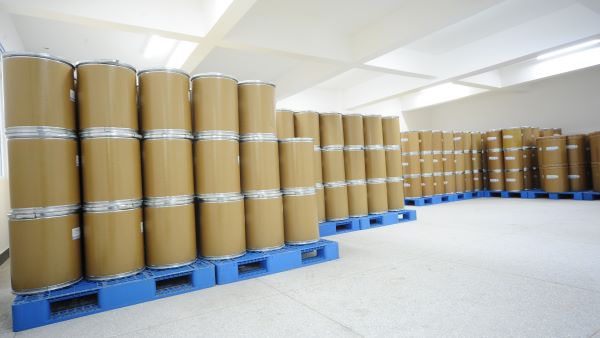
- Standard: 25 kg fiber drums with double PE liners.
- Custom packaging available per buyer requirement.
- Sample quantities: 100 g – 1 kg aluminum bags.
Shipping Terms
- Express (DHL, FedEx, UPS): 3–7 days
- Air freight: 5–10 days
- Sea freight: 20–35 days (varies by destination)
- FOB, CIF, DAP terms available
Shelf Life & Storage
- Store in a cool, dry place away from direct sunlight and moisture. Keep container tightly closed when not in use. Protect from strong odors and humidity.