Product Description
For immune support and seasonal health management, we provide standardized, traceable chicoric acid standardized Echinacea extract raw materials – Nutralighting ensures that every batch of raw materials can withstand verification.
Product Description
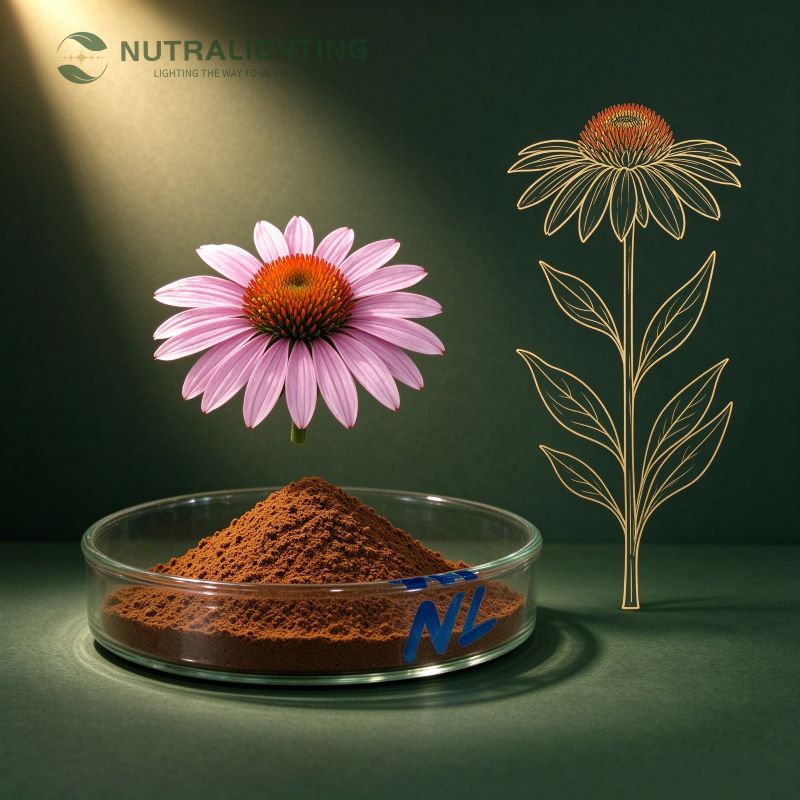
Nutraligting supplies a full-spectrum standardized Echinacea Extract derived from the dried aerial parts (flowers and leaves) and/or roots of Echinacea purpurea (L.) Moench (Family: Asteraceae). Our standard product is standardized to a minimum of 4.0% cichoric acid by HPLC, with characterized alkylamide content. The extract is cultivated in organized planting bases across Shanxi, Hebei, and Inner Mongolia, China – regions selected for their altitude, soil composition, and climate conditions closely matching the native Great Plains habitat of E. purpurea. We supply this extract for formulators building immune-support and antioxidant dietary supplements, functional foods, and botanical ingredient blends in the global B2B market.
Echinacea purpurea is a perennial herb native to the central and eastern United States, widely recognized as one of the most commercially significant medicinal plants in North America. It has been used for centuries by Indigenous peoples of the Great Plains for wound healing, infections, and inflammatory conditions, and became one of the best-selling botanical dietary supplements in Europe and North America during the 1990s and 2000s. The primary bioactive constituents include cichoric acid (a caffeic acid derivative and the most widely used quality marker for E. purpurea), alkylamides (isobutylamides with immunomodulatory activity), echinacoside, polysaccharides, and various phenolic compounds. Clinical research on Echinacea has produced mixed but generally supportive evidence for reducing the duration and severity of the common cold when taken at symptom onset, with meta-analyses reporting a statistically significant reduction in cold duration of approximately 1.4 days. However, the variability in botanical species, plant part used (aerial vs. root), extraction solvent, and standardization markers across studies has been a major source of heterogeneity in the clinical literature. The EMA has issued assessment reports for both the fresh herb (Echinaceae purpureae herba recens) and the dried root (Echinaceae purpureae radix), recognizing different traditional uses based on plant part – the fresh-herb juice preparation for temporary relief of mild upper respiratory tract infections, and the root extract for immune support.
Our full-spectrum ethanol-water extraction process is designed to recover the complete bioactive profile of E. purpurea – including the water-soluble phenolic acids (cichoric acid, chlorogenic acid, caffeic acid) and the lipophilic alkylamide fraction – ensuring that the final extract contains the synergistic compound matrix for which Echinacea is known. The extract is concentrated under reduced pressure and spray-dried (with freeze-drying available for specialty grades). We offer standard grades at 4.0% cichoric acid, with optional grades at 6.0% and 8.0% for specific positioning requirements. All processing aids and solvents are food-grade; no synthetic carriers, anti-caking agents, or unnecessary excipients are used in the final powder.
Quality control follows USP/EP standards and Nutraligting internal specifications. Each production batch is accompanied by a Certificate of Analysis covering cichoric acid content (HPLC), total alkylamides (colorimetric / HPLC), total polysaccharides, echinacoside, loss on drying, total ash, heavy metals (Pb, As, Cd, Hg per USP <561>), pesticide residues, aflatoxins, and microbiological parameters. Full traceability from raw material to finished product is maintained. Organic-certified, KOSHER, HALAL, and Non-GMO documentation are available on request.
Basic Information
Core Application Areas
Immune Support: Rich in polysaccharides and alkamides known to support immune function
Standardized Potency: 4:1 extraction ratio with guaranteed active compound levels
Clinically Studied: Backed by research supporting immune health benefits
Versatile Application: Suitable for capsules, tablets, gummies, and liquid formulations
| Item | Content |
| Extract Name | Echinacea Extract |
| Botanic Name | Echinacea purpurea (L.) Moench |
| Plant Part Used | Aerial parts (flower, leaf, stem) |
| English Common Name | Echinacea purpurea Extract, |
| Solvent | Ethanol/Water |
| Main Active Components | Cichoric acid, Alkylamides (isobutylamides), Echinacoside, Polysaccharides, Phenolic compounds |
Standard Specifications (COA)
The values below are typical specifications for our standard cichoric acid 4.0% grade. Actual values for each batch are reported in the accompanying COA. Custom specification ranges are available for qualifying orders.
| Test Item | Standard |
| Cichoric Acid (HPLC) | ≥4.0% (grades available: 4.0%, 6.0%, 8.0%) |
| Total Alkylamides | Characterised and declared (% w/w); typical range 0.02%-0.1% |
| Echinacoside | ≥0.3% (typically 0.5%-2.0%, varies by plant part) |
| Total Polysaccharides | ≥10.0% |
| Loss on Drying | ≤7.0% |
| Total Ash | ≤8.0% |
| Lead (Pb) | ≤1.0 mg/kg |
| Arsenic (As) | ≤2.0 mg/kg |
| Cadmium (Cd) | ≤0.5 mg/kg |
| Mercury (Hg) | ≤0.1 mg/kg |
| Pesticide Residues (Organochlorine/Organophosphorus) | Complies with USP <561> |
| Aflatoxin B1 | ≤5.0 μg/kg |
| Total Aflatoxins | ≤10.0 μg/kg |
| Total Microbial Count (TAMC) | ≤1×10⁴ CFU/g |
| Yeasts and Molds (TYMC) | ≤1×10² CFU/g |
| E. coli / Salmonella | Negative in 1g |
Botanical Source Description
This product is derived from Echinacea purpurea (L.) Moench (Family: Asteraceae), commonly known as purple coneflower. E. purpurea is native to the central and eastern United States, with its natural range extending from Texas and Oklahoma eastward to Florida and northward to Ontario and Michigan. In China, E. purpurea was introduced for cultivation in the late 20th century and has since been grown in several provinces, with major production areas in Shanxi, Hebei, Inner Mongolia, Shaanxi, Gansu and Qinghai. The high-altitude continental climate and well-drained sandy-loam soils in these regions provide growing conditions that approximate the native Great Plains habitat. E. purpurea is a perennial herb that typically reaches 60-120 cm in height, with characteristic purple-pink ray florets and a prominent central cone. The above-ground parts (flowers and leaves) are harvested at full bloom for aerial-part extracts, while the roots are harvested in the second or third year for root extracts. Both plant parts have distinct bioactive profiles – the aerial parts are richer in cichoric acid and polysaccharides, while the roots contain higher concentrations of alkylamides. Our standard product combines both parts to deliver a broad-spectrum extract.
The bioactive profile of Echinacea is significantly affected by the plant species, plant part, harvest time, extraction solvent, and post-harvest processing. E. purpurea differs from the other two commercially used species, Echinacea angustifolia and Echinacea pallida, in its phytochemical composition – E. purpurea is notably richer in cichoric acid, while E. angustifolia tends to have higher alkylamide content. Specifying the botanical species and plant part in your COA is critical, as the clinical evidence base for immune support is primarily derived from E. purpurea preparations. Our raw material supply chain ensures botanical authentication through macroscopic and microscopic identification, and all batches are tested by HPLC to confirm species identity and active constituent content.
Core Efficacy
The following efficacy summary is based on published scientific literature and is provided for technical reference. End-product health claims should be validated against the regulations of the target market.
The immunomodulatory and antioxidant properties of Echinacea purpurea extract are primarily attributed to its cichoric acid, alkylamide, and polysaccharide content. Cichoric acid has demonstrated antioxidant activity through direct free-radical scavenging and upregulation of endogenous antioxidant enzymes, as well as anti-inflammatory effects via inhibition of cyclooxygenase (COX) and lipoxygenase (LOX) pathways and suppression of pro-inflammatory cytokine production including TNF-α and IL-6 (Schoeffter et al., Planta Medica, 2006). The alkylamide fraction, particularly dodeca-2E,4E,8Z,10E-tetraenoic acid isobutylamide, exhibits immunomodulatory activity through interaction with cannabinoid CB2 receptors on immune cells, modulating cytokine release and phagocytosis (Wildeck et al., Phytotherapy Research, 2000). Polysaccharides from Echinacea have been shown to stimulate innate immune responses, including enhanced phagocytic activity of macrophages and increased natural killer (NK) cell activity. Clinical evidence for cold prevention and treatment comes from a Cochrane systematic review (Cassano et al., Cochrane Database of Systematic Reviews, 2023; CD001458), which analyzed 48 randomized controlled trials and found that Echinacea preparations reduced the risk of developing colds by 58% in prevention studies and shortened cold duration by approximately 1.4 days when treatment was started within 24 hours of symptom onset. However, the review noted substantial heterogeneity across studies, attributing inconsistent results largely to differences in botanical species, plant part, extraction method, and standardization markers. A landmark RCT by Gagnon et al. (Phytomedicine, 2000; 7(5): 333-341) tested a standardized E. purpurea extract (400 mg three times daily, containing 6.3 mg cichoric acid, 1.1 mg alkylamides, and 100 mg polysaccharides) and found a significant reduction in cold duration and severity in the treatment group compared to placebo. Another study by Tiralongo et al. (Journal of Infectious Diseases, 2010; 202(10): 1470-1478) found that daily supplementation with a standardized E. purpurea preparation significantly reduced both the incidence and duration of the common cold in healthy adults over a 5-month winter period. For formulation purposes, it is important to note that the clinical evidence is strongest for preparations standardized to cichoric acid and containing both aerial parts and roots, and that short-term use (up to 10 days) is consistent with the traditional use recommendations.
Regulatory & Regional Access Status
The regulatory information below is based on publicly available data. Always verify current requirements with your target market regulator before product launch.
Note: Regulatory status can change. Confirm with the relevant authority or a regulatory consultant prior to export.
| Region / Country | Regulatory Status | Key Notes |
| USA (FDA) | Dietary Supplement (DSHEA) | Echinacea purpurea is listed in the FDA’s EAFUS database (CAS 94204-52-3) as a substance generally recognized as safe for use in dietary supplements. It is not independently GRAS-approved as a food additive, but is recognized under DSHEA as a botanical dietary supplement ingredient. No FDA-approved health claims exist for Echinacea; structure/function claims are permitted under 21 CFR 101.93 with mandatory disclaimer. The FDA has not taken enforcement action against Echinacea dietary supplement products marketed in the US. Echinacea is included in the WHO Monographs on Selected Medicinal Plants (Vol. 3, 2007). |
| EU (EFSA/EMA) | Traditional Herbal Medicine / Food Supplement | The EMA has issued assessment reports for both Echinaceae purpureae herba recens (fresh herb) and Echinaceae purpureae radix (dried root). The fresh-herb juice preparation is indicated for temporary relief of symptoms of mild upper respiratory tract infections (traditional use). The root extract is indicated for general immune system support (well-established use). EFSA has not authorized a specific health claim for Echinacea under Regulation 1924/2006. The German Commission E approves Echinacea preparations for the prevention and treatment of upper respiratory tract infections. Short-term use (up to 10 days) is recommended for self-limiting conditions. |
| China (NHC/NMPA) | Imported Botanical Material | Echinacea purpurea is not native to China but is cultivated in Shanxi, Hebei, Inner Mongolia, Shaanxi, Gansu and Qinghai. It is not listed in the Chinese Pharmacopoeia but is widely used in TCM-influenced formulations. For export, compliance with target market regulations applies. |
Application Directions & Recommended Dosage
| Application | Recommended Dosage | Dosage Forms | Notes |
| Oral Powder / Soluble Drink | As per specification | Stick packs, sachets, jars | Water-soluble extract disperses readily. The characteristic earthy-bitter taste may require masking; consider blending with citrus, ginger, or honey flavour systems for palatability. Compatible with vitamin C, zinc, and elderberry for immune-support blends. |
| Tablets / Capsules | As per specification | Tablets, hard capsules | Typical serving: 300-400 mg extract 2-3×/day (900-1,200 mg/day total). At 4.0% cichoric acid grade, a 400 mg capsule delivers ~16 mg cichoric acid. For acute cold treatment, align with the Gagnon et al. protocol of 400 mg TID. |
| Liquid Supplements / Functional Beverages | As per specification | Glass bottles, PET bottles, single-serve vials | Soluble in water and aqueous alcohol. Stable in pH 3.0-6.5 range. The natural amber-brown colour and earthy flavour profile may limit use in clear or sweet beverage formats without masking. |
| Oral Care Products | As per specification | Mouthwash, lozenges | Echinacea exhibits antimicrobial and anti-inflammatory properties relevant to oral health. Suitable for inclusion in natural oral care formulations. Evaluate sensory compatibility with mint and other oral-care flavour systems. |
Recommended Daily Dosage Reference
Immune support / cold prevention and treatment: 300-400 mg standardized Echinacea extract 2-3 times daily (total 900-1,200 mg/day), aligned with the clinical protocols used in the Gagnon and Tiralongo RCTs
Short-term use: Recommended for up to 10 consecutive days for acute immune support; prolonged daily use beyond 8 weeks is not recommended per EMA guidance due to potential desensitization
Allergy and sensitisation caution: Echinacea is a member of the Asteraceae/Compositae family. Individuals with known allergies to Asteraceae plants (ragweed, chrysanthemum, marigold, daisy) may be at increased risk of allergic reaction. Formulators should include appropriate allergen warning on product labelling
Children: Echinacea is generally considered safe for children over 12 years of age for short-term use. For children under 12, consult a healthcare provider before use
Other Precautions
- Keep containers tightly closed after opening -the extract is hygroscopic and alkylamides degrade in humid conditions and under light exposure
- Avoid prolonged exposure to light and elevated temperatures during transit and storage -alkylamides are photosensitive
- For oral care formulations: Echinacea extract is compatible with common mouthwash and lozenge bases. Evaluate sensory acceptability in your final formulation before scale-up.
- Echinacea purpurea is listed in the FDA’s EAFUS database (CAS 94204-52-3) and is generally recognized as safe for use in dietary supplements under DSHEA. The FDA has not issued any safety warnings specifically targeting Echinacea products.
- ALLERGEN WARNING: Echinacea is a member of the Asteraceae/Compositae family. Individuals with known allergies to Asteraceae plants (ragweed, chrysanthemum, marigold, daisy, camomile) may experience allergic reactions, including contact dermatitis, urticaria, and in rare cases, anaphylaxis. Product labelling should include an appropriate allergen warning for Asteraceae-sensitive consumers.
- Immune-mediated conditions: Echinacea stimulates immune activity and should be avoided by individuals with autoimmune diseases (e.g., multiple sclerosis, lupus, rheumatoid arthritis) or those taking immunosuppressive medications. Use in children with autoimmune conditions should be supervised by a healthcare provider.
- Pregnancy and lactation: Safety data for Echinacea during pregnancy and lactation are limited. The EMA does not recommend use during pregnancy and breastfeeding. Pregnant or nursing women should consult a healthcare provider before use.
- Short-term use only: Echinacea is intended for short-term use (up to 10 days for acute treatment; up to 8 weeks for seasonal prevention). Prolonged continuous use may lead to desensitization and reduced effectiveness. Products should not be marketed for long-term daily use.
- Drug interactions: Echinacea may interact with immunosuppressant drugs, CYP450-metabolized medications, and medications processed by the liver. Individuals taking prescription medications should consult a healthcare provider before using concentrated Echinacea extract supplements.
Why Choose Nutraligting Echinacea Extract?
The immune-support ingredient market is one of the most competitive in botanicals, but the clinical evidence for Echinacea is inconsistent precisely because of supplier variability – different botanical species, different plant parts, different standardization markers make comparison across products impossible. We aim to bring consistency and transparency to what has historically been an opaque market.
You want to formulate an immune-support product with credible clinical evidence, but the Echinacea market has significant variability in botanical species, plant part, and standardization -making it difficult to replicate the dosages and extract profiles used in the clinical trials. We supply E. purpurea standardized to ≥4.0% cichoric acid with declared alkylamide content and full botanical authentication, so you can formulate with the exact bioactive profile the Gagnon and Tiralongo protocols used.
You need clear allergen warning labelling to comply with regulatory requirements, but most Echinacea suppliers ship the powder and leave allergen assessment entirely to the brand owner. We provide Asteraceae cross-reactivity data, species identification certificates, and recommended allergen warning language in our technical dossier -so your regulatory team can position the product safely from day one.
You face the challenge of bitter, earthy taste in your capsule or beverage formulation, but most Echinacea suppliers simply ship the raw powder with no formulation guidance. We offer practical taste-masking recommendations, blending suggestions (echinacea + vitamin C + zinc + elderberry), and sensory compatibility testing support -so your final product delivers both immune-support efficacy and consumer acceptability.
You need a supplier with competitive pricing and consistent domestic supply, but many Echinacea extract suppliers rely on wild-harvested North American material with unpredictable seasonal availability and quality. China now has organized cultivation bases in Shanxi, Hebei, and Inner Mongolia, giving us direct access to a stable, domestically-sourced supply at competitive prices -without the seasonality and supply-chain volatility of wild-harvest procurement.
You need flexible customization for your specific formulation and market requirements, but many suppliers offer only fixed specifications with no room for adjustment. Whether you need a different cichoric acid concentration, a specific alkylamide profile for your target indication, a custom extraction ratio, or private-label packaging with your branding, we accommodate the changes -with clear communication on lead times and minimum order quantities before you commit.
You want a partner who goes beyond simply supplying raw material and can help you position your Echinacea product effectively in the crowded immune-support segment. Our technical team provides application support for capsules, powders, beverages, and oral care formats -including guidance on taste masking, thermal-processing compatibility, and synergistic ingredient pairing (echinacea + vitamin C + zinc for immune positioning, echinacea + elderberry + ginger for cold-treatment blends). We help you think through the full product development journey, not just the ingredient transaction.
Appendix: References
(The following references are provided for technical reference. Some are open access and can be accessed via PubMed, PMC, or the journal websites.)
[1] Cassano R. et al., Cochrane Database of Systematic Reviews, 2023; CD001458. – Meta-analysis of 48 RCTs: Echinacea reduced cold risk by 58% in prevention and shortened duration by ~1.4 days when started within 24h.
[2] Gagnon V. et al., Phytomedicine, 2000; 7(5): 333-341. – RCT: standardized E. purpurea extract (400 mg TID) significantly reduced cold duration and severity.
[3] Tiralongo R. et al., Journal of Infectious Diseases, 2010; 202(10): 1470-1478. – RCT: daily E. purpurea supplementation reduced cold incidence and duration over 5 months.
[4] Schoeffter P.A. et al., Planta Medica, 2006. – Cichoric acid mechanisms: antioxidant and anti-inflammatory via COX/LOX inhibition.
[5] Wildeck U. et al., Phytotherapy Research, 2000. – Alkylamide immunomodulation via CB2 receptor interaction.
[6] EMA/HMPC. Assessment report on Echinaceae purpureae herba recens. Traditional use for mild upper respiratory tract infections.
[7] EMA/HMPC. Assessment report on Echinaceae purpureae radix. Well-established use for immune system support.
[8] German Commission E. Monograph on Echinacea. Prevention and treatment of upper respiratory tract infections.
[9] FDA EAFUS. Echinacea purpurea (CAS 94204-52-3) – Listed as GRAS substance for use in dietary supplements.
[10] WHO. Monographs on Selected Medicinal Plants, Vol. 3, 2007. – Echinacea purpurea monograph.
[11] United States Pharmacopeial Convention. USP-NF Monograph: Echinacea Purpurea Extract. Rockville: United States Pharmacopeia, 2021: 2892-2894.
[12] Li S, Miller R, Weber W, et al. Updated quality control standard framework for multi-component characterization of Echinacea spp. extracts. Journal of Dietary Supplements, 2022, 19(3): 287-301.
[13] European Medicines Agency. Herbal Monograph for Echinacea purpurea (L.) Moench, radix et herba extractum. London: EMA Committee on Herbal Medicinal Products, 2023: 1-12.
Frequently Asked Questions
Our Echinacea Extract has a 24-month shelf life when stored properly in a cool, dry place away from direct sunlight.
Yes, we provide Certificate of Analysis (COA), Material Safety Data Sheet (MSDS), and all necessary documentation for regulatory compliance.
Our standard MOQ is 25 kg per batch. We also accommodate smaller trial orders starting at 5 kg.
Packaging & Shipping
Standard Packaging
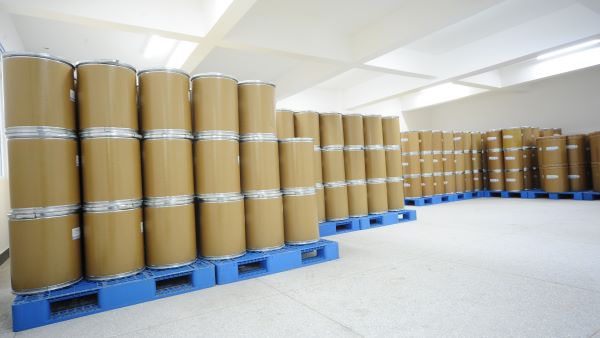
- 25 kg drums with dual polyethylene liners. Custom packaging available for bulk orders.
Shipping Terms
- FOB Shanghai port. Express shipping available for urgent orders. Sea freight recommended for bulk quantities.
Shelf Life & Storage
- Store in a cool, dry place below 25°C. Protect from moisture and direct sunlight. Shelf life: 24 months.