Product Description
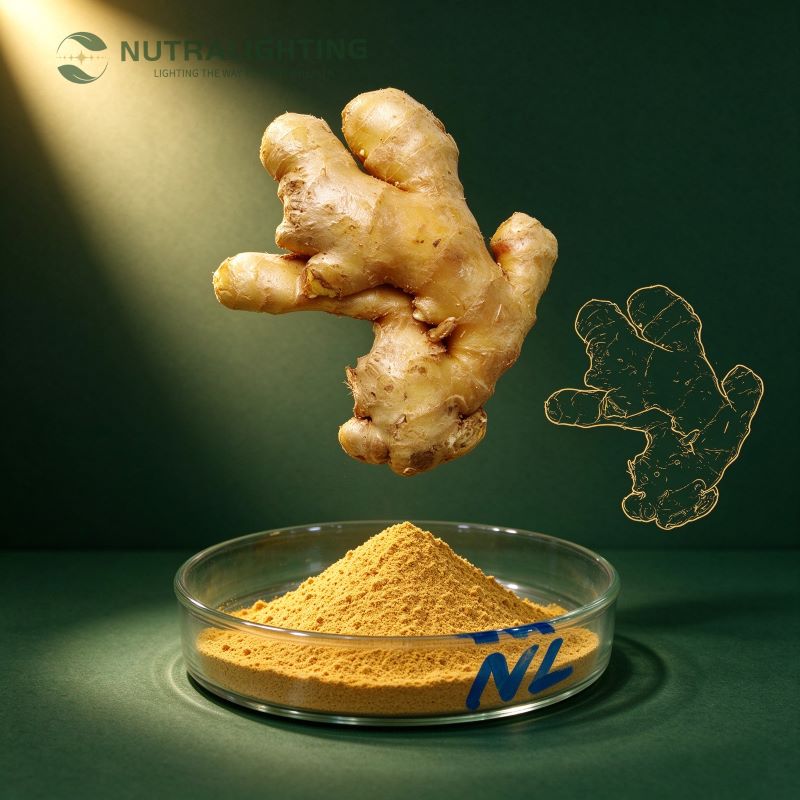
Nutraligting supplies a premium standardized ginger root extract from the dried rhizomes of Zingiber officinale Roscoe, cultivated in organized planting bases across Guangdong, Guangxi, Yunnan, and Sichuan provinces, China. Our standard product is standardized to 5%-10% total gingerols by HPLC (expressed as 6-gingerol), with a complementary shogaol fraction that reflects the natural profile of dried ginger material. Gingerols and shogaols are the primary bioactive pungent principles responsible for the anti-inflammatory, antioxidant, and gastrointestinal-support properties long associated with ginger. This extract is designed for formulators building dietary supplements, functional foods, and wellness products in the global B2B market.
Product Description
Ginger (Zingiber officinale) is one of the most widely consumed culinary spices and medicinal plants in the world, with a documented history of use spanning over 5,000 years in both Traditional Chinese Medicine and Ayurvedic practice. The Chinese Pharmacopoeia (2020 Edition) includes a monograph for Zingiberis Rhizoma, and ginger is listed in the European Pharmacopoeia as Zingiberis Rhizoma. The active pungent principles – gingerols in fresh ginger and their dehydration products, shogaols, in dried or heated ginger – are well-characterized by HPLC and are the standard markers for quality control. China is the world’s second-largest ginger producer after India, with annual dried rhizome output exceeding 1.5 million metric tons, making domestic-sourced ginger extract one of the most cost-competitive botanical ingredients available globally. The EMA has adopted a Union herbal monograph for Zingiberis Rhizoma, recognizing its traditional use for the prevention of nausea and vomiting in motion sickness and for mild, spasmodic gastrointestinal complaints.
Our manufacturing process uses food-grade hydroalcoholic extraction at controlled low temperatures, followed by reduced-pressure concentration and spray drying (with freeze-drying available for specialty grades). The process is designed to preserve the thermolabile gingerol fraction while capturing the shogaol content characteristic of dried ginger rhizome. We offer standard grades at 5% and 10% total gingerols (HPLC), with custom specification ranges available for high-volume contracts.
Quality control follows USP/EP standards and Nutraligting internal specifications. Each production batch is accompanied by a Certificate of Analysis covering total gingerol content (HPLC, expressed as 6-gingerol), shogaol content, loss on drying, total ash, heavy metals (Pb, As, Cd, Hg per USP <561>), pesticide residues, aflatoxins, and microbiological parameters.
Basic Information
| Item | Content |
| Extract Name | Ginger Root Extract |
| Botanical Name | Zingiber officinale Roscoe |
| Part Used | Rhizome |
| Extraction Solvent | Ethanol/Water (Food Grade) |
| English Common Name | Zingiberis Rhizoma Extract, Ginger Extract |
| Appearance | Brown to Reddish-brown Powder/Liquid |
| Odor | Characteristic Ginger Odor |
| Main Active Components | Total Gingerols (mainly 6-gingerol), Shogaols (6-shogaol, 10-shogaol), Paradol, Zingerone |
| Key Specifications | Total Gingerols 5%-10% (HPLC, expressed as 6-gingerol); Shogaols present per source material |
| Target Markets | North America, Europe, Asia-Pacific – Digestive Health, Joint Health & Anti-Nausea segments |
| Core Application Areas | Ginger Extract is widely used in dietary supplements, functional beverages, food flavorings, herbal formulations, and cosmetic products for its warming properties and bioactive compounds. |
Standard Specifications (COA)
The values below are typical specifications for our standard gingerol 5%-10% grade. Actual values for each batch are reported in the accompanying COA. Custom specification ranges are available for qualifying orders.
| Test Item | Standard |
| Total Gingerols (HPLC, expressed as 6-gingerol) | 5%-10% (grades available: 5%, 8%, 10%) |
| 6-Gingerol (individual, HPLC) | ≥60% of total gingerols |
| Shogaols (6-shogaol + 10-shogaol) | Present per source material (typically 1%-3% of total extract) |
| Loss on Drying | ≤5.0% |
| Total Ash | ≤6.0% |
| Lead (Pb) | ≤1.0 mg/kg |
| Arsenic (As) | ≤2.0 mg/kg |
| Cadmium (Cd) | ≤0.5 mg/kg |
| Mercury (Hg) | ≤0.1 mg/kg |
| Pesticide Residues (Organochlorine/Organophosphorus) | Complies with USP <561> |
| Aflatoxin B1 | ≤5.0 μg/kg |
| Total Aflatoxins | ≤10.0 μg/kg |
| Total Microbial Count (TAMC) | ≤1×10⁴ CFU/g |
| Yeasts and Molds (TYMC) | ≤1×10² CFU/g |
| E. coli / Salmonella | Negative in 1g |
Botanical Source Description
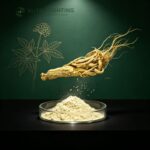
Ginger Extract product is derived from the dried rhizomes of Zingiber officinale Roscoe (Family: Zingiberaceae), commonly known as culinary ginger. Ginger is native to Southeast Asia and has been cultivated across tropical and subtropical regions worldwide for thousands of years. In China, ginger is one of the most extensively cultivated medicinal and culinary crops, with major production centers in Guangdong (notably Gaoyang), Guangxi (Yulin), Yunnan (Luoping), Sichuan (Qianwei, Leshan), and Henan (Qi County, Boai). China produces over 1.5 million metric tons of dried ginger rhizome annually, accounting for a significant share of global supply. The rhizome is harvested when the plant foliage begins to yellow and dry, typically 7-10 months after planting, then cleaned, sliced, and dried under controlled conditions to produce the raw material for extraction. The pungent bioactive compounds – gingerols, shogaols, and paradols – are concentrated in the inner tissue of the rhizome and are the markers most closely associated with ginger’s pharmacological activity.
Core Efficacy
The following efficacy summary is based on published scientific literature and is provided for technical reference. End-product health claims should be validated against the regulations of the target market.
The bioactive properties of ginger root extract are primarily attributed to its gingerol and shogaol content. 6-Gingerol, the principal pungent principle in fresh ginger, exerts anti-inflammatory effects through the inhibition of COX-2 and 5-lipoxygenase (5-LOX) expression and downstream prostaglandin and leukotriene synthesis (Nam et al., Journal of Medicinal Food, 2011; 14(1-2): 96-103). In a randomized, double-blind, placebo-controlled trial published in Osteoarthritis and Cartilage (Altman et al., 2011; 19(10): 1197-1204), patients with knee osteoarthritis who received ginger extract 250 mg twice daily (standardized to 5% gingerols) for 8 weeks showed a 38% reduction in WOMAC pain scores compared to placebo (P<0.001), with a 29% reduction in serum C-reactive protein (CRP) (P<0.01). A systematic review and meta-analysis confirmed that ginger supplementation significantly reduces pain and inflammation in knee osteoarthritis compared to placebo (Chen et al., 2016). For nausea and vomiting, a Cochrane systematic review (Proctor et al., Cochrane Database of Systematic Reviews, 2014; CD007575) found that ginger (approximately 1 g/day in divided doses) was effective in reducing nausea and vomiting during pregnancy, with a pooled risk ratio of 0.54 for vomiting reduction. The antiemetic mechanism is thought to involve 5-HT3 receptor antagonism, similar to the pharmacological target of ondansetron, though at a much milder potency. A separate clinical study (PMC10630771) demonstrated that ginger extract (8 mg gingerols in a 160 mg dose) significantly reduced motion sickness symptoms measured by the Motion Sickness Assessment Questionnaire (MSAQ), supporting the EMA traditional-use indication for ginger rhizome in motion sickness. In vitro studies have also shown that gingerol and shogaol compounds scavenge superoxide anions and hydroxyl radicals, inhibit lipid peroxidation, and modulate NF-κB and MAPK signaling pathways (Nam et al., 2011), contributing to their broad antioxidant and anti-inflammatory profiles.
Regulatory & Regional Access Status
The regulatory information below is based on publicly available data. Always verify current requirements with your target market regulator before product launch.
Note: Regulatory status can change. Confirm with the relevant authority or a regulatory consultant prior to export.
| Region / Country | Regulatory Status | Key Notes |
| USA (FDA) | GRAS / Dietary Supplement | Ginger root (Zingiber officinale) is Generally Recognized as Safe (GRAS) for use as a food ingredient under 21 CFR 182.20. Ginger extract (CAS 84696-15-1) is listed in the FDA’s EAFUS (Previously Confirmed GRAS Substances) database as a flavoring agent or adjuvant. Ginger root extract is commonly marketed as a dietary supplement ingredient under DSHEA. Daily intake of up to 4 g of dried ginger powder is considered safe by the FDA. Structure/function claims are permitted under 21 CFR 101.93 with the mandatory disclaimer. No FDA-approved drug indications exist for ginger extract; it is not approved to diagnose, treat, cure, or prevent any disease. |
| EU (EFSA/EMA) | Traditional Herbal Medicine / Food Supplement | The EMA has adopted a Union herbal monograph for Zingiberis Rhizoma (Ginger Rhizome), recognizing its traditional use for the prevention of nausea and vomiting in motion sickness, and for the symptomatic relief of mild, spasmodic gastrointestinal complaints such as bloating and flatulence. EFSA has not authorized a specific health claim for ginger under Regulation 1924/2006. Ginger is permitted as a food ingredient and food supplement across EU member states. Products must comply with Directive 2002/46/EC (food supplements) and Regulation (EU) 2015/2283 (Novel Food – ginger is not a Novel Food as it has a established food use history in the EU). |
| China (NHC/NMPA) | Medicinal Food Homology / Health Food Raw Material | Zingiberis Rhizoma (Sheng Jiang) is listed in the Chinese Pharmacopoeia (2020 Edition) and in China’s “Substances That Are Both Food and Medicine” catalog. It is approved for use in health foods with functions related to aiding digestion and supporting immune health. Export compliance should follow target market regulations. |
Application Directions & Recommended Dosage
Recommended Daily Dosage Reference
- Digestive support / anti-nausea: 250-500 mg standardized ginger root extract per day (delivering approximately 12.5-50 mg total gingerols at our 5%-10% grade), taken with or between meals
- Joint health / osteoarthritis support: Align with clinical protocol -the Altman et al. (2011) RCT used 250 mg BID (500 mg/day total) of a 5% gingerol-standardized extract; our 5% grade delivers equivalent gingerol content at 500 mg/day
- Motion sickness: Clinical studies using ginger extract for motion sickness have employed doses of 160-1,000 mg extract per day (containing 8-50 mg gingerols); taking the dose 30 minutes before travel is recommended
- Formulation notes: Ginger extract is soluble in water and aqueous-alcoholic solutions. In products subjected to heat treatment (>70°C), gingerol undergoes a thermal dehydration reaction, converting to shogaol – a natural transformation process that can be utilised or controlled according to the desired product characteristics.
| Application | Recommended Dosage | Dosage Forms | Notes |
| Oral Powder / Soluble Drink | As per specification | Stick packs, sachets, jars | Water-soluble extract disperses readily. The characteristic pungent flavor is a sensory attribute that can enhance product appeal in warming-beverage formulations. Compatible with vitamin C, turmeric, or green tea for synergistic blends. |
| Tablets / Capsules | As per specification | Tablets, hard capsules | Typical serving: 250-500 mg extract per capsule. At 5% gingerol grade, one 500 mg capsule delivers ~25 mg total gingerols. For joint-health positioning, align with the Altman et al. clinical dosage of 500 mg BID (1,000 mg/day total). |
| Liquid Supplements / Functional Beverages | As per specification | Glass bottles, PET bottles | Excellent solubility in water and dilute alcohol. Stable in pH 3.5-6.5 range. The pungent taste profile may require masking in sweet beverage formats; consider our water-soluble graded variant for clearer formulations. |
| Anti-Nausea / Motion Sickness Formulations | As per specification | Chewable tablets, lozenges, capsules | Ginger’s 5-HT3 antagonism mechanism makes it suitable for anti-nausea positioning. Clinical evidence supports use in pregnancy-related nausea (at ≤1 g/day total ginger) and motion sickness. Note: pregnancy-related claims require careful regulatory review. |
Other Precautions
- Keep containers tightly closed after opening -the extract is hygroscopic and gingerol content degrades in humid conditions
- For heat-processed products (>70°C): Gingerols undergo thermal dehydration to form shogaols -this is a natural, well-documented transformation. If your formulation requires high gingerol retention, limit thermal exposure or add the extract post-processing. If a higher shogaol profile is desired, controlled heating during processing can be utilized.
- For chewable / lozenge formats: The characteristic pungent flavor of ginger is a sensory advantage in these formats. Evaluate sensory acceptability in your final formulation before scale-up.
- Ginger root is GRAS as a food ingredient in the US (21 CFR 182.20). The FDA considers a daily intake of up to 4 g of dried ginger powder to be safe for the general population.
- Occasional mild GI discomfort (heartburn, diarrhea, gastric reflux) has been reported at high doses. Ingestion of more than 6 g/day of ginger may exacerbate these symptoms.
- Ginger may have mild antiplatelet effects and can interact with anticoagulant and antiplatelet medications (e.g., warfarin, aspirin, clopidogrel). Individuals taking these medications should consult a healthcare provider before using concentrated ginger extract supplements.
- Ginger may lower blood glucose levels and can interact with oral hypoglycemic agents. Individuals with diabetes should monitor blood sugar closely when using concentrated ginger supplements.
- Ginger is commonly used for nausea in pregnancy; however, pregnant individuals should consult a healthcare provider before using concentrated ginger extract supplements, especially during the first trimester.
- Individuals with gallstones or biliary obstruction should use ginger extract with caution, as ginger stimulates bile secretion.
Why Choose Nutraligting Ginger Root Extract?
Nutraligting aims to become a trusted global partner for ginger root extract in the digestive health, joint health, and anti-nausea ingredient segments. Below are the reasons our B2B customers choose us:
- You need batch-to-batch consistency, but ginger raw material varies significantly by origin, harvest time, and drying method -affecting both the gingerol-to-shogaol ratio and overall potency. Our extract is produced from carefully selected dried rhizomes from proven Chinese growing regions (Guangdong, Guangxi, Yunnan, Sichuan), and each batch is tested and certified to spec before shipment, giving you the consistency you need to maintain product quality across seasons and supply cycles.
- You need a supplier with deep cost competitiveness, but many ginger extract suppliers source from India or other non-Chinese origins at higher cost. China is the world’s second-largest ginger producer with over 1.5 million metric tons of annual output, giving us direct access to the world’s largest and most cost-effective ginger supply chain -resulting in competitive pricing without middlemen markups.
- You need flexible customization for your specific formulation, but many suppliers offer only fixed specifications with no room for adjustment. Whether you need a different gingerol concentration, a custom extraction ratio, a specific shogaol-to-gingerol profile for your target indication, or private-label packaging with your branding, we accommodate the changes -with clear communication on lead times and minimum order quantities before you commit.
- You want a partner who goes beyond simply supplying raw material and can help you position your ginger product effectively in the market. Our technical team provides application support for capsules, powders, beverages, chewables, and functional food formats -including guidance on flavor masking, thermal processing compatibility, and synergistic ingredient pairing (e.g., ginger with turmeric for inflammatory support, or with peppermint for digestive blends). We help you think through the full product development journey, not just the ingredient transaction.
Appendix: References
(The following references are provided for technical reference. Some are open access and can be accessed via PubMed, PMC, or the journal websites.)
[1] Altman R.D. et al., Osteoarthritis and Cartilage, 2011; 19(10): 1197-1204. – RCT: ginger extract 250 mg BID (5% gingerols) for 8 weeks reduced WOMAC pain by 38% and CRP by 29% in knee osteoarthritis patients.
[2] Proctor A. et al., Cochrane Database of Systematic Reviews, 2014; CD007575. – Cochrane review: ginger (~1 g/day) effective for nausea and vomiting during pregnancy.
[3] Nam M.J. et al., Journal of Medicinal Food, 2011; 14(1-2): 96-103. – Anti-inflammatory mechanisms of 6-gingerol and 6-shogaol: inhibition of NF-κB and MAPK pathways, COX-2/5-LOX suppression.
[4] EMA/HMPC. Zingiberis Rhizoma – European Union herbal monograph. Traditional use for prevention of nausea/vomiting in motion sickness and mild gastrointestinal complaints.
[5] FDA 21 CFR 182.20. Spices and other plant materials – Generally Recognized As Safe (GRAS).
[6] FDA 21 CFR 101.93. Structure/function claims on dietary supplement labels – requirements and mandatory disclaimer.
[7] FDA EAFUS. Ginger Extract (CAS 84696-15-1) – Listed as GRAS substance (flavoring agent or adjuvant).
[8] StatPearls [NCBI Bookshelf]. Ginger Root. Last updated August 2024. – Comprehensive review of ginger pharmacology, clinical evidence, safety, and dosing.
Frequently Asked Questions
Our standard MOQ is 25kg per drum, but we can accommodate smaller trial orders of 5-10kg for new customers. Please contact our sales team for details.
Yes, we offer customizable gingerol content ranging from 5% to 95%. We can also produce oil-resin blends and customized particle sizes based on your requirements.
Yes, we provide both conventional and organic-certified Ginger Extract. Our organic products are USDA Organic and EU Organic certified upon request.
We accept T/T (bank transfer), L/C at sight, and other negotiated payment methods. Typically 30% deposit with 70% balance before shipment.
Each batch undergoes strict QC testing including HPLC analysis for active compound content, microbial testing, and heavy metal screening. COA and MSDS are provided with every shipment.
Packaging & Shipping
Standard Packaging
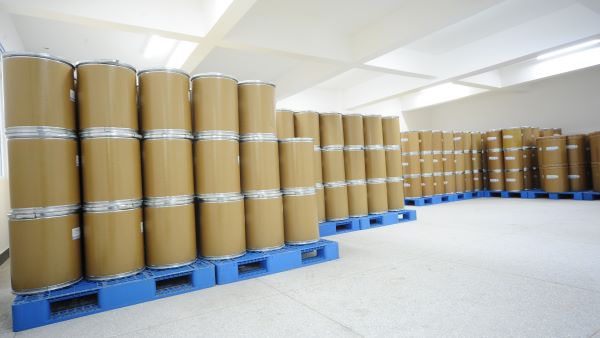
- Standard packaging: 25kg fiber drums with double PE bags inside.
- Custom packaging available: 1kg aluminum foil bags, 5kg boxes, or as per customer requirements.
- Lead time: 7-15 working days after order confirmation.
Shipping Terms
- Delivery terms: FOB, CFR, CIF available
- Port of loading: Shanghai/Ningbo, China
- Sample availability: Free samples (50-100g) within 3-5 days
- Shipping method: By sea, by air, or by express courier (DHL, FedEx, UPS)
Shelf Life & Storage
- Store in a cool, dry place away from direct sunlight and heat sources.
- Keep container tightly closed when not in use.
- Avoid moisture absorption during handling.
- Shelf life: 24 months from production date when stored properly.