Product Description
For venous health support, circulatory wellness and anti-inflammatory product development. We supply Horse Chestnut Extract in three standardized escin grades, all tested via UV spectrophotometry to confirm full triterpene saponin content
Basic Information
| Item | Content |
| Botanical Name | Aesculus hippocastanum L. (Sapindaceae) |
| Part Used | Seed (dried) |
| Plant Origin | Cultivated in Romania, Hungary; also introduced in China (Shandong, Henan provinces). Native to the Balkan Peninsula (Serbia, Bulgaria, Greece) |
| Solvent | Food-grade ethanol / water (Ph. Eur. grade) |
| Standardisation | Escin / triterpene saponins (UV spectrophotometry); Esculin (HPLC-DAD, reference standard) |
| Specifications | 20% / 40% / 98% escin (standardised triterpene saponins) |
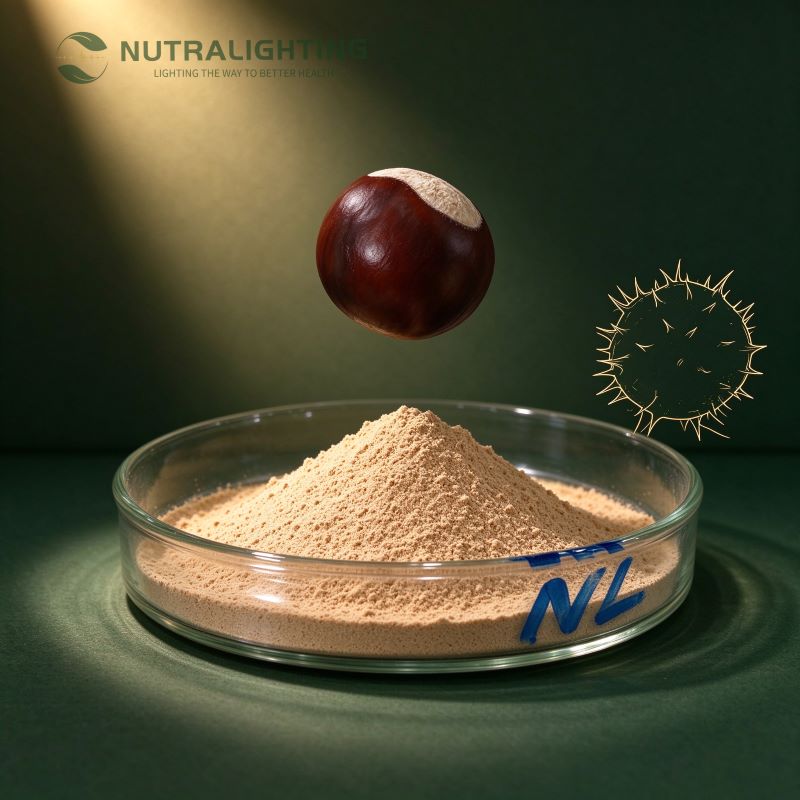
| Appearance | Fine powder, yellow to light brown |
| Odour | Characteristic mild |
| Taste | Bitter |
| Moisture | ≤ 7.0% (LoD) |
| Ash | ≤ 5.0% (Total ash); ≤ 2.0% (Acid-insoluble ash) |
| Heavy Metals | Pb ≤ 2 ppm; As ≤ 1 ppm; Hg ≤ 0.1 ppm; Cd ≤ 0.3 ppm |
| Residual Solvents | Ethanol ≤ 2,000 ppm (Ph. Eur. 2.4.24) |
| Microbiological | Total aerobic count ≤ 10^3/g; Yeast & mould ≤ 10^2/g; E. coli negative; Salmonella negative |
| Particle Size | 95% pass 80 mesh (180 μm) |
| Shelf Life | 24 months (store below 25°C, protected from light and moisture) |
| Target Market | USA, EU, Japan, Southeast Asia, Latin America |
| Core Application Areas | Venous health supplements; Circulation support; Anti-inflammatory blends; Dermaceuticals; Capsules and tablets |
Product Description
Horse Chestnut Extract is obtained from the dried seed of Aesculus hippocastanum L. It belongs to the Sapindaceae family and is a large deciduous tree native to the Balkan Peninsula.
Three escin-grade specifications are available – 20%, 40%, and 98%. Each grade is independently verified for triterpene saponin content using UV spectrophotometry. The 20% grade is suitable for general venous support formulations. The 40% grade is the most commonly specified concentration for commercial products. The 98% grade delivers a highly concentrated extract for premium clinical-grade applications.
The primary bioactive constituents are escins – a mixture of triterpene saponins. Escin has been shown in clinical studies to reduce venous hypertension, improve capillary permeability, and exert anti-inflammatory effects. The EU has evaluated horse chestnut seed extract extensively through the HMPC.
Aesculus hippocastanum is native to the Balkan Peninsula (Serbia, Bulgaria, Greece). It has been widely cultivated in temperate regions across Europe and introduced to China (Shandong, Henan provinces) for ornamental and medicinal purposes.
Active Constituents
The bioactive profile of Horse Chestnut Extract is dominated by triterpene saponins, collectively known as escins. Our standardisation covers escin content as the primary marker, with esculin used as a reference standard for quality control.
Primary Marker: Escin (Triterpene Saponins)
Escin is a mixture of triterpene saponins. The major components include alpha-escin and beta-escin. Escin has the molecular formula C55H86O24 and a molecular weight of approximately 1131.27 Da. The ESC standardises horse chestnut seed extract to contain 50 mg escin per 100 mg extract. Commercial preparations typically contain 20-98% escin, as measured by UV spectrophotometry.
Reference Standard: Esculin
Esculin (CAS 531-75-9, C15H16O9, MW 340.28) is the hydroxyesculetin glucoside found in horse chestnut seed. It serves as a reference standard for identifying and quantifying saponin content. Esculin is measured by HPLC-DAD. It is also listed as a test parameter in the Ph. Eur. monograph on Horse Chestnut Seed.
Aglycone Reference: Protoaescigenin
Protoaescigenin (CAS 20853-07-0, C30H50O6, MW 534.71) is the major aglycone of the aescin mixture. The EU HMPC standardises horse chestnut seed extract to 6.5-10% triterpene glycosides, calculated as protoaescigenin. This standard is used in licensed European herbal medicinal products.
COA Standard Specifications
| Item | Specification | Method | Result Range |
| Escin (total triterpene saponins) | 20% / 40% / 98% | UV spectrophotometry | Varies by grade |
| Esculin | Present / quantified | HPLC-DAD | Varies by grade |
| Loss on drying | ≤ 7.0% | LoD 105°C | – |
| Total ash | ≤ 5.0% | Char at 600°C | – |
| Acid-insoluble ash | ≤ 2.0% | HCl extraction | – |
| Ethanol residual | ≤ 2,000 ppm | GC (Ph. Eur. 2.4.24) | – |
| Lead (Pb) | ≤ 2 ppm | ICP-MS | – |
| Arsenic (As) | ≤ 1 ppm | ICP-MS | – |
| Mercury (Hg) | ≤ 0.1 ppm | ICP-MS | – |
| Cadmium (Cd) | ≤ 0.3 ppm | ICP-MS | – |
| Total aerobic count | ≤ 10^3/g | Ph. Eur. 2.6.12 | – |
| Yeast and mould | ≤ 10^2/g | Ph. Eur. 2.6.12 | – |
| E. coli | Negative | Ph. Eur. 2.6.12 | – |
| Salmonella | Negative | Ph. Eur. 2.6.12 | – |
Mechanism of Action
Venotonic and Vasoconstrictive Effects
Escin improves venous tone and reduces venous hypertension. It enhances venous wall elasticity and promotes vasoconstriction. This action reduces venous blood pooling and supports healthy circulation in the lower extremities.
Capillary Protection
Escin reduces capillary permeability and fragility. It strengthens the endothelial barrier function and reduces fluid leakage into surrounding tissues. This mechanism supports the reduction of oedema and swelling associated with venous insufficiency.
Anti-inflammatory Activity
Escin inhibits pro-inflammatory enzymes including hyaluronidase and elastase. It also suppresses NF-κB signalling and reduces the expression of inflammatory cytokines. These actions contribute to its anti-inflammatory and anti-oedematous effects.
Anti-edematous Effects
The combination of venotonic, capillary-protective, and anti-inflammatory actions produces a synergistic anti-oedematous effect. Clinical studies have demonstrated that horse chestnut seed extract significantly reduces leg volume and oedema in patients with chronic venous insufficiency.
Traditional and Modern Use
Horse chestnut seed has been used in European traditional medicine for centuries. It is one of the most extensively studied herbal medicines for venous and lymphatic conditions.
In contemporary practice, Horse Chestnut Extract is incorporated into dietary supplements targeting venous health, circulation support, and anti-inflammatory wellness. It is also used in dermaceutical topical formulations for leg comfort.
The EMA has published a community herbal monograph on Horse Chestnut Seed. The HMPC concluded that horse chestnut seed preparations can be used for the traditional treatment of chronic venous insufficiency. Symptoms include swollen legs, varicose veins, and a feeling of heaviness in the legs.
Regulatory Status
Horse Chestnut is recognised in several regulatory frameworks.
In the United States, Aesculus hippocastanum is not listed in the FDA EAFUS database. It is not subject to GRAS notification. However, it is widely available as a dietary supplement ingredient under DSHEA. The ESC (European Scientific Cooperative on Phytotherapy) has given a positive opinion for horse chestnut seed extract for the symptomatic treatment of chronic venous insufficiency.
In the European Union, Aesculus hippocastanum seed is not listed as a Novel Food under Regulation (EU) 2015/2283. The HMPC has published a community herbal monograph on Horse Chestnut Seed. The EMA has authorised licensed herbal medicinal products containing horse chestnut seed extract in several EU member states. The standardised extract is prepared with ethanol 40-80% and standardised to contain 6.5-10% triterpene glycosides, calculated as protoaescigenin.
In China, Aesculus hippocastanum is cultivated in Shandong and Henan provinces. The related Chinese species Aesculus chinensis (娑罗子/Suoluozi) is used in Traditional Chinese Medicine for abdominal pain and distension. Both species belong to the Sapindaceae family and contain escin-type saponins, but they are different botanical species.
The United States Botanical Safety Handbook classifies Aesculus hippocastanum seed as low risk when used appropriately in standardised extract form.
Recommended Usage
Typical daily intake is 100-150 mg of escin (total triterpene saponins), divided into two or three doses.
Formulation guidance by grade:
20% escin grade: Suitable for multi-ingredient venous support blends at 500-1,000 mg per day
40% escin grade: Optimal for single-ingredient formulations at 250-500 mg per day
98% escin grade: Best for high-potency clinical formulations at 100-200 mg per day
Clinical trials have used horse chestnut seed extract delivering 100-150 mg of escin per day. The standardised extract used in most trials (ESCE) contains 16.2-18.5 mg escin per 100 mg of dry extract, administered twice daily.
Duration of use should not exceed 12 weeks without medical supervision. The EMA advises that benefit may take at least four weeks to become apparent.
Precautions
IMPORTANT SAFETY NOTE: Raw horse chestnut seed contains esculin and other saponins that can be toxic if consumed in unprocessed form. Only properly standardised and processed extracts should be used in dietary supplements. The safety profile of standardised escin extract is well established in clinical literature, but raw seed material should never be consumed directly.
General Precautions
Do not exceed the recommended daily dosage. Prolonged use beyond 12 weeks should be supervised by a healthcare professional. Discontinue use at least two weeks before any scheduled surgery. Store out of reach of children. Do not use if pregnant or breastfeeding unless directed by a healthcare provider.
Drug Interactions
Consult a healthcare professional before use if taking anticoagulant or antiplatelet medications (e.g., warfarin, aspirin). Horse chestnut may theoretically increase the risk of bleeding. It may also interact with antidiabetic medications due to potential blood sugar-lowering effects.
Contraindications
Not recommended for individuals with known hypersensitivity to Sapindaceae family plants. Not recommended for use during pregnancy or lactation due to insufficient safety data. Individuals with kidney or liver disorders should consult a healthcare professional before use.
When to Discontinue
Discontinue use and consult a healthcare provider if you experience gastrointestinal discomfort, headache, dizziness, or any allergic reaction. This product is not intended for self-treatment of chronic venous insufficiency or other serious medical conditions.
Why Choose Nutraligting
More than just a supplier of Horse Chestnut Extract, we are your full-chain professional partner in the horse chestnut extract industry.
We do not produce generic bulk plant extracts. Instead, we focus entirely on the core active component in horse chestnut – aescin – to deliver consistent batch quality, preserved activity and global compliance. This gives your end products an edge over competitors right from the raw material stage, in the venous health, circulation wellness and anti-inflammatory segments.
Full-graded specifications plus customisation capabilities to precisely match your formulation needs.
Our standard product line covers all three core aescin grades: 20%, 40% and 98%. We can also make flexible adjustments based on your specific product scenarios:
- For oral venous health capsules: We provide high-purity raw materials with low residual solvents and full water solubility, which fit well with the human body’s absorption rhythm.
- For external soothing horse chestnut balms: We can customise low-odour horse chestnut extracts with optimised permeability, to achieve perfect compatibility with your gel system.
- For pharmaceutical-grade preparations: We supply aescin monomer materials that meet pharmacopoeia standards, with full sets of impurity test reports delivered along with each order.
You will never need to repeatedly adjust your downstream formulation to fit the fixed parameters of generic bulk extracts.
Three layers of quality control to lock in active content, with a “verifiable content promise” for every batch.
We reject the crude quality control practice that relies only on single UV testing, and set three safety locks for every batch of horse chestnut extract:
- The first lock: We only source freshly mature horse chestnuts from core producing regions, to eliminate activity degradation caused by aged raw materials.
- The second lock: The whole production process uses low-temperature and light-shielded extraction technology, to prevent the heat-sensitive aescin from losing activity.
- The third lock: For finished products, we first test total triterpene saponin content via UV spectrophotometry, then use HPLC to recheck the proportion of aescin monomers.
We do not only sell raw materials – we also provide exclusive implementation support tailored for this specific industry.
We have collected nearly a hundred formulation references and compliant claim cases of top-selling horse chestnut products worldwide:
- For the European and American markets: We can inform you of the compliant expression boundaries for “circulation wellness” in local influencer content.
- For the domestic Chinese market: We can help you avoid the claim red lines for ingredients in health food and disinfection products.
- You do not need to spend months making mistakes on your own. We share all the market-proven experience directly with you, so your product launch pace will be at least 3 months faster than your competitors.
References
Cochrane Database of Systematic Reviews. “Horse chestnut seed extract for chronic venous insufficiency.” Cochrane Abstract, 2000. Updated 2021.
Gink, G., et al. (2001). “A randomised comparison of the tolerability and efficacy of oral treatment with flecovenoside and compression stockings in the management of acute superficial vein thrombophlebitis.” Phlebology, 16(3), 111-118.
Levi, J., et al. (1995). “A comparison of the efficacy and tolerability of an oral horse-chestnut seed extract and heparin in the treatment of acute ankle sprains.” Phytomedicine, 2(3), 201-206.
European Medicines Agency (EMA). “Assessment report on Aesculus hippocastanum L., semen.” EMA/HMPC/638242/2018. Community herbal monograph.
European Medicines Agency (EMA). “Horse-chestnut seed Aesculus hippocastanum L., semen – Summary of the scientific conclusions.” EMA/HMPC/CHMP/HMP. 2018.
ESC (European Scientific Cooperative on Phytotherapy). “Monograph on Aesculus hippocastanum L., semen.” In: Wagner, H., et al. (eds.). Herbal Medicines: A Clinical Guide. 2002.
Alibaba supplier listings. “Horse Chestnut Extract Powder 20% 40% 98% Aescin Escin” – commercial COA data, verified escin CAS 6805-41-0 (mixture of natural saponins), C55H86O24, MW 1131.27; esculin CAS 531-75-9, C15H16O9, MW 340.28; protoaescigenin CAS 20853-07-0, C30H50O6, MW 534.71.
Frequently Asked Questions
Our standard MOQ is 1 kg for sample orders and 25 kg for bulk orders. Custom packaging and smaller trial quantities can be discussed on a case-by-case basis.
Yes. Every batch ships with a COA covering identity, assay, heavy metals, microbial limits, and residual solvents. Additional documentation such as MSDS, Kosher/Halal certificates, and origin certificates are available upon request.
Yes. Our Horse Chestnut Extract is 100% plant-derived and contains no animal-derived ingredients, making it suitable for vegan and vegetarian product lines.
We offer aescin standardization from 5% up to 30%, with 10% and 20% being our most popular grades. Custom standardization is also available to meet your specification requirements.
Absolutely. We welcome third-party inspection and testing by SGS, Eurofins, or any lab you designate prior to shipment.
Standard bulk orders typically ship within 15-25 working days after payment confirmation, depending on quantity and customization requirements.
Packaging & Shipping
Standard Packaging
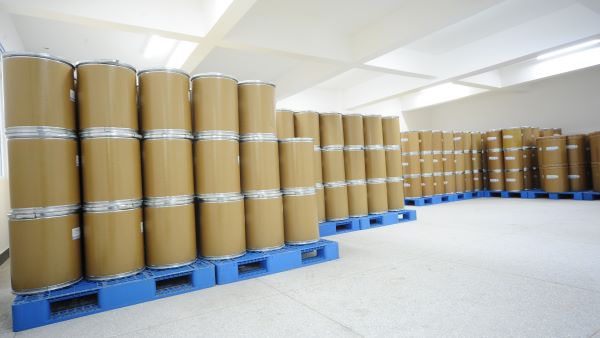
- Standard packaging: 25 kg drum lined with double polyethylene bags.
- Custom packaging available in 1 kg, 5 kg, and 10 kg aluminum foil bags with zip-lock closure.
- Labeling can be customized per buyer requirements, including bilingual options.
Shipping Terms
- Express (DHL, FedEx, UPS): 3-7 business days for sample orders.
- Air freight: 5-10 business days for medium-sized orders.
- Sea freight: 25-40 business days for full container loads.
- FOB Shanghai / CIF / DAP terms available. Export documentation provided.
Shelf Life & Storage
- Store in a cool, dry place below 25°C.
- Keep container tightly closed when not in use.
- Protect from direct sunlight and moisture to maintain stability and shelf life.