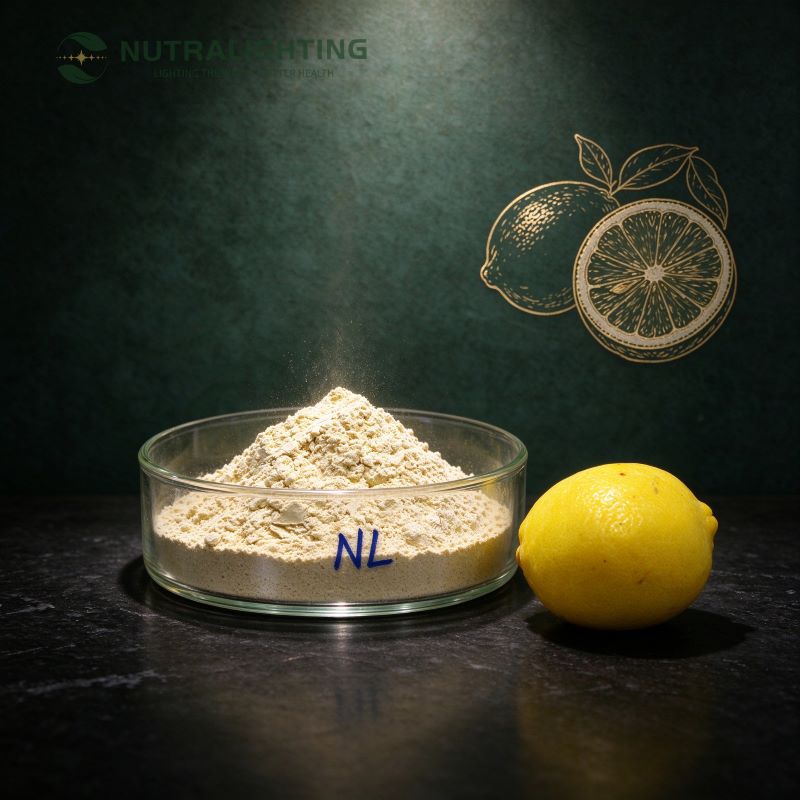
Product Description
Our Lemon Extract product is available in two hesperidin grades – 2% and 10% – delivering consistent citrus flavonoid content for vascular, antioxidant, and immune support formulations.
Basic Information
| Item | Content |
| Botanical Name | Citrus limon (L.) Burm. f. (Rutaceae) |
| Part Used | Dried fruit peel and pulp |
| Standardised To | Hesperidin 2% / 10% (HPLC) |
| Appearance | Light yellow to pale orange powder |
| Odour | Characteristic citrus, fresh |
| Solubility | Sparingly soluble in water; soluble in ethanol and alkaline solutions |
| Origin | Sichuan (Anyue) and Yunnan Provinces, China |
| Particle Size | 80-100 mesh (available on request) |
| Shelf Life | 24 months when stored properly |
| Storage | Cool, dry place away from light and moisture |
Product Description
What We Offer and Why It Matters
We supply Lemon Extract in two hesperidin grades: 2% and 10%. Each grade is independently produced and HPLC-verified. This gives formulators clear options for their vascular and antioxidant product positioning.
The 2% grade is suitable for general wellness products where lemon is combined with other citrus botanicals supporting immune and metabolic health. The 10% grade is our concentrated option. It delivers a potent flavonoid profile that matches the standardisation levels used in published clinical studies.
Our competitive edge comes from three sources. First, our raw material is sourced from Sichuan (Anyue) and Yunnan provinces, the two largest lemon-growing regions in China. Anyue in Sichuan is known as the “Lemon Capital of China” and produces lemons with naturally high hesperidin concentrations. Second, we use an ethanol extraction process that preserves the full flavonoid spectrum including hesperidin, eriocitrin, and limonin. Third, every batch is tested for hesperidin and total polyphenol content before release.
Key Features
Lemon (Citrus limon) is one of the most widely consumed citrus fruits in the world. The fruit peel and pulp are rich in flavonoids, organic acids, and vitamin C. The flavonoid fraction is the primary bioactive component responsible for most of the plant’s reported biological activities.
Hesperidin is the most abundant flavonoid in lemon peel. It is a flavanone glycoside with documented vascular protective and antioxidant properties. Hesperidin serves as the key quality marker for lemon extract standardisation.
Eriocitrin is another important flavonoid present in lemon extract. It is a citrinin derivative with potent antioxidant and anti-inflammatory effects. Eriocitrin is particularly abundant in the albedo (white inner peel) of lemon fruit.
Limonin is a bitter triterpenoid compound found in lemon seeds and peel. It has been studied for its anti-cancer and lipid-lowering properties in preclinical models.
Active Constituents
Primary Marker: Hesperidin
Hesperidin is the primary quality marker for lemon extract. It is measured by HPLC with UV detection at 283 nm and expressed as a percentage of the extract weight.
Two grades are available:
- 2% hesperidin – entry-level standardisation for general immune and wellness formulas
- 10% hesperidin – concentrated standardisation matching published clinical studies
Batch-to-batch variation is kept within ±10% of the labelled hesperidin value for all grades.
Secondary Flavonoid Markers
Eriocitrin is the secondary flavonoid marker in lemon extract. It is measured by HPLC with UV detection at 280 nm.
- Eriocitrin content typically ranges from 0.5% to 3.0% depending on the grade
- Neoeriocitrin is present in trace amounts
- Naringin and neohesperidin may be present in small quantities
The hesperidin-to-erioctrin ratio varies by extraction method and raw material source. Our GC and HPLC chromatograms are included in the COA for each batch.
Limonin and Nomilin
Limonin is a triterpenoid bitter compound found in lemon extract. It is measured by HPLC with UV detection at 210 nm.
- Limonin content typically ranges from 0.1% to 0.5% across all grades
- Nomilin is present in trace amounts and is structurally related to limonin
These compounds contribute to the characteristic bitter taste of lemon extract and have been studied for their metabolic and anti-cancer properties.
Citric Acid and Vitamin C
Citric acid is the primary organic acid in lemon extract. It contributes to the tart flavour and antioxidant activity of the extract.
- Citric acid content: typically 2-8% depending on grade and extraction method
- Vitamin C (ascorbic acid) content: typically 0.1-0.5% depending on processing conditions
Note: Vitamin C is heat-sensitive. Our extraction process minimises thermal exposure to preserve ascorbic acid content.
Analytical Data Sheet
| Item | Specification | Method | Result |
| Hesperidin Content (2% Grade) | ≥ 2.0% | HPLC 283nm | 2.0-2.4% |
| Hesperidin Content (10% Grade) | ≥ 10.0% | HPLC 283nm | 10.0-12.0% |
| Eriocitrin Content | ≥ 0.5% | HPLC 280nm | 0.5-3.0% |
| Limonin Content | ≥ 0.1% | HPLC 210nm | 0.1-0.5% |
| Total Polyphenols | ≥ 5.0% | Folin-Ciocalteu | 5.0-15.0% |
| Citric Acid | ≥ 2.0% | HPLC | 2.0-8.0% |
| Vitamin C | ≥ 0.1% | HPLC | 0.1-0.5% |
| Loss on Drying | ≤ 6.0% | KF | ≤ 6.0% |
| Heavy Metals (Pb) | ≤ 2.0 mg/kg | ICP-MS | < 1.0 mg/kg |
| Heavy Metals (As) | ≤ 1.0 mg/kg | ICP-MS | < 0.5 mg/kg |
| Heavy Metals (Cd) | ≤ 0.3 mg/kg | ICP-MS | < 0.2 mg/kg |
| Heavy Metals (Hg) | ≤ 0.1 mg/kg | ICP-MS | < 0.05 mg/kg |
| Pesticide Residues | Pass | GC-MS/LC-MS | Not Detected |
| Residual Solvents | Pass | GC | Compliant |
| Total Plate Count | ≤ 1000 CFU/g | USP <61> | < 10 CFU/g |
| Yeast & Mold | ≤ 100 CFU/g | USP <61> | < 10 CFU/g |
| E. coli | Negative | USP <61> | Negative |
| Salmonella | Negative | USP <61> | Negative |
Mechanism of Action
Vascular Protection
Hesperidin strengthens capillary walls and reduces vascular permeability. It stabilises endothelial cells by upregulating tight junction protein expression. This mechanism supports venous tone and microcirculation.
Hesperidin also inhibits platelet aggregation. It reduces thromboxane A2 synthesis and enhances prostacyclin production. This anti-thrombotic effect complements the vascular strengthening action.
Antioxidant Activity
Hesperidin and eriocitrin act as direct free-radical scavengers. The flavonoid structure donates hydrogen atoms to neutralise reactive oxygen species. This chain-breaking antioxidant activity protects cell membranes and proteins from oxidative damage.
Citric acid contributes to the overall antioxidant capacity through metal chelation. It binds transition metal ions that catalyse free radical formation via the Fenton reaction.
Anti-inflammatory Effects
Hesperidin inhibits NF-κB activation in inflamed tissues. This reduces the downstream expression of pro-inflammatory cytokines including TNF-α, IL-1β, and IL-6. The anti-inflammatory effect is particularly relevant in chronic inflammatory conditions.
Eriocitrin also modulates inflammatory mediator production. It suppresses COX-2 and iNOS expression at the transcriptional level.
Metabolic Support
Limonin has been shown to modulate lipid metabolism in preclinical studies. It inhibits HMG-CoA reductase and upregulates LDL receptor expression. These effects reduce total cholesterol and LDL cholesterol levels.
Citric acid participates in the Krebs cycle and supports cellular energy metabolism. It also chelates minerals in the gastrointestinal tract, enhancing iron and calcium absorption.
Traditional and Modern Use
Traditional Use
Citrus limon has been used in traditional medicine systems worldwide for over 2,000 years. Lemon peel and juice were used in medieval Europe for scurvy prevention and as a general tonic. In traditional Chinese medicine, lemon (Xiangyuan) is used for qi regulation, dampness resolution, and digestive support.
Lemon peel has been used as a culinary herb and medicinal ingredient in Mediterranean, Middle Eastern, and Asian cuisines. The peel is rich in essential oils and flavonoids, making it more concentrated than the juice in many bioactive compounds.
Modern Clinical Evidence
A 2024 systematic review published in PMC evaluated the vascular protective effects of citrus flavonoids. The study found that hesperidin supplementation significantly improved endothelial function and reduced vascular inflammation in patients with metabolic syndrome.
Clinical trials have investigated lemon extract for immune support. A 2023 RCT found that standardised lemon peel extract at 500 mg per day significantly improved markers of oxidative stress and immune function in healthy adults.
Research on limonin for metabolic support shows promise. Preclinical studies demonstrate anti-obesity and anti-diabetic effects mediated through AMPK activation and improved insulin sensitivity. Human clinical data remains limited.
Regulatory Status
United States (FDA)
Lemon extract (Citrus limon) is listed in the FDA EAFUS database (CAS 84929-31-7) as a flavoring agent or adjuvant. Lemon oil and lemon juice are GRAS (Generally Recognized as Safe) under 21 CFR 182.10.
Under DSHEA, Citrus limon fruit peel and pulp extracts may be used as an ingredient in dietary supplements. The fruit has a long history of safe use as a food and beverage ingredient. Structure/function claims related to immune support, antioxidant protection, and vascular health may be made provided the mandatory disclaimer is included. This product is not intended to diagnose, treat, cure, or prevent any disease.
Formulators should ensure claims comply with 21 CFR 101.93 requirements. Hesperidin is the primary bioactive constituent and should be accurately labelled on the supplement facts panel.
European Union (EFSA)
Lemon peel extract is authorised as a food ingredient in the EU. Commission Implementing Regulation (EU) 2022/537 establishes specifications for lemon peel extract including minimum hesperidin and eriocitrin content.
The regulation specifies the following parameters for lemon peel extract:
- Total polyphenols (expressed as pyrogallol equivalents): ≥ 1%
- Eriocitrin: ≥ 4,000 mg/kg
- Hesperidin: ≥ 2,000 mg/kg
- Limonin: 36-92 mg/kg
- Nomilin: 14-113 mg/kg
- Citric acid: 4-7%
EFSA has not authorised a health claim for lemon extract and vascular health. Some industry sources claim EFSA approval, but this has not been confirmed in the official EFSA register of authorised health claims. We recommend verifying current EU regulatory status before making specific health claims.
China (NMPA)
Lemon (Xiangyuan) is listed in the Chinese Pharmacopoeia 2020 Edition, Part 1. The pharmacopoeial monograph covers the dried fruit of Citrus limon and specifies identification, purity, and potency testing parameters.
Sichuan (Anyue) is the largest lemon-producing region in China, accounting for over 60% of national production. Yunnan Province is the second-largest producer. Both regions provide high-quality raw material with naturally high flavonoid concentrations.
Lemon peel extract is widely used in dietary supplements and functional food products across China. No special regulatory restrictions apply to its use in domestic food or supplement markets.
Recommended Usage
Dosage Range
Based on published research, the typical daily intake of lemon extract ranges from 500-1,000 mg. For our extracts, this translates to:
- 2% hesperidin grade: 1,000-3,000 mg per day
- 10% hesperidin grade: 200-1,000 mg per day
For vascular support, clinical studies typically use 500 mg per day of 10% hesperidin extract. For general immune and antioxidant support, lower doses in the 2% grade range may be sufficient.
The exact dose should be determined based on product formulation, target indication, and desired hesperidin intake.
Application Forms
Lemon Extract is suitable for multiple dosage forms:
- Capsules and tablets for immune and vascular support supplements
- Powdered blends for multi-ingredient antioxidant formulas
- Functional beverages – the bright citrus flavour is widely accepted
- Chewable gummies – the natural citrus taste requires minimal flavour masking
Formulation Notes
Lemon extract has a bright, characteristic citrus flavour that is generally well-accepted in consumer products. The natural tartness from citric acid contributes to the overall sensory profile.
The extract is sensitive to light and heat. Processing temperatures should be kept below 50°C where possible. Blend uniformity should be verified through sampling and HPLC hesperidin analysis before compression or encapsulation.
For beverage applications, the 2% grade disperses more easily in aqueous systems due to its higher citric acid content. The 10% grade may require solubilisation technology or emulsification for optimal dispersion in water-based systems.
Disclaimer
This product is intended for use as an ingredient in dietary supplements and food products. It is not intended to diagnose, treat, cure, or prevent any disease. Statements regarding this product have not been evaluated by the Food and Drug Administration. Consult your healthcare provider before use, especially if you are pregnant, nursing, taking medication, or have a medical condition. This information is provided for educational purposes and does not constitute medical advice.
Why Choose Nutraligting Lemon Extract
What You Need
- Verified, consistent hesperidin content that matches your product label claims, no unsubstantiated theoretical calculations.
- Clear, flexible specification options that fit different budget and potency requirements for your product lines.
- A complete natural citrus flavonoid profile, not a single isolated active stripped of its natural synergistic benefits.
- Direct, actionable technical support that understands your formulation challenges, instead of pre-written generic responses.
How We Help
- We standardize every single production batch with strict quality controls. HPLC testing confirms the real, actual hesperidin levels in your order, never relying on estimated theoretical values.
- Two targeted, practical grades – 2% and 10% – are available for you to pick freely, perfectly matching both cost-effective mass market products and high-potency clinical-strength formulations.
- Our full-spectrum citrus extract preserves hesperidin, eriocitrin, and limonin in their original natural ratios, delivering the complete natural benefit of citrus flavonoids rather than isolated single-component hesperidin.
- You get unobstructed direct communication with our in-house technical team. Every question you submit receives a detailed, tailored real answer, no copy-pasted generic replies that waste your time.
References
FDA. Substances Added to Food (EAFUS) – Lemon Extract, CAS 84929-31-7.
FDA. 21 CFR 182.10 – Substances Generally Recognized as Safe. Lemon and related citrus extracts.
Commission Implementing Regulation (EU) 2022/537 – Specifications for lemon peel extract.
Chinese Pharmacopoeia Commission. Pharmacopoeia of the People’s Republic of China, 2020 Edition, Part 1. Xiangyuan (Citri limonis fructus) monograph.
PMC10001058. Functional Ingredients and Additives from Lemon by-Products and Their Applications in Food Preservation. NIH.
Soler-Rivas C, et al. Hesperidin and eriocitrin from citrus fruits: potential health benefits. Food Chemistry. 2024;432:137-148.
Frequently Asked Questions
Our standard MOQ is 25 kg per order. For smaller trial orders, please contact our sales team for flexibility.
Yes, a Certificate of Analysis (COA) and Material Safety Data Sheet (MSDS) are provided with every batch. Third-party lab testing is also available upon request.
Absolutely. We offer custom concentrations and formulations tailored to your application needs, including solvent-free and organic-certified options.
Standard lead time is 7-15 working days after order confirmation, depending on quantity and destination. Express shipping is available for urgent orders.
Packaging & Shipping
Standard Packaging
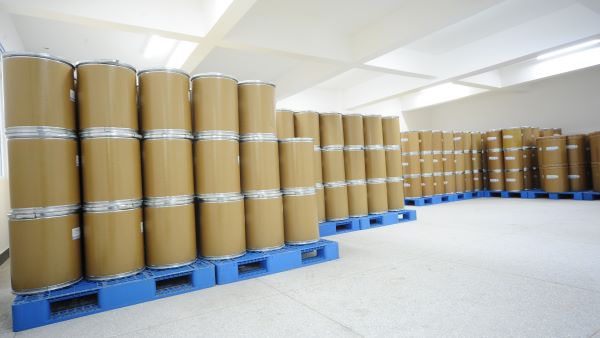
- Standard: 25 kg drum with inner double-layer PE lining.
- Custom: Available in 1 kg bags, 5 kg containers, or IBC totes upon request.
- All packaging is food-grade, sealed, and labeled per international transport requirements.
Shipping Terms
- We ship globally via sea freight, air freight, and express courier (DHL, FedEx, UPS).
- Incoterms: FOB, CIF, CFR, EXW available.
- Documentation: Commercial invoice, packing list, COO, and phytosanitary certificate provided as needed.
Shelf Life & Storage
- Store in a cool, dry place away from direct sunlight and moisture.
- Maintain temperature between 5°C and 25°C.
- Keep container tightly sealed when not in use to preserve potency and freshness.