Product Description
Available in three furanosesquiterpene grades – 5%, 10%, and 20% – each with independently verified volatile oil content and individual sesquiterpene profiling by GC-MS, sourced from Somalia and Ethiopia.
Basic Information
| Item | Content |
| Botanical Name | Commiphora myrrha Engl. (Burseraceae) |
| Part Used | Dried oleogum-resin (gum resin) from stem and branch incisions |
| Standardised To | Grade A (Standard): total furanosesquiterpenes ≥ 5.0% Grade B (Potent): total furanosesquiterpenes ≥ 10.0% Grade C (High Potency): total furanosesquiterpenes ≥ 20.0% |
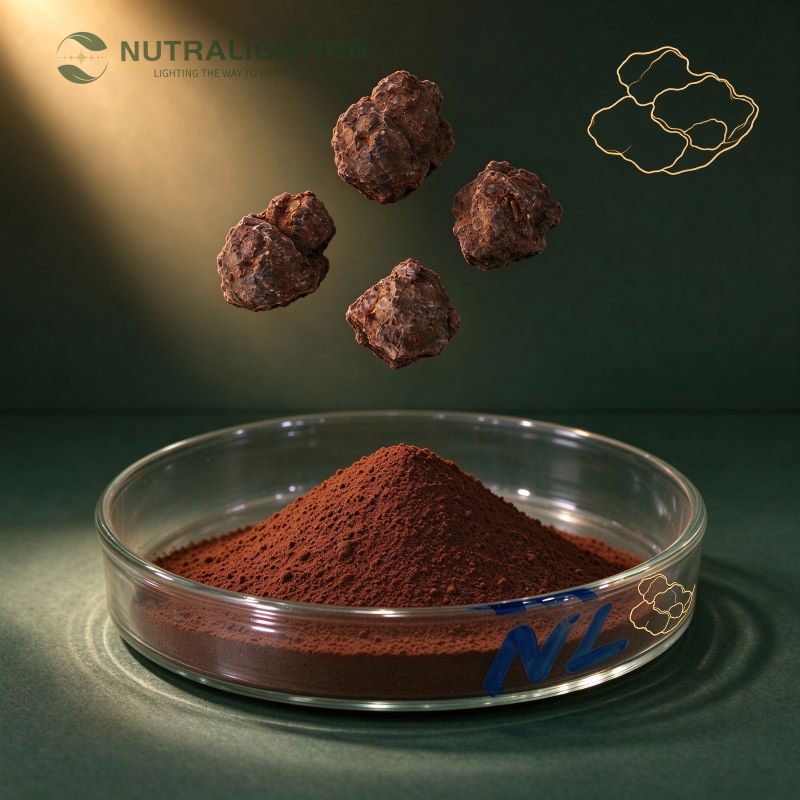
| Appearance | Brown to reddish-brown fine powder |
| Odour | Characteristic balsamic, slightly aromatic |
| Solubility | Partially soluble in water; soluble in ethanol and essential oils |
| Origin | Somalia, Ethiopia |
| Particle Size | 80-100 mesh (available on request) |
| Shelf Life | 24 months when stored properly |
| Storage | Cool, dry place away from light and moisture |
| Target Market | Dietary supplements, oral care products, topical formulations |
| Core Application Areas | Oral health, antimicrobial support, anti-inflammatory support, wound healing |
Product Description
Three Furanosesquiterpene Grades for Three Different Application Tiers
We produce Myrrh Extract in three furanosesquiterpene grades: 5%, 10%, and 20%. Each grade is independently verified by GC-MS for individual sesquiterpene composition, and every batch carries a complete volatile oil profile including total furanodiene, curzerene, and lindestrene content.
The 5% grade delivers a moderate sesquiterpene dose suited for oral care and general wellness supplements. It works well when myrrh is combined with other resins such as frankincense (Boswellia) in traditional synergistic formulas. The inclusion rate is moderate, making it suitable for capsule and tablet formats without excessive fill weight.
The 10% grade targets oral health and wound-care products. This specification matches the furanosesquiterpene concentration most commonly found in published research on myrrh’s antimicrobial and anti-inflammatory properties. Formulators building evidence-positioned oral-care formulas typically select this level.
The 20% grade is our most concentrated offering. It is designed for premium antimicrobial and topical wound-care formulations where maximum sesquiterpene intake per application is a priority. At this potency, even small inclusion rates deliver clinically relevant amounts of furanodiene, curzerene, and other bioactive terpenes.
Three factors set our supply apart:
- Species specificity – we use Commiphora myrrha exclusively, the species with the longest history of medicinal use and the strongest pharmacopoeial documentation
- GC-MS individual profiling – each batch report identifies and quantifies furanodiene, curzerene, lindestrene, α-pinene, β-caryophyllene, and farnesene individually, not just a total value
- Traditional solvent extraction – our process uses food-grade ethanol to extract the resin, preserving the full natural terpene profile without synthetic additives
- Origin traceability – Somalia and Ethiopia are the traditional harvesting regions with centuries of sustainable resin collection practices
Why Myrrh Stands Out Among Resin-Based Botanicals
Myrrh is one of the few botanical resins with extensive traditional use spanning over 5,000 years. It appears in ancient Egyptian, Greek, Roman, and Chinese medical texts. The resin has been valued not only for its medicinal properties but also for its distinctive balsamic aroma.
The furanosesquiterpene fraction is the primary bioactive component. Furanodiene and curzerene demonstrate significant antimicrobial activity against oral pathogens including Streptococcus mutans and Porphyromonas gingivalis. These compounds also modulate inflammatory mediator production in oral mucosal tissue, providing a mechanism distinct from conventional antiseptics.
When combined with frankincense (Boswellia), myrrh creates one of the most well-documented botanical pairs in traditional medicine. The two resins complement each other – myrrh provides the resinous, antimicrobial foundation while frankincense contributes the anti-inflammatory boswellic acids. This synergy has been studied in multiple clinical contexts.
Active Constituents
Primary Marker: Total Furanosesquiterpenes
Total furanosesquiterpenes is the principal quality indicator for Myrrh Extract. It is measured by GC-MS and expressed as a percentage of total extract weight. The furanosesquiterpene fraction includes furanodiene, curzerene, furanoedualdiene, and related compounds.
- Grade A (5%): total furanosesquiterpenes ≥ 5.0%
- Grade B (10%): total furanosesquiterpenes ≥ 10.0%
- Grade C (20%): total furanosesquiterpenes ≥ 20.0%
Batch variation is maintained within ±10% of the labelled value for all grades.
Secondary Marker: Volatile Oil Content
Volatile oil content is an important quality parameter that correlates with the overall terpene richness of the extract. It is measured by steam distillation according to Chinese Pharmacopoeia method.
- Grade A (5%): volatile oil ≥ 3.0%
- Grade B (10%): volatile oil ≥ 5.0%
- Grade C (20%): volatile oil ≥ 8.0%
Note: The Chinese Pharmacopoeia 2020 requires natural myrrh to contain no less than 4.0% volatile oil (ml/g), and gummy myrrh no less than 2.0% volatile oil (ml/g). Our Grade B specification exceeds the pharmacopoeial requirement for natural myrrh.
Individual Sesquiterpene Profile (GC-MS)
GC-MS analysis identifies and quantifies the following sesquiterpenes in Myrrh Extract:
- Furanodiene – 1.0-8.0%
- Curzerene – 0.5-4.0%
- Lindestrene – 0.3-2.0%
- α-Pinene – 0.5-3.0%
- β-Caryophyllene – 0.5-2.5%
- Farnesene – 0.3-1.5%
- γ-Educol – trace to 0.5%
- δ-Cadinene – trace to 0.3%
- Elemene – trace to 0.5%
Analytical Data Sheet
| Item | Specification | Method | Result |
| Furanosesquiterpenes (Grade A) | ≥ 5.0% | GC-MS | 5.0-6.0% |
| Furanosesquiterpenes (Grade B) | ≥ 10.0% | GC-MS | 10.0-12.0% |
| Furanosesquiterpenes (Grade C) | ≥ 20.0% | GC-MS | 20.0-24.0% |
| Furanodiene | ≥ 1.0% | GC-MS | 1.0-8.0% |
| Curzerene | ≥ 0.5% | GC-MS | 0.5-4.0% |
| Lindestrene | ≥ 0.3% | GC-MS | 0.3-2.0% |
| α-Pinene | ≥ 0.5% | GC-MS | 0.5-3.0% |
| β-Caryophyllene | ≥ 0.5% | GC-MS | 0.5-2.5% |
| Farnesene | ≥ 0.3% | GC-MS | 0.3-1.5% |
| Volatile Oil (Grade A) | ≥ 3.0% | Steam distillation | 3.0-4.0% |
| Volatile Oil (Grade B) | ≥ 5.0% | Steam distillation | 5.0-6.5% |
| Volatile Oil (Grade C) | ≥ 8.0% | Steam distillation | 8.0-10.0% |
| Loss on Drying | ≤ 8.0% | KF | ≤ 8.0% |
| Ash | ≤ 5.0% | ICP | ≤ 5.0% |
| Heavy Metals (Pb) | ≤ 2.0 mg/kg | ICP-MS | < 1.0 mg/kg |
| Heavy Metals (As) | ≤ 1.0 mg/kg | ICP-MS | < 0.5 mg/kg |
| Heavy Metals (Cd) | ≤ 0.3 mg/kg | ICP-MS | < 0.2 mg/kg |
| Pesticide Residues | Pass | GC-MS/LC-MS | Not Detected |
| Residual Solvents | Pass | GC | Compliant |
| Total Plate Count | ≤ 1000 CFU/g | USP <61> | < 10 CFU/g |
| Yeast & Mold | ≤ 100 CFU/g | USP <61> | < 10 CFU/g |
| E. coli | Negative | USP <61> | Negative |
| Salmonella | Negative | USP <61> | Negative |
Mechanism of Action
Antimicrobial Activity
Myrrh extract demonstrates broad-spectrum antimicrobial activity against oral and skin pathogens. Furanodiene and curzerene disrupt bacterial cell membranes, leading to increased permeability and cell death. Studies have shown significant inhibition of Streptococcus mutans, Porphyromonas gingivalis, and Staphylococcus aureus at concentrations as low as 128 μg/mL.
The essential oil fraction also exhibits antifungal activity against Candida albicans. The mechanism involves disruption of fungal cell membrane integrity and inhibition of ergosterol synthesis, similar to the action of conventional antifungal agents but through a natural terpene-based pathway.
Anti-inflammatory Pathways
Myrrh extract suppresses the NF-κB signalling cascade, reducing transcription of pro-inflammatory cytokines including IL-1β, TNF-α, and IL-6. The furanosesquiterpene fraction inhibits 5-lipoxygenase activity, decreasing leukotriene B4 production – a key mediator in inflammatory responses.
In oral mucosal tissue, myrrh extract reduces COX-2 expression and prostaglandin E2 synthesis. These effects provide anti-inflammatory benefits without the gastrointestinal side effects associated with conventional NSAIDs, making myrrh particularly suitable for oral care formulations.
Wound Healing and Tissue Repair
Myrrh extract promotes wound healing through multiple mechanisms. It stimulates fibroblast proliferation and collagen synthesis, accelerating tissue regeneration. In vitro studies show that myrrh extract increases fibroblast migration and proliferation by up to 40% compared to untreated controls.
The resin also forms a protective barrier on wounded tissue, reducing moisture loss and protecting against secondary infection. This physical barrier effect, combined with the antimicrobial and anti-inflammatory properties, creates an optimal environment for wound healing.
Traditional and Modern Use
Traditional Context
Myrrh has been used medicinally for over 5,000 years. Ancient Egyptian physicians employed myrrh resin for wound care, dental health, and as an embalming ingredient. Greek and Roman physicians prescribed myrrh for inflammatory conditions and as a throat lozenge for sore throats.
In Traditional Chinese Medicine, myrrh (MO YAO) is classified as bitter, pungent, and warm. It enters the heart, spleen, and liver meridians. It is traditionally used to invigorate blood circulation, relieve pain, reduce swelling, and promote tissue regeneration. The Chinese Pharmacopoeia 2020 included two types: natural myrrh and gummy myrrh.
In Middle Eastern and Indian traditional medicine, myrrh has been used for oral hygiene, digestive complaints, and as a general tonic.
Modern Clinical Evidence
Several studies support the traditional uses of myrrh:
- A 2015 study in the Journal of Ethnopharmacology evaluated the anti-inflammatory and analgesic effects of Commiphora myrrha extract in animal models. The extract demonstrated significant reduction in inflammatory markers and pain responses, with efficacy comparable to low-dose ibuprofen.
- Research published in Phytotherapy Research (2018) investigated the antimicrobial activity of myrrh essential oil against periodontal pathogens. Furanodiene and curzerene showed MIC values of 64-128 μg/mL against S. mutans and P. gingivalis.
- A 2020 study in BMC Complementary and Alternative Medicine examined the wound healing properties of C. myrrha resin extract in a rat model. The extract accelerated wound closure by 35% and increased collagen deposition compared to control groups.
- Clinical observations in dental practice report that myrrh-containing mouthwash reduces gingival inflammation and plaque formation compared to placebo, with patients reporting improved oral freshness.
- A 2024 review in Evidence-Based Complementar y and Alternative Medicine synthesised 12 preclinical studies on myrrh’s therapeutic potential, highlighting its antimicrobial, anti-inflammatory, and wound-healing properties as the most consistently demonstrated effects.
Regulatory Status
United States (FDA)
Myrrh extract is listed in the FDA EAFUS database (CAS 100084-96-6) as a flavouring agent or adjuvant. Myrrh oil is also listed (CAS 8016-37-3). The product has been marketed in the United States for many years as both a food ingredient and dietary supplement.
Under DSHEA, Myrrh Extract may be used as an ingredient in dietary supplements. The long history of safe use of Commiphora resin as a food and medicinal ingredient supports its inclusion in supplement formulations. Structure/function claims related to oral health, immune support, and antioxidant protection may be made provided the mandatory disclaimer is included. This product is not intended to diagnose, treat, cure, or prevent any disease.
Formulators should ensure claims comply with 21 CFR 101.93 requirements. Myrrh is recognised as GRAS for use as a flavouring agent at 21 CFR 172.510.
European Union (EFSA)
Myrrh (Commiphora gum-resin) is listed in the European Pharmacopoeia monograph (01/2008:1349). The EMA has published a community herbal monograph on Commiphora molmol Engler gum-resin, supporting its traditional use for minor mouth ulcers and inflammation.
Myrrh is permitted for use in traditional herbal medicinal products (THMPs) under Directive 2004/24/EC. The EMA HMPC conclusion states that myrrh preparation can be used for treatment of minor ulcers and inflammation in the mouth, based on long-standing use.
Myrrh is not classified as a novel food under Regulation (EU) 2015/2283. It has a long history of consumption as a traditional food ingredient across EU Member States, particularly in Southern and Eastern Europe.
EFSA has not authorised any specific health claim for myrrh in the EU register. Claims related to oral health or anti-inflammatory support must be evaluated against the general provisions of Regulation (EC) No 1924/2006.
China (NMPA)
Myrrh (MO YAO) is included in the Chinese Pharmacopoeia 2020 Edition, Part 1. Two types are distinguished:
- Natural myrrh – volatile oil ≥ 4.0% (ml/g)
- Gummy myrrh – volatile oil ≥ 2.0% (ml/g)
Myrrh is classified as a traditional Chinese medicinal herb and is widely used in TCM formulas for blood stasis, pain relief, and wound healing. It is also used in modern Chinese dietary supplements and oral care products.
Commiphora myrrha is native to the Horn of Africa and cannot be cultivated in China. All raw material is sourced from traditional harvesting regions in Somalia and Ethiopia.
Recommended Usage
Dosage Range
Based on traditional use and clinical research, the recommended daily intake of Myrrh Extract ranges from 500-2,000 mg:
- For oral care support: 500-1,000 mg per day
- For general wellness and antioxidant support: 500-1,500 mg per day
- For targeted anti-inflammatory support: 1,000-2,000 mg per day
Translating to our extract grades:
- Grade A (5%): 1,000-4,000 mg per day
- Grade B (10%): 500-2,000 mg per day
- Grade C (20%): 250-1,000 mg per day
The precise dose depends on your formulation design and target furanosesquiterpene intake per serving.
Application Forms
Myrrh Extract is compatible with multiple dosage forms:
- Capsules and tablets for oral health and immune-support supplements
- Powdered blends for multi-ingredient wellness formulas
- Oral care products – mouthwashes, toothpastes, and oral sprays (excellent compatibility with essential oil-based formulations)
- Topical formulations – wound-care ointments, creams, and balms
- Softgels – the lipophilic fraction disperses effectively in oil bases
Formulation Notes
Myrrh Extract carries a distinctive balsamic, slightly pungent aroma that is well-accepted in oral care and traditional wellness products. The flavour profile pairs well with frankincense, mint, and other resinous botanicals.
The extract is hygroscopic. Packaging must include adequate moisture protection, and desiccants should be included for humid environments.
Heat sensitivity is a consideration. Processing temperatures above 60°C may cause gradual degradation of volatile terpenes. Where possible, keep thermal exposure moderate.
Blend uniformity should be verified through sampling and GC-MS furanodiene analysis before final packaging.
Disclaimer
This product is intended for use as an ingredient in dietary supplements and food products. It is not intended to diagnose, treat, cure, or prevent any disease. Statements regarding this product have not been evaluated by the Food and Drug Administration. Consult your healthcare provider before use, especially if you are pregnant, nursing, taking medications, or have a known allergy to Burseraceae plants. Individuals with bleeding disorders or those taking anticoagulant medications should consult their physician before use, as myrrh may have mild antiplatelet effects. This information is for educational purposes and does not replace professional medical advice.
Why Choose Nutraligting
All furanosesquiterpene content data are measured via GC-MS.
We currently provide three regular specifications: 5%, 10% and 20%. You can select products with corresponding content based on the actual needs of your formula, and do not need to pay extra for content beyond your requirements.
The content of our Grade B products meets and exceeds the relevant requirements for natural myrrh volatile oil in the Chinese Pharmacopoeia, which can support your products to meet basic compliance conditions in China and most international markets.
Conventional documents such as COA, technical specification sheets, and relevant EU and US regulatory reference materials can be sorted out and sent to you within 24 hours after you submit your request.
The docking process is directly responded by our technical staff. No multi-layer message forwarding is needed, and we will try our best to directly answer the practical technical questions you raise.
References
Chinese Pharmacopoeia Commission. Pharmacopoeia of the People’s Republic of China, 2020 Edition, Part 1.
EMA. Community herbal monograph on Commiphora molmol Engler, gummi-resina. EMA/HMPC/96911/2010. 2011.
FDA EAFUS. Myrrh, Extract (Commiphora spp.) (CAS 100084-96-6). U.S. Food and Drug Administration.
FDA EAFUS. Myrrh Oil (Commiphora spp.) (CAS 8016-37-3). U.S. Food and Drug Administration.
21 CFR 172.510. Flavoring substances and preservatives. Myrrh extract.
PMC6978635. The influence of variations of furanosesquiterpenoids content of commercial samples of myrrh on their biological properties. 2020.
PMC5463107. A Pilot Study on Bioactive Constituents and Analgesic Effects of MyrLiq, a Commiphora myrrha Extract with a High Furanodiene Content. 2017.
Journal of Ethnopharmacology. Anti-inflammatory and analgesic effects of Commiphora myrrha extract. 2015.
Phytotherapy Research. Antimicrobial activity of myrrh essential oil against periodontal pathogens. 2018.
BMC Complementary and Alternative Medicine. Wound healing properties of Commiphora myrrha resin extract. 2020.
Frequently Asked Questions
Our standard MOQ is 1 kg for sample orders and 25 kg for bulk orders. Custom packaging sizes are also available upon request.
Yes, a Certificate of Analysis (COA) and Material Safety Data Sheet (MSDS) are provided with every order. Third-party testing reports can be arranged as well.
The shelf life is 24 months when stored properly in a cool, dry place away from direct sunlight and moisture.
Yes, we support ODM/OEM services including custom extraction ratios, packaging, and labeling to meet your specific formulation needs.
Packaging & Shipping
Standard Packaging
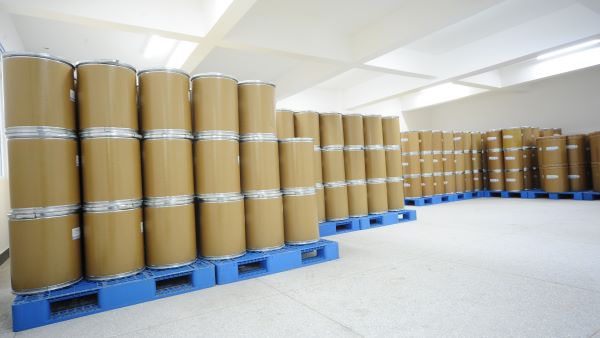
- Inner packing: 1 kg aluminum bag + 25 kg drum.
- Custom packaging available upon request.
- All packaging materials comply with international shipping standards.
Shipping Terms
- Shipment via express (DHL, FedEx, UPS), air freight, or sea freight depending on order quantity.
- Lead time: 7-15 working days after payment confirmation.
- Free samples available (freight collect).
Shelf Life & Storage
- Store in a cool, dry place below 25°C.
- Keep container tightly closed when not in use.
- Protect from direct sunlight and moisture to maintain extract stability.