Product Description
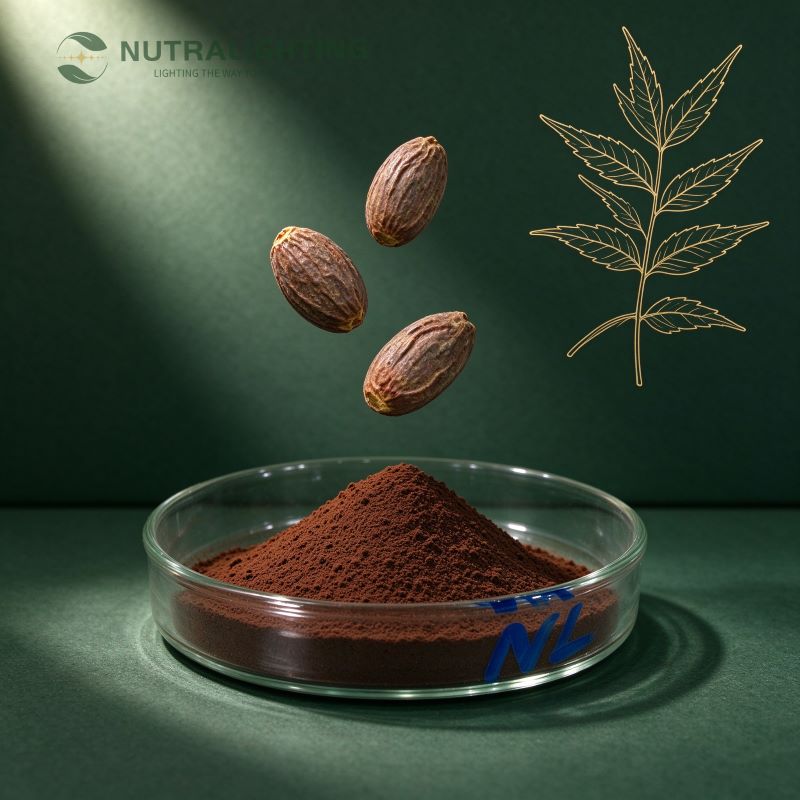
Neem Seed Extract (Azadirachta indica) is a standardised botanical extract formulated for use in bio-pesticide, organic crop protection, and integrated pest management (IPM) applications. Offered in Azadirachtin A grades of 2%, 5%, 10%, 20%, and 40%.
Basic Information
| Item | Content |
| Botanical Name | Azadirachta indica A. Juss. (Meliaceae) |
| Part Used | Seed kernel (dried, cold-pressed or solvent-extracted) |
| Plant Origin | Native to the Indian subcontinent; cultivated in India, Myanmar, Bangladesh, and tropical Africa. Main commercial sources: India (Rajasthan, Gujarat, Tamil Nadu). China cultivates in Yunnan and Hainan provinces for ornamental and research purposes |
| Solvent | Food-grade ethanol / supercritical CO2 / ethyl acetate (for technical grade); emulsifiable concentrate (EC) formulations for end-use products |
| Standardisation | Azadirachtin (HPLC-DAD at 254 nm); Azadirachtin A (HPLC-DAD); Total limonoids (UV spectrophotometry) |
| Specifications | 2% / 5% / 10% / 20% / 40% azadirachtin (technical powder grade); EC formulations: 0.03% / 0.15% / 0.3% / 1% / 3% azadirachtin |
| Appearance | Fine powder, yellowish-brown to dark brown (technical grade); Amber liquid (EC formulations) |
| Odour | Characteristic mild neem odour |
| Moisture | ≤ 5.0% (LoD) |
| Ash | ≤ 3.0% (Total ash) |
| Heavy Metals | Pb ≤ 5 ppm; As ≤ 2 ppm; Hg ≤ 0.5 ppm; Cd ≤ 1.0 ppm |
| Residual Solvents | Ethanol ≤ 5,000 ppm; Ethyl acetate ≤ 1,000 ppm (Ph. Eur. 2.4.24) |
| Microbiological | Total aerobic count ≤ 10^3/g; Yeast & mould ≤ 10^2/g; E. coli negative; Salmonella negative |
| Particle Size | 95% pass 80 mesh (180 μm) for powder grades |
| Shelf Life | 24 months (store below 25°C, protected from light and moisture); EC formulations: 36 months |
| Target Market | India, China, USA, EU, Southeast Asia, Latin America, Africa |
| Core Application Areas | Biopesticide formulations; Organic crop protection; Integrated pest management (IPM); Horticulture; Greenhouse pest control; Seed treatment |
Product Description
Neem Seed Extract is obtained from the dried seed kernel of Azadirachta indica A. Juss. It belongs to the Meliaceae family and is native to the Indian subcontinent.
Five technical powder grades are available – 2%, 5%, 10%, 20%, and 40% azadirachtin – each independently verified by HPLC-DAD. The 2% and 5% grades are suitable for ready-to-use emulsifiable concentrate (EC) formulations. The 10% and 20% grades serve as intermediate concentrates for custom formulation development. The 40% grade is a high-purity technical active ingredient for premium biopesticide products.
The primary bioactive constituent is azadirachtin, a tetranortriterpenoid limonoid that is one of the most potent naturally occurring insecticides known. Azadirachtin affects over 600 species of insects and acts through multiple modes of action including anti-feedant, growth-regulating, ovicidal, and repellent activities.
Azadirachta indica is native to the Indian subcontinent (India, Myanmar, Bangladesh). India remains the dominant global supplier, with major cultivation areas in Rajasthan, Gujarat, and Tamil Nadu. China has cultivated neem trees in Yunnan and Hainan provinces since the 1980s, but commercial seed extraction for azadirachtin is still primarily sourced from India.
Active Constituents
The bioactive profile of Neem Seed Extract is defined by azadirachtin content and related limonoids.
Primary Marker: Azadirachtin
Azadirachtin (CAS 11141-17-6, C35H44O16, MW 720.71) is the principal bioactive limonoid in neem seed extract. It is quantified by HPLC-DAD at 254 nm. Azadirachtin consists of a mixture of structurally related compounds, with azadirachtin A being the most potent (approximately 80-90% of total azadirachtin). The compound acts as an insect juvenile hormone analogue, disrupting molting, feeding, and reproduction in target pests. It exhibits translaminar and systemic activity in treated plants.
Secondary Markers
Total limonoids (including nimbin, salanin, nimbilin, and gedunin) contribute to the overall insecticidal spectrum. These are measured by UV spectrophotometry and typically range from 2-5 times the azadirachtin content depending on the extraction method and seed quality.
COA Standard Specifications – Technical Powder
| Item | Specification | Method | Result Range |
| Azadirachtin | 2% / 5% / 10% / 20% / 40% | HPLC-DAD 254 nm | Varies by grade |
| Azadirachtin A | ≥ 80% of total azadirachtin | HPLC-DAD 254 nm | – |
| Total limonoids | ≥ 10% (for 5% grade) | UV spectrophotometry | Varies by grade |
| Loss on drying | ≤ 5.0% | LoD 105°C | – |
| Total ash | ≤ 3.0% | Char at 600°C | – |
| Lead (Pb) | ≤ 5 ppm | ICP-MS | – |
| Arsenic (As) | ≤ 2 ppm | ICP-MS | – |
| Mercury (Hg) | ≤ 0.5 ppm | ICP-MS | – |
| Cadmium (Cd) | ≤ 1.0 ppm | ICP-MS | – |
| Total aerobic count | ≤ 10^3/g | Ph. Eur. 2.6.12 | – |
| Yeast and mould | ≤ 10^2/g | Ph. Eur. 2.6.12 | – |
| E. coli | Negative | Ph. Eur. 2.6.12 | – |
| Salmonella | Negative | Ph. Eur. 2.6.12 | – |
COA Standard Specifications – EC Formulations
| Item | Specification | Method | Result Range |
| Azadirachtin | 0.03% / 0.15% / 0.3% / 1% / 3% | HPLC-DAD 254 nm | Varies by formulation |
| pH | 6.0 – 8.5 | pH meter | – |
| Emulsifiability | Pass (clear or milky emulsion) | Visual test | – |
| Cold stability | Pass (no phase separation at -5°C) | Storage test | – |
| Hot stability | Pass (no phase separation at 54°C) | Storage test | – |
| Flash point | ≥ 45°C | Tag closed cup | – |
Mode of Action
Anti-Feedant Activity
Azadirachtin acts as a powerful anti-feedant by interfering with the insect nervous system. It disrupts feeding behavior within hours of exposure, causing insects to stop feeding and eventually starve. This effect is particularly pronounced in caterpillars and chewing insects.
Insect Growth Regulation
Azadirachtin mimics insect juvenile hormone, disrupting molting and metamorphosis. It prevents larval development into viable adults and reduces egg hatchability. This growth-regulating action provides long-lasting residual control even after the initial contact dose has dissipated.
Ovicidal and Repellent Effects
Azadirachtin reduces oviposition (egg-laying) by female insects and exhibits direct ovicidal activity on existing eggs. It also acts as a repellent, deterring pests from settling on treated crops. These combined effects provide comprehensive pest pressure reduction.
Systemic and Translaminar Action
Azadirachtin demonstrates both translaminar movement (penetrating through leaf surfaces) and limited systemic activity within treated plants. This allows it to reach pests that hide underneath leaves or bore into plant tissues, providing protection beyond surface contact.
Target Pests and Crop Applications
Target Pest Spectrum
Azadirachtin is effective against more than 600 species of insects, including:
Lepidoptera: Caterpillars (Helicoverpa, Spodoptera, Plutella, Trichoplusia)
Hemiptera: Aphids, whiteflies, leafhoppers, mealybugs, jassids
Coleoptera: Flea beetles, Colorado potato beetle, weevils
Thysanoptera: Thrips (Frankliniella, Thrips tabaci)
Approved Crop Uses
Azadirachtin-based biopesticides are registered and approved for use on a wide range of crops globally:
Vegetables: Tomatoes, peppers, Brassica spp., lettuce, cucurbits
Fruit crops: Apples, citrus, berries, stone fruits
Field crops: Cotton, soybeans, cereals
Ornamentals and turf: Roses, ornamental trees, golf courses
Greenhouse crops: Cut flowers, bedding plants, transplants
Regulatory Status
United States (EPA)
Azadirachtin is registered with the US Environmental Protection Agency (EPA) as a biopesticide under FIFRA Section 3. EPA Registration numbers include 02552-2 (Azatin), 70051-6, and others. It is exempt from residue tolerance requirements under 40 CFR 180.970. Azadirachtin is classified as a minimum-risk pesticide under FIFRA Section 25(b) when formulated at low concentrations.
European Union
Azadirachtin is authorised as an active substance in plant protection products under EU Regulation (EC) No 1107/2009. It was included in the EU approval process and is permitted in several member states. Products containing azadirachtin must comply with Maximum Residue Level (MRL) regulations under Regulation (EC) No 396/2005.
India (CIB&CR)
Azadirachtin is registered with the Central Insecticides Board & Registration Committee (CIB&CR) under the Insecticides Act, 1968. Multiple formulations are registered, including EC (0.03%, 0.15%, 0.3%, 1%), wettable powder (WP), and dust formulations. The standard specification requires minimum 90% recovery of azadirachtin by HPLC.
China
Azadirachtin is registered as a biopesticide in China. Products include 0.3% EC (registration No. PD20101580) and other formulations. GB 2763-2021 sets a maximum residue limit of 1 mg/kg for azadirachtin in tea. China also imports neem seed material from India for domestic formulation production.
Organic Certification
Azadirachtin is approved for use in organic agriculture by multiple certifying bodies worldwide. It complies with EU Organic Regulation (EC) No 834/2007. It is also permitted under Japan JAS and India PGS-India standards.
Recommended Usage
Application Rate Guidelines
Application rates vary by formulation concentration, target pest, and crop type:
0.03% EC: 2-3 L/ha (for general pest control on vegetables and ornamentals)
0.15% EC: 1-2 L/ha (for moderate infestations)
0.3% EC: 0.5-1.5 L/ha (for heavy infestations)
1% EC: 0.2-0.5 L/ha (for targeted spot treatment)
Technical powder (20%): Dilute to desired concentration for custom formulation
Application Timing
Apply at the first sign of pest infestation or preventively before peak pest pressure. Early morning or late afternoon application is recommended to maximise efficacy and minimise photodegradation. Repeat applications at 7-14 day intervals may be needed for heavy infestations. Maximum 3-4 applications per crop cycle.
Pre-Harvest Interval (PHI)
Azadirachtin has a 0-day pre-harvest interval in most jurisdictions, meaning treated crops may be harvested immediately after application. Always consult local registration requirements for specific crop and region.
Precautions
IMPORTANT SAFETY NOTE: Neem seed extract containing azadirachtin is an agricultural biopesticide. It must NOT be used as a dietary supplement, food additive, or cosmetic ingredient. Azadirachtin is strictly for agricultural pest control use only. Keep all neem seed extract products away from children, pets, and food handling areas. In case of accidental ingestion, seek immediate medical attention.
General Precautions
Wear appropriate personal protective equipment (PPE) during mixing and application, including gloves, goggles, and protective clothing. Do not apply when bees are actively foraging. Avoid contamination of water bodies and aquatic habitats. Do not exceed recommended application rates.
Storage and Handling
Store in original sealed container in a cool, dry, well-ventilated area away from direct sunlight. Keep away from food, feed, and fertilizers. Avoid temperature extremes (below 5°C or above 40°C). In case of spillage, contain and dispose of according to local regulations.
Environmental Hazards
Azadirachtin is toxic to aquatic invertebrates and beneficial insects including honeybees and parasitic wasps. Do not apply to flowering crops during bloom when pollinators are active. Allow treated crops to dry completely before allowing livestock access to treated areas.
First Aid
If swallowed, do NOT induce vomiting. Rinse mouth with water. Seek immediate medical attention. If on skin, wash thoroughly with soap and water. If in eyes, rinse with clean water for 15 minutes and seek medical attention. If inhaled, move to fresh air.
Disclaimer
This product is a biopesticide active ingredient for agricultural use. It is NOT a dietary supplement, food ingredient, or cosmetic raw material. Azadirachtin is registered as a pesticide active ingredient with the US EPA, EU member state authorities, India CIB&CR, and China’s pesticide registration authorities.
Users are responsible for ensuring compliance with local pesticide registration and application regulations. Product labels and safety data sheets (SDS) must be followed in all jurisdictions. This product should only be handled by trained agricultural professionals. Store out of reach of children and animals.
Neem seed extract should not be confused with neem leaf extract, which has different regulatory considerations. The seed kernel contains significantly higher azadirachtin concentrations than leaf material (seed: 3,000-10,000 ppm vs. leaf: 200-2,000 ppm).
Why Choose Nutralighting
Verified azadirachtin content: Every batch is HPLC-DAD tested for azadirachtin content against certified CAS 11141-17-6 reference standard. A batch-specific COA is provided with each shipment.
Custom EC formulations: Our formulation team develops custom emulsifiable concentrate specifications tailored to your registration requirements. Contact us for details.
References
US EPA. “Azadirachtin; Pesticide Tolerance Exemption.” Federal Register, 40 CFR 180.970. EPA Office of Pesticide Programs.
US EPA. “Azadirachtin Fact Sheet.” OPP Chemical Code 121701. EPA/635/F-01/003F.
Butterworth, J. L., and Morgan, E. D. (1977). “Azadirachtin: a novel antifeedant from the Indian neem tree (Azadirachta indica A. Juss.).” Journal of Chemical Ecology, 3(4), 429-435.
Central Insecticides Board & Registration Committee (CIB&CR). “Specifications for Azadirachtin-based insecticides.” Ministry of Agriculture, Government of India.
European Food Safety Authority (EFSA). “Conclusion on the peer review of the pesticide risk assessment of the active substance azadirachtin.” EFSA Journal. 2013;11(11):3453.
FAO. “Azadirachtin: a natural insecticide.” FAO Plant Production and Protection Paper 159. Rome: Food and Agriculture Organization; 2000.
Alibaba / Made-in-China supplier listings. “Azadirachtin 2% 5% 10% 20% 40% Technical Powder” – commercial COA data, verified CAS 11141-17-6, C35H44O16, MW 720.71.
Frequently Asked Questions
We supply five technical powder grades: 2%, 5%, 10%, 20%, and 40% azadirachtin, each verified by HPLC at 254 nm against CAS 11141-17-6 standard.
MOQ varies by specification. Standard quantities start at 25 kg drums for powder grades. Please contact our sales team for tailored quotation and lead time.
Yes. A full COA accompanies every shipment. Third-party testing via SGS, Eurofins, or other approved laboratories is available upon request at additional cost.
Store below 25°C in a dry, dark place. Keep containers sealed when not in use. Powder grades have a shelf life of 24 months; EC formulations last 36 months.
Packaging & Shipping
Standard Packaging
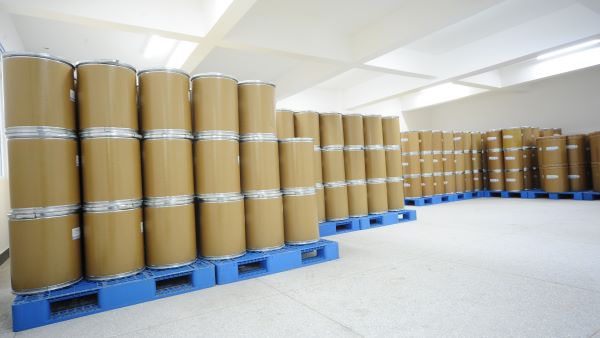
- 25 kg cardboard drums with double PE liner (powder)
- 5 kg aluminum foil bags (powder)
- 200 L HDPE drums (EC formulations)
- Custom packaging available on request
Shipping Terms
- Shipped via freight forwarder or courier
- FOB ports: Shanghai, Ningbo, Mumbai
- Lead time: 15–25 working days after order confirmation
- Sample orders shipped within 5–7 working days
Shelf Life & Storage
- Store below 25°C
- Protect from direct sunlight, heat, and moisture
- Keep containers tightly sealed
- Use within shelf life indicated on label