Product Description
Our Oregano Extract is available in three carvacrol grades – 20%, 60%, and 90% – delivering precise phenolic standardisation for antimicrobial, antioxidant, and digestive support formulations.
Basic Information
| Item | Content |
| Botanical Name | Origanum vulgare L. (Lamiaceae) |
| Part Used | Dried flowering tops |
| Standardised To | Carvacrol 20% / 60% / 90% (HPLC) |
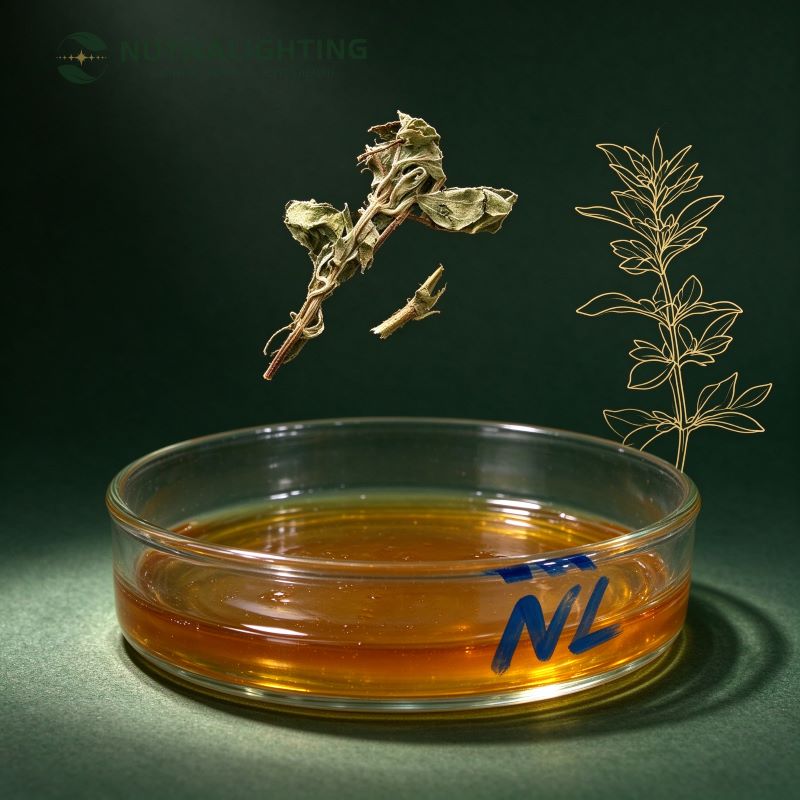
| Appearance | Yellow to amber viscous liquid |
| Odour | Characteristic, aromatic, pungent |
| Solubility | Sparingly soluble in water; soluble in ethanol and oils |
| Origin | Shaanxi and Gansu Provinces, China; Mediterranean origin available on request |
| Particle Size | 80-100 mesh (available on request) |
| Shelf Life | 24 months when stored properly |
| Storage | Cool, dry place away from light and moisture |
Product Description
What We Offer and Why It Matters
We supply Origanum Extract in three carvacrol grades: 20%, 60%, and 90%. Each grade is independently produced and HPLC-verified. This gives formulators clear options for their antimicrobial and antioxidant product positioning.
The 20% grade is suitable for general wellness products where oregano is combined with other botanicals supporting immune and digestive health. The 60% grade is our standard offering. It matches the carvacrol content used in most published research. The 90% grade is our premium concentrated option for high-potency antimicrobial formulations.
Our competitive edge comes from three sources. First, our raw material is sourced from Shaanxi and Gansu provinces in Northwest China. These regions provide the cool, dry climate conditions that oregano requires for optimal essential oil production. Second, we use steam distillation for the essential oil fraction and ethanol extraction for the phenolic compound fraction. Third, every batch is tested for carvacrol and thymol content by HPLC before release.
Key Features
Origanum vulgare is one of the most widely studied medicinal herbs in the Lamiaceae family. The flowering tops contain volatile essential oil rich in carvacrol and thymol, as well as phenolic acids including rosmarinic acid and protocatechuic acid.
Carvacrol is the primary bioactive marker in oregano extract. It is a monoterpenoid phenol responsible for most of the plant’s antimicrobial and antioxidant effects. Commercial oregano essential oil typically contains 40-80% carvacrol.
Thymol is a structural isomer of carvacrol and shares similar biological activity. It contributes to the overall antimicrobial potency of the extract. Our extracts maintain a natural carvacrol-to-thymol ratio found in the raw herb.
Rosmarinic acid is the primary phenolic acid marker. It contributes to the antioxidant capacity and anti-inflammatory effects of the extract. The Chinese Pharmacopoeia recognises oregano as a traditional medicinal herb.
Active Constituents
Primary Marker: Carvacrol
Carvacrol is the primary quality marker for Origanum extract. It is measured by HPLC with UV detection at 280 nm and expressed as a percentage of the extract weight.
Three grades are available:
- 20% carvacrol -entry-level standardisation for general immune and digestive wellness formulas
- 60% carvacrol -industry standard matching most published research
- 90% carvacrol -high-potency concentrated standardisation for targeted antimicrobial formulations
Batch-to-batch variation is kept within ±10% of the labelled carvacrol value for all grades.
Secondary Marker: Thymol
Thymol is the secondary quality marker for oregano extract. It is measured by HPLC and reported alongside carvacrol content. Thymol shares similar antimicrobial and antioxidant properties with carvacrol.
- 20% grade: thymol typically 3-8% of extract weight
- 60% grade: thymol typically 8-15% of extract weight
- 90% grade: thymol typically 10-20% of extract weight
The carvacrol-to-thymol ratio varies by growing region and distillation conditions. Our GC and HPLC chromatograms are included in the COA for each batch.
Phenolic Acid Fraction
Rosmarinic acid is the primary phenolic acid marker in Origanum extract. It is measured by HPLC with UV detection.
- Rosmarinic acid content: ≥ 2.0% across all grades
- Protocatechuic acid content: ≥ 0.5% across all grades
- Total polyphenol content: typically 10-30% depending on grade
The phenolic acid fraction contributes to the antioxidant and anti-inflammatory activity of the extract through independent mechanisms from the essential oil fraction.
Analytical Data Sheet
| Item | Specification | Method | Result |
| Carvacrol Content (20% Grade) | ≥ 20.0% | HPLC 280nm | 20.0-24.0% |
| Carvacrol Content (60% Grade) | ≥ 60.0% | HPLC 280nm | 60.0-68.0% |
| Carvacrol Content (90% Grade) | ≥ 90.0% | HPLC 280nm | 90.0-94.0% |
| Thymol Content (20% Grade) | ≥ 3.0% | HPLC 280nm | 3.0-8.0% |
| Thymol Content (60% Grade) | ≥ 8.0% | HPLC 280nm | 8.0-15.0% |
| Thymol Content (90% Grade) | ≥ 10.0% | HPLC 280nm | 10.0-20.0% |
| Rosmarinic Acid | ≥ 2.0% | HPLC | 2.0-5.0% |
| Protocatechuic Acid | ≥ 0.5% | HPLC | 0.5-1.5% |
| Total Polyphenols | ≥ 10.0% | Folin-Ciocalteu | 10.0-30.0% |
| Loss on Drying | ≤ 6.0% | KF | ≤ 6.0% |
| Heavy Metals (Pb) | ≤ 2.0 mg/kg | ICP-MS | < 1.0 mg/kg |
| Heavy Metals (As) | ≤ 1.0 mg/kg | ICP-MS | < 0.5 mg/kg |
| Heavy Metals (Cd) | ≤ 0.3 mg/kg | ICP-MS | < 0.2 mg/kg |
| Heavy Metals (Hg) | ≤ 0.1 mg/kg | ICP-MS | < 0.05 mg/kg |
| Pesticide Residues | Pass | GC-MS/LC-MS | Not Detected |
| Residual Solvents | Pass | GC | Compliant |
| Total Plate Count | ≤ 1000 CFU/g | USP <61> | < 10 CFU/g |
| Yeast & Mold | ≤ 100 CFU/g | USP <61> | < 10 CFU/g |
| E. coli | Negative | USP <61> | Negative |
| Salmonella | Negative | USP <61> | Negative |
Mechanism of Action
Antimicrobial Activity
Carvacrol disrupts microbial cell membranes. It inserts into the phospholipid bilayer and increases membrane permeability. This causes leakage of cellular contents and loss of membrane potential. Gram-positive bacteria are generally more susceptible than Gram-negative bacteria due to differences in cell wall structure.
Carvacrol also inhibits bacterial enzyme systems. It interferes with ATP synthase activity and disrupts proton motive force. This energy depletion prevents microbial replication and metabolic function.
Antioxidant Protection
Carvacrol and thymol act as direct free-radical scavengers. The phenolic hydroxyl group donates hydrogen atoms to neutralise reactive oxygen species. This chain-breaking antioxidant activity protects cell membranes and proteins from oxidative damage.
Rosmarinic acid contributes additional antioxidant protection. It chelates transition metal ions that catalyse free radical formation. The combined action of the essential oil fraction and the phenolic acid fraction provides multi-target antioxidant coverage.
Anti-inflammatory Effects
Carvacrol inhibits NF-κB activation in inflamed tissues. This reduces the downstream expression of COX-2, iNOS, and pro-inflammatory cytokines. The anti-inflammatory effect is distinct from NSAID mechanism, which directly inhibits COX enzymes.
Thymol modulates inflammatory mediator production. It suppresses prostaglandin E2 synthesis in activated immune cells. This complementary action supports the traditional use of oregano for inflammatory conditions.
Gastrointestinal Support
Oregano extract has a long tradition of use for digestive complaints. The essential oil stimulates bile secretion and pancreatic enzyme release. This cholagogic and pancreatropic effect supports fat digestion and nutrient absorption.
Carvacrol also has antispasmodic effects on gastrointestinal smooth muscle. It reduces involuntary contractions and relieves cramping. This mechanism supports the use of oregano for functional dyspepsia and irritable bowel symptoms.
Traditional and Modern Use
Traditional Use
Origanum vulgare has been used in Mediterranean traditional medicine for over 3,000 years. The ancient Greeks and Romans valued oregano as both a culinary herb and a medicinal plant. The word “origanum” derives from the Greek words “oros” (mountain) and “gaion” (joy), meaning “joy of the mountain.”
In traditional European herbalism, oregano was used for digestive complaints, respiratory infections, and wound care. The essential oil was applied topically for skin conditions and internally for gastrointestinal discomfort. Dried oregano tea was a common remedy for colds and coughs.
In traditional Chinese medicine, oregano is used for detoxification, dampness resolution, and circulation promotion. It is recognised in regional pharmacopoeias and used for respiratory and digestive complaints.
Modern Clinical Evidence
A 2024 systematic review published in PMC evaluated the antimicrobial activity of Origanum vulgare essential oil against clinical isolates. The study confirmed strong activity against drug-resistant bacteria including MRSA and extended-spectrum beta-lactamase (ESBL)-producing Enterobacteriaceae.
Clinical studies have investigated oregano extract for Helicobacter pylori-associated gastritis. A pilot study found that oral oregano essential oil capsules reduced H. pylori colonisation and improved gastric symptoms. More research is needed to confirm these findings in larger trials.
Research on oregano for metabolic support shows promise. Preclinical studies demonstrate anti-obesity and anti-diabetic effects mediated through PPAR-γ activation and improved insulin sensitivity. Human clinical data remains limited.
Regulatory Status
United States (FDA)
Oregano herb (Origanum vulgare L.) is listed in the FDA EAFUS database (CAS 977138-70-7) under 21 CFR 182.10 as a flavoring agent or adjuvant. The herb and its essential oil have GRAS status for use as a food flavoring substance.
Under DSHEA, Origanum vulgare flowering tops and their extracts may be used as an ingredient in dietary supplements. The herb has a long history of safe use in traditional medicine and as a culinary spice. Structure/function claims related to immune support, digestive support, and antioxidant protection may be made provided the mandatory disclaimer is included. This product is not intended to diagnose, treat, cure, or prevent any disease.
Formulators should ensure claims comply with 21 CFR 101.93 requirements. Carvacrol is the primary bioactive constituent and should be accurately labelled on the supplement facts panel.
European Union (EMA)
Origanum vulgare L., flos is covered by a European Union herbal monograph published by the EMA. The monograph specifies parameters for the dried flowering tops and their preparations.
The EMA assessment confirms traditional use for:
Temporary loss of appetite
Mild spasmodic gastrointestinal complaints
Topical use for minor skin irritations and insect bites
The EMA calculation shows that at the maximum daily dose of 2.5 g of dried herb, the theoretical carvacrol intake does not exceed 250 mg per day. This is considered safe for traditional use durations of 4 weeks without medical supervision.
Carvacrol is approved as a food additive (E-number: not separately listed; covered under general flavouring provisions) in the EU under Commission Implementing Regulation (EU) No 872/2012.
China (NMPA)
Origanum vulgare (Niuzhi) is listed in the Chinese Pharmacopoeia 2020 Edition, Part 1. The pharmacopoeial monograph covers the dried herb and specifies identification, purity, and potency testing parameters.
The recommended dosage in the Chinese Pharmacopoeia is 3-9 g per day for decoction. The herb is classified as acrid and warm in nature, entering the lung and spleen meridians.
China is a significant producer of Origanum vulgare. Cultivation has expanded in Shaanxi, Gansu, and Inner Mongolia provinces. Domestic sourcing is available for clients who prefer Chinese-grown raw material.
Recommended Usage
Dosage Range
Based on traditional use and published research, the recommended daily intake of Origanum extract ranges from 500-2,000 mg. For our extracts, this translates to:
- 20% carvacrol grade: 1,000-4,000 mg per day
- 60% carvacrol grade: 330-1,300 mg per day
- 90% carvacrol grade: 220-900 mg per day
The exact dose should be determined based on product formulation, target indication, and desired carvacrol intake. For general immune and digestive wellness, lower doses in the 20% or 60% grade range may be sufficient. For targeted antimicrobial support, the 60% or 90% grade at higher daily intake may be more appropriate.
Application Forms
Origanum Extract is suitable for multiple dosage forms:
- Capsules and tablets for immune and digestive support supplements
- Softgels -the lipophilic carvacrol disperses well in oil bases
- Powdered blends for multi-ingredient antimicrobial formulas
- Topical formulations -creams and ointments for skin care
Formulation Notes
Origanum extract has a very strong, characteristic odour and taste. The pungent, peppery flavour is one of the most distinctive among botanical extracts. Encapsulation is recommended for consumer acceptance in capsule and tablet formats.
The extract is sensitive to light and heat. Processing temperatures should be kept below 50°C where possible. Blend uniformity should be verified through sampling and HPLC carvacrol analysis before compression or encapsulation.
For topical formulations, the carvacrol fraction provides antimicrobial and anti-inflammatory activity. This makes oregano extract particularly suitable for skin care products targeting blemishes and minor skin irritations.
Disclaimer
This product is intended for use as an ingredient in dietary supplements and food products. It is not intended to diagnose, treat, cure, or prevent any disease. Statements regarding this product have not been evaluated by the Food and Drug Administration. Consult your healthcare provider before use, especially if you are pregnant, nursing, taking medication, or have a medical condition. Individuals with gallbladder disease or taking anticoagulant medications should consult their physician before use. Topical use may cause skin irritation in sensitive individuals. Perform a patch test before widespread use. This information is provided for educational purposes and does not constitute medical advice.
Why Choose Us for Carvacrol Supply
Why Choose Nutraligting
We eliminate guesswork from your carvacrol sourcing, turning inconsistent raw material quality into predictable, production-ready reliability.
Our end-to-end quality system is built specifically for teams that refuse to compromise on product safety, ingredient transparency, and regulatory compliance.
We don’t just sell carvacrol – we deliver a seamless support system that aligns with your wellness, cosmetic, and clinical product development timelines.
What You Need
Verified, real-world carvacrol content that matches your product label claims, no unsubstantiated theoretical calculations.
Flexible concentration grades that fit different product lines, from daily wellness formulations to high-potency clinical applications.
Full ingredient visibility beyond a single active marker, so you can confirm the full phenolic profile of every batch.
Fast, complete regulatory documentation that won’t delay your production, testing, or market launch schedules.
Direct, expert technical support that understands your formulation challenges, instead of pre-written, one-size-fits-all responses.
How We Help
Every single production batch undergoes strict standardization, with HPLC testing to deliver you confirmed, accurate carvacrol levels that meet your exact quality requirements.
Three clear, targeted concentration grades – 20%, 60%, and 90% – are available, so you can pick the perfect match for general wellness ranges or high-strength clinical product lines.
We provide dual-marker full transparency for every order, reporting both carvacrol and thymol content to give you a complete picture of your ingredient composition.
All required documents including COA, full technical dossier, and targeted regulatory support are prepared and delivered to you within 24 hours of your formal request.
You get direct, unobstructed access to our in-house technical team, every question you submit receives a detailed, tailored real answer instead of generic, unhelpful auto-replies.
References
EMA. European Union Herbal Monograph on Origanum vulgare L., flos. European Medicines Agency.
FDA. 21 CFR 182.10 – Origanum vulgare L. Substances Generally Recognized as Safe.
FDA. Substances Added to Food (EAFUS) – Oregano, Herb, CAS 977138-70-7.
Chinese Pharmacopoeia Commission. Pharmacopoeia of the People’s Republic of China, 2020 Edition, Part 1. Niuzhi (Oregani herba) monograph.
PMC11548386. Characterization of Natural Bioactive Compounds from Greek Oregano Accessions Subjected to Advanced Extraction Techniques. NIH.
PMC11858988. Chemical Composition, Biological Activity, and Potential Uses of Oregano (Origanum vulgare L.) and Oregano Essential Oil. NIH.
Commission Implementing Regulation (EU) No 872/2012 – Carvacrol approval as food additive.
Frequently Asked Questions
Our standard MOQ is 25 kg per order. For sample testing, we offer 1 kg packaging.
Yes, we provide full COA, MSDS, and TDS documents for every batch upon request.
We accept TT and other mutually agreed payment methods.
Yes, we support OEM/ODM services and can adjust carvacrol content based on customer requirements.
Packaging & Shipping
Standard Packaging
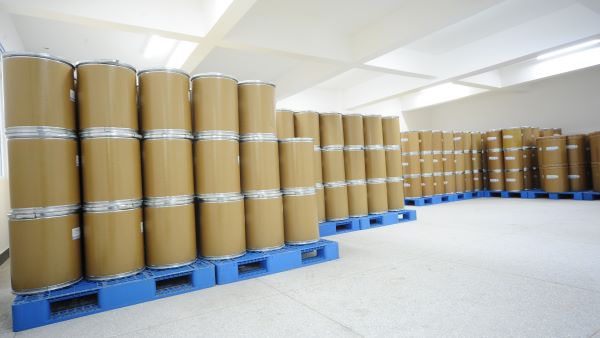
- Standard: 25 kg fiber drum with double PE bag lining
- Custom: 1 kg aluminum foil bag or 200 kg drum available
Shipping Terms
- By express (DHL, FedEx, UPS): 3-7 days
- By air freight: 5-10 days
- By sea freight: 20-35 days depending on destination
Shelf Life & Storage
- Store in a cool, dry place away from direct sunlight
- Keep container tightly closed when not in use
- Avoid exposure to moisture and high temperatures